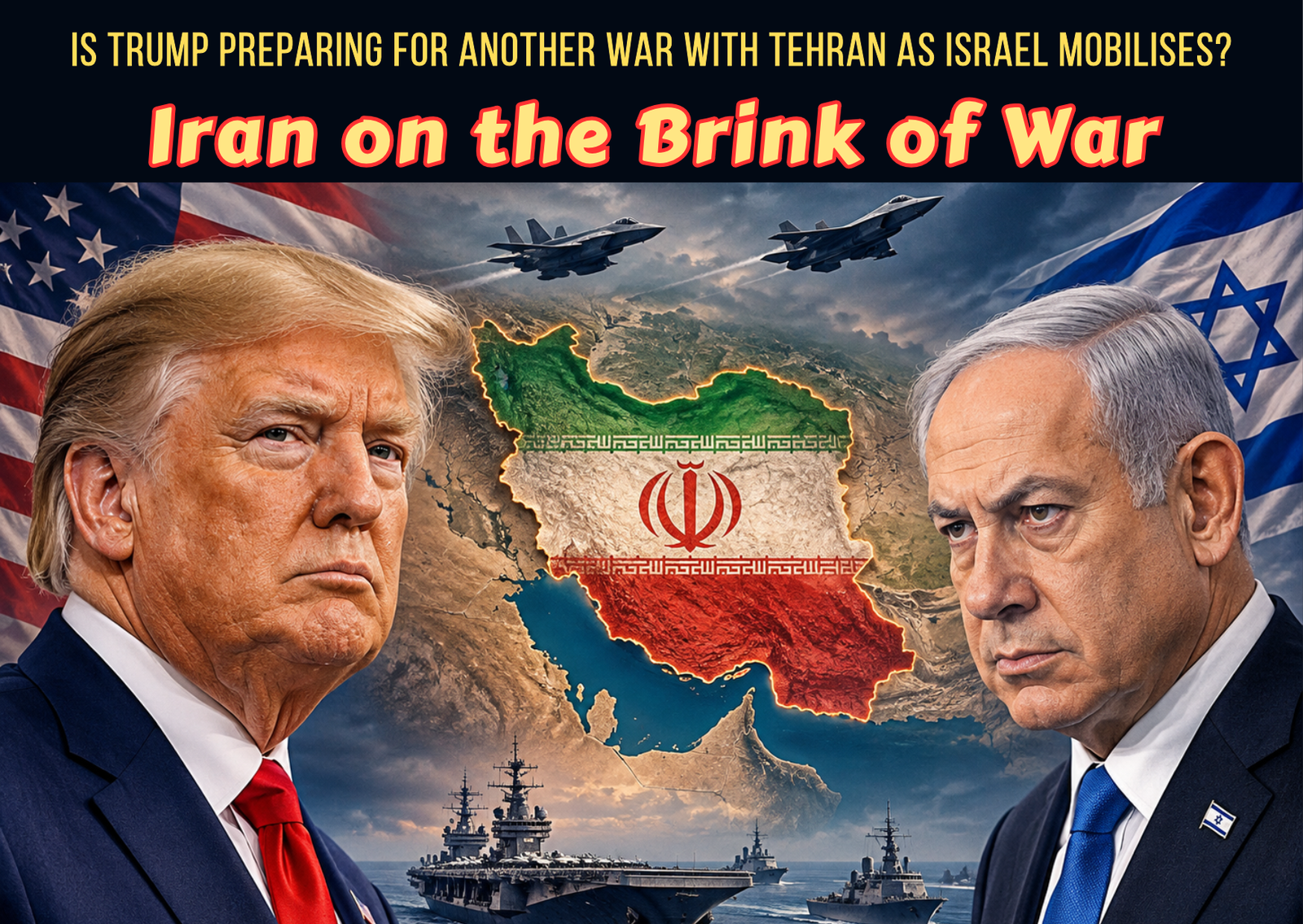
Trump’s rejection of a diplomatic settlement, JD Vance’s removal from Iran negotiations and Israel’s renewed military preparations raise serious questions about the future of the Middle East.
(By Khalid Masood)
Introduction: An Uncertain Peace
The confrontation between the United States, Israel and Iran has entered another critical phase, with diplomatic uncertainty, economic warfare and military preparations shaping the future of an already volatile Middle East. Although US President Donald Trump has indicated that Washington may not need another major military campaign against Tehran, his latest statements suggest that the prospect of a negotiated settlement is becoming increasingly uncertain.
The most significant development came on 12 November 2026, when Trump declared that the United States did not need a deal with Iran and instructed Vice President JD Vance to redirect his attention towards domestic political issues. The decision followed weeks of diplomatic efforts in which Vance had reportedly been exploring possibilities for renewed negotiations with Iranian representatives.
Meanwhile, Israel has maintained a heightened state of military readiness, preparing for possible American military action against Iran as well as the prospect of an unexpected Iranian attack. Reports of earlier US-Israeli operational planning have further intensified speculation about another round of strikes.
The contradiction is striking. Washington is suggesting that economic pressure may achieve its objectives without another extensive military operation, while Israel remains concerned that Iran’s military and strategic capabilities have not been sufficiently neutralised.
The central question is therefore no longer simply whether another confrontation is possible. It is whether the United States and Israel can secure their strategic objectives through economic coercion and military deterrence, or whether they will eventually conclude that another military campaign is unavoidable.
Trump’s Changing Position on Iran: Victory Without a Settlement?
Donald Trump’s statements on Iran have reflected an evolving approach that combines military threats, economic pressure and an apparent reluctance to commit the United States to another prolonged confrontation.
Following a meeting with Qatar’s Prime Minister on 9 November, Trump described Iran’s military position as effectively defeated and indicated that there was little immediate need for further extensive military action. His administration subsequently reinforced the argument that the existing economic campaign was producing results.
On 10 November, Trump said that he intended to hold off on fresh military strikes for the time being, following appeals from regional countries. He nevertheless emphasised that American forces remained fully equipped and prepared should circumstances change.
The following day, Secretary of State Marco Rubio provided a clearer explanation of Washington’s emerging approach. Speaking after a meeting of G7 foreign ministers in Paris, Rubio argued that economic pressure was achieving objectives that would otherwise require military operations.
His position was that Washington could continue weakening Iran’s economic capacity without immediately returning to large-scale combat.
However, Trump’s 12 November statement introduced another dimension. Declaring that the United States no longer needed a deal with Iran, he claimed that Washington had secured control over Iranian financial resources and the Strait of Hormuz. He also directed Vance to concentrate on domestic political issues rather than Iran diplomacy.
This sequence reveals an important distinction between Trump’s declared military success and the unresolved political objectives of the conflict.
Destroying military installations, weakening missile capabilities and restricting oil exports are military and economic achievements. They do not automatically produce a sustainable political settlement, eliminate Iran’s regional influence or guarantee that Tehran will abandon its strategic ambitions.
Trump may believe that maintaining economic pressure is preferable to another costly military operation. However, the absence of a negotiated settlement leaves the underlying confrontation unresolved.
JD Vance Sidelined: A Setback for Washington’s Diplomatic Track
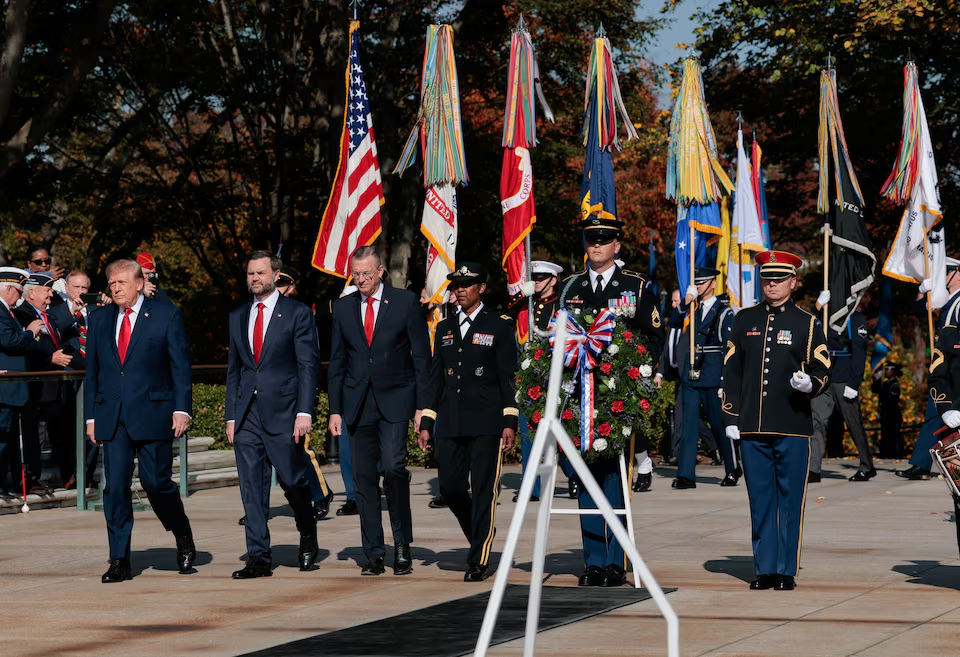
One of the most consequential developments in Washington has been the changing role of Vice President JD Vance.
Vance had emerged as an important figure in diplomatic efforts to end the confrontation with Iran. He had previously led American negotiations in Pakistan in April 2026, which produced a temporary memorandum of understanding. That arrangement subsequently collapsed.
In early November, Vance was reportedly exploring renewed direct engagement with senior Iranian representatives, with the objective of reopening the Strait of Hormuz and establishing restrictions on Iran’s nuclear programme.
His approach reflected a recognition that continued military operations could impose considerable economic and political costs on the United States without necessarily producing a lasting resolution.
The diplomatic initiative also had support from Trump’s special envoy Steve Witkoff and his son-in-law Jared Kushner, according to reporting by The Washington Post.
However, the administration was divided over the way forward. Defence Secretary Pete Hegseth and Israeli Prime Minister Benjamin Netanyahu were associated with a more forceful military approach, while Vance and other diplomatic interlocutors were exploring the possibility of an agreement.
The political situation became more complicated following the Republican Party’s disappointing performance in the 3 November midterm elections. Vance publicly acknowledged that the war and its economic consequences had contributed to the party’s electoral difficulties.
On 12 November, Trump instructed Vance to redirect his complete attention towards alleged crime and corruption in Democrat-run American cities and states.
This was a significant setback for the diplomatic initiative led by the Vice President.
It would be premature to conclude that Vance has been excluded from every national-security discussion. Nevertheless, his immediate role in the Iran negotiations has clearly been curtailed.
The wider significance is that Washington’s diplomatic track has lost one of its most prominent political advocates at precisely the moment when a negotiated settlement remains elusive.
Israel’s Military Preparations: Another Attack on Iran?
Israel’s military calculations are not necessarily identical to those of Washington.
For the Israeli government, Iran represents a long-term strategic challenge involving nuclear capabilities, ballistic missiles, military infrastructure and regional networks of armed groups.
Although earlier American and Israeli military operations inflicted damage on Iranian military infrastructure, Israeli security planners remain concerned about Tehran’s capacity to rebuild and retaliate.
Reports published in October by ABC News indicated that American and Israeli military officials had drawn up plans for renewed joint strikes following the US midterm elections. The reported targets included Iranian nuclear facilities and petrochemical infrastructure, with the objective of further weakening Iran’s military and economic capacity.
The reporting also suggested that Netanyahu favoured renewed military action, although the final decision on American participation rested with Trump.
More recent reporting has added another dimension. On 10 November, Israeli media reported that the Israel Defence Forces were preparing for two broad escalation scenarios.
The first involved the possibility of a major American offensive against Iranian military and national infrastructure. The second concerned a surprise Iranian attack against American interests and military installations across the Middle East, potentially involving facilities hosting American personnel and aircraft.
These preparations demonstrate that Israel is taking the possibility of renewed hostilities seriously.
However, military readiness should not be confused with a confirmed decision to launch an offensive. Israel has strong reasons to prepare for several contingencies, including an Iranian retaliation even if Washington continues to avoid a major military campaign.
The central strategic question is whether Netanyahu would accept a prolonged American economic blockade as sufficient pressure on Tehran or consider further military action necessary to protect Israel’s security interests.
A unilateral Israeli offensive would also carry significant risks. Iran could retaliate against Israeli territory, American installations and regional infrastructure, potentially drawing Washington into another major confrontation.
Israel’s military preparedness therefore serves two purposes: maintaining the capability to conduct operations and deterring Iran from attempting to exploit the current uncertainty.
America’s Military Posture: Deterrence or Preparation for War?
The American military presence in the Middle East remains an important component of Washington’s strategy.
The United States possesses substantial naval, air and intelligence capabilities across the region. Its military infrastructure, regional partnerships and access to strategic bases provide considerable operational flexibility.
The continuing naval blockade of Iranian ports is particularly significant.
Rather than relying exclusively on air strikes, Washington is attempting to restrict Iran’s economic activity, particularly its ability to export oil and generate foreign currency.
The strategy is intended to increase the cost of continued confrontation for Tehran while retaining the option of military action.
American Secretary of State Marco Rubio’s comments on 11 November reflected this approach. He argued that economic pressure was producing the desired results and that major combat operations were not currently necessary.
This position is consistent with Trump’s stated preference to avoid fresh strikes for the time being.
Nevertheless, Washington has not abandoned military contingency planning. The presence of naval forces, air assets and regional military infrastructure allows the United States to respond rapidly if the situation deteriorates.
It is important to distinguish three separate activities:
- Military deployment and readiness, which provide operational options.
- Contingency planning, which prepares forces for possible future operations.
- Political authorisation, which constitutes an actual decision to launch an offensive.
Evidence of the first two does not establish the third.
For now, Washington appears to be maintaining a policy that combines economic coercion, military deterrence and the possibility of renewed negotiations, even as Trump’s latest statements have complicated the diplomatic picture.
Iran’s Response: Retaliation, Deterrence and Strategic Survival
Iran’s position is considerably more complicated than a straightforward assessment of military defeat might suggest.
The country has suffered military and economic pressure, but its ability to retaliate should not be underestimated.
Iran retains ballistic missiles, drones, asymmetric naval capabilities and a network of regional relationships that could complicate American and Israeli military planning.
On 12 November, senior Iranian military and Revolutionary Guards officials issued particularly strong warnings against the United States and Israel.
Their statements included threats against American and Israeli leaders, warnings about American military installations and suggestions that retaliation could extend beyond the immediate Middle East.
Such statements should be understood as part of Iran’s deterrence messaging. They do not necessarily establish that Tehran has made a decision to initiate another offensive.
Nevertheless, they demonstrate that Iran is attempting to communicate that another attack would carry substantial consequences.
Iran’s strategic options include:
- Missile and drone attacks against Israeli military installations and infrastructure.
- Threats to American military installations and regional interests.
- Maritime disruption and pressure on commercial shipping.
- Increased activity by regional armed groups aligned with Tehran.
- Further changes in its nuclear posture and cooperation with international inspectors.
The effectiveness of these options would vary considerably, but even limited retaliation could create serious complications for Washington and its regional partners.
Iran also faces an important dilemma. Accepting American conditions without adequate guarantees could be portrayed domestically as a strategic surrender. Continuing confrontation, however, risks further destruction and economic hardship.
Tehran must therefore balance national security, political survival and the need to preserve its negotiating position.
The Strait of Hormuz: The Economic Front of the Conflict
The Strait of Hormuz remains one of the most strategically important waterways in the world.
Connecting the Persian Gulf with the Gulf of Oman and the Arabian Sea, it carries a substantial share of international oil shipments and significant volumes of liquefied natural gas.
Its importance extends far beyond the immediate interests of Iran and the United States.
Any prolonged disruption could affect energy supplies, international shipping, insurance costs and the economic stability of major importing countries.
For Iran, the Strait represents an important source of strategic leverage. Its geographical position allows Tehran to threaten maritime traffic and raise the cost of military confrontation.
For Washington, ensuring freedom of navigation is a major strategic objective. The American naval presence and blockade are intended to restrict Iranian economic activity while maintaining control over the maritime security environment.
However, the use of naval pressure carries its own risks.
An incident involving commercial vessels, Iranian naval forces or American warships could rapidly escalate into a wider confrontation.
The economic consequences would be particularly serious for Asian countries, including China, India, Japan, South Korea and Pakistan, all of which have substantial interests in Gulf energy supplies.
A renewed conflict could also create inflationary pressure across global markets, particularly if oil prices remain elevated for an extended period.
The Strait of Hormuz is therefore not simply a military consideration. It is one of the central economic and geopolitical pressure points in the entire confrontation.
Pakistan and the Regional Geopolitical Equation
For Pakistan, the unfolding confrontation carries direct economic, diplomatic and security implications.
Pakistan shares a long border with Iran and maintains important relations with Saudi Arabia, the Gulf countries and the United States. Any major escalation could place Islamabad in a difficult diplomatic position.
The first concern is energy security.
Pakistan remains dependent on imported petroleum products and is vulnerable to fluctuations in international oil prices. A prolonged disruption of Gulf shipping could increase the country’s import bill, intensify inflationary pressure and complicate economic management.
The second concern is regional stability.
A wider confrontation could create additional security challenges along Pakistan’s western border. Increased instability in Iran and the surrounding region would have implications for border management, trade and regional connectivity.
The third consideration is Pakistan’s diplomatic position.
Islamabad has compelling reasons to support de-escalation while maintaining balanced relations with Tehran, Riyadh and Washington.
Pakistan’s earlier involvement in diplomatic efforts between the United States and Iran demonstrates that it can provide a useful channel for communication. However, its diplomatic influence should not be exaggerated. Any meaningful settlement would require the participation and consent of the principal parties.
Qatar and other Gulf states also have important roles to play in mediation.
Pakistan’s most practical interest is to prevent another regional war, protect its economic interests and avoid becoming entangled in a confrontation between major powers.
What Lies Ahead: Three Possible Scenarios
The future of the confrontation will depend on the decisions taken in Washington, Tel Aviv and Tehran. Three broad scenarios deserve consideration.
1. Managed Confrontation: Economic Pressure Without Major War
Under this scenario, Trump continues the naval blockade and economic sanctions while avoiding another extensive military campaign.
Israel maintains military readiness, and Iran attempts to preserve its remaining strategic capabilities without initiating a major confrontation.
The arrangement would be unstable but could provide Washington with an opportunity to extract further concessions through economic pressure.
It would also allow Trump to avoid the political and economic costs of another prolonged war.
2. Renewed Military Escalation: Another Round of US-Israeli Strikes
A second possibility is that Washington concludes economic pressure is insufficient and authorises renewed military action.
Targets could include nuclear facilities, missile installations, air-defence systems and military-industrial infrastructure.
Iran would almost certainly attempt to retaliate, although the scale and effectiveness of its response would depend on its remaining capabilities and the circumstances of the attack.
The consequences could extend across the Gulf, threaten maritime traffic and involve regional actors.
This scenario carries the greatest immediate danger of a wider regional war.
3. Diplomatic Compromise: An Agreement Through Regional Mediation
A third possibility is the eventual revival of negotiations through Qatar, Pakistan or other intermediaries.
A potential agreement could involve:
- Reopening and securing the Strait of Hormuz.
- Restoring international nuclear inspections.
- Restrictions on Iran’s nuclear activities.
- Arrangements concerning sanctions and frozen Iranian assets.
- Guarantees against renewed military escalation.
However, the differences between Washington and Tehran remain substantial.
The United States wants verifiable restrictions and assurances regarding Iran’s nuclear and regional activities. Iran, meanwhile, is likely to demand economic relief, recognition of its security concerns and guarantees against future attacks.
Without some degree of compromise, negotiations are unlikely to produce a durable settlement.
Conclusion: A Conflict Without a Clear Endgame
The confrontation between the United States, Israel and Iran has reached a stage where military superiority alone cannot guarantee a sustainable political outcome.
Washington may have weakened Iran’s military infrastructure and economic capacity, but the country retains the ability to create instability across the region. Israel’s security concerns remain unresolved, while Tehran has little incentive to accept an agreement that it considers a strategic surrender.
Trump’s latest statements and his decision to redirect JD Vance away from Iran negotiations have complicated the prospects for diplomacy. At the same time, Marco Rubio’s defence of economic pressure suggests that Washington is not necessarily preparing for an immediate return to large-scale combat.
Israel, however, continues to prepare for possible escalation, while Iran is warning that any renewed attack could produce a broader response.
The greatest danger may lie not in a carefully planned military operation but in a miscalculation: an Iranian retaliation, an Israeli pre-emptive strike or an incident involving American forces and commercial shipping that neither side can easily contain.
For the international community, the stakes extend far beyond the immediate confrontation. Energy security, global trade, regional stability and the future of the Middle East are all tied to the outcome.
The central question remains whether Trump will use economic pressure to negotiate an agreement or eventually conclude that military force is necessary to achieve his objectives.
The Middle East may be experiencing an interval between military confrontations rather than the beginning of a lasting peace.