(By Khalid Masood)
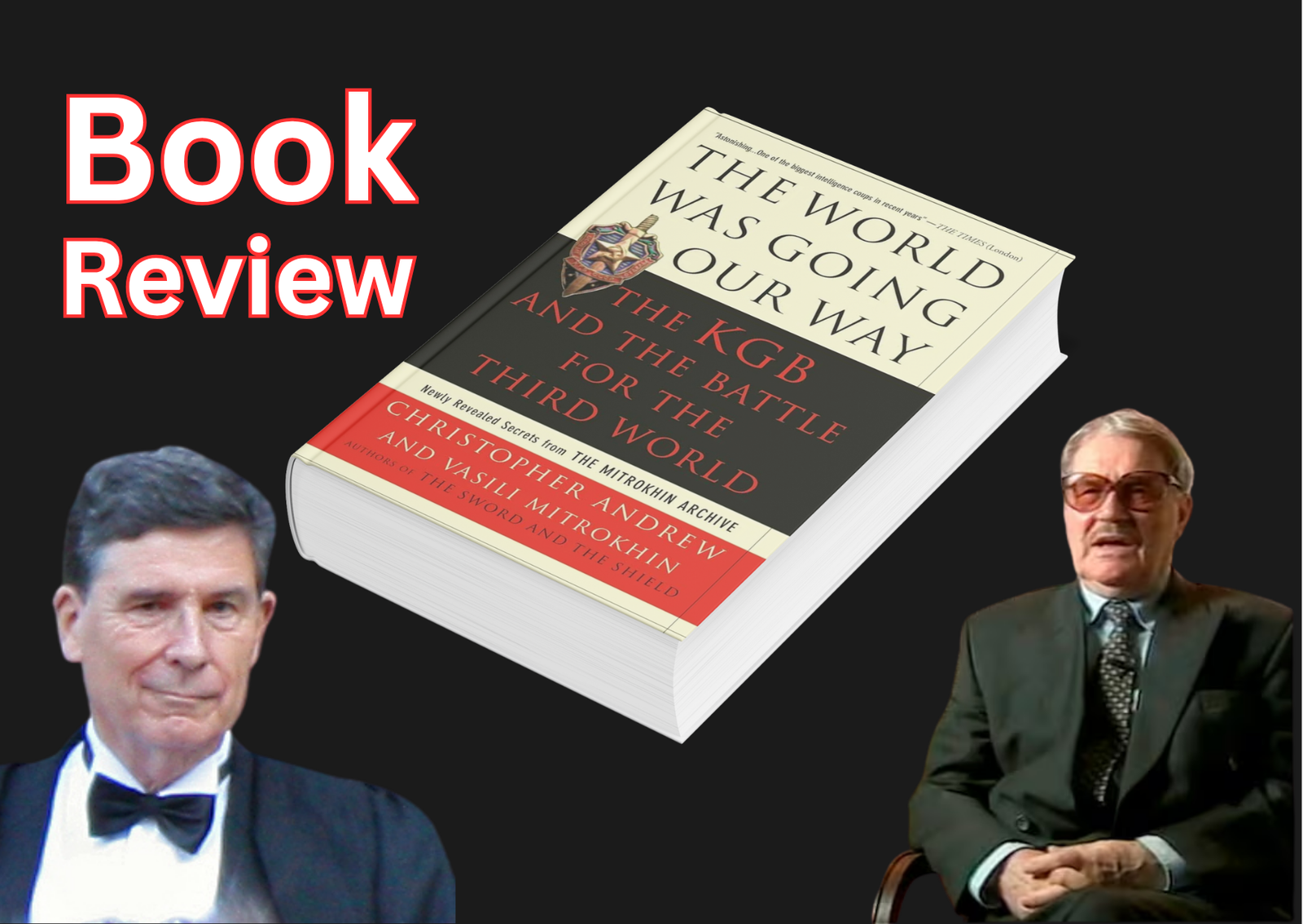
In the realm of strategic studies, few primary sources offer as unvarnished a look into the mechanics of Cold War espionage as the Mitrokhin Archive. Christopher Andrew and Vasili Mitrokhin’s The World Was Going Our Way: The KGB and the Battle for the Third World is not merely a historical recounting of Soviet intelligence operations; it is a masterclass in understanding how great powers project influence in the developing world. For readers in Pakistan, navigating a complex regional security environment, this book provides indispensable historical context. It sheds light on the intelligence architectures that shaped modern South Asia, particularly the historical dynamics between India, Pakistan, and the tragic crucible of Afghanistan.
The Ultimate Intelligence Coup To appreciate the book, one must understand its source. Vasili Mitrokhin, a senior KGB archivist, spent years secretly copying thousands of classified documents, eventually smuggling them out of Russia. Dubbed by The Times of London as “one of the biggest intelligence coups in recent years,” this archive provides an unprecedented, ground-level view of the KGB’s “active measures,” disinformation campaigns, and support for revolutionary movements across Asia, Africa, and Latin America.
The South Asian Chessboard: India, Pakistan, and the KGB One of the most compelling aspects of the book for a South Asian audience is its detailed exposition of the KGB’s operations in the subcontinent. The authors meticulously document the deep, institutionalized cooperation between the KGB and Indian intelligence agencies during the Cold War.
From a neutral, analytical standpoint, the archive reveals that Moscow viewed New Delhi as its primary strategic anchor in the region, providing extensive political and intelligence backing. Conversely, the KGB largely analyzed Pakistan through the prism of its alliances with the United States and China, often viewing Islamabad as a conduit for Western intelligence. Understanding this historical intelligence asymmetry is crucial for students of India-Pakistan relations. It provides the foundational blueprint for the strategic trust deficits, intelligence postures, and geopolitical alignments that continue to influence the subcontinent today.
The Afghan Crucible: Roots of Modern Conflict No review of this text would be complete without examining its coverage of Afghanistan. The KGB’s role in the 1979 Soviet invasion and its subsequent counter-insurgency operations offer a grim but vital case study in modern conflict and counterterrorism.
The book details the Soviet attempts to stabilize the communist government in Kabul and their brutal campaigns against the Mujahideen. For a Pakistani audience, this section is particularly resonant. It traces the genesis of the armed resistance that would eventually spill over the Durand Line, fundamentally altering Pakistan’s internal security landscape. The KGB’s failures in Afghanistan serve as a stark historical reminder of how foreign interventions in the region invariably create long-term blowback, giving rise to the complex counterterrorism and border security challenges that Pakistan navigates to this day.
Active Measures and the Precursor to Hybrid Warfare Beyond kinetic operations and espionage, the book excels in detailing “active measures”—the KGB’s use of disinformation, forged documents, and political influence operations to destabilize adversaries. In an era where hybrid warfare and information manipulation are dominant features of global conflict, the KGB’s playbook in the Third World serves as a historical mirror to contemporary information warfare. The tactics used to influence media and political narratives in the developing world during the Cold War are strikingly similar to the digital and psychological operations seen in modern geopolitical rivalries.
Conclusion The World Was Going Our Way is an essential addition to the library of any serious student of military affairs, intelligence, and strategic studies. While the Cold War has ended, the geopolitical fault lines it carved into the Third World remain deeply etched.
For readers in Pakistan, this book is much more than a history of Soviet espionage; it is a vital tool for decoding the historical DNA of South Asia’s current security dilemmas. By objectively analyzing the intelligence battles and strategic miscalculations of the past, we are far better equipped to understand, and navigate, the complex and often turbulent strategic realities of the present.