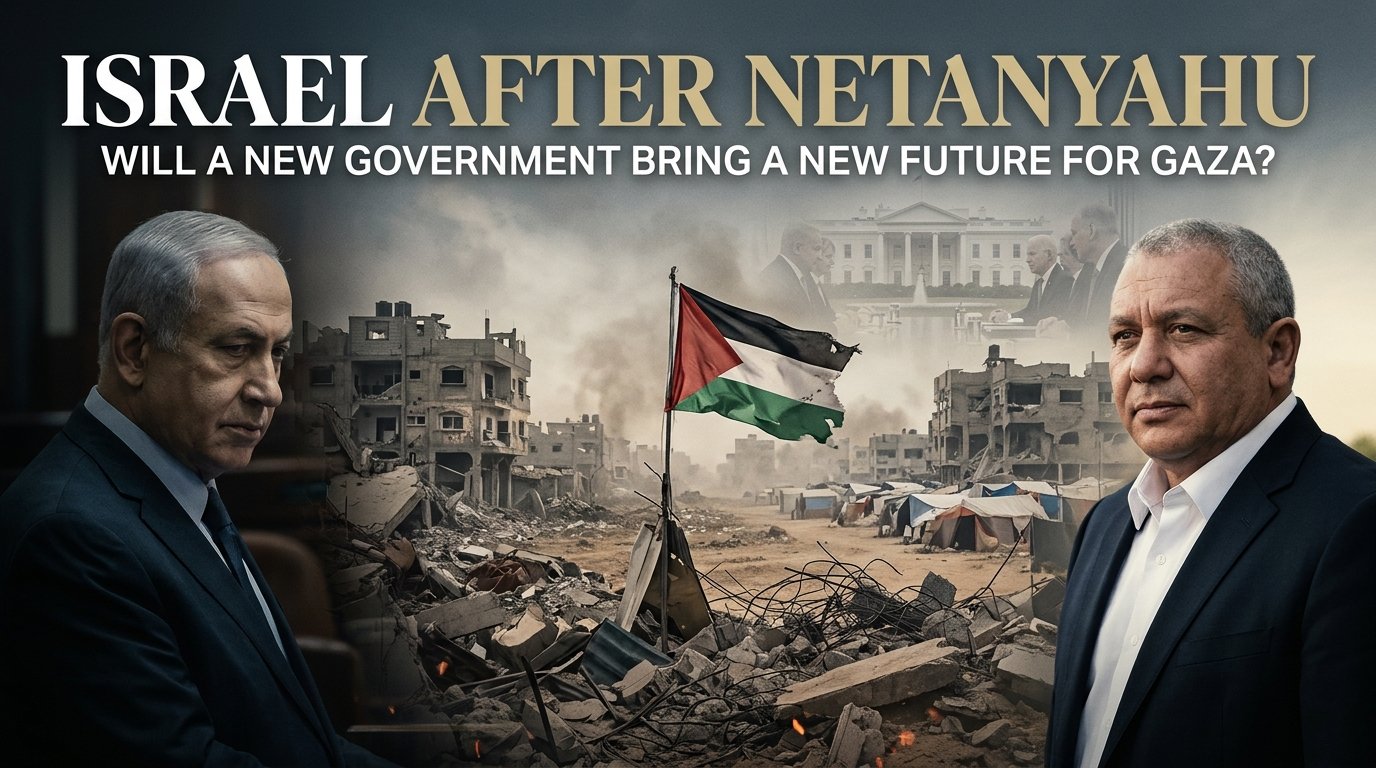
Israel’s political transition has opened a new chapter in the country’s domestic politics. But will the possible departure of Benjamin Netanyahu change the realities of Gaza, or will a new government continue the same strategic policies under different leadership?
(By Quratulain Khalid)
Introduction: A Change in Leadership, but What About Gaza?
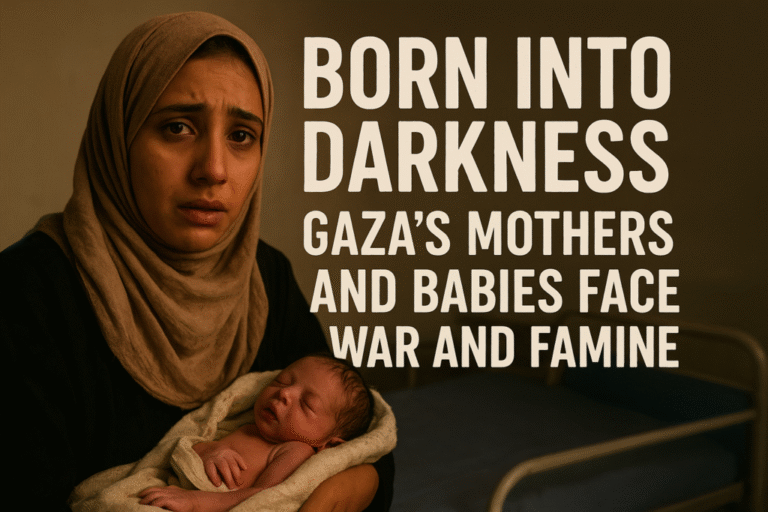
For Palestinians living in Gaza, the prospect of a change in Israel’s political leadership offers little immediate reason for optimism. The territory remains devastated by years of military operations, hundreds of thousands of people continue to face displacement, and the prospects for meaningful reconstruction remain uncertain. Even the ceasefire arrangements have failed to deliver the security and normality that Gaza’s population desperately needs.
Yet, an important political development has taken place in Israel.
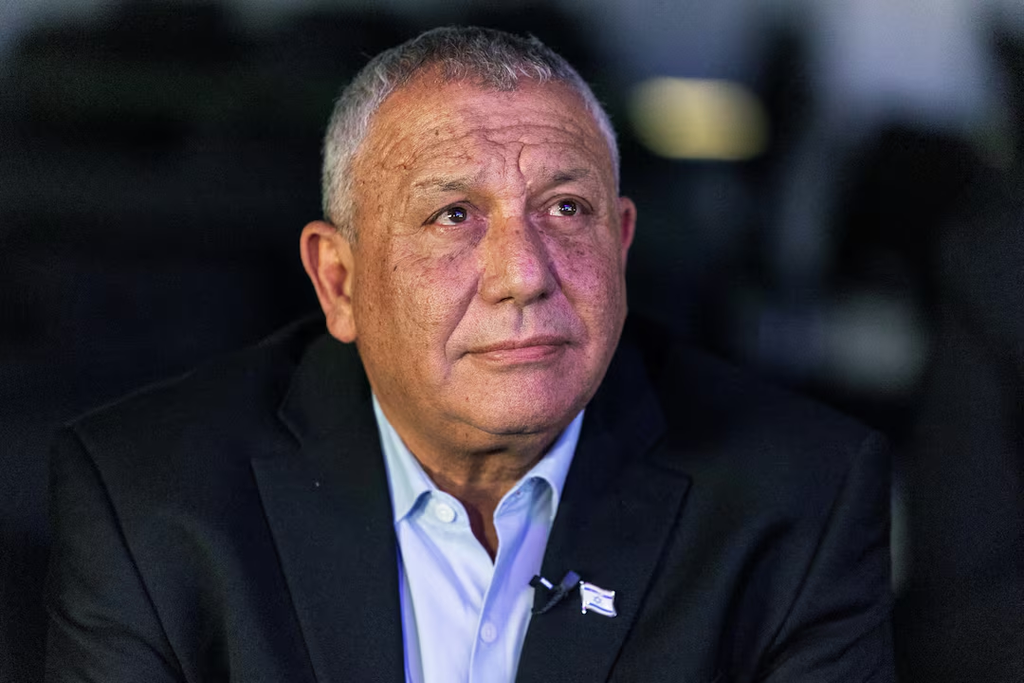
The parliamentary elections held on 27 October 2026 have weakened Prime Minister Benjamin Netanyahu’s position and opened the possibility of a new government. On 8 November, Israeli President Isaac Herzog formally tasked opposition leader Gadi Eisenkot, a former Chief of Staff of the Israel Defence Forces (IDF), with forming the next government.
Eisenkot now has 28 days to assemble a parliamentary majority, with the possibility of an extension of up to 14 additional days. Although his appointment represents a significant setback for Netanyahu, the formation of a new government is far from guaranteed. The opposition remains divided, and coalition negotiations involve considerable political complications.
For the Palestinians, however, the most important question is not who occupies the prime minister’s office in Jerusalem. It is whether the change in leadership will produce a fundamental change in Israel’s policies towards Gaza, the West Bank and Palestinian statehood.
There are reasons to question whether it will.
Israel’s Political Earthquake: Netanyahu Loses His Advantage
Benjamin Netanyahu has dominated Israeli politics for years, surviving political crises, corruption proceedings, military controversies and repeated challenges to his leadership. His latest electoral setback, however, has created an opportunity for his opponents to take power.
The October election produced a divided parliament without a clear governing majority. Netanyahu’s Likud remained the largest individual party, but his political camp failed to secure sufficient support to guarantee another government.
During consultations with the elected parliamentary factions, 67 members recommended Gadi Eisenkot to receive the mandate to form a government, while 46 recommended Netanyahu. Another seven did not recommend either candidate. On this basis, President Herzog selected Eisenkot.
It is important to understand that these figures represent parliamentary recommendations to the President, not the number of seats held by Eisenkot’s party.
Eisenkot’s challenge is to translate this political support into a functioning coalition. He must reconcile differences among parties that oppose Netanyahu but do not necessarily share the same positions on security, religious affairs, military service and relations with Arab political parties.
The question of cooperation with Arab parties is particularly complicated. Their parliamentary support could be important in securing a majority, but some of Eisenkot’s potential partners have resisted such an arrangement.
A government formed through these negotiations could therefore represent a significant political departure from Netanyahu’s administration. Nevertheless, its eventual composition will determine how much freedom Eisenkot has to change existing policies.
Who Is Gadi Eisenkot? A Military Commander, Not a Conventional Peace Politician
Gadi Eisenkot is not an ordinary opposition politician. He served for 41 years in the Israeli military and became the IDF’s 21st Chief of General Staff, a position he held from 2015 to 2019.
He subsequently entered politics and founded the Yashar party in 2025, presenting it as an alternative to Netanyahu’s leadership.
His political appeal is closely connected to his military experience, national security credentials and criticism of the Netanyahu government’s handling of the 7 October 2023 Hamas attack.
However, Palestinians and international observers should not automatically interpret his opposition to Netanyahu as support for a fundamentally different approach towards Palestine.
Eisenkot’s public positions indicate a security-oriented approach. He supports dismantling Hamas’s military capabilities and ending its political control of Gaza. He has also advocated retaining an Israeli security presence in parts of the territory.
More importantly, he has publicly rejected the prospect of establishing a Palestinian state under present circumstances, describing the two-state solution as unrealistic in the post-7 October political environment.
In an October 2026 interview, his position was reported as favouring the replacement of Hamas with an alternative Palestinian administration, while maintaining an Israeli security corridor and allowing reconstruction to proceed alongside partial disarmament.
These positions reveal an important distinction between Eisenkot and Netanyahu. They may disagree over the conduct of the war, political management and the implementation of an American-backed framework, but they have not demonstrated a fundamental agreement on Palestinian sovereignty.
In other words, a government led by Eisenkot could be different in style and political composition without necessarily offering Palestinians a substantially different political destination.
Netanyahu’s Gaza Legacy: A Territory Still Waiting for Normality
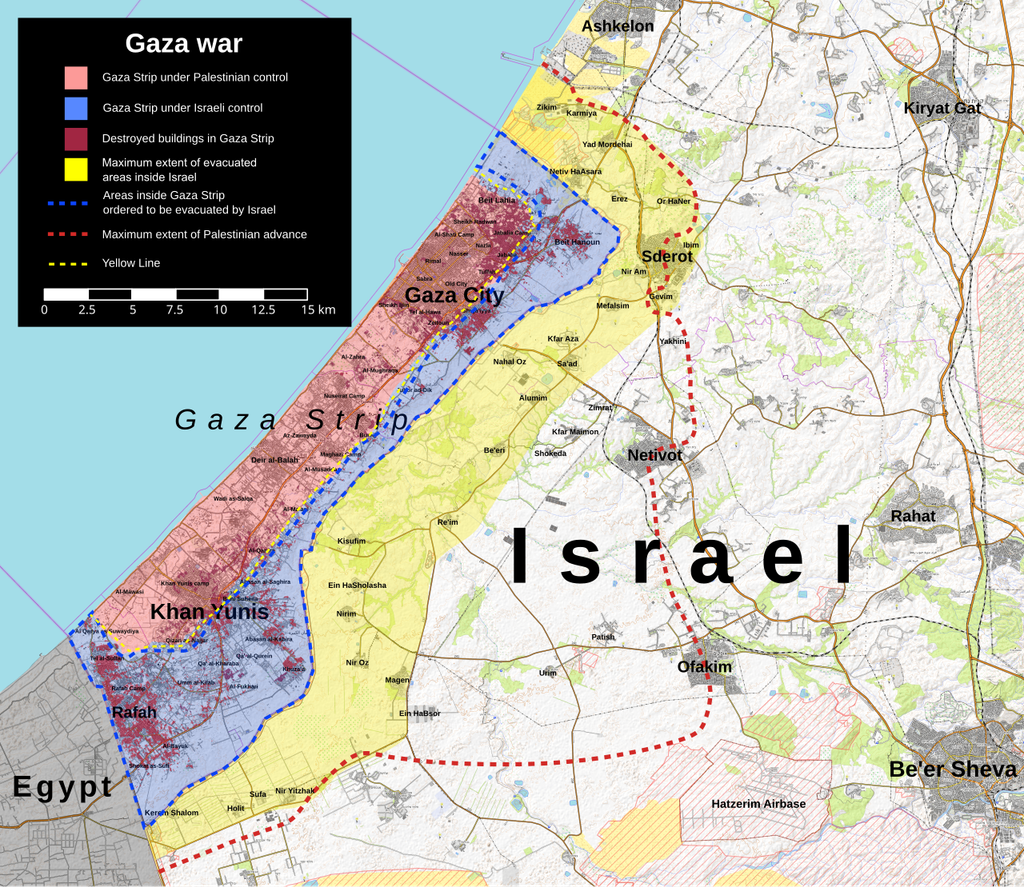
The scale of Gaza’s destruction remains one of the most consequential humanitarian and political challenges of our time.
Following the Hamas-led attacks of 7 October 2023, in which approximately 1,200 people were killed in Israel and hostages were taken into Gaza, Israel launched a large-scale military campaign against Hamas.
Israel justified its operations on the grounds of eliminating Hamas’s military capabilities, preventing another attack and securing the release of hostages.
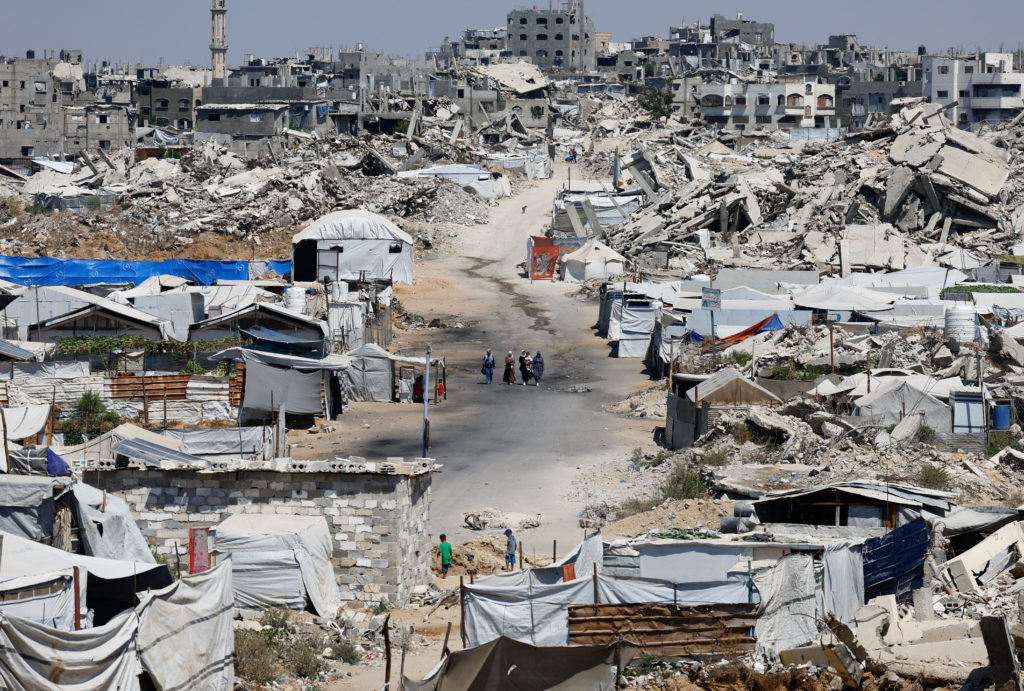
However, the subsequent military campaign devastated Gaza’s residential areas, public infrastructure, hospitals, educational institutions, water networks and essential services. The Palestinian population experienced repeated displacement, severe shortages and the collapse of much of its normal economic and social life.
The ceasefire announced in October 2025 created expectations of a new beginning. It facilitated the release of the remaining Israeli captives and Palestinian prisoners and detainees covered by the agreement, while establishing a framework for subsequent political and security arrangements.
Yet the ceasefire has not ended the violence or resolved the fundamental disagreements.
According to the United Nations Office for the Coordination of Humanitarian Affairs, Israeli attacks continued to cause civilian casualties after the ceasefire, while shortages of medical supplies, restrictions on essential materials and inadequate shelter continued to undermine humanitarian operations.
The situation has become particularly alarming with the arrival of winter.
Heavy rainfall during the first week of November flooded tens of thousands of tents sheltering displaced Palestinians. On 9 November, a sand embankment collapsed onto tents near Deir al-Balah, killing five people, including children, according to reports from humanitarian authorities.
For families who have already lost their homes, the arrival of winter has created another humanitarian emergency.
This is the reality that any incoming Israeli government will inherit.
Trump’s Twenty-Point Peace Plan: A Roadmap with Unresolved Questions
The future of Gaza is also closely connected to the peace framework advanced by US President Donald Trump.
The twenty-point plan, associated with the October 2025 ceasefire, was presented as a mechanism to end the conflict and establish a transitional political and security arrangement.
Its principal elements include:
- Ending military operations and implementing the ceasefire.
- Releasing hostages and addressing the issue of Palestinian prisoners.
- Establishing a Palestinian technocratic administration to manage civilian affairs.
- Disarming Hamas and other armed groups.
- Creating an international security arrangement.
- Facilitating an Israeli military withdrawal in phases.
- Initiating humanitarian assistance and large-scale reconstruction.
The proposed National Committee for the Administration of Gaza (NCAG) is intended to provide a Palestinian technocratic structure for civilian governance.
An international mechanism, associated with Trump’s proposed Board of Peace, is expected to oversee aspects of the transition and reconstruction process.
On paper, the framework addresses several essential requirements. It recognises that Gaza cannot remain indefinitely under military confrontation and that some form of civilian administration must be established.
Nevertheless, the central disagreements remain unresolved.
Israel insists that Hamas must be genuinely disarmed before a complete military withdrawal. Hamas, on the other hand, has maintained that Israeli military withdrawal, a halt to attacks and improved humanitarian access must precede any final agreement on weapons.
The disagreement is therefore not simply about disarmament. It concerns the sequence of implementation, the identity of the authority that will control Gaza, and the extent of Israeli military involvement after the transition.
This is where the peace framework faces its greatest political challenge.
A plan cannot succeed merely because its provisions are announced. It requires agreement from the parties concerned, credible international guarantees and a mechanism to ensure compliance.
The Most Important Question: Who Will Actually Govern Gaza?
Perhaps the most fundamental issue in the entire debate is the future political authority of Gaza.
There are several possible arrangements.
A Palestinian technocratic administration: A non-partisan Palestinian body could manage public services, reconstruction, healthcare, education and economic affairs under an agreed transitional framework.
A reformed Palestinian Authority: The Palestinian Authority could eventually assume responsibility for Gaza as part of a broader Palestinian political arrangement. This would require institutional reforms, political legitimacy and acceptance among Palestinians.
Continued Israeli security control: Israel could retain military control over strategic areas, borders and security arrangements while allowing a limited Palestinian civilian administration to function.
Internationally supervised administration: An international mechanism could support the transitional administration, coordinate reconstruction and oversee security arrangements.
Each option presents different political and practical difficulties.
The most serious concern is that Gaza could end up with an administration that is responsible for managing daily civilian problems but lacks the authority to determine its own security, borders, resources and political future.
Such an arrangement might reduce immediate instability without resolving the underlying conflict.
Palestinians cannot reasonably be expected to regard the reconstruction of buildings and roads as a complete political settlement if their right to political representation and self-determination remains unresolved.
Reconstruction is necessary, but it cannot substitute for sovereignty.
Will Eisenkot Change Israel’s Policy Towards Palestinians?
This is the central question that makes the recent Israeli political developments particularly significant.
Eisenkot has criticised Netanyahu’s handling of the Gaza war and has presented himself as a more disciplined and responsible alternative. His approach towards the Trump peace framework also suggests a willingness to explore a structured transition rather than rely indefinitely on military operations.
Nevertheless, his stated positions raise important questions. He lost one of his sons, Master Sergeant Gal Meir Eisenkot in Gaza Conflict. He was killed in action in northern Gaza on December 7, 2023, after an explosive device detonated near a tunnel shaft in Jabaliya.
First, he supports dismantling Hamas’s military capabilities and replacing its administration in Gaza. This is broadly consistent with one of Netanyahu’s principal declared war objectives.
Second, he favours retaining an Israeli security role in Gaza. The precise extent, duration and geographical scope of such a role remain crucial questions.
Third, his opposition to Palestinian statehood represents a significant obstacle to any comprehensive political settlement.
The distinction between removing Hamas from government and establishing a Palestinian political alternative is fundamental.
The first is a security and governance objective. The second requires a political vision.
If a new Israeli government succeeds in replacing Hamas with a Palestinian technocratic administration but refuses to recognise any meaningful Palestinian political aspirations, the result could be a temporary administrative arrangement rather than a lasting peace.
The international community will therefore need to examine the actual policies of the incoming government rather than judge it solely by its political differences with Netanyahu.
America, the Arab World and the International Community
The future of Gaza cannot be determined by Israeli domestic politics alone.
The United States remains the most influential external actor because of its military, diplomatic and economic relationship with Israel. President Trump’s administration has invested political capital in the twenty-point framework and the Board of Peace.
However, Washington faces a difficult balancing act.
It must maintain its relationship with Israel while persuading the Israeli leadership to accept arrangements that can deliver a credible political transition. At the same time, it must ensure that Palestinian interests are not reduced to a secondary consideration in negotiations conducted primarily between powerful external actors.
Egypt has a particularly important role because of its geographical position and its concerns about displacement across the Rafah border. Cairo has consistently opposed the forced displacement of Palestinians into Egyptian territory.
Qatar has played an important diplomatic role in negotiations involving Israel and Hamas, while Türkiye has also sought a greater role in regional diplomacy and reconstruction discussions.
Saudi Arabia’s position is equally significant. Riyadh has repeatedly linked meaningful progress towards Palestinian statehood with the prospects for normalisation between Saudi Arabia and Israel.
The European Union and United Nations also have important responsibilities in humanitarian assistance, international diplomacy and the promotion of a political settlement.
For Pakistan and the wider Muslim world, the issue carries particular significance. Pakistan has consistently supported Palestinian self-determination and the establishment of an independent Palestinian state based on internationally recognised parameters.
Nevertheless, diplomatic statements alone cannot determine the outcome.
Arab and Muslim countries will need to translate their political positions into coordinated diplomatic, humanitarian and reconstruction initiatives. They must also ensure that any international arrangement for Gaza has genuine Palestinian participation and legitimacy.
The International Law Dimension: Can Security Exist Without Palestinian Rights?
Any lasting settlement must address the legal and political status of the occupied Palestinian territories.
United Nations resolutions, international humanitarian law and the broader international legal framework recognise the importance of civilian protection, self-determination and the prohibition of acquiring territory by force.
The International Court of Justice, in its July 2024 advisory opinion, concluded that Israel’s continued presence in the Occupied Palestinian Territory is unlawful and that its policies and practices obstruct Palestinian self-determination.
The opinion has significant implications for any proposed political arrangement concerning Gaza and the West Bank.
Israel has consistently raised its security concerns, particularly following the 7 October attacks. Those concerns cannot simply be ignored in designing a viable settlement.
However, security considerations do not eliminate the rights of an occupied population.
A sustainable political arrangement must address both Israeli security and Palestinian political rights. It cannot depend indefinitely on military control, restricted movement and the absence of a recognised political future for Palestinians.
This is also why the two-state solution remains central to international diplomatic discussions, despite growing opposition and the enormous practical obstacles facing its implementation.
Without a credible political horizon, ceasefires may provide temporary pauses in hostilities but cannot resolve the underlying dispute.
Gaza’s Future: Three Possible Scenarios
The next few months will be particularly important in determining whether the political transition in Israel produces any meaningful change.
Three broad scenarios deserve consideration.
1. A negotiated political transition
Eisenkot succeeds in forming a coalition, and his government works with Washington and regional actors to implement the Gaza framework.
A Palestinian technocratic administration assumes civilian responsibilities, humanitarian access improves, Israeli forces withdraw in agreed stages and reconstruction begins.
This scenario would require difficult compromises on disarmament, security guarantees and the political authority of the Palestinian administration.
2. A continuation of managed instability
A new government is formed, but its coalition partners disagree over Gaza’s future.
Israel maintains a substantial security presence, reconstruction proceeds slowly and the Palestinian administration operates with limited authority.
The humanitarian situation may improve in certain areas, but the fundamental political questions remain unresolved.
3. Renewed confrontation and political deadlock
Coalition negotiations fail, Netanyahu returns to the political centre of negotiations or another election becomes necessary.
Alternatively, even a new government could fail to reach an agreement with Hamas over disarmament and Israeli withdrawal.
The result could be renewed military operations, further displacement and another prolonged period of uncertainty.
These are analytical possibilities, not predictions. The eventual outcome will depend on the decisions of the parties involved and the willingness of international actors to enforce agreed commitments.
Conclusion: A New Prime Minister Is Not Necessarily a New Beginning for Palestine
The political developments in Israel have created an opportunity for a reassessment of the country’s approach towards Gaza. Benjamin Netanyahu’s weakened position and Gadi Eisenkot’s mandate to form a government represent a significant moment in Israeli politics.
However, Palestinians should not be expected to equate a change of leadership with a change in national policy.
Eisenkot’s military background, his stated opposition to Palestinian statehood and his insistence on dismantling Hamas’s military capabilities suggest that important elements of Israel’s existing security doctrine may continue under a different government.
The real test will not be whether Eisenkot can replace Netanyahu. It will be whether his government can move beyond military objectives and participate in establishing a viable political future for Palestinians.
Gaza needs much more than a temporary ceasefire, a technocratic administration or an international reconstruction programme. It needs security, functioning institutions, economic recovery, freedom of movement and a legitimate political authority capable of representing its population.
Above all, Palestinians need a credible path towards exercising their right to self-determination.
The international community must also recognise that reconstruction without political rights cannot provide a lasting solution. Nor can a security arrangement that indefinitely excludes Palestinians from determining their own future.
Israel may be approaching a new political chapter. Whether that chapter brings a new future for Gaza remains an unanswered question.
The ultimate measure of this political transition will not be who governs Israel, but whether Palestinians finally gain the opportunity to govern their own future.