Riyadh has assembled a maritime alliance to secure the world’s most critical oil chokepoint. The Houthis have declared “full escalation.” And 8,000 Pakistani troops, fighter jets, and air defence batteries are already inside the kingdom — bound by a defence pact that could drag South Asia into the Middle East’s widening war.
(By Khalid Masood)
I. The Coalition
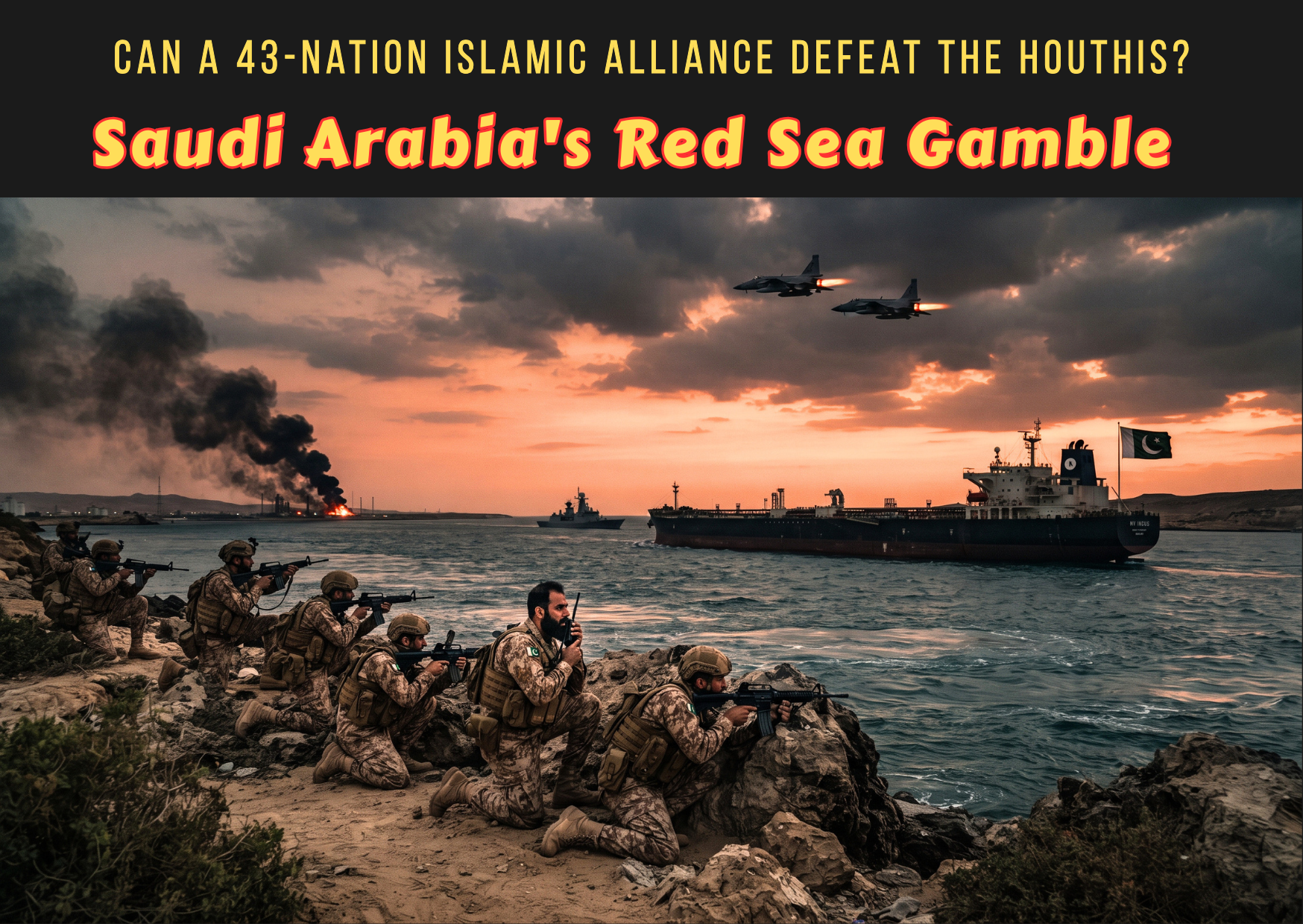
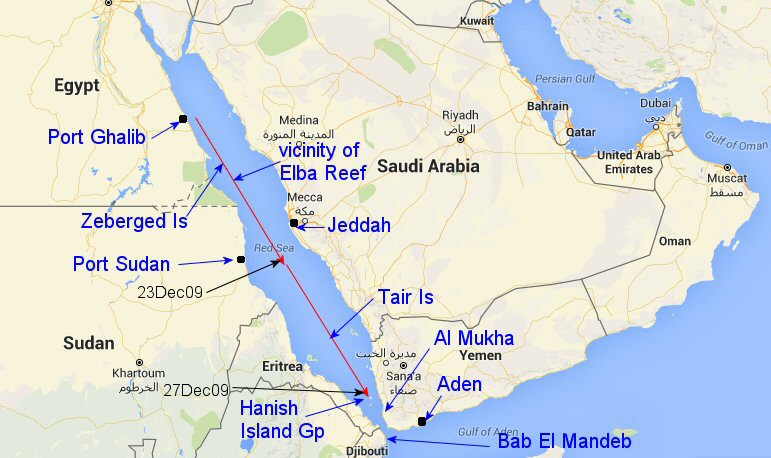
On 30 July 2026, Saudi Arabia did something it had not attempted since the ill-fated intervention of 2015: it declared war on the Houthis — not with ground troops, but with a flag. At a summit in Riyadh, Crown Prince Mohammed bin Salman unveiled the Multinational Maritime Defence Coalition, inviting representatives from 43 nations to secure the Bab al-Mandeb Strait, the Red Sea, and the Gulf of Aden. Fourteen countries signed the founding declaration: Saudi Arabia, Kuwait, Bahrain, Qatar, Pakistan, Türkiye, Egypt, Jordan, Yemen’s Saudi-backed Presidential Leadership Council government, Bangladesh, Nigeria, Sudan, Djibouti, and Somalia.
The coalition will be headquartered in Riyadh with a joint command and operational centre. The European Union, which already runs its own Aspides naval protection mission in the Red Sea, sent a delegation but conspicuously did not sign. That omission matters. It suggests that while Brussels wants the sea lanes open, it does not want to be drawn into a Saudi-led war against Iranian proxies.
Riyadh’s framing was careful. This was not a return to the 2015 Yemen intervention. This was a “maritime security architecture” — a multilateral shield rather than a unilateral sword. The Saudis have learned from eight years of quagmire that bombing Sana’a does not break the Houthis. But controlling the sea might strangle them.
The problem, as so often in this region, was that the enemy read the announcement before the ink dried.
II. “Full Escalation”
Hours before the Riyadh summit, Houthi leader Abdul-Malik al-Houthi appeared on al-Masirah television with a message that left no room for interpretation:
“The indicators show that the Saudi side is heading towards full escalation, and we will respond to its full escalation with full escalation.”
He was specific. Turkish aircraft sold to Saudi Arabia, he warned, would “turn into unsellable stock once they are shot down in Yemen.” He denied that his movement was an Iranian proxy, framing the conflict instead as a struggle for Yemeni sovereignty against foreign domination. Whether that claim holds water is debatable; what is not debatable is that the Houthis have the means to back up their threats.
The month of July 2026 had already turned the Saudi-Houthi cold war hot:
| Date | Event |
|---|---|
| 13 July | Saudi-led coalition airstrikes hit Sana’a International Airport — the first such strikes since the 2022 ceasefire. The Houthis respond with a ballistic missile attack on southern Saudi Arabia, intercepted by Saudi air defences. |
| 19 July | The Houthis announce a naval blockade on Saudi Arabia. |
| 23 July | Houthi missiles and drones target two Saudi oil tankers in the Red Sea. Brent crude hits $100 per barrel for the first time since May. |
| 25 July | Houthi projectiles strike a Saudi Aramco oil refinery in Jizan. |
| 26 July | Ship traffic through the Bab al-Mandeb Strait drops to its lowest level in months. |
The 2022 ceasefire is dead. The US-Israeli war against Iran, which began in February 2026, has reactivated the Houthis as Tehran’s southern front. In April, the group threatened to close Bab al-Mandeb entirely if any Gulf states joined the American and Israeli strikes against Iran. Saudi Arabia has now called their bluff. The question is whether the kingdom has also called its own.
III. The Tripwire Nobody Is Talking About
While diplomats in Riyadh shook hands, 8,000 Pakistani troops were already inside Saudi Arabia. They were not there for a military exercise. They were there because a defence pact — signed in haste, sealed in ambiguity — may have already been invoked.
The SMDA
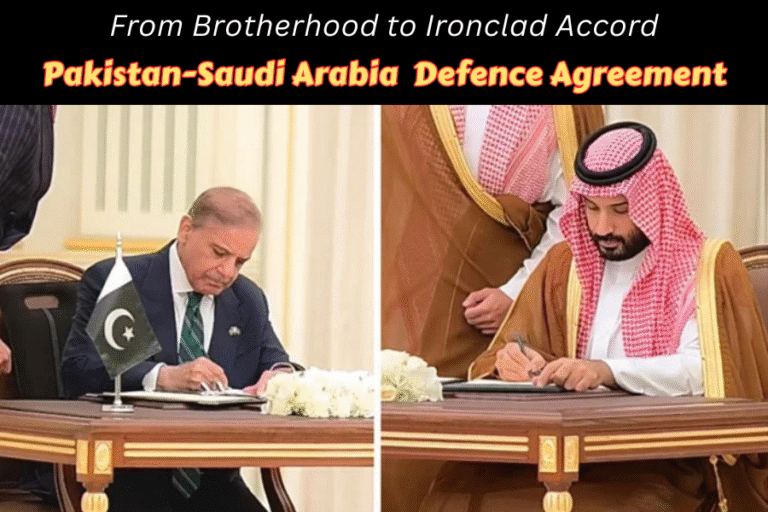
On 17 September 2025, at Al-Yamamah Palace, Mohammed bin Salman and Pakistani Prime Minister Shehbaz Sharif signed the Strategic Mutual Defence Agreement (SMDA). The Saudi Press Agency quoted the core clause in language that echoed Article 5 of the North Atlantic Treaty:
“Any aggression against either country shall be considered an aggression against both.”
Reuters, citing Pakistani officials privy to the confidential text, reported that the agreement provides for the deployment of up to 80,000 Pakistani troops to secure Saudi Arabia’s borders alongside Saudi forces. The Belfer Center at Harvard assessed the pact as “primarily a political signal of solidarity and strategic cooperation, rather than an unconditional war guarantee” — but the legal language leaves little room for nuance. If the Houthis are committing “aggression” against Saudi Arabia, Pakistan is treaty-bound to treat it as aggression against itself.
What Is Already There
Pakistan did not wait for a Houthi-specific request. During the US-Iran war, Saudi Arabia reportedly invoked the SMDA, and Islamabad deployed a substantial package:
| Asset | Quantity | Status |
|---|---|---|
| Combat troops | ~8,000 (some reports suggest up to 13,000) | Deployed to Saudi bases |
| JF-17 Thunder fighter jets | ~16 | Operational at King Abdulaziz Air Base since April 2026 |
| Drone squadrons | 2 | Operational, not training platforms |
| HQ-9 air defence battery | 1 | Chinese-origin system, Pakistani-manned |
These are not peacekeepers. These are combat-capable forces positioned inside a country that is now formally at war with the Houthis. The question is no longer whether Pakistan will send troops. The question is whether Riyadh will ask the troops already there to start shooting.
The Constitutional Brake
Pakistan’s 1973 Constitution contains a safeguard that Riyadh may find inconvenient. Article 245 stipulates that the Armed Forces operate under the direction of the Federal Government, and any overseas deployment — particularly offensive combat — requires explicit governmental authorisation. As one defence analyst in Islamabad noted:
“Offensive combat abroad without parliamentary consensus would trigger a constitutional crisis. This is Pakistan’s version of the constraint that prevents Japan from sending warships under Article 9.”
The tiers of possible Pakistani involvement break down as follows:
Table
| Tier | Activity | Legal Status | Political Feasibility |
|---|---|---|---|
| 1 | Intelligence sharing, advisory roles, training | Already occurring; no new authorisation required | High |
| 2 | Minesweeping, logistical support, air defence of Saudi bases | Feasible under existing cabinet authority | Moderate–High |
| 3 | Defensive deployment (protecting Saudi ports and infrastructure) | Requires explicit cabinet authorisation | Moderate |
| 4 | Offensive combat operations inside Yemen | Constitutionally and politically fraught | Very Low |
The Five-Way Vise
Pakistan is caught in a strategic trap with no obvious exit. Consider the constraints:
First, the Iran border. Pakistan shares a 909-kilometre frontier with Iran across Balochistan — some of the most contested terrain in South Asia, where Iranian and Pakistani forces already exchange fire over militant safe havens. If Pakistan attacks the Houthis, Iran’s closest proxy, Tehran can retaliate against Pakistan overland within hours. No navy is required. No strait needs to be closed. This is not a theoretical risk; it is a geographic certainty.
Second, the mediator paradox. Pakistan is currently the lead mediator in the US-Iran war. It brokered the Islamabad Memorandum and continues to host talks between Washington and Tehran. A mediator cannot simultaneously become a combatant against one party’s proxy. To do so would destroy Islamabad’s diplomatic credibility in an instant.
Third, the 2015 precedent. When Saudi Arabia asked Pakistan to join the Yemen intervention in 2015, Pakistan’s parliament voted no. The refusal soured relations with Riyadh for years. Mohammed bin Salman has not forgotten. The 2025 SMDA was designed, in part, to ensure that Pakistan could not say no again.
Fourth, economic dependency. Pakistan is currently rationing fuel due to the Hormuz crisis. QR codes at petrol stations, odd-even licence plate restrictions, and a four-day working week mandated to conserve diesel are not abstract policy measures — they are symptoms of an economy that cannot survive without Saudi oil and remittances. Saying no to Riyadh risks economic strangulation.
Fifth, domestic security. Pakistan is already fighting on multiple fronts: a Baloch insurgency, protests in Pakistan-administered Kashmir, and tensions along the Afghanistan border. Diverting troops to Yemen while Balochistan burns is a strategic risk no Pakistani general wants to take.
The Most Likely Scenario
Islamabad’s response, when it comes, will be deliberately ambiguous. The official line will echo what the Pakistani foreign ministry has already said: “Pakistan will be there whenever Saudi needs assistance.” The word “assistance” is doing more work than any diplomatic term in the Urdu language.
The probable outcome is that Pakistan expands its defensive footprint — more air defence patrols, more surveillance, more troops guarding Saudi infrastructure — but stops short of offensive combat inside Yemen. This satisfies Riyadh’s need for a visible alliance without triggering Iranian retaliation across the Balochistan border.
There is one more layer of ambiguity that neither side will clarify: the nuclear question. The SMDA does not explicitly extend Pakistan’s nuclear umbrella to Saudi Arabia. But the ambiguity is the point. If the Houthis — or Iran — believe that Pakistani nuclear deterrence covers the kingdom, that is a deterrent win for Riyadh even if Islamabad never confirms it.
IV. The Geo-Economic Architecture
This is not merely a Yemen story. It is a story about who controls the chokepoints of the global economy.
Bab al-Mandeb handles roughly 12 per cent of global trade and 8 per cent of seaborne oil. Hormuz, 2,500 kilometres to the east, handles roughly 20 per cent of global oil shipments. For the first time in modern history, both chokepoints are under simultaneous threat from Iranian-aligned forces. The economic consequences are already visible: oil at $100 per barrel, shipping insurance rates spiking, and the diversion of tankers around the Cape of Good Hope — adding weeks and millions of dollars to every journey.
The Saudi coalition is not just about defeating the Houthis. It is about establishing a Global South security architecture to replace the American-led order that has frayed since 2025. The inclusion of Bangladesh, Nigeria, and Sudan alongside Gulf and Middle Eastern powers signals that Riyadh is building a bloc, not just an alliance. Türkiye’s participation is equally significant: Ankara is already selling Bayraktar drones and fighter aircraft to the Saudis, and al-Houthi’s threat to shoot them down suggests he knows where the hardware is coming from.
The EU’s refusal to sign, despite running its own Aspides mission, reveals a transatlantic divergence. Europe wants the sea lanes open. It does not want to be seen joining a Saudi war against Yemeni rebels. That distinction may prove untenable if the shooting starts.
V. The Internal Yemen Context
The coalition declaration was signed by Yemen’s Presidential Leadership Council (PLC) government — the Saudi-backed faction that pushed back the UAE-backed Southern Transitional Council in January 2026. But the PLC still lacks a unified armed force, faces economic collapse, and controls only fragments of the country.
The Houthis, meanwhile, have tightened their grip on the north. They restrict aid groups, detain United Nations staff, and have forced the UN to relocate its main offices to Aden. The humanitarian catastrophe is staggering: more than 56 million people across Eastern and Southern Africa require assistance, and Yemen itself remains one of the world’s worst humanitarian crises.
The coalition does not solve Yemen’s civil war. It may deepen it by legitimising the PLC and isolating the Houthis further. A maritime blockade works only if the blockaded party has something to lose. The Houthis, who have survived eight years of war, siege, and bombardment, have shown repeatedly that they are willing to let Yemen starve before they surrender.
VI. The Tightrope
Pakistan is already inside the war zone. Its troops, jets, drones, and air defence batteries are on Saudi soil. The question is not whether Pakistan will respond to a Saudi request for help. The question is how far that response will go before it crosses the line from assistance to combat.
The SMDA creates a legal tripwire. If the Houthis strike a Saudi port, refinery, or military base while Pakistani troops are stationed there, Riyadh can frame it as “aggression” triggering collective defence. But Pakistan will try to keep any response defensive and deniable — because crossing into offensive combat means war with Iran’s proxy, Iranian retaliation in Balochistan, the loss of mediator status in the US-Iran war, and a constitutional crisis at home.
A nuclear-armed South Asian power is already deployed inside a Middle Eastern war, bound by a defence pact it cannot fully honour without destroying its own strategic position. That is not an alliance. That is a trap.
And the Houthis know it. On 30 July, al-Houthi did not just threaten Saudi Arabia. He threatened every nation that signed the Riyadh declaration. Among them was Pakistan — a country that has spent decades trying to avoid being pulled into other people’s wars, and may now discover that a signature on a piece of paper in September 2025 was the moment the trap snapped shut.
The Red Sea is getting crowded. And the tripwire is already armed.