(By Khalid Masood)
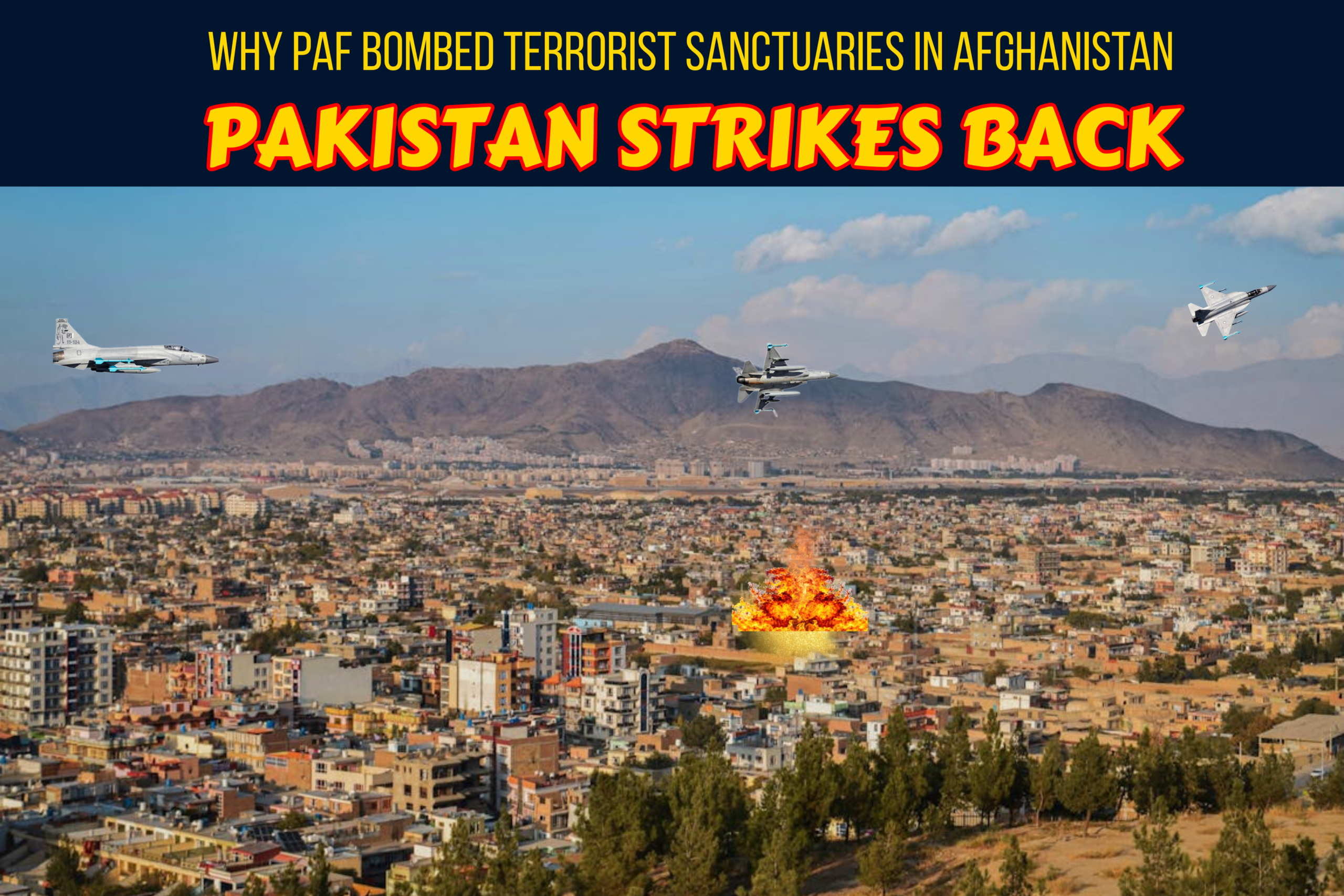
The last night (16-17 March 2026) airstrikes of Pakistan Air Force inside Afghanistan have sparked intense regional debate, with the Taliban government condemning the operations as violations of sovereignty and alleging civilian harm at protected sites. Yet, to view these strikes solely through the lens of diplomatic friction is to overlook the security imperatives that compelled them. From Pakistan’s perspective, these were not acts of aggression but defensive, intelligence-based operations necessitated by an escalating pattern of cross-border terrorism that Islamabad could no longer ignore.
The immediate catalyst was not a single incident, but a sustained campaign. In early March 2026, the Tehrik-e-Taliban Pakistan (TTP) launched “Operation Khyber,” a coordinated wave of assaults across multiple districts of Khyber Pakhtunkhwa targeting security forces and civilian spaces. Pakistani intelligence assessments indicate these operations were planned and staged from sanctuaries in eastern Afghanistan—a reality that persisted despite repeated diplomatic appeals and intelligence sharing since 2021. When diplomacy fails to curb cross-border terrorism that kills citizens, the state retains the inherent right to self-defence under Article 51 of the UN Charter. This article examines the verified facts behind Pakistan’s strategic decision, addresses contested claims regarding target selection, and outlines the conditions necessary for de-escalation and lasting regional stability.
I. The Immediate Trigger: Bajaur Under Fire
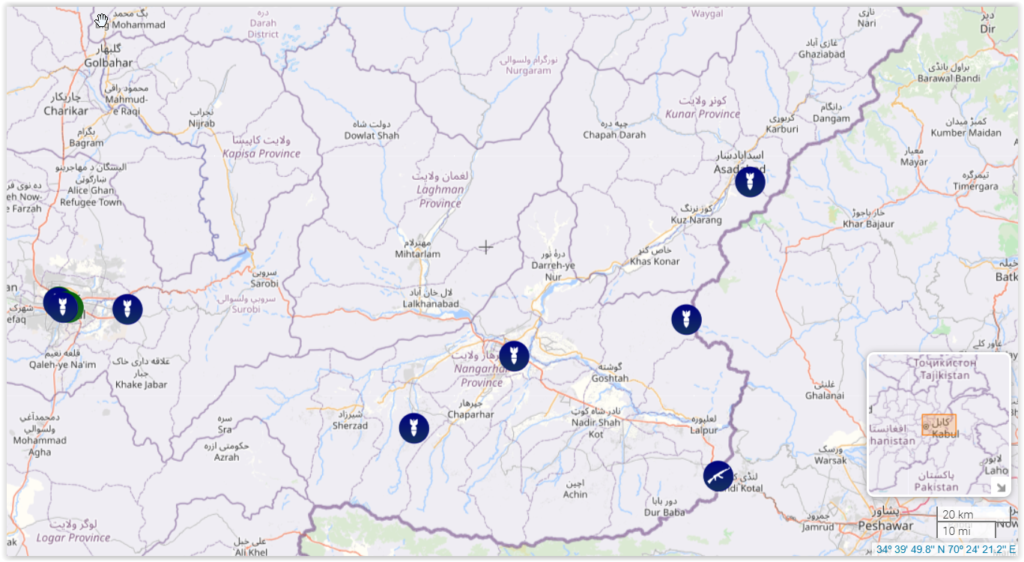
The direct catalyst for last night’s airstrikes was a brutal, coordinated attacks by the Tehrik-e-Taliban Pakistan (TTP). In early March 2026, militants of the Tehrik-e-Taliban Pakistan (TTP)—designated by the Pakistani state as Fitna al Khwarij—launched a sustained wave of coordinated assaults under “Operation Khyber” across multiple districts of Khyber Pakhtunkhwa, including North Waziristan, South Waziristan, Peshawar, Bannu, Tank, and Lakki Marwat . According to Pakistani security assessments, these attacks targeted joint security checkpoints, patrol routes, and forward posts in a deliberate campaign to destabilize the region. While specific casualty figures for each incident remain under official review, the cumulative toll of this coordinated offensive has included the martyrdom of numerous security personnel and civilian casualties, alongside significant damage to critical infrastructure. Forensic analysis of recovered weapons, communications equipment, and tactical patterns indicates that these operations were planned, staged, and logistically supported from sanctuaries in eastern Afghanistan—a pattern consistent with previous TTP cross-border incursions. Despite repeated diplomatic appeals and intelligence sharing since the Taliban’s return to power in 2021, the Afghan Taliban government has not taken verifiable action to dismantle these militant networks. For Pakistan, this escalation represented a clear threshold: when diplomacy fails to curb cross-border terrorism that kills Pakistani citizens, the state retains the inherent right to self-defence under Article 51 of the UN Charter.
For Pakistan, these were not isolated incidents. It was the latest in a long series of cross-border attacks that have killed over 2,000 Pakistani security personnel and civilians since the Taliban’s return to power in 2021. Despite repeated diplomatic appeals, intelligence sharing, and a Qatar-mediated ceasefire in late 2025, the Afghan Taliban government has not taken credible, verifiable action to curb TTP activities on its soil.
As Defence Minister Khawaja Asif stated: “Pakistan does not seek war with Afghanistan or its people. We seek security. When a neighbor harbors terrorists who murder our children, we have a duty to act. The choice to de-escalate rests with those who enable these attacks.”
II. The Broader Security Context: A Coordinated Campaign in Balochistan
Last month, Pakistan faced a coordinated wave of terrorist attacks across Balochistan, orchestrated by the Balochistan Liberation Army (BLA)—a designated terrorist organization with reported external support. Multiple cities and towns—including Quetta, Turbat, Gwadar, and Khuzdar—were targeted in near-simultaneous assaults on security forces, infrastructure, and civilian spaces.
| Attack Location | Date | Target | Casualties | Claimed By |
|---|---|---|---|---|
| Quetta | Feb 2026 | Security convoy | 12 soldiers killed | BLA |
| Turbat | Feb 2026 | CPEC infrastructure site | 8 civilians injured | BLA |
| Gwadar | Feb 2026 | Port security perimeter | 3 security personnel killed | BLA |
| Khuzdar | Feb 2026 | Police station | 5 officers killed | BLA |
Source: Pakistan Ministry of Interior, ISPR press releases
While the BLA’s stated grievances are local, Pakistani security officials have long warned that terrorist groups operate across porous borders, leveraging safe havens in neighboring Afghanistan to plan, train, and launch attacks with impunity. The Balochistan assaults underscored a troubling reality: when one frontier is pressured, militants shift tactics and geography—but the threat to Pakistani lives remains constant.
III. Pakistan’s Strategic Rationale: Self-Defence Under International Law
In this context, Pakistan’s military leadership faced a clear choice: continue absorbing attacks while hoping for diplomatic breakthroughs, or exercise the inherent right to self-defence recognized under Article 51 of the UN Charter.
The decision to conduct precision airstrikes against confirmed TTP and BLA infrastructure inside Afghanistan was taken with the following principles:
| Principle | Application |
|---|---|
| Intelligence-Based Targeting | Strikes limited to verified militant camps, command nodes, and logistics hubs—not civilian infrastructure |
| Proportionality | Scale of response calibrated to degrade militant capability, not inflict collective punishment |
| Distinction | Efforts made to minimize civilian harm through precision munitions and timing of strikes |
| Transparency | Pakistan publicly announced operations, shared target coordinates with international partners, invited independent verification |
| Diplomatic Off-Ramp | Reiterated willingness to resume dialogue if Taliban provide “credible, verifiable guarantees” |
Legal Basis: Article 51 of the UN Charter affirms the “inherent right of individual or collective self-defence if an armed attack occurs against a Member of the United Nations.” Pakistan’s position is that cross-border terrorist attacks constitute “armed attacks” for the purposes of this provision—a view supported by precedent in international law (e.g., US strikes against Al-Qaeda in Afghanistan post-9/11).
IV. Addressing the “Mental Hospital” Claim: ISPR’s Clarification
A central point of contention in recent reporting involves the Taliban’s allegation that Pakistan Air Force strikes hit a “mental hospital” in Afghanistan, causing civilian casualties. Pakistan’s military media wing, the Inter-Services Public Relations (ISPR), has issued a detailed clarification to counter this narrative.
According to ISPR’s official statement:
“The facility struck was not a mental health institution, but a verified suicide bomber training camp and ammunition depot operated by terrorist networks. Continuous secondary explosions observed during and after the strike—captured on surveillance footage—confirm the presence of significant weapons stockpiles. A civilian medical facility would not produce such blast patterns.”
ISPR further alleged that the site was used to:
- Recruit and indoctrinate vulnerable individuals, including those with mental health conditions or substance dependencies
- Administer intoxicants and extremist ideology to prepare suicide attackers
- Store explosives, weapons, and communications equipment for cross-border operations
The Evidence Cited:
- Surveillance imagery showing blast sequences consistent with ammunition detonation
- Intercepted communications linking the facility to TTP/BLA command structures
- Human intelligence indicating the site’s use for militant training, not medical care
Verification Challenges: Independent access to the site remains restricted due to ongoing security conditions. While the Taliban deny militant use of the facility, and some local residents describe it as a medical center, ISPR maintains that its intelligence—corroborated by technical surveillance—confirms its military function.
Broader Context: This incident reflects a recurring tactic in asymmetric warfare: militant groups deliberately embed themselves within civilian infrastructure to exploit humanitarian protections and deter counter-terror operations. Pakistan’s military has long argued that such exploitation complicates precision targeting and increases the risk of collateral harm—a challenge faced by counter-terror forces worldwide.
V. Target Selection: What Pakistan Struck vs. What the Taliban Claim
| Claimed Targets (Pakistan/ISPR) | Taliban/Local Claims | Independent Assessment |
|---|---|---|
| TTP/BLA militant camps and hideouts | Civilian homes struck in Nangarhar | Satellite imagery reviewed by analysts indicates many strikes hit military-related sites; civilian harm cannot be ruled out |
| Taliban brigade headquarters, ammunition depots | Religious seminaries damaged | UNAMA reports 69 civilians killed, 136 injured; verification limited by access constraints |
| Border outposts, logistics bases | Healthcare facilities affected | 20+ health centers suspended operations per WHO; causation (direct strike vs. collateral disruption) disputed |
| Command-and-control centers | “Mental hospital” destroyed | ISPR cites secondary explosions as evidence of ammunition storage; no independent confirmation possible at this time |
Sources: ISPR press releases, UNAMA, WHO, Taliban statements, satellite imagery analysis
Pakistan’s Position: Every effort was made to minimize civilian harm through precision targeting, timing of strikes (night operations to reduce civilian presence), and post-strike damage assessment. When civilian casualties occur—as they tragically do in any conflict—the responsibility lies with those who embed military assets within protected sites.
VI. The Human Cost: Pakistan’s Perspective
While Afghan officials report civilian casualties—a tragedy Pakistan deeply regrets—the broader human cost must be viewed in full context:
| Metric | Pakistan | Afghanistan |
|---|---|---|
| Security Personnel Killed (2021-2026) | ~1,500 | Not publicly disclosed |
| Civilians Killed in Terror Attacks | ~500+ (TTP/BLA) | Uncertain; conflict-related casualties ongoing |
| Internally Displaced Persons | ~300,000 (KP/Balochistan) | ~115,000 (per UNHCR, cross-border fighting) |
| Refugees Hosted | ~1.3 million Afghan refugees | ~600,000 Pakistani refugees (historical) |
| Economic Impact | CPEC disruptions, security spending | Infrastructure damage, trade disruption |
Sources: Pakistani Ministry of Interior, UNHCR, World Bank, UNAMA
For Pakistan, the equation is stark: every day of inaction costs Pakistani lives. Every diplomatic appeal unanswered emboldens militants. Every strike avoided today may require a larger response tomorrow.
Pakistan’s Humanitarian Record: Despite its own security and economic challenges, Pakistan hosts over 1.3 million Afghan refugees—the largest refugee population in the world. This humanitarian burden is borne voluntarily, reflecting Pakistan’s commitment to regional stability and Islamic solidarity.
VII. Diplomatic Efforts: What Pakistan Has Tried
Before resorting to military action, Pakistan exhausted diplomatic avenues:
| Initiative | Date | Outcome |
|---|---|---|
| Intelligence Sharing with Taliban | 2021-2025 | Limited cooperation; Taliban deny TTP presence |
| Qatar-Mediated Ceasefire | Oct 2025 | Collapsed within weeks; TTP attacks resumed |
| Direct Talks with Taliban Leadership | Multiple, 2024-2026 | No verifiable action against TTP infrastructure |
| **Regional Diplomacy **(China, Iran, Russia) | Ongoing | Calls for dialogue; no enforcement mechanism |
| UN Appeals | Feb 2026 | General calls for de-escalation; no binding resolution |
Pakistan’s Current Demand: “Credible, verifiable guarantees” that Afghan soil will not be used for attacks against Pakistan. This includes:
- Dismantling TTP/BLA command structures in eastern Afghanistan
- Preventing cross-border movement of militants and weapons
- Allowing joint border monitoring mechanisms
- Prosecuting individuals responsible for attacks on Pakistani territory
Until these conditions are met, Pakistan reserves the right to take necessary, proportionate measures to protect its citizens. This is not a threat—it is a responsibility.
VIII. Regional Implications: What This Means for Pakistan and the GCC
Pakistan’s Strategic Calculus
From Pakistan’s perspective, the stakes extend beyond immediate security:
| Factor | Pakistani Concern |
|---|---|
| CPEC Security | Terrorist attacks on China-Pakistan Economic Corridor infrastructure threaten regional connectivity and billions in investment |
| Border Sovereignty | The Durand Line dispute complicates security coordination; Pakistan seeks recognition of its territorial integrity |
| Regional Stability | Escalation with Afghanistan risks destabilizing Pakistan’s western frontier, already strained by internal security challenges |
| Great Power Dynamics | Pakistan navigates relationships with US, China, Russia, and GCC states; cross-border conflict complicates this balancing act |
The GCC Perspective
Gulf Cooperation Council states watch these developments closely:
- Saudi Arabia & UAE: Seek regional stability for economic diversification; concerned about spillover effects
- Qatar: Mediation role creates diplomatic opportunity but also exposure to criticism from all sides
- Common Interest: All GCC states oppose terrorism and support sovereign borders—but prefer diplomatic solutions to military escalation
Professional Assessment: Having observed coalition operations and regional diplomacy, It has been noted that middle powers like Pakistan and GCC states thrive when great powers provide predictable security frameworks. When those frameworks fracture, smaller states must hedge, diversify, and assert strategic autonomy—a rational response, not disloyalty.
IX. The Path Forward: What Pakistan Seeks
Pakistan’s demands are clear, consistent, and achievable:
- Action, Not Words: The Taliban must demonstrably dismantle TTP/BLA infrastructure on Afghan soil—not issue statements.
- Border Security Cooperation: Joint mechanisms to monitor and secure the Durand Line, respecting Pakistan’s sovereignty.
- Regional Dialogue: Inclusive talks involving China, Iran, and Central Asian states to address cross-border terrorism holistically.
- Humanitarian Safeguards: Coordination to minimize civilian harm and protect displaced populations on both sides.
- Verification Mechanisms: Third-party monitoring (e.g., UN, OIC) to build trust and confirm compliance.
Pakistan’s Offer: Should the Taliban meet these conditions, Pakistan is prepared to:
- Halt military operations immediately
- Resume diplomatic engagement at the highest levels
- Provide economic and humanitarian assistance to Afghanistan
- Support Afghanistan’s integration into regional trade and connectivity initiatives
This is not an ultimatum. It is an invitation to choose peace over perpetual conflict.
X. Conclusion: The Soldier’s Perspective
The decision to conduct military operations across a border is never taken lightly, particularly when civilian safety is a paramount concern. However, the calculus for Pakistan is stark: every day of inaction against terrorist sanctuaries costs Pakistani lives. The recent airstrikes were not a declaration of war against Afghanistan or its people, but a targeted measure against militant networks that have chosen to operate from Afghan soil against Pakistani targets. The responsibility for civilian risk lies not with those who strike terrorist hideouts, but with those who embed military assets within protected sites and harbor perpetrators of violence.
The path forward remains clear. The Taliban government faces a definitive choice: continue harboring groups like the TTP and BLA and bear the consequences of renewed hostility, or take credible, verifiable action to dismantle these networks and open the door to peace. Pakistan has exhausted diplomatic avenues and extended offers of economic cooperation and regional integration. What remains is the need for action, not words. For Pakistan, the principle is non-negotiable: We will protect our citizens. We will defend our sovereignty. And we will always prefer peace—but never at the cost of our people’s security. The ball now lies in Kabul’s court to decide whether the future holds continued conflict or a return to stability.