(By Khalid Masood)
From the outside looking in, the transformation within the Pentagon’s National Military Command Center over the past year represents more than routine personnel rotation. It signals a fundamental recalibration of the relationship between political authority and military professionalism—a dynamic that every officer who has served in uniform understands, but few outside the profession truly grasp.
Having served in the Pakistan Army for nearly three decades, completed the Staff Course at the Command and Staff College, Quetta, commanded troops in the field, and held various staff appointments at GHQ and formation headquarters, I have witnessed different models of military advice under political pressure. My four-year tenure at the Inter-Services Public Relations (ISPR) directorate afforded me a unique tri-service perspective on strategic communication, diplomacy, and civil-military dynamics. Having interacted directly with US forces during the critical 2004-2005 period from Pakistan, and remaining an avid student of military strategy, public relations and diplomacy, I see patterns in Washington that bear uncomfortable similarities to scenarios I have observed elsewhere—patterns that rarely end well for strategic coherence
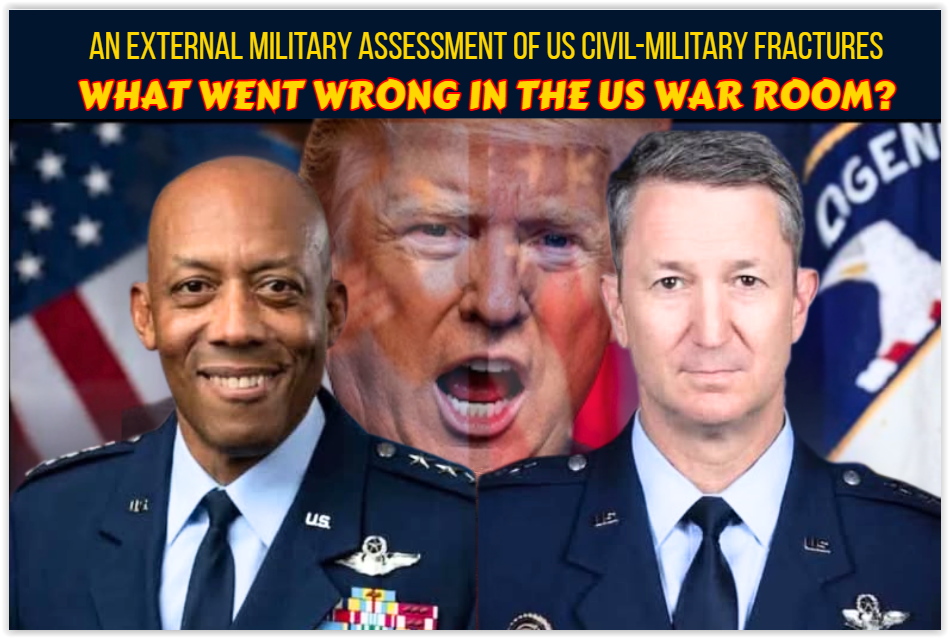
This is not an American story alone. It is a cautionary tale about what happens when institutional memory is traded for political alignment, and when the war room becomes a mirror of political preference rather than a crucible of strategic debate. As the United States faces escalating tensions with Iran, the question is not merely academic for regional partners like Pakistan and the GCC states: Can a military stripped of its senior institutional knowledge still deliver sound strategic advice?
I. The Reshuffle: A Professional Military Perspective
Documented Leadership Changes Through an Officer’s Lens
Since January 2025, the Trump administration has conducted one of the most significant reshuffles of senior military leadership in recent American history. From a professional military standpoint, several aspects warrant scrutiny:
| Position | Change | Date | Professional Concern |
|---|---|---|---|
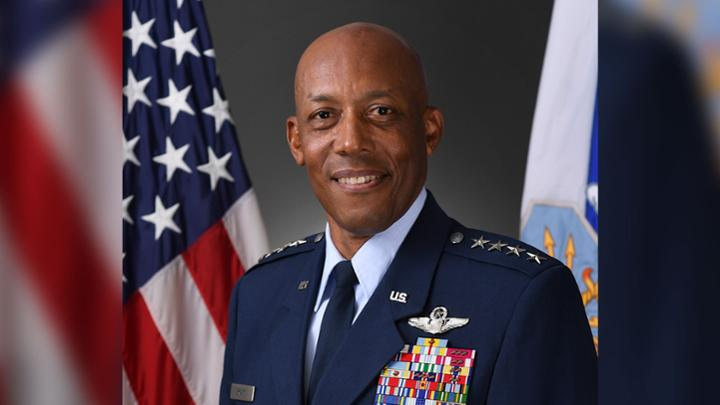
| Chairman, Joint Chiefs of Staff | Gen. CQ Brown Jr. dismissed; Lt. Gen. Dan Caine nominated | Feb 2025 | First nominee without four-star rank or combatant command experience; requires statutory waiver |
| Senior Pentagon Planners | ~24 generals/admirals removed or reassigned | Jan 2025-Mar 2026 | Loss of accumulated regional expertise, particularly on Iran |
| Under Secretary of Defense for Policy | Multiple turnover; Elbridge Colby appointed | Late 2024 | Rapid civilian turnover disrupts policy continuity |
| CENTCOM Commander | Adm. Brad Cooper retained but reportedly marginalized | Ongoing | Combatant commander’s operational authority potentially undermined |
Source: Military Times, Task & Purpose, US Department of Defense records
The Waiver That Troubles Professional Soldiers
The nomination of retired Lt. Gen. Dan “Razin” Caine as Chairman of the Joint Chiefs represents an unprecedented break with military tradition. Under 10 U.S.C. § 152, the Chairman should have served as a combatant commander or service chief—a requirement President Trump waived.
Caine’s Verified Credentials (Assessed Objectively):
- Commissioned 1990 via ROTC; career F-16 pilot
- Senior roles in Special Access Program Central Office
- Assignment with CIA prior to retirement
- Described by colleagues as “measured”
The Professional Military Concern: In every professional military I have studied or served alongside, the position equivalent to Chairman of the Joint Chiefs requires demonstrated experience managing large-scale joint operations. This is not bureaucratic pedantry—it is functional necessity.
“The law exists to ensure that the person advising the head of state has managed complex joint operations,” noted retired Lt. Gen. Mark Hertling. “When we waive that, we gamble with institutional expertise.”
From my perspective, having observed similar dynamics in other nations, this gamble carries predictable risks:
- Credibility Deficit: Junior officers may question whether the Chairman speaks from operational experience or political access
- Allied Confidence: Partner militaries assess competence through career progression, not political appointment
- Internal Cohesion: Four-star officers who commanded larger organizations may resent taking strategic direction from someone without comparable experience
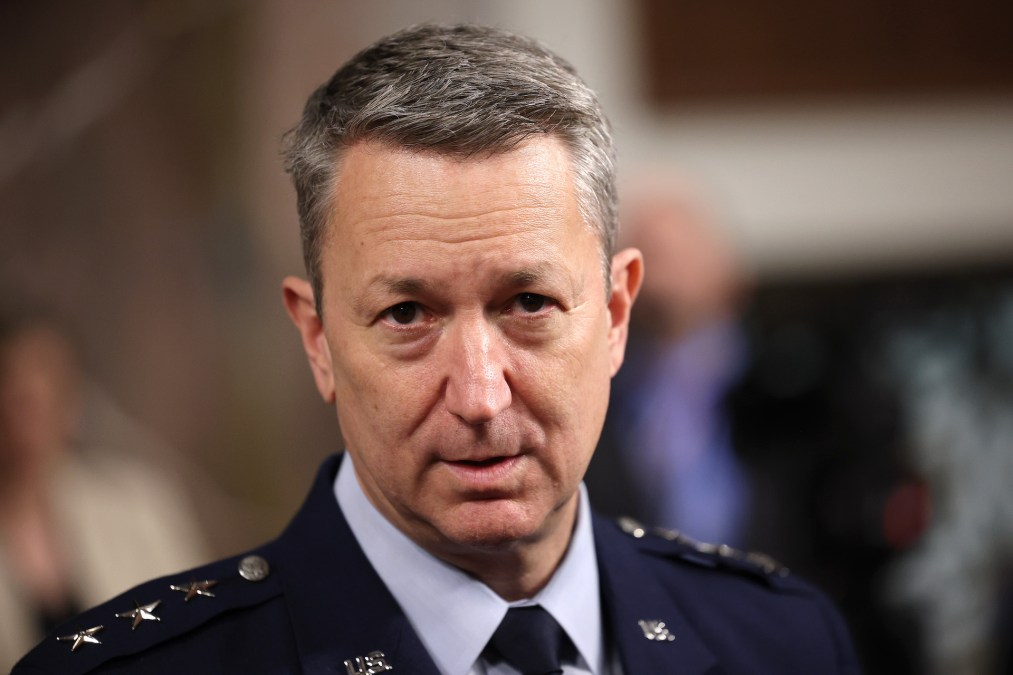
Gen. Charles Q. Brown Jr., whom Caine would replace, brought nearly four decades of command experience to the role: squadron, wing, numbered air force, Pacific Air Forces, and ultimately Chief of Staff of the Air Force—a position to which he was confirmed by a 98-0 Senate vote in 2020. His career included combat leadership in Operation Inherent Resolve and oversight of a $200 billion budget.
Lt. Gen. Dan Caine, by contrast, built his career in intelligence operations, special access programs, and classified program management, with no prior service as a four-star commander or service chief. Both are credentialed professionals; their career paths, however, reflect fundamentally different models of military leadership—one rooted in joint operational command, the other in intelligence and program oversight.
II. The War Room Dynamic: A Comparative Assessment
How Strategic Advice Should Function
In professional militaries worldwide, sound strategic advice follows a structured process:
- Unvarnished Intelligence: Raw assessment, not politically filtered
- Multiple Options: At least three viable courses of action with honest risk assessments
- Institutional Challenge: Red-teaming by officers not invested in the preferred option
- Professional Military Judgment: Advice based on operational feasibility, not political desirability
- Civilian Decision: Political leaders choose strategic objectives
- Military Execution: Professionals implement with operational discretion
Reported Deviations from This Model
According to reporting from Politico and The Washington Post, anonymous Pentagon sources describe:
“Options which don’t align with the president’s instincts are being filtered out before they reach the table. The red-teaming process feels performative, not substantive.”
“When you remove officers who’ve spent decades studying Iran, you lose the nuance. It’s not about being ‘soft’—it’s about understanding tribal dynamics, regime factions, and escalation ladders.”
Comparative Perspective:
I have observed similar patterns in other nations where political leaders perceived military expertise as an obstacle rather than an asset. The outcomes were remarkably consistent:
- Short-term political satisfaction
- Medium-term operational miscalculation
- Long-term strategic drift
The Loyalty Question: A Professional Officer’s View
| Concern | Evidence | Professional Assessment |
|---|---|---|
| Promotions tied to political alignment | Col. Butler’s promotion reportedly delayed due to associations | Undermines merit-based system; creates career anxiety |
| Experienced voices marginalized | Gen. McGee’s retirement followed policy clashes | Loss of institutional memory cannot be quickly replaced |
| Advice filtered for political palatability | Anonymous sources describe “pre-screening” | Increases risk of groupthink and strategic surprise |
Professional Judgment:
“What we’re seeing isn’t necessarily incompetence—it’s a different model of civil-military relations,” said Dr. Linda Robinson of RAND Corporation. “The question is whether this model produces better decisions in complex contingencies like Iran. History suggests that excluding dissenting military views increases the risk of miscalculation.”
Having served in coalition operations, I can attest: the best decisions emerge when military professionals speak truth to power, even when inconvenient. When that dynamic shifts, operational risks accumulate silently until they manifest as strategic failure.
III. The Iran Case Study: Institutional Memory Matters
Why Iran Demands Deep Expertise
Iran presents a uniquely complex strategic challenge that rewards institutional knowledge:
| Factor | Why Experience Matters |
|---|---|
| Asymmetric Warfare | Iran relies on proxies, cyber, and naval mines—threats that don’t appear in conventional order of battle |
| Regional Entanglement | Actions against Iran risk escalation with Hezbollah, Houthis, Iraqi militias—each requiring nuanced understanding |
| Regime Dynamics | Iranian politics involve factional competition between IRGC, clerical establishment, and pragmatists |
| Escalation Ladders | Understanding Iranian red lines requires decades of pattern analysis |
What Is Lost When Expertise Departs
Consider the reported removal of ~24 senior officers with Iran expertise. From a professional standpoint, this represents:
Quantifiable Loss:
- Average 25-30 years of service per officer
- Cumulative 600+ years of institutional experience
- Personal relationships with regional counterparts built over decades
- Pattern recognition developed through multiple crises
Operational Impact:
- Miscalculation Risk: Officers who understand Iranian signaling can distinguish between bluster and intent. New appointees may misread both.
- Proxy Dynamics: Iran’s network requires understanding local tribal, sectarian, and political dynamics—a specialty of long-serving regional experts.
- Alliance Management: GCC partners have complex relationships with Iran; experienced officers often have personal rapport that facilitates coordination.
- Exit Strategy Planning: Seasoned planners anticipate second- and third-order effects; rapid turnover may prioritize short-term wins over long-term stability.
Historical Parallel:
In 1965, Pakistan’s military leadership made operational decisions based on incomplete understanding of Indian capabilities and political resolve. The result was a war that achieved limited objectives at high cost. Institutional memory matters.
What We Know About Current Iran Planning
- Public Statements: CENTCOM Commander Adm. Brad Cooper stated in February 2026: “We maintain a full range of options to defend US interests.”
- Leaked Details: The Washington Post reported war room discussions focus on “limited strike options” rather than regime change.
- Allied Coordination: GCC partners reportedly express concern about being drawn into escalation without clear diplomatic off-ramps.
Professional Assessment:
Without access to classified after-action reports or operational assessments, external observers cannot judge whether current leadership is producing superior or inferior strategy. However, the process by which strategy is formulated matters as much as the outcome. When institutional challenge is suppressed, error compounds silently.
IV. Historical Context: Patterns Across Nations
Comparative Civil-Military Relations
| Historical Example | Nation | Outcome | Professional Lesson |
|---|---|---|---|
| Truman-MacArthur (1951) | United States | Truman fired MacArthur for insubordination | Civilian control is non-negotiable, but removing military voices too broadly risks expertise loss |
| Indira Gandhi-Pakistan War (1971) | India | Political leadership overrode military caution | Decisive victory, but at cost of prolonged insurgency in Bangladesh |
| Musharraf-Kargil (1999) | Pakistan | Military adventurism without political consensus/ understanding | Strategic failure; international isolation |
| Bush-Rumsfeld (Iraq 2003) | United States | Rumsfeld sidelined Joint Staff concerns | Ignoring military expertise on post-invasion planning led to prolonged instability |
| Current Trump Administration | United States | Ongoing | Pattern suggests prioritization of political alignment over institutional experience |
What Comparative Analysis Reveals
“The pattern is familiar,” noted Dr. Eliot Cohen of Johns Hopkins SAIS. “When political leaders perceive the military as an obstacle rather than a partner, they replace voices. The risk isn’t immediate failure—it’s the accumulation of small errors that compound into strategic surprise.”
Having studied civil-military relations across multiple nations, I observe consistent patterns:
When Political Alignment Trumps Professional Expertise:
- Short-term: Political leaders achieve desired messaging
- Medium-term: Military planners self-censor to protect careers
- Long-term: Strategic miscalculation becomes probable
When Professional Military Advice Is Valued:
- Short-term: Political leaders may face inconvenient truths
- Medium-term: Strategy is stress-tested against operational reality
- Long-term: Miscalculation risk is reduced
The choice is not between civilian control and military autonomy—it is between informed and uninformed political decision-making.
V. Regional Implications: The View from Islamabad and Riyadh
How Allies Assess US Military Coherence
For regional partners, the stability of US decision-making matters as much as US military capability. Having served in coalition operations, I understand how allied officers assess partner reliability:
GCC Perspectives:
- Saudi Foreign Minister Prince Faisal bin Farhan stated in March 2026: “We value our partnership with the United States. What we need is consistency, not volatility.”
- UAE officials have reportedly expressed concern about being drawn into escalation without clear strategic objectives, per Al Jazeera reporting.
Professional Assessment:
GCC military officers, many of whom trained in US institutions, assess American strategic coherence through:
- Leadership stability
- Consistency between rhetoric and operational posture
- Quality of military advice reaching political decision-makers
- Clarity of strategic objectives
When these elements appear fractured, allies hedge their bets—diversifying partnerships, seeking alternative security arrangements, and questioning long-term commitments.
Pakistan’s Strategic Calculus
From Pakistan’s perspective, US civil-military dynamics directly impact national security:
| Factor | Pakistani Concern |
|---|---|
| Iran-Pakistan Gas Pipeline | US sanctions policy requires predictable implementation; leadership turnover creates uncertainty |
| CPEC Investments | Chinese infrastructure requires stable regional environment; US-Iran escalation threatens this |
| Afghanistan Stability | Pakistan seeks regional stability; US-Iran conflict could destabilize Afghanistan further |
| Military-to-Military Relations | Pakistani officers value relationships with US counterparts; frequent turnover disrupts continuity |
Former Foreign Minister Bilawal Bhutto Zardari noted: “Pakistan seeks stability in its neighborhood. When great powers experience internal friction, middle powers bear the consequences.”
Professional Military Perspective:
Having observed Pakistan’s military navigate complex regional dynamics, I understand the challenge: when a primary security partner appears internally divided, smaller powers must:
- Diversify security relationships
- Develop independent strategic capacity
- Avoid over-dependence on any single partner
- Maintain dialogue with all regional actors
This is not disloyalty—it is prudent statecraft.
The Credibility Question Through an Officer’s Eyes
| Factor | Impact on Allied Perception |
|---|---|
| Frequent Leadership Turnover | Suggests policy instability; allies hedge bets |
| Perceived Politicization of Advice | Raises doubts about whether US strategy is driven by analysis or politics |
| Unprecedented Appointments | Creates uncertainty about decision-making processes |
| Public Civil-Military Tensions | Signals internal discord that adversaries may exploit |
“Allies don’t just assess US capabilities—they assess US coherence,” said Dr. Vali Nasr of Johns Hopkins SAIS. “When the war room looks chaotic, partners question whether commitments will hold.”
From my experience in coalition operations, this assessment is accurate. Officers assess partner reliability not through press releases, but through:
- Consistency of strategic messaging
- Stability of military leadership
- Quality of operational planning
- Clarity of end states
When these elements fracture, operational coordination suffers.
VI. Professional Recommendations: Restoring Strategic Coherence
Lessons from Comparative Military Systems
Drawing on observations from multiple nations’ civil-military relations, several principles emerge:
| Principle | Rationale | Application to Current US Context |
|---|---|---|
| Protect Institutional Memory | Expertise accumulates over decades; losing it creates capability gaps | Avoid mass removal of senior officers with regional expertise |
| Ensure Merit-Based Progression | Officers must trust that competence, not politics, drives promotion | Resist perception that loyalty tests determine career advancement |
| Preserve Red-Teaming | Uncomfortable truths prevent strategic surprise | Mandate independent challenge of options regardless of political alignment |
| Balance Civilian Control with Professional Advice | Political leaders set objectives; military professionals assess feasibility | Maintain distinction between political direction and operational assessment |
What Regional Allies Would Advise (If Asked Candidly)
Based on conversations with allied officers and analysis of official statements, regional partners would likely recommend:
- Stability Over Speed: Deliberate decision-making beats rapid turnover
- Expertise Over Alignment: Regional complexity demands deep knowledge
- Consistency Over Volatility: Allies need predictable partners
- Transparency Over Opacity: Clear strategic objectives facilitate coordination
What to Watch For
| Indicator | Significance |
|---|---|
| Caine Confirmation Outcome | Senate vote will signal whether precedent-breaking appointments face institutional resistance |
| Iran Crisis Response | How the war room manages the next escalation will test the new leadership model |
| Allied Statements | GCC, NATO, and Indo-Pacific partners’ reactions reveal confidence levels |
| Retired Officer Commentary | Continued public concern from respected military figures may pressure course correction |
VII. Conclusion: The War Room as a Mirror of Strategic Culture
The question “What went wrong in the war room?” may be misplaced. A more productive inquiry is: “What kind of war room does a great power need for the challenges of the 21st century?”
From my perspective as a professional military officer who has observed multiple nations navigate civil-military tensions, the answer is clear:
The United States needs a war room that:
- Values institutional memory alongside fresh perspectives
- Encourages professional military judgment without political filtration
- Balances civilian control with operational expertise
- Maintains credibility with allies through leadership stability
- Learns from historical patterns rather than repeating them
The tension between political authority and military professionalism is not unique to the United States. Every nation grapples with it. But the manner in which this tension is managed determines strategic success or failure.
As retired Gen. David Petraeus reflected in a March 2026 interview with Foreign Policy: “The best decisions emerge when political leaders and military professionals challenge each other respectfully. When one side dominates, strategy suffers.”
For Pakistan, the GCC, and the broader international community, the stakes are clear: a coherent, experienced US strategic apparatus benefits global stability. A fractured one invites uncertainty, miscalculation, and strategic drift.
The war room is more than a physical space. It is a mirror reflecting how a nation thinks about war, peace, and power. What it reflects today will shape what the world faces tomorrow.
As a professional soldier who has served alongside American officers in coalition operations, I offer this assessment not as criticism, but as observation: Institutional expertise is not a luxury—it is a strategic necessity. When it is traded for political alignment, the bill comes due not in headlines, but in operational miscalculations that compound silently until they manifest as strategic failure.
The United States deserves better. Its allies deserve better. And the cause of regional stability demands better.