(By Faraz Ahmed)
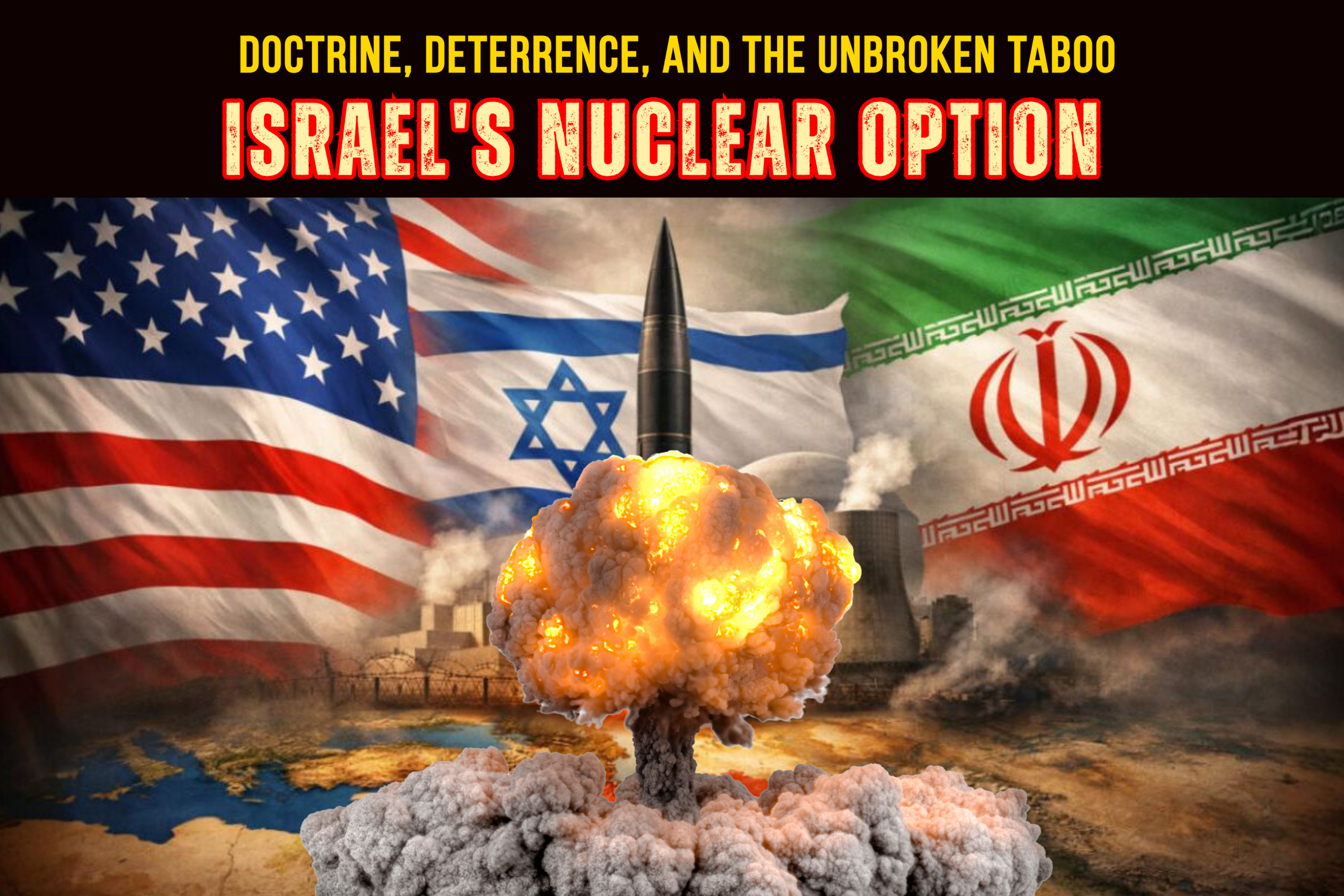
In an era of viral predictions and escalating Middle East tensions, one question surfaces repeatedly in strategic discussions, often whispered rather than shouted: Could Israel use nuclear weapons against Iran? Some of the analysts declared “no, with 100% confidence,” citing the enduring nuclear taboo and the strategic suicide such a move would represent. But in high-stakes geopolitics, certainty is a luxury few can afford. When a nation perceives its survival is at stake, abstract norms often collide with existential imperatives.
This article tests that prediction against verified evidence. It moves beyond speculation to examine the bedrock of Israeli security policy: What does Israel’s nuclear doctrine actually say? How robust is the taboo in crisis? And what concrete indicators would signal a meaningful shift in risk? In a region where miscalculation can cascade into catastrophe, understanding the boundaries of the unthinkable is not just academic—it is essential.
I. The Claim: “No Nukes, Ever”
The Viral Argument Summarized: The prevailing analysis circulating online argues that nuclear use is strategically irrational. The logic rests on three pillars:
- Historical Precedent: Nuclear weapons have been used only once (1945); the taboo has held for 80 years through Cold War crises like Cuba and Kargil.
- Alliance Preservation: Using nukes would collapse US and European support, isolating Israel diplomatically and economically.
- Strategic Flexibility: Nuclear weapons eliminate calibration options. Once used, there is no “next move”—only escalation or surrender.
Initial Assessment: This logic is analytically coherent but rests on assumptions about rationality, alliance cohesion, and crisis dynamics that warrant scrutiny. It assumes that all actors prioritize long-term strategic flexibility over short-term survival imperatives. It also treats “Israel” as a unitary rational actor, overlooking potential factional pressures or leadership psychology under extreme stress. While the prediction is likely correct, the confidence level should be tempered by the reality of wartime fog.
II. What We Can Verify: Israel’s Nuclear Posture
A. Doctrine: Opacity, Deterrence, and the “Samson Option”
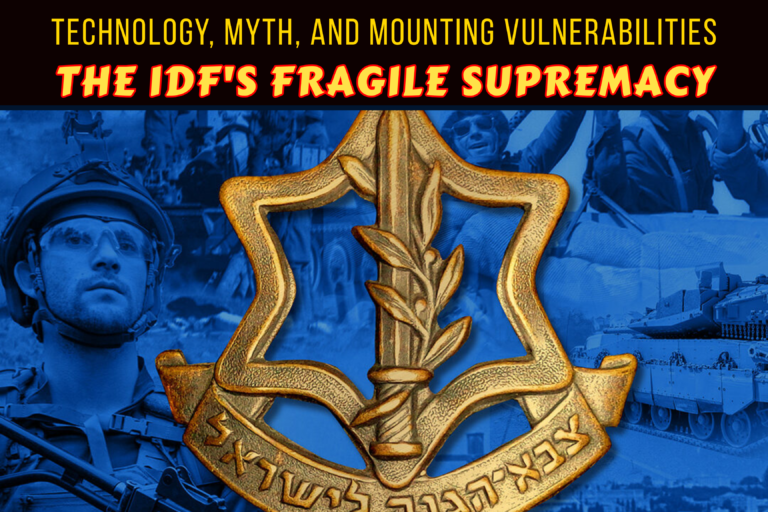
Israel’s nuclear policy is defined by amimut (ambiguity). Neither confirming nor denying possession allows Israel to reap the benefits of deterrence without triggering the sanctions that accompany declared nuclear states.
| Element | Verified Status | Source |
|---|---|---|
| Policy of Ambiguity | Israel neither confirms nor denies possessing nuclear weapons; this deliberate opacity is a core deterrence tool | PIR Center Report, 2026 |
| Estimated Arsenal | ~90 deployed warheads, with fissile material stockpiles for potential expansion; delivery systems form a triad (Jericho missiles, F-15/F-16/F-35 aircraft, Dolphin-class submarines) | SIPRI, GlobalMilitary.net |
| Use Criteria | Nuclear weapons reserved for “existential threat to the state” – a deliberately undefined threshold that preserves strategic flexibility | PIR Center |
| Samson Option | Theoretical last-resort doctrine implying massive retaliation if the state faces imminent collapse; named after the biblical figure who brought down the temple on his enemies | Strategic Studies Institute |
Key Insight: Israel’s doctrine is designed for deterrence through uncertainty, not war-fighting clarity. This serves strategic purposes but complicates external assessment. The “existential threat” threshold is the critical variable—is it defined by territorial loss, demographic collapse, or weapon of mass destruction (WMD) attack? Most analysts agree conventional missile barrages, however damaging, do not meet this threshold.
B. Alliance Dynamics: The US-Israel Nuclear Relationship
The United States maintains a policy of “qualitative military edge” (QME) for Israel, ensuring it remains conventionally superior to regional adversaries. This reduces the perceived need for nuclear escalation.
- US Position: Washington has consistently opposed nuclear escalation in the Middle East and maintains that Israel’s security should be maintained through conventional means .
- Coordination Reality: While the US and Israel coordinate closely on missile defence (Arrow, THAAD) and conventional strikes, there is no public evidence of joint nuclear planning or US endorsement of Israeli nuclear use scenarios .
- Constraint Factor: Any Israeli nuclear use would likely trigger immediate US diplomatic pressure to de-escalate. The US has significant leverage over Israel’s supply chains (munitions, intelligence, diplomatic cover), making unilateral nuclear action highly costly.
C. The Nuclear Taboo: Robust but Not Immutable
The nuclear taboo is a normative barrier reinforced by legal frameworks (NPT, IAEA), moral consensus, and practical deterrence logic.
| Factor | Assessment |
|---|---|
| Historical Precedent | No state has used nuclear weapons since 1945, despite multiple crises (Cuban Missile Crisis, Kargil, etc.) |
| Normative Strength | The taboo is reinforced by legal frameworks, moral consensus, and practical deterrence logic |
| Erosion Risks | Some analysts note growing nuclear signaling, treaty breakdowns, and regional proliferation pressures that could weaken the taboo over time |
| Israel-Specific Context | Israel is not an NPT signatory; its ambiguity policy exists outside the formal non-proliferation regime, creating unique dynamics |
Expert Perspective: “The taboo is robust, but its strength depends on continued reinforcement by major powers. In a multipolar crisis with multiple nuclear-armed actors, miscalculation risks increase.” – Open Nuclear Network webinar recap
III. Historical Precedents: When Did Israel Come Close?
To understand the current risk, we must examine when Israel previously faced existential pressures.
1. The 1973 Yom Kippur War Alert The closest Israel came to nuclear activation was during the 1973 war. As Egyptian and Syrian forces breached initial defensive lines, Defence Minister Moshe Dayan reportedly suggested preparing nuclear devices for potential use. Prime Minister Golda Meir authorized a low-level alert of Jericho missiles at Sdot Micha airbase.
- Outcome: The alert was intended as a signal to the United States to accelerate resupply efforts (Operation Nickel Grass), not necessarily as a prelude to use. The US responded with a massive airlift, conventional fortunes reversed, and the nuclear alert was stood down.
- Lesson: Nuclear signaling was used to secure conventional support, not to initiate nuclear war. This precedent suggests Israel prefers leveraging ambiguity to restore conventional balance rather than crossing the nuclear threshold.
2. The 1991 Gulf War Scud Attacks During the First Gulf War, Iraq fired 39 Scud missiles at Israeli cities. Despite significant damage and civilian casualties, Israel refrained from retaliation under intense US pressure.
- Outcome: Israel absorbed the attacks to maintain the US-led coalition against Iraq.
- Lesson: Even under direct missile fire, strategic alliance considerations outweighed the impulse for immediate retaliation. This reinforces the view that alliance management is a higher priority than punitive strikes when existential survival is not immediately threatened.
IV. Regional Ripple Effects: The Proliferation Cascade
If the taboo were broken, the consequences would extend far beyond the immediate conflict zone. A Israeli nuclear strike would likely trigger a proliferation cascade across the Middle East.
- Saudi Arabia: Riyadh has explicitly stated it would seek nuclear weapons if Iran acquires them. An Israeli use case would accelerate this timeline, potentially leading to direct Saudi nuclear procurement from Pakistan or other sources.
- Turkey & Egypt: Both nations have the technical infrastructure to pursue weapons programs. A breakdown of the nuclear norm would remove the political stigma currently restraining these efforts.
- Global Non-Proliferation Regime: The NPT would face existential crisis. If a non-signatory state uses nuclear weapons without catastrophic global retaliation, the incentive for other states to remain non-nuclear diminishes significantly.
Strategic Implication: Israel understands that its long-term security relies on a stable regional order. Breaking the nuclear taboo would destabilize that order permanently, creating a neighborhood of nuclear-armed adversaries. This long-term security cost is a powerful deterrent against short-term nuclear use.
V. Testing the Prediction: What Would Change the Risk Assessment?
While the baseline risk is low, dynamic crises require dynamic monitoring. The following indicators provide a framework for assessing shifts in nuclear posture.
Indicators That Nuclear Risk Is Rising
✅ Doctrinal Shifts: Official Israeli statements moving from “existential threat” ambiguity toward explicit nuclear signaling; deployment of nuclear-capable assets (e.g., Dolphin submarines) to forward positions visible via commercial satellite imagery.
✅ Alliance Fracture: Public US/European statements distancing from Israeli actions in ways that suggest Israel might feel strategically isolated; suspension of critical munitions supplies.
✅ Conventional Defence Collapse: Verified depletion of Arrow/THAAD interceptors combined with sustained Iranian missile barrages that overwhelm layered defences, creating a perceived “last stand” scenario .
✅ Existential Rhetoric: Senior Israeli officials framing the conflict in terms of national survival (“Second Holocaust” rhetoric) rather than tactical objectives.
✅ Third-Party Nuclear Involvement: Evidence of nuclear-armed states (e.g., China, Russia or others) providing direct support to Iran in ways that alter escalation calculus.
Indicators That Nuclear Risk Is Receding
✅ Reaffirmed Ambiguity: Israeli officials reiterating “amimut” policy without qualification in press briefings.
✅ US Diplomatic Engagement: Active US mediation to create off-ramps and prevent escalation spirals; visible high-level visits to Jerusalem.
✅ Missile Defence Resupply: Confirmed US/ally deliveries of Arrow, David’s Sling, or Iron Beam systems to restore interception capacity.
✅ De-escalatory Signals: Iranian statements or actions suggesting willingness to negotiate limits on missile transfers to proxies.
✅ Regional Diplomatic Activity: GCC states, Jordan, or Egypt facilitating backchannel communications to reduce tensions.
VI. The “Control vs. Dominance” Framework: Useful or Overstated?
The viral analysis argues that “control is more important than dominance” – that nuclear weapons eliminate strategic flexibility and thus are self-defeating.
Where This Framework Adds Value:
- Escalation Management: Highlights that managing the conflict trajectory often matters more than raw firepower.
- Alliance Cohesion: Correctly notes that international support depends on perceived restraint and adherence to norms.
- Diplomatic Off-Ramps: Emphasizes that nuclear use would foreclose diplomatic options, leaving only total victory or total defeat.
Where It May Oversimplify:
- Survival Instinct: Assumes all actors prioritize long-term strategic flexibility over short-term survival imperatives. In a “last stand” scenario, long-term consequences may be discounted.
- Miscalculation Risk: Underweights the role of unauthorized actions, technical failures, or misinterpreted signals in crisis scenarios.
- Unitary Actor Fallacy: Treats “Israel” as a unitary rational actor, overlooking potential factional pressures within a coalition government or military command stress.
Balanced Take: The framework is a useful heuristic for understanding escalation dynamics, but real-world outcomes depend on contingent factors no model can fully capture. Rationality often degrades under the fog of war.
VII. Bottom Line Assessment
Based on available evidence, the prediction that Israel will not use nuclear weapons in the current conflict is well-founded—but “100% confidence” overstates the certainty appropriate to geopolitical analysis.
Israel’s doctrine, alliance relationships, and the robustness of the nuclear taboo all weigh heavily against nuclear employment. The historical record (1973, 1991) suggests Israel prefers leveraging ambiguity to secure conventional support rather than crossing the nuclear threshold. Furthermore, the long-term strategic cost of triggering a regional proliferation cascade serves as a powerful deterrent.
However, in high-intensity crises, low-probability/high-impact scenarios cannot be eliminated entirely. The most credible near-term path remains conventional precision strikes, missile defence, and diplomatic pressure—not nuclear escalation.
A shift in Israeli doctrinal language, confirmed interceptor depletion without resupply, or public alliance fractures would warrant reassessment. Absent those signals, the nuclear taboo remains one of the most durable norms in international security. The world should watch, but not panic.