(By Khalid Masood)
Executive Summary
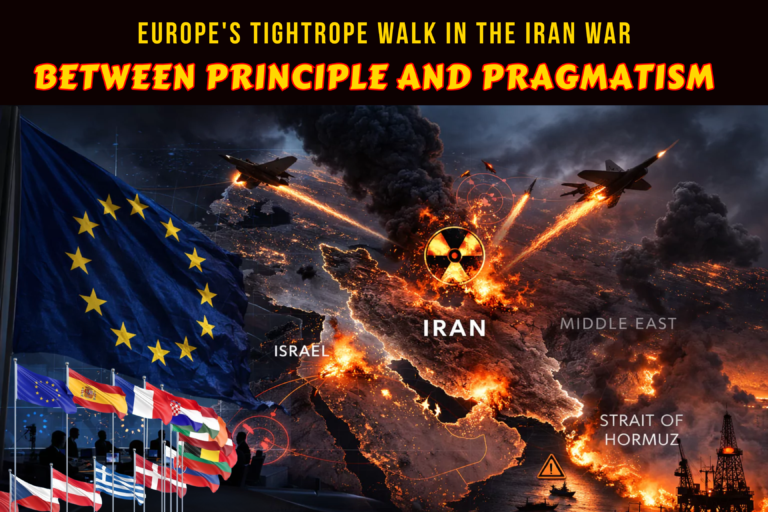
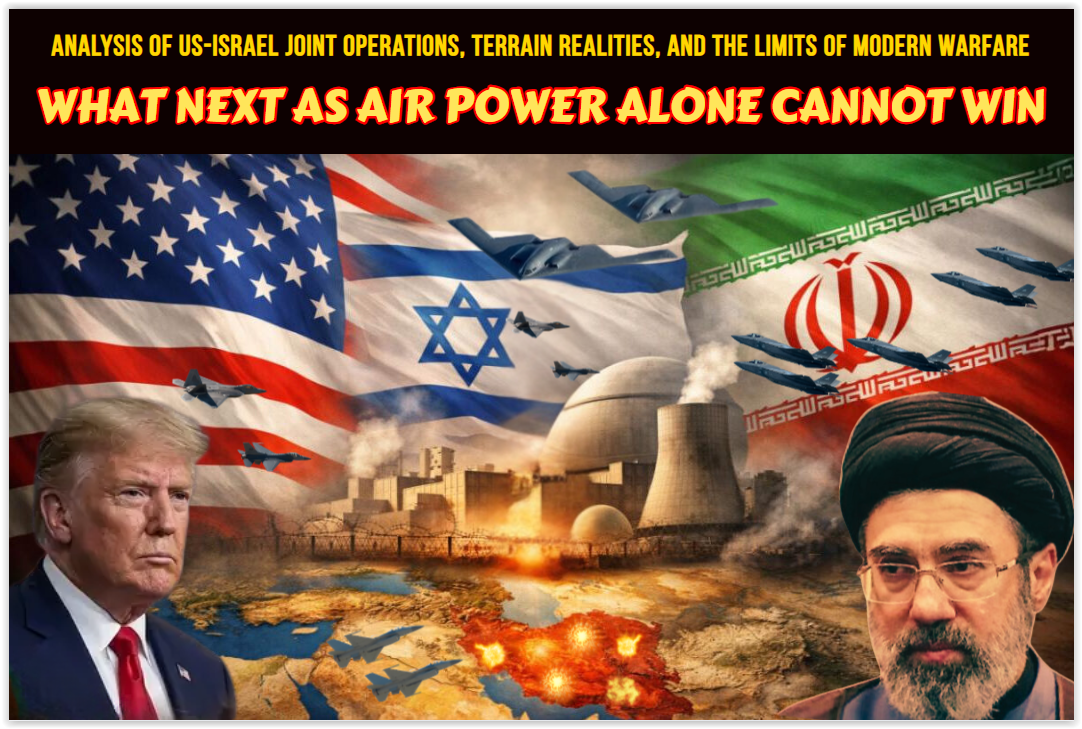
The ongoing US-Israel joint military campaign against Iran, which began on February 28, 2026, represents the most complex air warfare operation in modern history. While American and Israeli forces have achieved near-total air superiority and conducted unprecedented coordinated strikes, critical questions remain: Can air power alone achieve strategic victory? Is a ground invasion militarily feasible or politically viable? And how do Iran’s formidable terrain and brutal summer weather shape the battlefield?
This analysis synthesizes current operational data, historical precedent, geographic realities, and military doctrine to answer the “million dollar question” troubling strategists worldwide.
Key Finding: Air power can degrade, delay, and disrupt—but rarely decisively defeat—a determined adversary with strategic depth, asymmetric capabilities, and favorable terrain. Iran’s geography, climate, and doctrine make it uniquely resistant to conquest by air alone.
I. The Air War: Unprecedented Scale, Familiar Limitations
The “Thunderbolt in an Eggshell” Paradox
As military scholar Elliot Cohen aptly describes, modern air power is “a thunderbolt inside an eggshell”—lethal in payload but fragile in platform, highly mobile yet tethered to ground-based logistics, intelligence, and command networks. This paradox defines the current campaign:
US-Israel Advantages:
- Total Air Superiority: Iranian air defenses have been “effectively suppressed,” allowing US and Israeli aircraft to operate with minimal opposition.
- Unprecedented Coordination: Joint planning between CENTCOM and the IDF has enabled synchronized strikes on over 1,000 targets in the opening phase, including nuclear facilities, missile launchers, and leadership compounds.
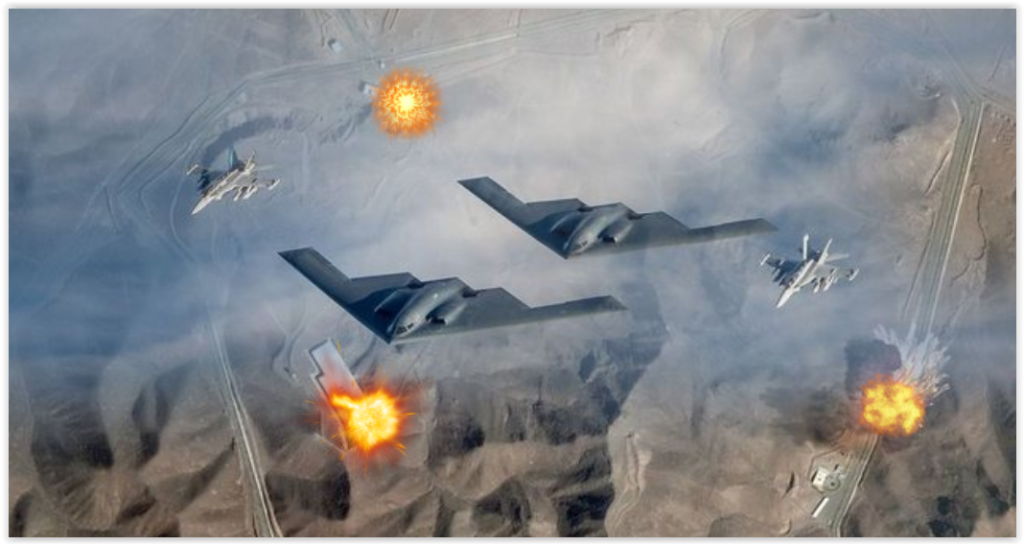
- Technological Edge: Stealth bombers (B-2), precision-guided munitions, long-range Tomahawk missiles, and re-engineered drone systems provide standoff strike capabilities that minimize pilot risk.
Persistent Vulnerabilities:
- Battle Damage Assessment (BDA): Determining whether underground facilities like Fordow have been truly neutralized remains notoriously difficult. Initial claims of “obliteration” often prove premature; final BDA can take months or years.
- Interceptor Depletion: US THAAD and Patriot batteries have finite missiles. Iran’s strategy of sustained, dispersed drone and missile salvos aims to exhaust these defenses.
- Intelligence Lag: The tragic strike on the Minab school—reportedly based on outdated imagery—illustrates how over-reliance on air power without ground-level HUMINT can produce catastrophic errors.
The Asymmetric Counter: Iran’s “Smart Control” Doctrine
Iran lacks a conventional air force, but it has developed a sophisticated asymmetric response:
- Missile & Drone Swarms: Tehran has launched sustained ballistic missile and drone attacks at Israel and US bases across the Gulf.
- Maritime Chokepoint Pressure: Through its “Smart Control” doctrine, Iran employs GPS spoofing, discriminatory drone strikes, and integrated coastal defenses to disrupt shipping in the Strait of Hormuz without triggering full blockade escalation.
- Proxy Amplification: Hezbollah, Iraqi militias, and Houthi forces extend Iran’s reach, forcing US-Israel to defend multiple fronts simultaneously.
Strategic Implication: Iran does not need to win the air war. It only needs to survive it, impose unsustainable costs, and wait for political will in Washington and Jerusalem to erode.
II. The Ground Invasion Question: Geography as Iran’s First Line of Defense
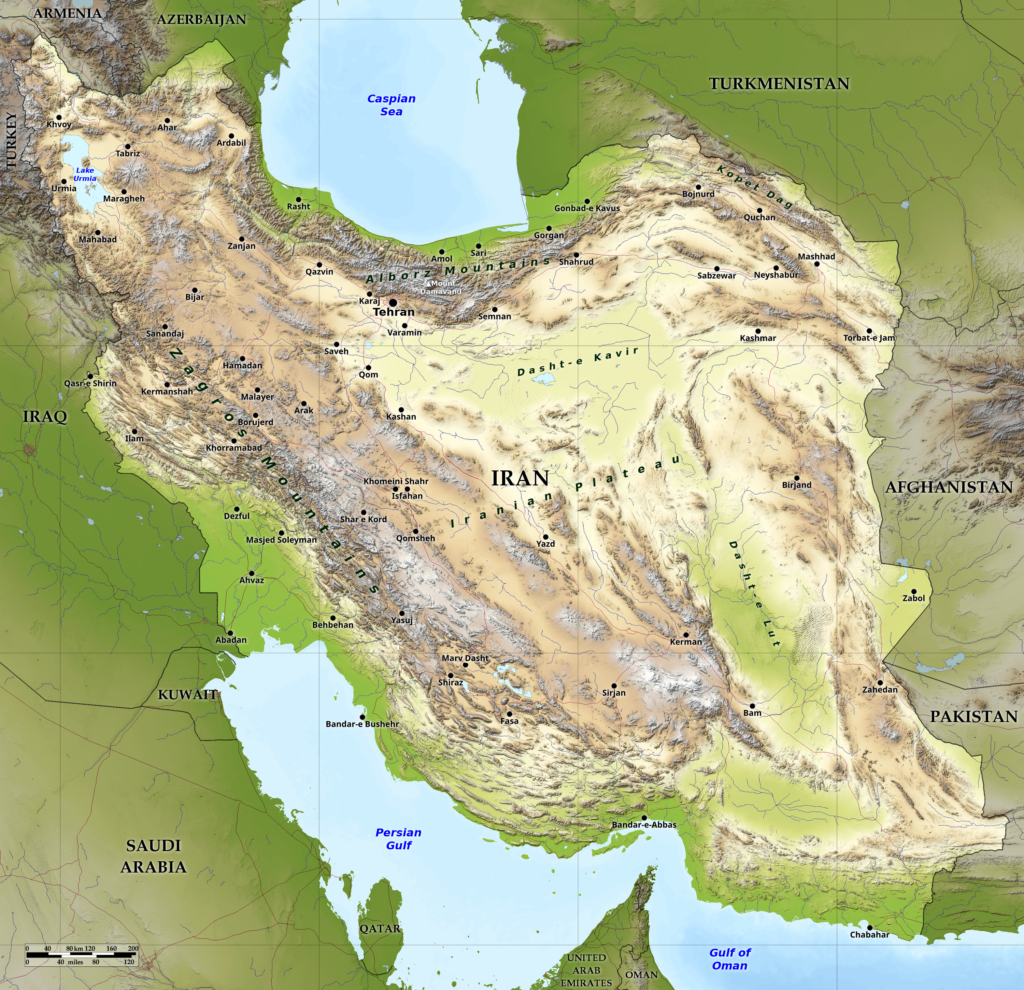
Terrain: The Zagros Wall and Desert Trap
Iran is not Iraq. Its geography presents obstacles that would make any ground invasion a logistical nightmare:
| Geographic Feature | Military Impact |
|---|---|
| Zagros Mountains (West) | Peaks exceed 13,000 feet; narrow passes easily defended; ideal for ambushes and guerrilla warfare. |
| Alborz Mountains (North) | Shield Tehran from Caspian approaches; snow-capped peaks limit seasonal access. |
| Dasht-e Kavir & Lut Deserts (Center) | Salt flats behave like quicksand; summer temperatures exceed 120°F (49°C); dust storms cripple engines and sensors. |
| Strait of Hormuz Coastline | Rugged, mineable shoreline; IRGC naval bases embedded in cliffs; perfect for anti-access defenses. |
As Colonel John M. Collins (USA-Ret.) notes: “Iran’s forbidding terrain should make war planners think twice about an invasion.” The Zagros Mountains alone would force any invading column into predictable chokepoints—perfect targets for Iranian anti-tank missiles, drones, and artillery.
Distance and Logistics: The Thousand-Mile Supply Line
- Tehran is ~1,000 km from the nearest US bases in Iraq/Kuwait.
- Sustaining a division-sized force would require daily convoys through mountain passes barely wide enough for one-way traffic.
- Water scarcity: Iran’s central plateau has no major rivers. Troops would require imported water—adding massive logistical burden.
- Equipment degradation: Abrasive sand, extreme heat, and dust would accelerate wear on vehicles, weapons, and electronics.
Expert Consensus: A full-scale ground invasion of Iran would likely require 500,000+ troops—far more than the US currently has postured in the region.
III. The Weather Factor: Summer Warfare in the Persian Gulf
Climate as a Combat Multiplier (for the Defender)
Iran’s summer climate actively disadvantages non-acclimatized forces:
| Condition | Impact on Attackers | Advantage to Defenders |
|---|---|---|
| Temperatures 45-50°C (113-122°F) | Heat exhaustion limits patrol windows; 3x water requirements; reduced cognitive performance. | Local forces acclimatized; can operate during cooler dawn/dusk hours. |
| Dust Storms (Shamal winds) | Ground aircraft; clog filters; reduce visibility for sensors and targeting. | Familiar with patterns; can use storms for concealment. |
| Low Humidity (Central Plateau) | Accelerates dehydration; static electricity disrupts electronics. | Minimal impact on entrenched, prepared positions. |
| High Humidity (Gulf Coast) | Corrodes equipment; reduces helicopter lift capacity. | IRGC naval units trained for these conditions. |
Bloomberg reports that “even with satellites, advanced sensors and artificial intelligence, the weather can still determine the timing of military operations.” For US/Israeli forces unaccustomed to these extremes, summer campaigning would significantly degrade combat effectiveness.

IV. Political Will: The Casualty Threshold
The “Body Bag” Syndrome
Both the United States and Israel face domestic constraints:
- US Public Opinion: After Iraq and Afghanistan, tolerance for prolonged ground wars is low. Even limited casualties generate significant political pressure.
- Israeli Manpower: Israel is simultaneously engaged in Gaza and Lebanon. Opening a third front with a ground invasion into Iran—1,600+ km away—is logistically implausible without US lead.
- Regime Change Ambiguity: While some US officials speak of enabling “the Iranian people to take over,” history shows that external military intervention rarely produces stable, friendly governments.
The Trump Factor (Scenario-Dependent)
In the scenario described, President Trump’s public statements declaring “the war is over” after limited strikes suggest a preference for rapid, low-cost victories. However, if Iran continues retaliatory strikes, political pressure for escalation could mount—creating a dangerous mismatch between rhetoric and military reality.

V. The Resilience Miscalculation: Why Regime Change Failed
Perhaps the most critical intelligence failure of this campaign was the US assumption that military pressure would trigger an internal collapse. Washington analysts anticipated that decapitation strikes against the leadership would cause the Iranian people to rise up and overthrow the clerical establishment. Instead, the opposite occurred.
The targeting of the Supreme Leader triggered a profound “rally-round-the-flag” effect. Rather than buckling under pressure, the regime leveraged the attacks to frame the conflict as a national struggle for sovereignty against foreign aggression. Internal dissent was temporarily suspended as nationalist sentiment surged across the political spectrum. Far from weakening the government, the assassination attempt unified disparate factions behind the regime.
This resilience underscores a timeless strategic truth: external coercion often strengthens an authoritarian grip by providing a common enemy. The US and Israel found themselves fighting not just the IRGC, but a mobilized population willing to endure significant hardship to resist foreign intervention.
VI. Historical Precedent: What Air Power Has—and Has Not—Achieved
| Conflict | Air Campaign Duration | Ground Invasion? | Outcome |
|---|---|---|---|
| Gulf War (1991) | 38 days of bombing | Yes (Desert Storm) | Air power degraded Iraqi forces; ground campaign achieved objectives. |
| Kosovo (1999) | 78 days NATO air campaign | No | Air power coerced Serbian withdrawal, but political settlement required diplomacy. |
| Afghanistan (2001) | Initial air strikes + SOF | Limited ground (SOF + Northern Alliance) | Air power enabled rapid collapse, but 20-year occupation followed. |
| Iran-Iraq War (1980-88) | Limited air use | Yes (Iraqi invasion) | Iraqi advance stalled in Zagros; war ended in stalemate. |
Lesson: Air power is most effective when integrated with ground maneuver, political strategy, and realistic objectives. Purely aerial campaigns rarely achieve decisive political outcomes.
VII. Scenarios: Where This Conflict Could Go
Based on current trajectories, four plausible endpoints emerge:
- Limited Containment (Most Likely)
- International diplomacy forces ceasefire after significant degradation of Iranian nuclear/missile capabilities.
- Iran retains regime but accepts enhanced inspections.
- US-Israel claim victory; Iran claims survival.
- Prolonged Regional War
- Iran expands attacks on Gulf shipping; US responds with naval escalation.
- Hezbollah opens northern front against Israel.
- Conflict spreads to Iraq, Syria, Yemen; global oil prices surge.
- Economic Warfare via Hormuz
- Iran uses “Smart Control” to selectively disrupt shipping without full blockade.
- Insurance premiums spike; global supply chains reroute.
- Economic pressure forces negotiations.
- Regime Change Attempt (Least Likely)
- US-Israel commit to ground invasion to topple IRGC.
- Requires massive troop surge, accepts high casualties, risks regional conflagration.
- Historical precedent suggests low probability of success.
Conclusion: The Enduring Truth of War
The US-Israel joint air campaign against Iran demonstrates the breathtaking capabilities of modern air power: precision strikes, global reach, and minimal pilot risk. Yet it also reaffirms an enduring truth articulated by military theorists from Clausewitz to Cohen: War is a contest of wills, not just weapons.
Air Power can:
✅ Degrade enemy capabilities
✅ Delay adversary programs
✅ Impose costs and signal resolve
But Air Power alone cannot:
❌ Occupy territory
❌ Change political systems
❌ Replace the need for boots on the ground when strategic objectives demand it
Iran’s mountains, deserts, and summer heat are not mere backdrop—they are active participants in the conflict, favoring the defender and complicating the attacker’s calculus. Until US and Israeli leaders reconcile their strategic objectives with these geographic and climatic realities, the risk of escalation without resolution remains high.
This means the US and Israel need to reassess and redefine their ambitious war goals by honestly accounting for Iran’s resilience, it’s harsh terrain, extreme weather, and logistical challenges, as well as their own unwillingness to accept casualties. Otherwise, the conflict is likely to intensify—but never actually reach a clean, successful conclusion.”
Final Assessment: A purely aerial campaign cannot “win” a war against Iran in the political sense. It can, however, create conditions for negotiation, deter further nuclear advancement, and degrade immediate threats. The path to lasting stability will require not just thunderbolts from the sky, but patient statecraft on the ground.