(By Quratulain Khalid)
Introduction: The Question of Uncertainty
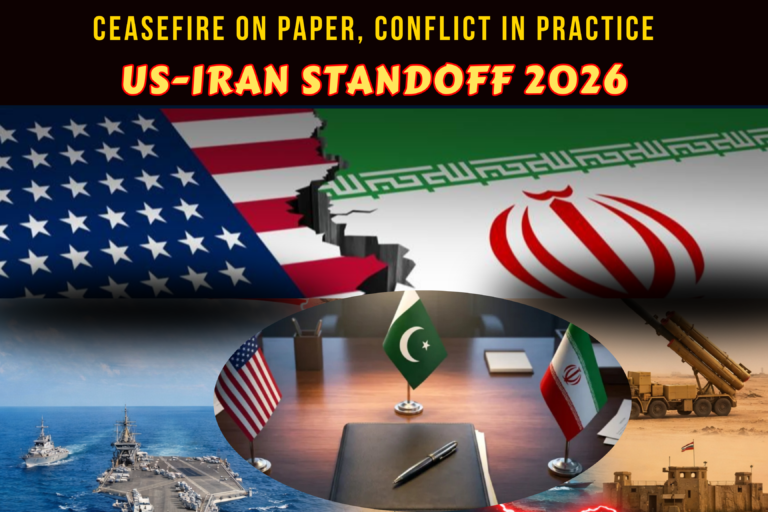
In the realm of international security, few questions are as pressing—or as difficult to answer—as what comes next in the conflict between Iran and its adversaries. Following a period of intensified military exchanges and diplomatic friction, global observers are searching for clarity amidst a fog of conflicting reports and strategic ambiguity. The stakes extend far beyond the immediate region, touching upon global energy supplies, nuclear non-proliferation norms, and the broader balance of power among great nations.
This analysis does not seek to offer definitive predictions. Geopolitical outcomes are rarely linear, and the variables involved—from domestic politics in Tehran and Washington to fluctuating oil markets—are too volatile for certainty. Instead, this article synthesizes available expert assessments, intelligence reports, and historical precedents to outline the most plausible pathways forward. By examining competing analytical frameworks and observable indicators, the goal is to provide a structured understanding of the risks and possibilities currently facing policymakers and the public.
The central question remains: Can tactical military actions translate into strategic stability, or do they risk deepening the conflict? To answer this, we must look beyond the headlines and examine the underlying dynamics driving the escalation.
Current Status: Verifiable Facts on the Ground
To understand potential future trajectories, it is necessary to establish a baseline of verified information regarding the current status of the conflict. While information warfare is a component of modern conflict, several key developments have been documented by multiple independent sources.
According to reports from the International Atomic Energy Agency (IAEA) and statements from regional defence ministries, significant military strikes occurred against Iranian nuclear infrastructure in mid-2025. These actions were followed by retaliatory measures involving drone and missile deployments targeting regional allies of the United States. Intelligence assessments from the Institute for the Study of War (ISW) suggest that while physical damage was inflicted on facilities such as Natanz and Fordo, the status of Iran’s enriched uranium stockpiles remains a point of contention.
Some security analysts, including Professor Robert Pape of the University of Chicago, argue that nuclear material may have been dispersed prior to the strikes, complicating verification efforts. Conversely, official briefings from U.S. Central Command have emphasized the degradation of Iran’s enrichment capacity. Regardless of the specific technical outcomes, the diplomatic landscape has hardened. Public statements from the Iranian Foreign Ministry indicate a refusal to accept new restrictions without significant sanctions relief, while U.S. State Department releases maintain a posture of “maximum pressure.”
This disconnect between military actions and diplomatic progress forms the core of the current uncertainty. The situation is not static; it is a dynamic environment where each action generates a reaction, often with unintended consequences.
Analytical Frameworks: How Experts Interpret the Data
When analyzing the potential next steps, experts generally rely on one of three competing frameworks. Understanding these perspectives is crucial for interpreting future developments without bias.
1. The “Escalation Trap” Framework
Prominently articulated by security expert Robert Pape in recent public discussions, this framework suggests that modern precision warfare can create a false sense of strategic progress. The argument posits that while military strikes may achieve tactical objectives—such as damaging infrastructure—they often alter the political landscape in ways that favor the adversary.
According to this view, bombing campaigns can unify domestic opposition within the targeted nation, remove moderating influences from leadership structures, and incentivize the dispersal of sensitive materials rather than their destruction. Pape argues that this creates a cycle where tactical success demands further military action to address new political problems, leading to a potential quagmire. The core assertion here is that military power alone cannot resolve political grievances regarding sovereignty and security.
2. The “Deterrence and Pressure” Framework
In contrast, defence analysts aligned with traditional deterrence theory argue that pressure is a necessary precondition for any viable diplomatic outcome. Proponents of this view, often found in defence think tanks and allied government statements, contend that Iran’s regional behavior and nuclear ambitions are driven by opportunity rather than purely defensive needs.
From this perspective, limiting Iran’s capabilities through military and economic pressure reduces the immediate threat landscape, even if it increases short-term tension. The argument is that without credible threats of force, diplomatic agreements lack enforcement mechanisms. This framework prioritizes long-term non-proliferation goals over short-term stability, accepting the risk of escalation as a cost of preventing a nuclear-armed Iran.
3. The “Regional Stability” Framework
A third perspective, often voiced by economic analysts and Gulf-based policy centers, focuses less on ideological victory and more on systemic risk. This framework evaluates the conflict through the lens of energy security and trade routes.
Analysts in this camp argue that prolonged conflict threatens the Strait of Hormuz, through which a significant percentage of global oil transit occurs. Their assessment prioritizes de-escalation not necessarily out of alignment with any specific party’s goals, but to prevent global economic shockwaves. This view suggests that all parties have an incentive to find an off-ramp before economic costs become unsustainable for domestic populations.
Potential Scenarios: Probabilities and Conditions
Based on the synthesis of these frameworks, three primary scenarios emerge. It is important to note that probabilities assigned to these scenarios are based on expert judgment and historical analogies, not deterministic facts.
Scenario 1: Protracted Stalemate (Estimated Probability: Moderate-High)
In this scenario, the conflict continues at a low-to-medium intensity without expanding into a full-scale regional war. Iran continues covert nuclear research while avoiding overt weaponization tests that would trigger a massive military response. The United States and its allies maintain sanctions and conduct periodic precision strikes but avoid ground deployment.
Conditions: This outcome relies on both sides calculating that the cost of escalation outweighs the benefits. It requires Iran to believe it can survive economically under sanctions, and the U.S. to believe that containment is preferable to invasion. Implications: Global oil markets would experience persistent volatility, with prices fluctuating based on threat levels rather than supply fundamentals. Regional allies might pursue independent security arrangements, potentially diversifying their partnerships beyond traditional Western alliances.
Scenario 2: Rapid Escalation (Estimated Probability: Low-Moderate)
This scenario involves a significant breakdown in containment, potentially triggered by a successful attack on critical infrastructure or the deployment of ground forces. Some analysts, including Pape, have suggested that if the search for dispersed nuclear material becomes a primary objective, the probability of ground deployment could rise significantly.
Conditions: Triggers could include a successful strike on U.S. naval assets, a closure of the Strait of Hormuz, or intelligence confirming a rapid dash toward weaponization. Implications: The economic consequences would be immediate. Energy analysts project that a sustained disruption in the Strait could spike oil prices sharply, inducing inflationary pressure globally. Furthermore, proxy groups across the region might activate, widening the conflict zone beyond Iran’s borders.
Scenario 3: Diplomatic Off-Ramp (Estimated Probability: Low)
This scenario envisions a renewed negotiation process leading to a temporary freeze on enrichment activities in exchange for limited sanctions relief.
Conditions: This would require significant political capital from leadership in both Washington and Tehran. It might be facilitated by back-channel communications through intermediaries such as Oman or Switzerland. A change in domestic political priorities—such as economic pressure in Iran or election cycles in the U.S.—could also create the necessary window. Implications: While this would reduce immediate military risks, verification would remain a challenge. Trust deficits built during the conflict phase would require robust monitoring mechanisms to ensure compliance.
Broader Implications: Beyond the Battlefield
The outcomes of this conflict will not be contained within the Middle East. The ripple effects are already visible in global markets and great power dynamics.
Global Energy Markets
The Strait of Hormuz remains a critical choke point. According to data from the U.S. Energy Information Administration, a significant portion of the world’s seaborne oil trade passes through this waterway. Even the threat of disruption influences insurance rates for maritime shipping, which translates to higher costs for consumers globally. Economic models suggest that prolonged uncertainty could delay investment in energy infrastructure, affecting long-term supply security.
Great Power Dynamics
The conflict also intersects with broader competition between major powers. Analysts note that prolonged U.S. engagement in the Middle East could divert resources and attention from other strategic priorities, such as the Indo-Pacific region. Conversely, nations like China and Russia may seek to strengthen economic ties with Iran to secure energy supplies and expand influence. This dynamic adds a layer of complexity, as regional conflicts become intertwined with global geopolitical competition.
Domestic Politics
Finally, the sustainability of any strategy depends on domestic political will. Historical precedents, such as conflicts in Vietnam and Afghanistan, suggest that public support for military engagement can erode over time if objectives appear unclear or costs rise. In Iran, economic hardship driven by sanctions could either galvanize nationalistic support for the government or fuel internal dissent. Monitoring public sentiment in all involved nations is therefore a critical component of assessing longevity.
Indicators to Monitor: What Changes the Outlook?
For observers seeking to track the evolution of this situation, several observable indicators offer more reliability than speculation. Changes in these areas could signal a shift toward one of the scenarios outlined above.
- Nuclear Metrics: Reports from the IAEA regarding enrichment levels are paramount. An increase beyond 60% purity would signal a shift toward weapons-grade capability, likely triggering a more aggressive response from adversaries. Conversely, increased inspector access could signal openness to diplomacy.
- Military Posturing: The movement of naval assets in the Persian Gulf or the pre-positioning of ground forces in neighboring countries serves as a tangible indicator of intent. Large-scale exercises often precede operational shifts.
- Diplomatic Signals: Public rhetoric is often designed for domestic audiences, but back-channel meetings are more telling. Reports of high-level envoys meeting in neutral capitals can indicate preparatory work for negotiations.
- Economic Signals: Insurance premiums for tankers transiting the Strait of Hormuz provide a real-time market assessment of risk. A sharp increase suggests insurers anticipate imminent disruption.
- Proxy Activity: Monitoring the frequency and scale of attacks by affiliated groups in Iraq, Syria, and Yemen can indicate whether Tehran is seeking to expand the conflict zone or keep it contained.
Conclusion: Navigating Uncertainty
The question of what is likely to happen next in the Iran conflict does not have a single answer. The situation is defined by competing interests, complex military dynamics, and significant economic interdependencies. As this analysis has shown, expert opinion is divided between those who see a trap of escalating violence and those who view pressure as a necessary tool for long-term security.
What is clear is that the path forward depends on decisions made in capitals around the world. Military actions will continue to shape the political landscape, but they will not determine the outcome alone. Diplomacy, economic resilience, and strategic patience will play equally critical roles.
For the independent observer, the most prudent approach is to monitor verified indicators rather than sensationalized headlines. By focusing on observable data—nuclear reports, military movements, and economic signals—it is possible to navigate the uncertainty with a clearer understanding of the risks. In a volatile geopolitical environment, clarity is not found in predictions, but in the rigorous analysis of available evidence.