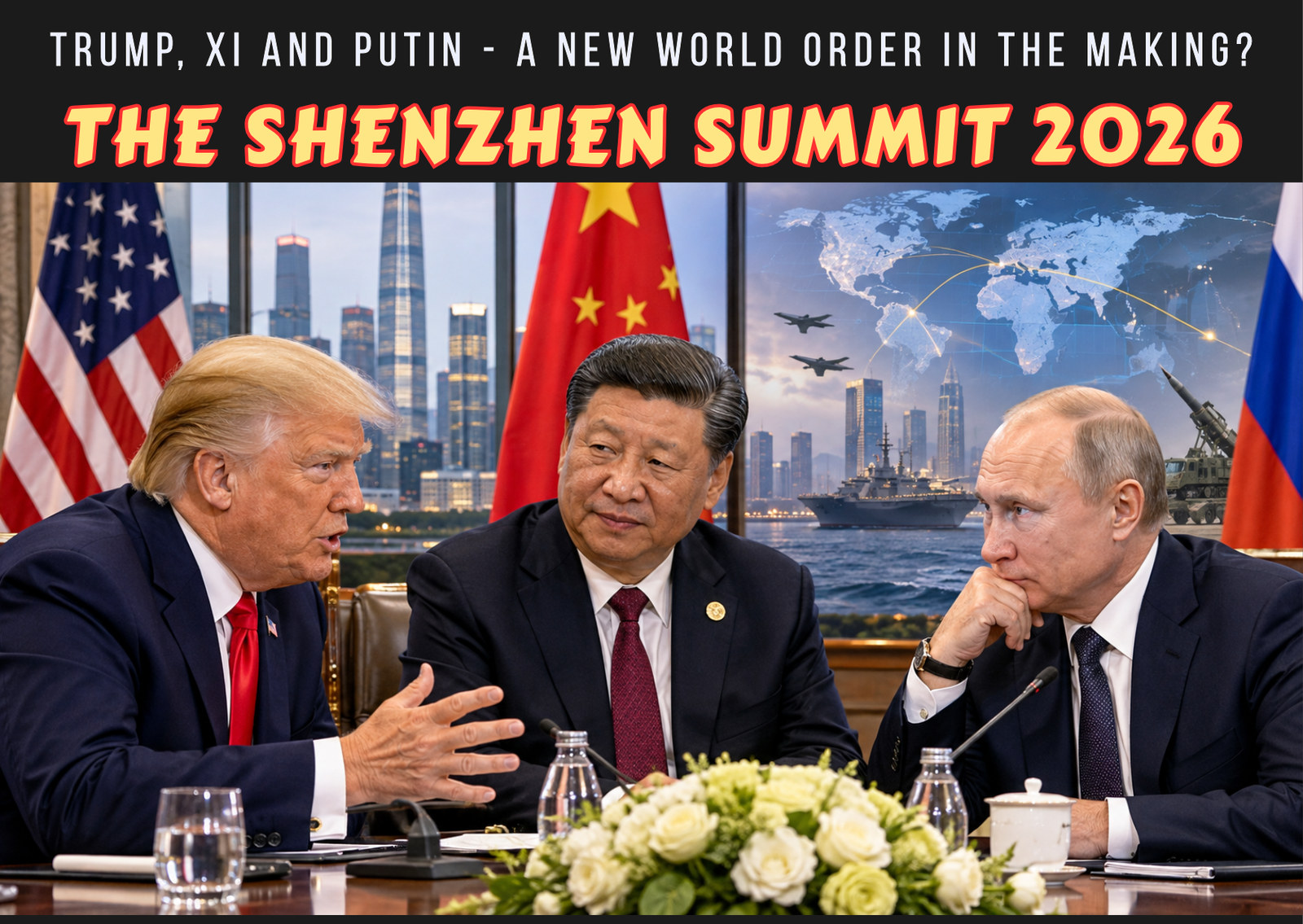
The first-ever trilateral summit of Donald Trump, Xi Jinping and Vladimir Putin
produced a four-point declaration toward peace — and not a single line about the
wars that define the age. What ninety minutes at Kylin Villa actually achieved, and
what it exposed about the order that is taking shape.
(By Khalid Masood)
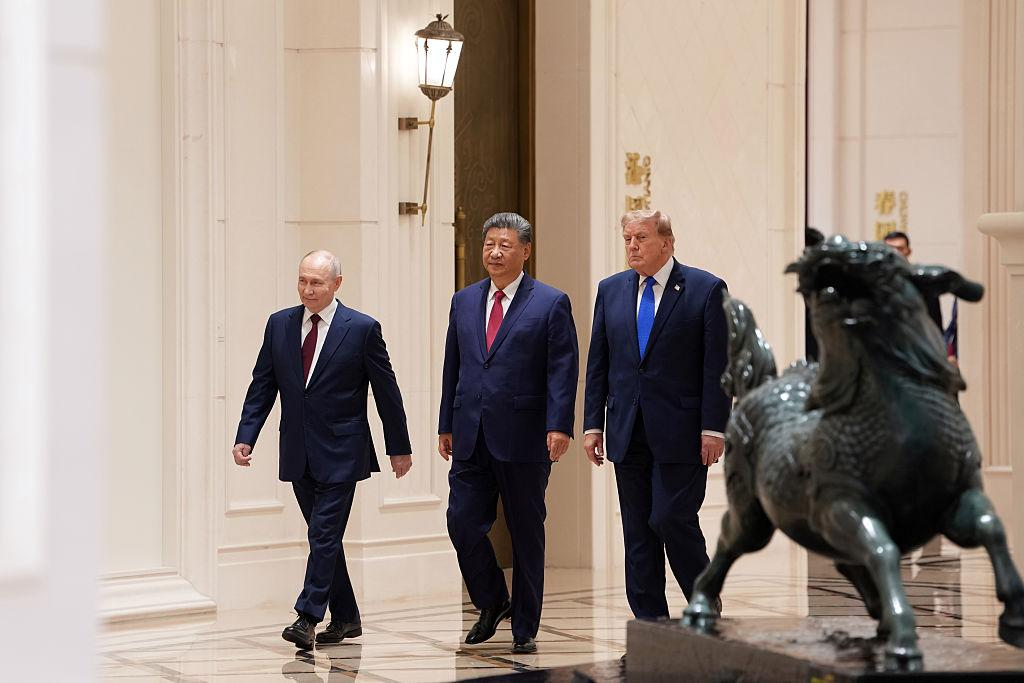
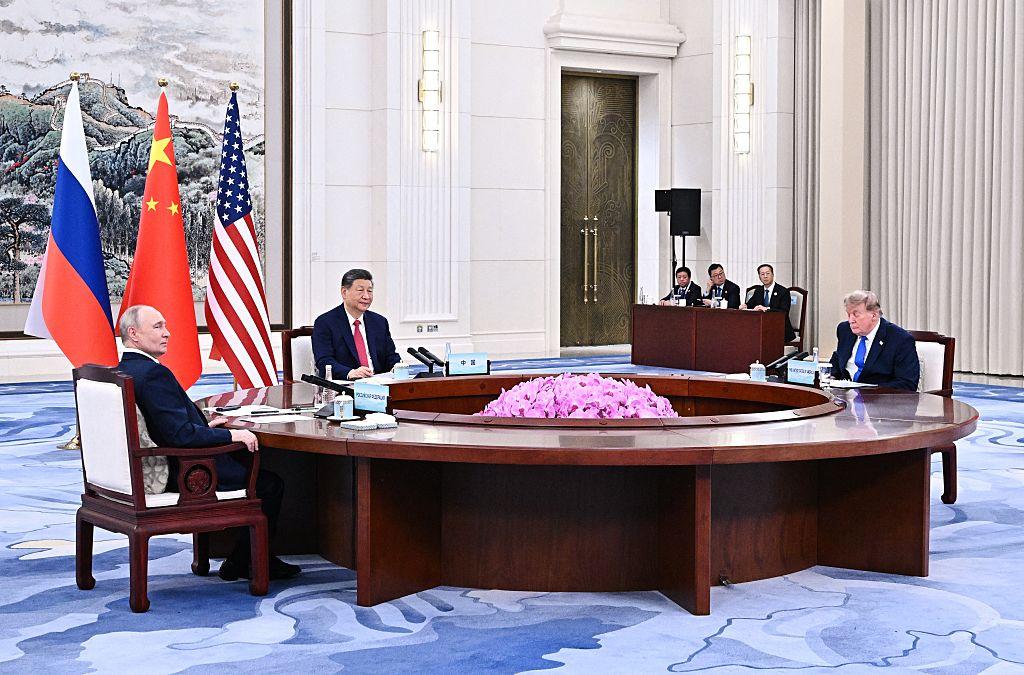
For the strategic observers around the globe, the shifting tectonic plates of global power are never merely abstract concepts; they dictate the immediate realities of national security, economic stability, and diplomatic maneuvering. On November 19, 2026, the global order witnessed a historic, albeit highly choreographed, convergence at the Kylin Villa in Shenzhen. For less than ninety minutes, the presidents of the United States, China, and Russia sat around the same table. It was the first time in history that the leaders of the world’s three largest nuclear powers met in a single trilateral format on the sidelines of the 33rd Asia-Pacific Economic Cooperation (APEC) summit.
While the imagery of Donald Trump, Xi Jinping, and Vladimir Putin sharing a stage will undoubtedly dominate the historical archives, the substance of the summit requires a more dispassionate, analytical dissection. As an independent analyst evaluating the geopolitical fallout for the Global South, it is evident that the Shenzhen Summit was less about forging a new world order and more about the great powers learning to manage a fragmented one.
The Kylin Villa Convergence: A Historic Trilateral
Staged on the margins of the APEC Economic Leaders’ Meeting, the sequence of the Shenzhen summit was highly deliberate. President Trump first engaged in a bilateral meeting with President Putin, followed by a bilateral with President Xi, before the three convened for the trilateral.
In their public remarks, the leaders struck carefully calibrated tones. President Trump emphasized his strong personal rapport with President Xi and projected optimism regarding cooperation on trade, investment, and conflict resolution. President Xi underscored the historic nature of the trilateral, advocating for mutual respect and the balancing of major-power interests. President Putin invoked the shared historical responsibility of the three nations for global peace, referencing their collective victory in the Second World War and the founding of the United Nations.
However, the private session, lasting roughly 70 to 80 minutes, stands in striking contrast to the week-long, world-altering bargains of the Yalta Conference in 1945. No complete transcript of the private discussion exists in the public record. What is known from official readouts and international reporting is considerably narrower than the maximalist expectations preceding the summit. This narrowness is, in itself, a profound strategic finding: a meeting of this magnitude can establish a framework for future negotiation, but it cannot unilaterally resolve entrenched conflicts over nuclear arms, Ukraine, Iran, or regional security in a single sitting.
Deconstructing the Shenzhen Declaration: Four Points of Contention and Consensus
The documentary centrepiece of the summit is the U.S.-Russia-China Heads of State Declaration toward Peace. A close reading of its four points reveals the precise intersections of shared interest and the hard boundaries of their cooperation.
Institutional Reform and the Global South’s Aspirations
The declaration commits the three governments to reform the United Nations to enhance its effectiveness in maintaining international peace. However, it offers no specifics regarding additional permanent members, veto modifications, or regional representation. For the Global South, including Pakistan and the broader Organisation of Islamic Cooperation (OIC), this omission is critical. The demands for equitable representation from Africa, Asia, and Latin America remain unaddressed. Furthermore, the complex dynamics of Security Council expansion—particularly the competing aspirations of nations like India, which seeks a permanent seat commensurate with its strategic and economic weight, and Pakistan, which advocates for a more equitable and representative UN structure—ensure that this clause remains a political platitude rather than an actionable roadmap.
Energy Security and the Geopolitics of Trade
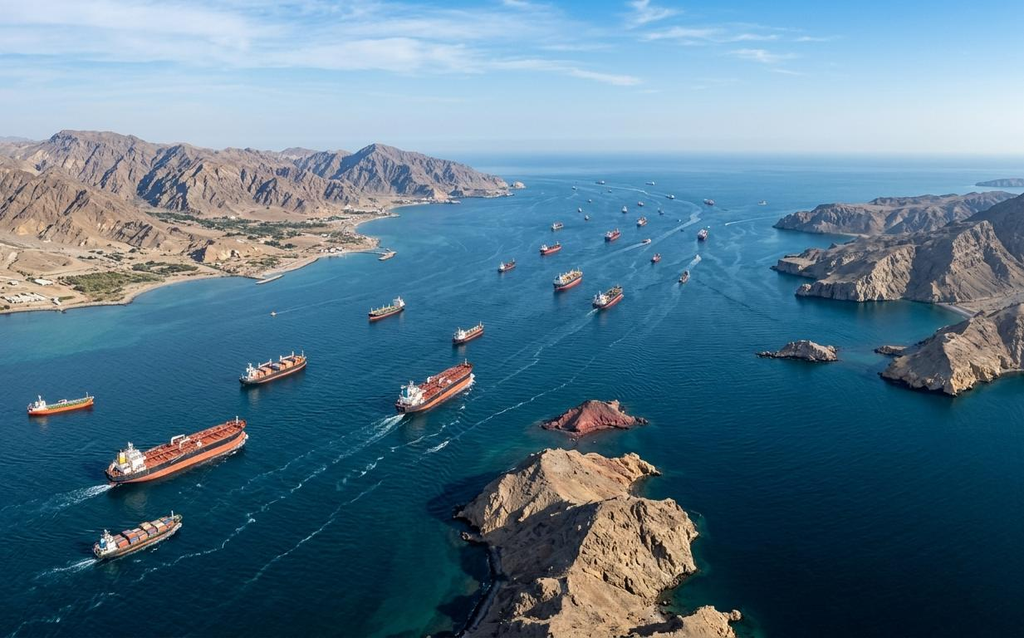
The leaders expressed an intention to increase the production and supply of refined petroleum products and reaffirmed the importance of stable energy flows. Yet, there are no production targets, export commitments, or coordination mechanisms. For energy-importing economies like Pakistan, stable energy flows through critical chokepoints like the Strait of Hormuz are vital for inflation control and economic growth. The declaration’s lack of binding commercial arrangements means that global energy markets will remain subject to the volatile whims of geopolitical rivalry rather than coordinated stabilization.
Jurisdictional Immunities and International Law
The text emphasizes state consent and the immunities of state officials, explicitly opposing abuses of jurisdiction by the International Criminal Court (ICC). While this does not cancel President Putin’s ICC arrest warrant, it provides a pointed diplomatic shield. From Moscow’s perspective, this language is a highly useful outcome that subtly challenges the jurisdictional reach of Western-led international judicial institutions without altering the formal legal positions of the signatories.
The Nuclear Imperative: Navigating the Post-New START Void
Perhaps the most consequential, yet fragile, achievement is the affirmation that “nuclear war cannot be won and must never be fought,” coupled with an agreement to dialogue on reducing nuclear risks. This is significant because the New START treaty—the last legally binding limit on the strategic arsenals of the U.S. and Russia—expired in February 2026.
China’s expanding nuclear arsenal complicates any successor arrangement. A three-party treaty must account for strategic warheads, delivery vehicles, missile defenses, and hypersonic weapons, while also considering the security calculus of other nuclear-armed states, including India and Pakistan. While the commitment to dialogue is a necessary political signal, dialogue without verification, timetables, and measurable obligations cannot prevent a renewed nuclear arms race. The true test of Shenzhen will be whether a permanent negotiating mechanism emerges from this commitment.
The Ukraine Conundrum: Great Power Diplomacy and Sovereign Realities
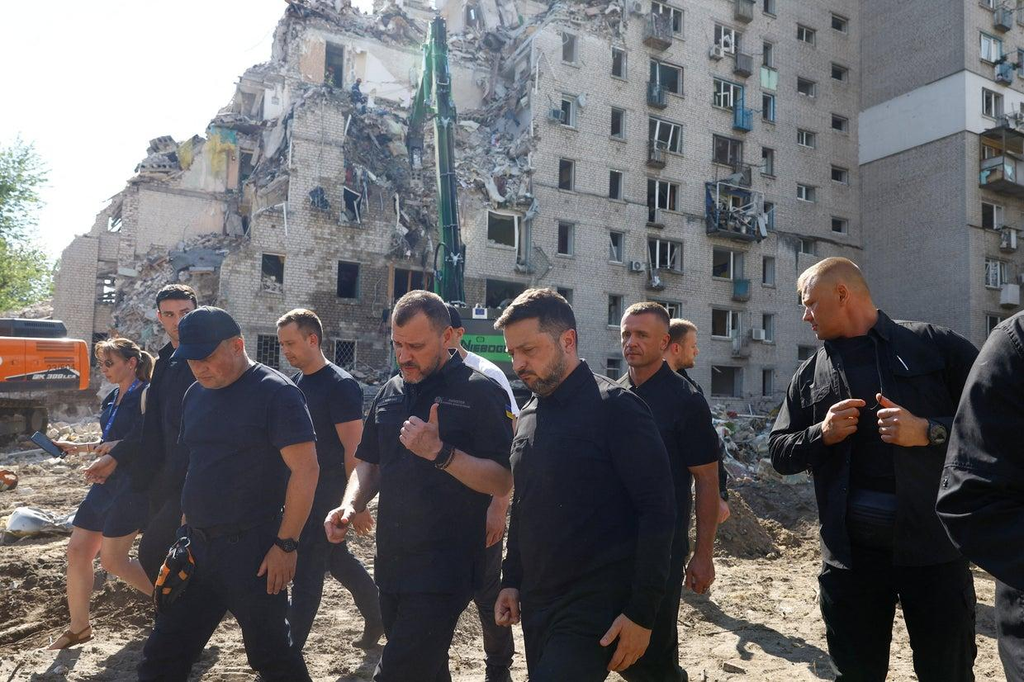
The most politically sensitive silence in the Shenzhen Declaration concerns the war in Ukraine. The leaders discussed peace in general terms, but the declaration never named the country. President Trump’s strategic calculus appears to rely on China’s economic leverage over Moscow and Putin’s role as the ultimate decision-maker in the Kremlin. However, no tangible momentum toward a settlement was announced in Shenzhen.
The diplomatic follow-up quickly shifted to Berlin, where Trump, alongside his envoys, met with Ukrainian President Volodymyr Zelenskyy and European leaders. Trump reportedly urged European leaders to engage Moscow directly, asserting that Putin was growing weary of the conflict.
This dynamic evokes the historical cautionary tale of Yalta. A sustainable peace requires Ukrainian participation and consent, credible security guarantees, and a broader European security understanding. The world must remain highly cautious whenever the strongest states discuss international peace without the direct participation of the countries whose sovereignty and territorial integrity are at stake. No settlement can be durable if a nation is treated as an object of negotiation rather than an independent participant.
Strategic Audits: Assessing the Leaders’ Outcomes
A summit must be judged by what each participant gained, conceded, and failed to achieve.
- President Xi likely secured the greatest immediate advantage. China hosted the leaders of its two primary strategic competitors, projected itself as an indispensable center of global diplomacy, and made no public concessions on Taiwan, trade, or its partnership with Russia.
- President Putin achieved international recognition without substantive concession. He reinforced his relationship with Beijing and utilized the declaration’s language on state immunity to bolster his diplomatic standing, despite his ICC warrant.
- President Trump successfully kept communication channels open with his strategic rivals and highlighted a proposed $30 billion trade tariff reduction. However, his principal objectives—a nuclear reduction agreement, a resolution in Ukraine, and Chinese or Russian assistance in containing Iran—remain unfulfilled.
The Architecture of Tomorrow: Managed Multipolarity and Regional Implications
The systemic question underlying Shenzhen is whether the architects of the post-1945 international order are negotiating its replacement or merely learning to manage a world where uncontested supremacy is impossible. The evidence strongly supports the latter.
The emerging system is not strictly tripolar, but genuinely multipolar. Washington retains its vast alliance network; Beijing commands immense economic and industrial weight; Moscow relies on its nuclear arsenal and energy resources. Around them, other centers of power—including the European Union, Japan, Türkiye, Brazil, and India—are asserting strategic autonomy.
For Pakistan, a nation situated at the complex crossroads of South Asia, Central Asia, and the Middle East, the post-Shenzhen reality demands a recalibration of strategic priorities. In a world where great powers are engaged in “managed strategic rivalry”—maintaining dialogue while continuing competition—the stakes for smaller and middle powers are concrete. Regional stability, counterterrorism operations, and economic pragmatism cannot be outsourced to great-power patronage. Islamabad’s sensible course remains the rigorous pursuit of strategic autonomy, ensuring that its national security and economic interests are insulated from the vagaries of U.S.-China-Russia dynamics. Furthermore, as regional powers like India align their military and strategic postures (such as the adoption of ‘Defensive Offence’ doctrines) to this new multipolar reality, Pakistan must ensure its own counterterrorism and conventional deterrence strategies remain robust, fact-based, and adaptable.
The Horizon: What to Monitor in the Post-Shenzhen Era
The immediate test of the summit’s substance arrives on November 20, 2026, with President Trump’s scheduled address to reporters. Because the summit concluded without a conventional closing press conference, the White House’s initial public accounting has left considerable ambiguity.
Strategic analysts will be scrutinizing six critical areas:
- Whether specific, verifiable commitments on Ukraine were extracted from Moscow.
- Whether the nuclear risk-reduction dialogue has been assigned a substantive framework.
- Whether Beijing has agreed to leverage its influence regarding the conflict in Iran.
- The exact parameters of the proposed trade and technology tariff reductions.
- What concessions Washington is offering Moscow in exchange for renewed engagement.
- How America’s traditional allies in Europe and the Indo-Pacific will be integrated into this new diplomatic phase.
Presidential statements, however, must ultimately be measured against official policy documents and subsequent actions. A press conference is not proof of a breakthrough.
Conclusion
The Shenzhen Summit did not establish a new world order; it established something more limited, yet profoundly significant. The three most powerful nuclear states have formally accepted the necessity of talking to one another, even where their strategic interests fundamentally diverge.
If nuclear risk-reduction mechanisms take shape, and if the conflicts in Eastern Europe and the Middle East move toward verifiable settlements, Shenzhen may eventually be remembered as the genesis of a vital diplomatic transformation. Conversely, if the declaration remains unimplemented while great-power competition intensifies, it will stand as an impressive demonstration of symbolism devoid of substance. For the global community, and particularly for nations navigating the delicate corridors of the Global South, the defining question of the post-Shenzhen era is clear: will the conversation opened at Kylin Villa produce a resilient international understanding, or merely postpone the next great confrontation? The answer will not be found in the photographs of the summit, but in the rigorous, unglamorous work of the diplomacy that must now follow.