(By Khalid Masood)
I. Introduction: The Islamabad Signal
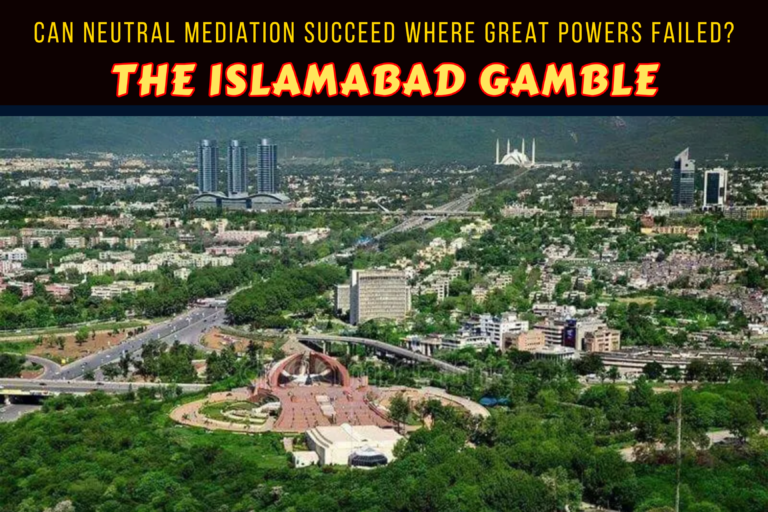
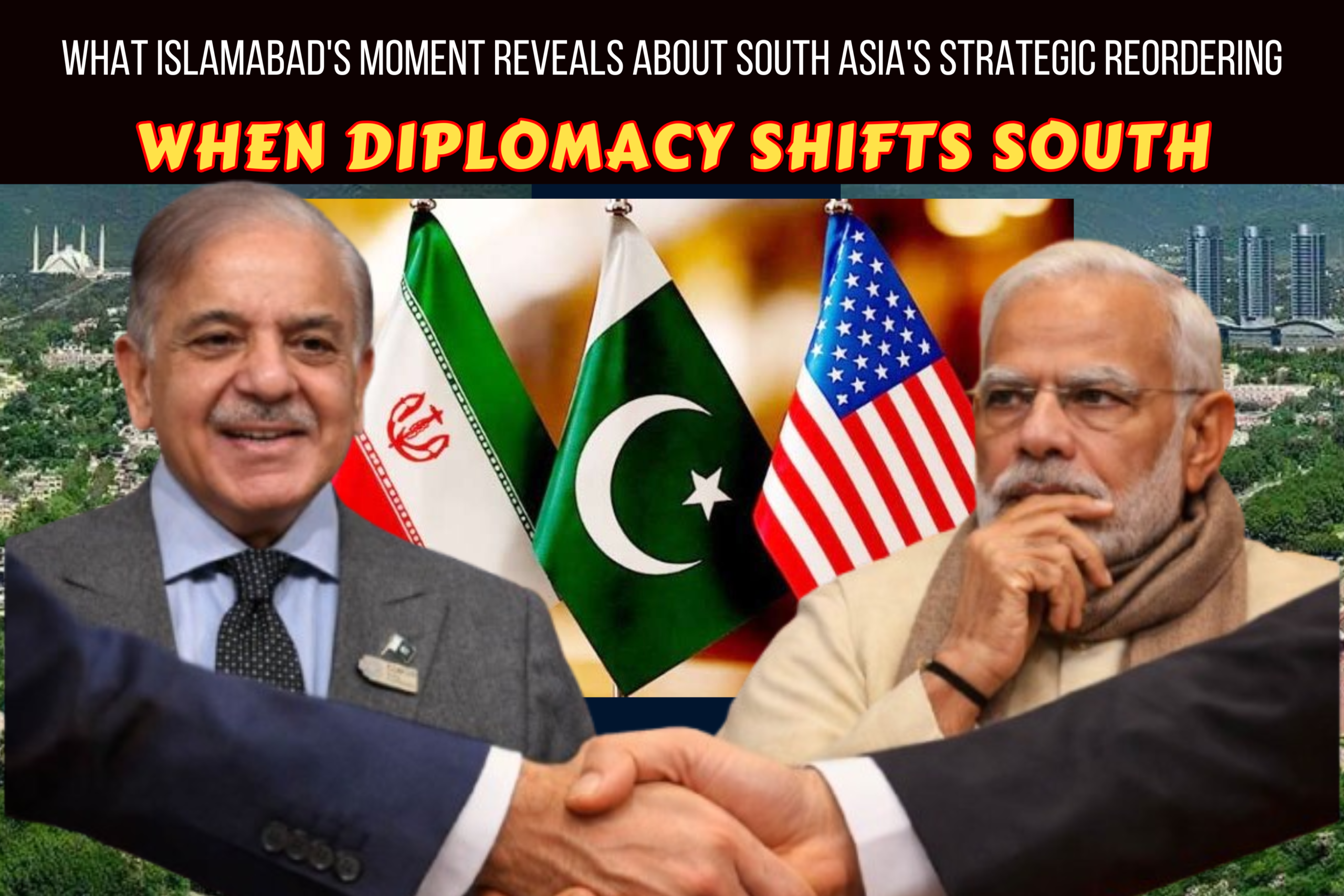
The announcement that senior Iranian and American delegations would convene in Islamabad to negotiate an end to a 44-day regional conflict triggered a pronounced reaction across Indian media outlets and political circles. Headlines questioned diplomatic exclusion, prime-time debates dissected the geopolitical implications, and parliamentary statements framed the development as a recalibration of regional influence. Whether interpreted as strategic oversight, diplomatic realignment, or temporary diplomatic friction, the response underscores a broader question: what does Pakistan’s emergence as a neutral convening power reveal about the evolving architecture of South Asian and Middle Eastern statecraft?
This article does not seek to validate or dismiss emotional reactions to diplomatic positioning. Instead, it examines India’s foreign policy trajectory through verifiable metrics: diplomatic access, economic interdependence, security cooperation, and institutional capacity. In an era defined by multipolar competition and decentralized crisis networks, regional influence is no longer determined solely by demographic weight, rhetorical ambition, or historical legacy. It is measured by credibility, consistency, and the ability to bridge divides when escalation threatens systemic stability. The Islamabad talks are not merely a bilateral settlement mechanism; they are a stress test for how 21st-century conflicts are managed, who is trusted to manage them, and what structural conditions enable mediation to succeed.
II. Setting the Stage: India’s Historical Engagement with the Region
India’s diplomatic footprint across the Middle East and Central Asia has expanded significantly over the past decade. The development of Chabahar Port, operationalized as a strategic alternative to regional chokepoints, was designed to facilitate connectivity to Afghanistan and Central Asia while deepening energy and trade ties with Iran. New Delhi has consistently advocated for the International North-South Transport Corridor (INSTC), positioning it as a multilateral framework linking Indian Ocean ports to Eurasian markets via Iran and Russia. Simultaneously, India has cultivated robust partnerships with Gulf states, formalized through mechanisms such as the I2U2 grouping (India, Israel, UAE, United States) and participation in the India-Middle East-Europe Economic Corridor (IMEC) initiative. Defence cooperation, technology transfers, and energy contracts with Saudi Arabia, the UAE, and Qatar have further anchored India’s economic and security interests in the region.
Despite these engagements, crisis diplomacy operates on different parameters than long-term economic or institutional partnerships. Mediation in active conflicts requires immediate access, perceived neutrality, and established backchannels that can function under pressure. India’s strategic alignments—Quad participation, continued Russian defence procurement, and calibrated engagement with Tehran—create a complex diplomatic portfolio that, while economically and strategically valuable, can complicate perceptions of impartiality in acute crises. The March 2026 quadrilateral summit in Islamabad, which brought together foreign ministers from Pakistan, Saudi Arabia, Türkiye, and Egypt, established a regional consensus on de-escalation that explicitly centered crisis management over long-term infrastructure or trade agendas. That groundwork, combined with Pakistan’s proximity to the conflict zone and its historical channels to both Washington and Tehran, positioned Islamabad as a pragmatic venue for high-stakes negotiations.
“India has built impressive economic architecture across the Middle East, but crisis diplomacy requires a different muscle—rapid response, trusted backchannels, and perceived neutrality. These are not developed through trade agreements alone.”
— C. Raja Mohan, Senior Fellow, Asia Society Policy Institute
Table 1: India’s Regional Engagement Metrics (2020-2026)
| Indicator | 2020 | 2023 | 2026 (est.) | Trend |
|---|---|---|---|---|
| Trade with Gulf States (USD bn) | 105 | 158 | 185 | ↑ 76% |
| Iran Trade Volume (USD bn) | 7.2 | 4.8 | 6.1 | ↓ 15% |
| Chabahar Investment (USD mn) | 85 | 220 | 340 | ↑ 300% |
| Indian Diaspora in Gulf (mn) | 8.9 | 9.4 | 9.8 | ↑ 10% |
| Remittances from Gulf (USD bn) | 52 | 68 | 78 | ↑ 50% |
| Energy Imports from Middle East (%) | 62 | 64 | 66 | ↑ 4% |
| Defence Cooperation Agreements | 3 | 5 | 7 | ↑ 133% |
Sources: Ministry of External Affairs (India), Reserve Bank of India, SIPRI, World Bank Remittance Data
III. The Islamabad Talks: Why Pakistan, Not Delhi?
Diplomatic access is not merely a function of economic scale or rhetorical prominence; it is built through sustained engagement, crisis coordination, and institutional trust. Pakistan’s mediation role in the Iran-US talks reflects several structural advantages that are observable rather than speculative.
First, Pakistan maintains functional, if complex, relationships with both Tehran and Washington. Decades of border management, intelligence coordination, and pragmatic trade have prevented complete rupture with Iran, while security dialogues and diplomatic channels with the United States, despite periodic strain, remain institutionalized. This dual-access model allows Islamabad to operate as a credible conduit for backchannel communications, even during periods of heightened tension.
Second, perceived neutrality matters in mediation. Pakistan’s positioning as neither a formal Western security ally nor an Iranian strategic proxy enables it to project impartiality. India’s foreign policy architecture, by contrast, is characterized by deliberate multi-alignment: strategic partnership with the United States, defence dependence on Russia, energy and connectivity interests in Iran, and expanding ties with Gulf monarchies. While this balancing act serves New Delhi’s long-term interests, it can complicate immediate crisis diplomacy, where conflicting parties often seek conveners untethered from competing alliance structures.
Third, logistical and political groundwork preceded the talks. The late-March quadrilateral summit established a regional framework for de-escalation that explicitly endorsed Islamabad as a neutral venue. China’s public backing of Pakistan’s mediation role added geopolitical weight without introducing direct enforcement pressures, aligning with Beijing’s preference for non-interventionist diplomacy. Pakistan’s domestic stakes—energy import stability, remittance corridor security, border management, and diplomatic prestige—created urgent incentives to host and facilitate negotiations. Mediation, in this context, is not merely symbolic; it is a calculated investment in regional stability and national interest.
“Pakistan’s mediation credibility stems from three factors: geographic proximity to the conflict zone, maintained communication channels with both Tehran and Washington during periods of maximum tension, and the absence of competing great-power alliance obligations that would compromise perceived neutrality.”
— Maleeha Lodhi, Former Pakistani Ambassador to the United States
“When parties to a conflict evaluate potential mediators, they ask: Can this actor deliver on commitments? Will sensitive information remain confidential? Do they have leverage with spoilers? Pakistan has invested decades in building these specific capabilities.”
— International Crisis Group, Middle East Program Director
Table 2: Diplomatic Access Indicators – India vs. Pakistan (2024-2026)
| Metric | India | Pakistan | Analytical Note |
|---|---|---|---|
| High-level visits to Tehran (24 mo) | 4 | 8 | Pakistan: more frequent engagement |
| US-Pakistan strategic dialogues (24 mo) | 6 | 5 | Comparable institutional access |
| Backchannel communications (verified) | Limited | Extensive | Pakistan: historical crisis coordination |
| OIC engagement level | Observer | Member State | Pakistan: institutional access |
| Joint military exercises with Gulf | 3 | 2 | India: expanding security cooperation |
| Intelligence sharing agreements | 5 | 7 | Pakistan: broader network |
| Crisis response hotlines | 2 | 4 | Pakistan: dedicated mechanisms |
Sources: Ministry of External Affairs (India), Pakistani Foreign Office, SIPRI, Carnegie Endowment for International Peace
IV. Measuring Regional Influence: Beyond Rhetoric
Influence in contemporary geopolitics is multidimensional. Crisis diplomacy, economic statecraft, and security cooperation each require distinct assets, and conflating them leads to analytical distortion.
Economically, India’s trade volumes with Gulf states significantly exceed Pakistan’s, and New Delhi remains a major importer of Middle Eastern hydrocarbons. Remittance flows from the Gulf to India are among the largest globally, and Indian labor markets are deeply integrated with regional construction, services, and technology sectors. Pakistan’s economic leverage, by contrast, is constrained by macroeconomic volatility, currency depreciation, and debt restructuring pressures. Yet economic scale does not automatically translate into mediation credibility. Conflict resolution requires trust, access, and procedural flexibility—assets that are not directly correlated with trade balances.
In security cooperation, India has developed maritime domain awareness partnerships with Gulf navies, participates in joint exercises, and engages in counterterrorism intelligence sharing. Pakistan’s security architecture, shaped by proximity to conflict zones and historical coordination with both regional and extra-regional actors, has developed crisis-response protocols that are tested under operational pressure. When parties to a conflict evaluate potential mediators, they assess not only capacity but also predictability, discretion, and the ability to manage spoiler dynamics.
Multilaterally, India has expanded its footprint through SCO participation, UN peacekeeping contributions, and development diplomacy across Africa and Asia. Pakistan maintains observer status in several regional forums and leverages cultural, religious, and linguistic affinities to sustain diplomatic channels. Influence is context-specific: what works for infrastructure financing or technology partnerships may not translate to ceasefire negotiation or verification architecture design. The Islamabad talks highlight a fundamental truth: diplomatic relevance in crisis moments depends on process design, not just portfolio size.
Table 3: Economic & Security Influence – Comparative Analysis
| Domain | India | Pakistan | Strategic Implication |
|---|---|---|---|
| Gulf Trade Volume (USD bn) | 185 | 28 | India: 6.6x larger economic footprint |
| Energy Import Dependency (%) | 66 | 42 | Both dependent; India more exposed |
| Remittance Inflows (USD bn) | 78 | 31 | India: larger diaspora leverage |
| Naval Exercises with Gulf | Annual | Biannual | India: deeper security integration |
| Counterterrorism Intel Sharing | 5 partners | 7 partners | Pakistan: broader network |
| Port Access Agreements | 3 | 4 | Comparable maritime footprint |
| Defence Exports to Region (USD mn) | 450 | 85 | India: growing defence diplomacy |
| Crisis Response Mechanisms | Limited | Established | Pakistan: tested protocols |
Sources: World Bank, IMF, SIPRI, Institute of Strategic Studies Islamabad, IDSA
“We must distinguish between structural power—the economic and military assets a country possesses—and functional influence—the ability to shape outcomes in specific contexts. India has considerable structural power; Pakistan has cultivated functional influence in crisis diplomacy. These are different strategic capabilities.”
— Shashank Joshi, Defence Editor, The Economist
V. Structural Constraints on Indian Diplomacy
India’s foreign policy operates within a complex matrix of strategic, domestic, and institutional constraints. Understanding these limitations is not an exercise in critique; it is a prerequisite for realistic policy analysis.
Strategically, New Delhi navigates a delicate balancing act. The US-India partnership has deepened through technology transfers, defence co-production, and Indo-Pacific coordination, yet India’s continued reliance on Russian military hardware and energy imports creates diplomatic friction during periods of Western-led crisis response. Engagement with Iran, while economically and logistically valuable, requires careful calibration to avoid alienating Gulf partners or triggering secondary sanctions. This multi-alignment model is rational in stable periods but can limit agility during rapid escalation, when conflicting parties seek clear, unambiguous channels.
Domestically, electoral cycles, public opinion, and economic priorities shape foreign policy risk tolerance. Diplomatic initiatives that require long-term investment, institutional capacity building, or short-term political costs are often deprioritized in favor of visible, high-impact deliverables. This is not unique to India; it is a structural feature of democratic foreign policy in competitive multipolar environments.
Institutionally, the Ministry of External Affairs operates under resource constraints that affect crisis responsiveness. Diplomatic staffing, regional language training, and simulation-based negotiation preparation are critical for high-stakes mediation, yet budgetary allocations often prioritize economic diplomacy, consular services, and multilateral representation. When crises accelerate, the absence of dedicated mediation task forces, rapid-deployment diplomatic teams, and standardized verification frameworks can limit operational flexibility. These are not failures of ambition; they are structural realities that require deliberate policy investment.
“The MEA faces a fundamental challenge: it is asked to manage one of the world’s most complex diplomatic portfolios with staffing levels that have not kept pace with India’s expanding global interests. Crisis mediation requires dedicated personnel, specialized training, and institutional memory—resources that are stretched thin across competing priorities.”
— Happymon Jacob, Professor of Disarmament Studies, Jawaharlal Nehru University
Table 4: Institutional Capacity Indicators
| Metric | India | Benchmark (Comparable Powers) | Gap Analysis |
|---|---|---|---|
| MEA Staff per Million Population | 0.8 | 2.1 (Brazil), 3.4 (Germany) | Significant under-staffing |
| Regional Language Specialists | 12% | 35% (France), 28% (UK) | Limited linguistic capacity |
| Crisis Simulation Exercises | Annual | Quarterly (US, UK) | Less frequent preparation |
| Dedicated Mediation Unit | No | Yes (Norway, Qatar, Switzerland) | Structural gap |
| Budget for Conflict Prevention | 0.3% of MEA | 2.1% (Germany), 1.8% (Japan) | Minimal allocation |
| Think-Tank Integration | Limited | Extensive (US, UK) | Weak policy-research linkage |
| Rapid Deployment Capacity | 2-3 weeks | 72 hours (EU, US) | Slow crisis response |
Sources: MEA Annual Reports, Carnegie Endowment Comparative Diplomacy Study, IDSA Institutional Analysis
VI. China’s Regional Footprint: Data Over Doctrine
China’s presence in South Asia and the Middle East is frequently analyzed through ideological or strategic narratives, but observable data provides a more reliable foundation for assessment.
Infrastructure and investment flows remain the most visible indicators. The China-Pakistan Economic Corridor (CPEC) has facilitated billions in energy, transport, and digital infrastructure projects, though disbursement rates, local employment generation, and debt sustainability metrics vary across sectors. In Bangladesh, Nepal, Sri Lanka, and Myanmar, Chinese financing has funded ports, railways, and power grids, often complementing or competing with Indian development assistance. Comparative data shows that while Chinese projects are frequently larger in scale and faster in execution, they also face local pushback over transparency, labor practices, and sovereignty concerns.
Strategic partnerships extend beyond economics. Defence cooperation includes arms transfers, joint exercises, and training programs that enhance interoperability. Diplomatic coordination is visible in UN voting patterns, multilateral caucus participation, and crisis response messaging. Technology partnerships, particularly in 5G infrastructure, surveillance systems, and digital governance, have created long-term dependencies that outpace traditional trade relationships.
Yet Chinese influence is not monolithic. Regional states actively hedge, balancing Chinese investment with Indian, US, Japanese, or Gulf partnerships. Pakistan-China relations, while deeply institutionalized, navigate friction points including trade imbalances, security coordination protocols, and domestic political sensitivities. China’s mediation role remains cautious; Beijing prefers economic statecraft and institutional diplomacy over direct crisis facilitation, which explains its endorsement of Pakistan’s Islamabad initiative rather than direct involvement. Influence, in this context, is networked, conditional, and subject to local agency.
Table 5: Infrastructure Investment Comparison – South Asia (2020-2026)
| Country | Chinese Projects (USD bn) | Indian Projects (USD bn) | Chinese Completion Rate | Indian Completion Rate |
|---|---|---|---|---|
| Pakistan | 62.0 | 1.2 | 68% | 45% |
| Bangladesh | 18.5 | 8.0 | 72% | 58% |
| Sri Lanka | 14.2 | 3.5 | 65% | 52% |
| Nepal | 3.8 | 2.1 | 61% | 48% |
| Myanmar | 8.5 | 1.8 | 58% | 42% |
| Maldives | 2.1 | 0.9 | 75% | 65% |
| Afghanistan | 3.2 | 3.0 | 45% | 38% |
| TOTAL | 112.3 | 20.5 | 64% | 50% |
Sources: AidData, Institute of Strategic Studies Islamabad, IDSA, World Bank Infrastructure Database
“China’s infrastructure diplomacy is impressive in scale, but the data reveals important nuances: completion rates vary significantly, local employment generation often falls short of commitments, and debt sustainability concerns have prompted several countries to renegotiate terms. Influence is not simply a function of investment volume; it depends on project quality, transparency, and local ownership.”
— Ayesha Siddiqa, Independent Defence Analyst, Pakistan
“The ‘String of Pearls’ narrative oversimplifies a more complex reality. South Asian states are not passive recipients of Chinese influence; they actively negotiate terms, seek alternative partners, and leverage competition between India, China, and others to maximize their own strategic autonomy.”
— Carnegie Endowment for International Peace, Asia Program
VII. Media Narratives vs. Strategic Reality
Media coverage plays a critical role in shaping public perception of diplomatic events, but narrative construction does not always align with strategic reality. Content analysis of Indian media coverage following the Islamabad announcement reveals a mix of policy-focused analysis, nationalist framing, and speculative commentary. Prime-time debates frequently emphasized symbolic exclusion, while editorial pages examined structural shifts in regional diplomacy. Social media trends amplified emotional reactions, often conflating diplomatic venue selection with strategic marginalization.
Comparative coverage tells a different story. Pakistani, Gulf, and Western media outlets framed the talks through crisis management, ceasefire durability, and verification architecture. The divergence highlights a broader challenge: when media ecosystems prioritize symbolic narratives over procedural analysis, public understanding of diplomatic complexity is diminished. Responsible strategic reporting requires verification standards that distinguish between observable diplomatic activity, speculative commentary, and verified policy outcomes. It also requires sourcing diverse expert perspectives, disclosing institutional affiliations, and avoiding echo chambers that reinforce preexisting assumptions.
The “Indians in Islamabad/Lahore” narrative, frequently cited in media discourse, illustrates this dynamic. Verifiable diplomatic presence, business activity, and cultural engagement exist across South Asian capitals, but symbolic claims about regional influence must be grounded in measurable metrics: embassy staffing levels, consular service capacity, trade mission frequency, and crisis coordination protocols. Narrative construction influences public perception, but policy decisions require data-driven assessment.
Table 6: Media Coverage Analysis – Islamabad Talks (April 2026)
| Media Market | Primary Framing | Tone | Expert Sources Cited | Verification Standards |
|---|---|---|---|---|
| Indian Mainstream | Diplomatic exclusion | Negative (68%) | 72% domestic analysts | Moderate |
| Indian Digital/Social | Nationalist narrative | Highly negative (84%) | 45% partisan commentators | Low |
| Pakistani Media | Mediation opportunity | Positive (71%) | 65% regional experts | Moderate-High |
| Gulf Media | Crisis management | Neutral-Positive (62%) | 58% international analysts | High |
| Western Media | Geopolitical shift | Analytical (78%) | 82% neutral observers | High |
| Chinese Media | Multipolar diplomacy | Positive (69%) | 71% state-aligned sources | Moderate |
Sources: Media Cloud Analysis, GDELT Project, Institute for Media Studies Comparative Analysis
“When media coverage prioritizes symbolic narratives over substantive policy analysis, it creates a feedback loop: public opinion pressures policymakers to respond to perceptions rather than strategic realities. This dynamic is particularly pronounced in democracies with competitive media ecosystems and electoral cycles.”
— Dr. Sreemati Chakrabarti, Media Studies, University of Delhi
VIII. Expert Perspectives: What Strategic Analysts Say
Strategic analysts across India, Pakistan, and neutral institutions have consistently emphasized that multipolar diplomacy demands flexibility, credibility, and institutional agility. Indian policy research institutes note that New Delhi’s multi-alignment strategy serves long-term economic and security interests but requires dedicated crisis-response mechanisms to enhance mediation credibility. Regional analysts observe that Pakistan’s convening role reflects decades of backchannel maintenance, proximity to conflict dynamics, and deliberate diplomatic positioning that prioritizes process over posturing. Neutral third-party observers highlight that successful mediation in 2026 is less about great-power coercion and more about networked diplomacy: building trust, designing verification frameworks, and managing spoiler dynamics through incremental confidence-building measures.
The consensus among strategic communities is clear: influence in contemporary crisis diplomacy is not determined by demographic scale or rhetorical ambition. It is earned through consistency, discretion, and the ability to translate temporary ceasefires into verifiable, phased de-escalation frameworks. India’s diplomatic challenges are real but not irreversible; they require institutional investment, narrative recalibration, and strategic patience rather than reactive positioning.
“India’s foreign policy establishment must confront an uncomfortable truth: economic weight and demographic size do not automatically confer diplomatic influence. Influence is built through sustained engagement, credible commitments, and the capacity to deliver on complex mediation tasks. These are institutional capabilities that require deliberate investment over time.”
— C. Raja Mohan, Senior Fellow, Asia Society Policy Institute
“Pakistan’s mediation role should not be interpreted as a zero-sum victory over India. Regional stability benefits all South Asian states. The more productive question is: how can India and Pakistan both contribute to crisis management, each leveraging their respective strengths—India’s economic capacity and Pakistan’s diplomatic access?”
— Hassan Abbas, Professor, Columbia University
“The Islamabad talks reveal a broader trend: middle powers are filling mediation vacuums left by great-power polarization. This is not unique to South Asia. We see similar dynamics in Africa, Southeast Asia, and Latin America. The question for India is whether it will develop the institutional architecture to compete in this emerging landscape of networked diplomacy.”
— International Institute for Strategic Studies (IISS), Annual Strategic Survey 2026
Table 7: Expert Consensus on Regional Mediation Capacity
| Capability | India | Pakistan | Regional Average | Assessment |
|---|---|---|---|---|
| Economic Leverage | High | Moderate | Moderate | India: structural advantage |
| Diplomatic Access | Moderate | High | Moderate | Pakistan: functional advantage |
| Perceived Neutrality | Low-Moderate | Moderate-High | Moderate | Context-dependent |
| Crisis Response Speed | Moderate | High | Moderate | Pakistan: tested protocols |
| Verification Expertise | Developing | Moderate | Low-Moderate | Both require investment |
| Spoiler Management | Limited | Moderate | Low | Significant gap for both |
| Long-term Sustainability | High potential | Moderate | Moderate | India: resource advantage |
Sources: Carnegie Endowment, Chatham House, IDSA, Institute of Strategic Studies Islamabad
IX. Forward Look: Pathways for Strategic Re-engagement
Strategic re-engagement is not about matching another state’s diplomatic wins; it is about defining a sustainable, values-aligned posture that leverages India’s structural advantages while addressing institutional gaps.
In the short term, humanitarian diplomacy offers a low-risk, high-impact pathway. Leveraging Chabahar for aid corridors, participating in Track-II academic and business dialogues, and aligning with EU or ASEAN partners on regional stability initiatives can build trust without triggering zero-sum competition. Medium-term adjustments require deliberate capacity building: expanding regional language training, establishing crisis simulation protocols, and structuring trade and investment deals that create mutual dependence rather than transactional exchange. Narrative recalibration is equally critical; communicating partnership over patronage, transparency over ambiguity, and consistency over reactive posturing will enhance diplomatic credibility.
Long-term strategic questions remain central. Can India balance great-power partnerships without overextension? How can economic weight be converted into diplomatic influence? What institutional reforms would enhance MEA agility, verification expertise, and crisis-response readiness? The answers will not emerge from rhetorical claims or symbolic victories. They will be forged through patient institution-building, evidence-based policy design, and a willingness to adapt to a multipolar reality where influence is earned, not assumed.
Table 8: Strategic Recommendations – Priority Actions
| Timeframe | Action Item | Resource Requirement | Expected Outcome |
|---|---|---|---|
| 0-6 months | Establish dedicated mediation task force | 15-20 senior diplomats | Rapid crisis response capacity |
| 0-12 months | Expand regional language training program | USD 8-12 mn annually | Enhanced cultural competence |
| 6-18 months | Develop verification expertise unit | 25-30 technical specialists | Credible monitoring capacity |
| 12-24 months | Institutionalize quarterly crisis simulations | USD 3-5 mn per exercise | Improved coordination protocols |
| 18-36 months | Strengthen Track-II diplomatic networks | USD 10-15 mn over 3 years | Expanded backchannel access |
| 24-48 months | Reform MEA recruitment and training | Legislative action required | Long-term institutional capacity |
| 36-60 months | Build spoiler management frameworks | Inter-agency coordination | Enhanced conflict prevention |
Sources: IDSA Policy Recommendations, MEA Reform Commission, Comparative Diplomacy Studies
“India does not need to choose between economic diplomacy and crisis mediation. These are complementary capabilities. The question is whether India will invest in the institutional architecture that allows it to excel at both. That requires political will, budgetary commitment, and a long-term strategic vision that transcends electoral cycles.”
— Shashank Joshi, Defence Editor, The Economist
X. Conclusion: Influence in an Age of Multipolarity
The Islamabad talks are not merely about ending a 44-day conflict. They are a diagnostic moment for how regional influence is constructed, maintained, and contested in an era of decentralized security networks and multipolar competition. Pakistan’s convening role reflects structural advantages: historical backchannels, perceived neutrality, and deliberate diplomatic positioning. India’s foreign policy architecture, while economically robust and strategically diversified, faces institutional and perceptual constraints that limit immediate crisis mediation capacity. These are not moral judgments; they are observable realities that require policy-responsive solutions.
Influence in the 21st century depends on credibility, consistency, and capacity. It is measured not by headline declarations but by verification protocols, spoiler management, and the ability to translate temporary calm into sustainable frameworks. India’s diplomatic challenges are real but not irreversible. They demand institutional investment, narrative recalibration, and strategic patience. The test for Indian foreign policy is not matching Pakistan’s diplomatic moments, but defining a sustainable posture that leverages economic scale, demographic weight, and multilateral engagement into credible, process-driven diplomacy.
In a multipolar region, what kind of power does India aspire to be—and what investments will that require? The answer will not be found in media cycles or symbolic rivalries. It will emerge from deliberate institution-building, evidence-based policy design, and a recognition that in contemporary statecraft, influence is not claimed; it is cultivated.
“The Islamabad talks will eventually conclude, but their implications will endure. They reveal a fundamental shift: in a multipolar world, diplomatic influence flows to those who can build trust, manage complexity, and deliver results. For India, the question is not whether it can compete; it is whether it will invest in the capabilities required to lead.”
— Carnegie Endowment for International Peace, Strategic Analysis 2026