(By Quratulain Khalid)
Introduction: America Re-Enters a Familiar but Dangerous Phase
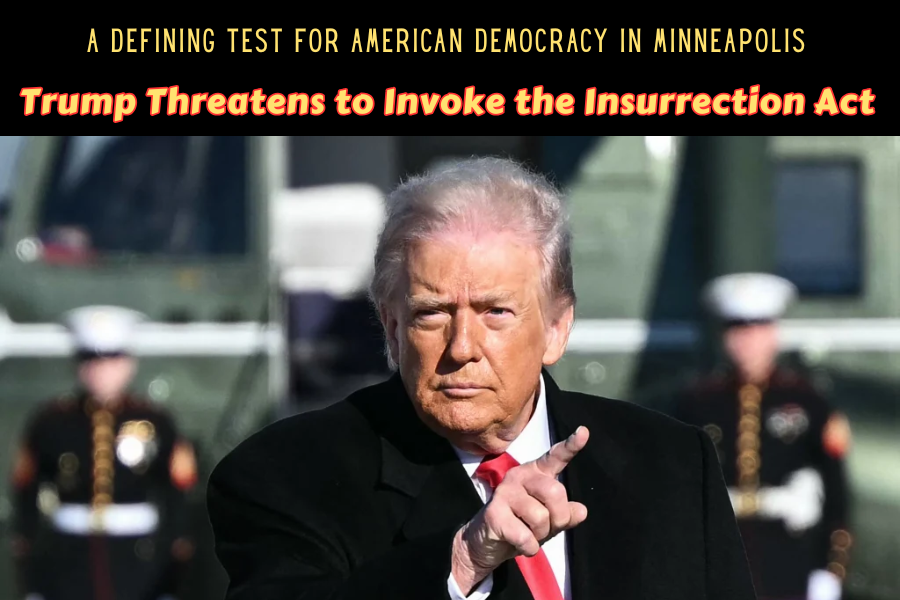
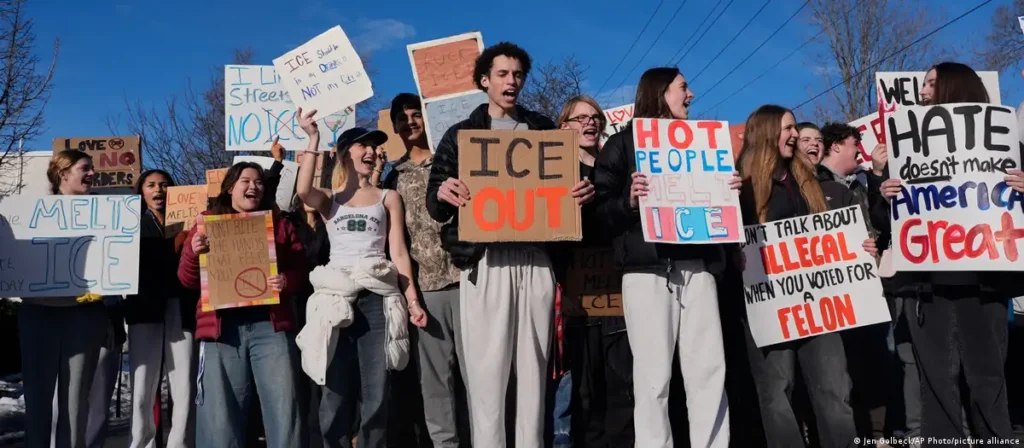
The United States, long presenting itself as the world’s foremost champion of democracy and civil liberties, is once again confronting a moment that tests the limits of its constitutional order. President Donald Trump, now governing in what many describe as “Trump 2.0,” has threatened to invoke the Insurrection Act in response to escalating protests and clashes in Minneapolis.
The unrest follows fatal incidents involving federal Immigration and Customs Enforcement (ICE) agents, reigniting old but unresolved debates over immigration enforcement, racial profiling, federal authority, and the militarization of domestic governance. Trump’s suggestion that active-duty military troops could be deployed on American streets has sent shockwaves not only across the United States, but throughout the international community.
This is not merely a Minneapolis story. It is a broader examination of how modern America responds to dissent—and what that response reveals about the future of its democracy.
Minneapolis Once Again at the Epicenter of National Unrest
Minneapolis occupies a unique and painful place in recent American history. The city became a global symbol of racial injustice following the 2020 killing of George Floyd, an event that ignited protests worldwide and reshaped conversations on policing and systemic racism.
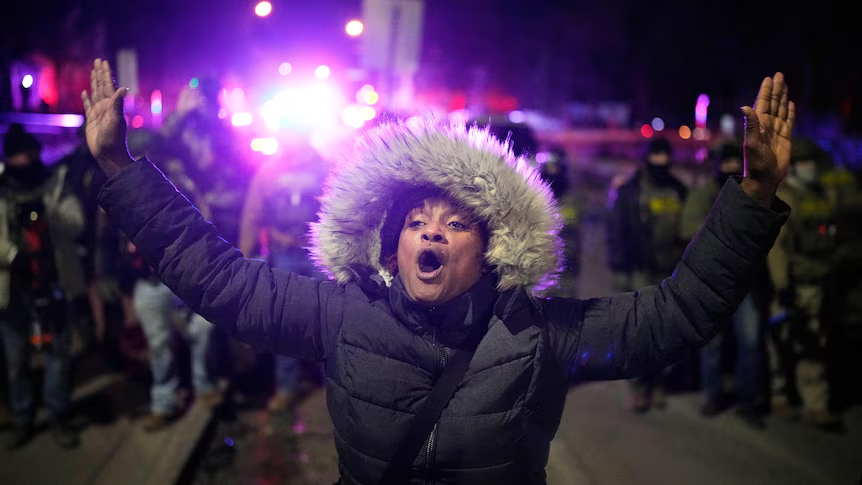
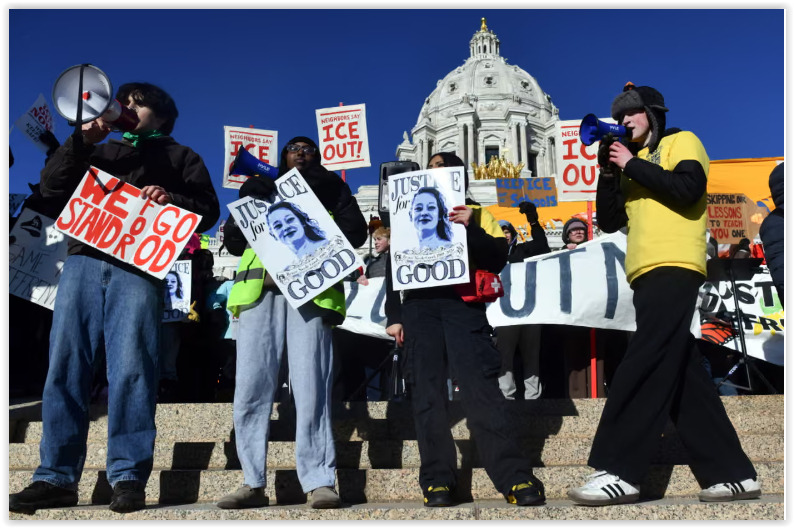
The current unrest began after fatal shootings involving federal ICE agents during enforcement operations. Official accounts emphasize threats to officer safety and federal property, while civil rights groups and community leaders argue the incidents reflect:
- Excessive use of force
- Aggressive and opaque immigration enforcement
- Racial and ethnic profiling
What began as peaceful demonstrations soon escalated as anger merged with long-standing distrust of federal agencies. As clashes intensified, Minneapolis once again became a flashpoint—prompting President Trump to consider extraordinary measures.
The Insurrection Act Explained: An Extraordinary Presidential Power
What Is the Insurrection Act?
The Insurrection Act of 1807 grants the U.S. president authority to deploy federal troops domestically to suppress rebellion, enforce federal law, or protect constitutional rights when state authorities are deemed unwilling or unable to do so.
Unlike the National Guard—typically under a governor’s control—the Insurrection Act allows the president to override state authority, placing military force directly under federal command.
Why Is It So Controversial?
The act is rarely used because it:
- Blurs the line between civilian law enforcement and military power.
- Undermines the principle of federalism.
- Risks politicization of the armed forces.
Historically, it has been invoked during moments of national crisis, including the Civil Rights Movement and the 1992 Los Angeles riots—always as a measure of last resort.
Trump 2.0 and Domestic Unrest: A Confrontational Governing Style
Trump’s second term has reinforced patterns established during his first presidency, but with fewer restraints and greater urgency.
His governing approach emphasizes:
- “Law and order” above dialogue.
- Centralized federal authority.
- A national security framing of domestic dissent.
Supporters argue this firmness is necessary to prevent cities from descending into chaos. Critics counter that dissent is being recast as subversion, creating justification for increasingly authoritarian responses.
Minneapolis, in this context, becomes both a policy test and a political signal.
Immigration Enforcement at the Core of the Crisis
At the heart of the unrest lies immigration policy, one of the most polarizing issues in American politics.
Under Trump 2.0:
- ICE operations have expanded.
- Enforcement priorities have widened.
- Federal agencies exert greater control over local jurisdictions.
Human rights organizations warn that these policies disproportionately impact:
- Immigrant families.
- Minority communities.
- Undocumented workers.
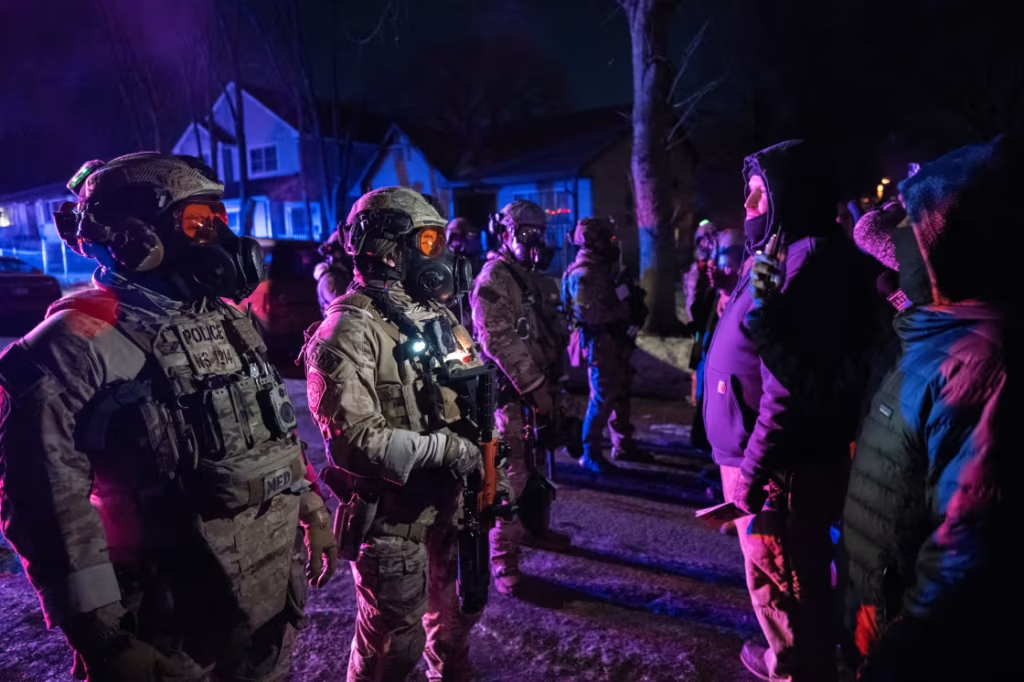
The fatal incidents involving ICE agents have intensified fears that immigration enforcement is becoming increasingly militarized, transforming civil administration into armed confrontation.
For immigrant communities—both inside the U.S. and abroad—this represents not just a policy shift, but a climate of fear.
Civil Liberties and Constitutional Concerns
Invoking the Insurrection Act would have profound implications for civil liberties.
Legal scholars warn such action could:
- Chill peaceful protest.
- Intimidate journalists and observers.
- Normalize military presence in civilian spaces.
The U.S. Constitution was designed to protect dissent, not suppress it. Frequent reliance on emergency powers risks hollowing out democratic norms while preserving their legal shell.
For a nation born from rebellion and protest, this trajectory is deeply unsettling.
Federal vs State Authority: A Constitutional Tension
One of the most alarming aspects of Trump’s threat is its challenge to state sovereignty.
Traditionally, governors manage unrest within their states. The Insurrection Act allows the president to bypass that system, raising fears of:
- Federal overreach.
- Politicization of law enforcement.
- Dangerous centralization of power.
This tension highlights a deeper question: is America governed by local democratic institutions—or by executive decree during moments of crisis?
What Does the U.S. Gain—and What Does It Risk?
The potential use of the Insurrection Act presents the United States with a stark trade-off between short-term control and long-term democratic resilience.
Potential Gains
Immediate Suppression of Unrest
Deploying federal troops could quickly restore surface-level order by deterring protests, securing federal buildings, and overwhelming local resistance. From a tactical standpoint, military presence can halt escalation faster than civilian law enforcement.
Strong Political Signaling to Core Supporters
Trump’s stance sends a clear message to his political base that disorder will not be tolerated. For supporters prioritizing law and order and strict immigration enforcement, invoking the Insurrection Act reinforces the image of decisive leadership.
Reinforcement of Federal Dominance
By asserting federal authority over state and local governments, the administration emphasizes Washington’s supremacy during national crises—allowing swift action unencumbered by political resistance at the local level.
Long-Term Risks
Normalization of Military Force in Civil Disputes
Once the military is used against civilian protests, the psychological and legal threshold for future deployments drops. Exceptional measures risk becoming routine tools of governance.
Erosion of Constitutional Protections
While legal, repeated use of emergency powers weakens constitutional restraint, conditioning citizens to accept curtailed freedoms in the name of security.
Loss of Global Credibility
America’s moral authority as a defender of democracy suffers when soldiers confront protesters. Authoritarian regimes gain rhetorical ammunition, citing U.S. precedent to justify repression.
History shows that nations rarely emerge stronger after weakening democratic safeguards.
Media, Misinformation, and Deepening Polarization
The crisis has unfolded within a hyper-polarized media ecosystem.
Social media amplifies selective footage, emotionally charged claims, and unverified narratives. Facts struggle to keep pace with outrage.
Supporters frame protests as violent riots threatening national security.
Critics describe Trump’s posture as authoritarian overreach bordering on undeclared martial law.
Between these extremes, truth is often obscured. As polarization deepens, trust in institutions erodes—and compromise becomes politically toxic.
Historical Parallels: Lessons Ignored
History offers warnings.
Military deployments in 1968 and 1992 restored temporary order but failed to address structural injustices. Force suppressed symptoms, not causes.
Minneapolis risks joining this pattern—another chapter in America’s unresolved struggle between authority and accountability.
International Implications: Why the World Is Watching
America’s internal conflicts reverberate globally.
- Allies worry about democratic backsliding
- Authoritarian states find justification for crackdowns
- Immigrant communities abroad fear harsher enforcement and reduced mobility
For countries with large U.S. diasporas—Pakistan, India, Mexico, the Philippines—the implications are personal and immediate.
A Turning Point for American Democracy
Trump’s threat to invoke the Insurrection Act is not merely a policy choice—it is a symbolic crossroads.
It forces Americans, and the world, to confront fundamental questions:
- How much power should one leader wield in a crisis?
- Where does order end and oppression begin?
- Can democracy survive prolonged polarization and emergency rule?
The answers will shape not only how Minneapolis is remembered—but how the United States defines itself in the decades ahead.
Conclusion: More Than a City, More Than a Moment
Minneapolis has once again become a mirror reflecting America’s deepest contradictions—freedom versus force, diversity versus division, democracy versus control.
Whether this moment becomes a cautionary episode or a lasting precedent will determine the trajectory of American democracy and its standing in the world.
One thing is certain: the consequences will reach far beyond Minneapolis.