(By Khalid Masood)
1. Introduction
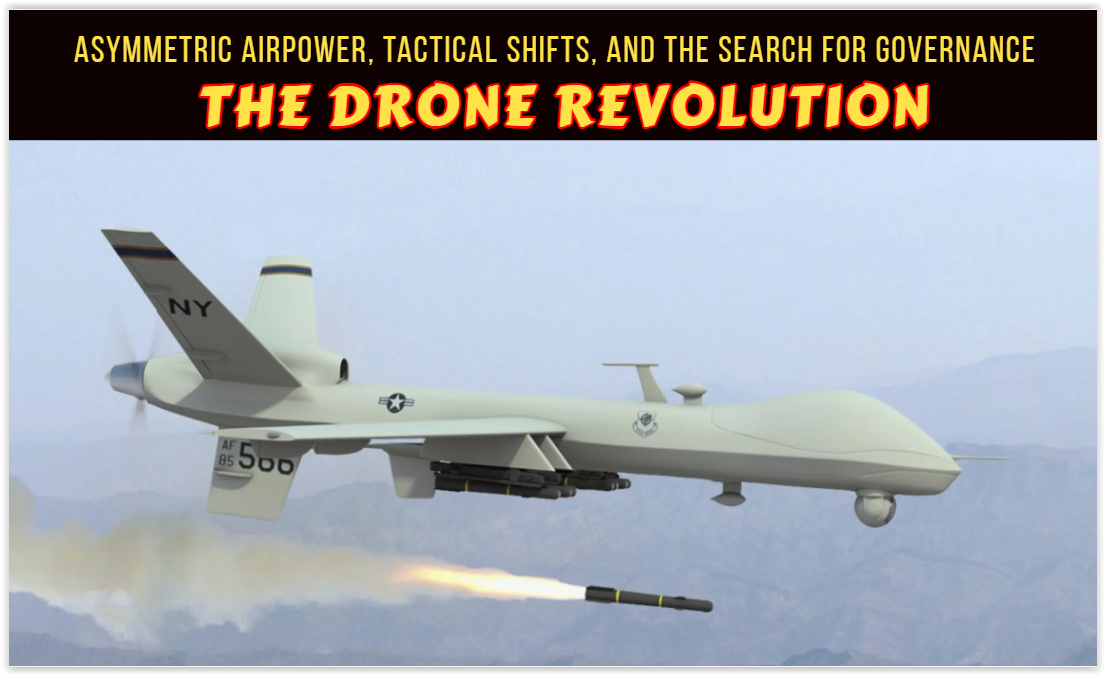
The integration of unmanned aerial systems (UAS) into modern conflict has moved from experimental deployment to operational standard across multiple theaters. First-person-view (FPV) drones, loitering munitions, and commercially adapted quadcopters are now routinely employed alongside conventional forces for reconnaissance, precision strike, and electronic warfare. This shift is often described as a “drone revolution,” though it reflects less a single technological breakthrough than a convergence of affordability, accessibility, and algorithmic assistance.
“We are witnessing a fundamental democratization of airpower. Systems that once required billions in investment and decades of development can now be assembled from commercial components for a fraction of the cost. This is not just a tactical change—it’s reshaping strategic calculations.”
— Dr. Sarah Mitchell, Defence Technology Analyst, International Institute for Strategic Studies (IISS)
This article examines documented trends in unmanned systems deployment, their impact on tactical and strategic planning, the geopolitical supply chains that sustain them, and the legal and humanitarian questions they raise. The evidence indicates that drones are democratizing airpower, compressing decision cycles, and operating within a regulatory environment that has yet to fully adapt. Addressing these dynamics will require coordinated approaches to defence planning, international law, and risk mitigation.
2. The Data-Driven Reality: Scale, Cost, and Proliferation
Military procurement of unmanned systems has grown steadily over the past decade, with defence ministries across multiple regions allocating increased budget shares to UAS development, acquisition, and counter-drone capabilities. Trackers such as SIPRI and the IISS Military Balance document rising expenditure on both dedicated military platforms and dual-use commercial derivatives.
Table 1: Categories of Unmanned Aerial Systems in Contemporary Use
| Category | Examples | Endurance | Range | Payload Capacity | Unit Cost (USD) | Primary Use Cases |
|---|---|---|---|---|---|---|
| Commercial/ Adapted Quadcopters | DJI Mavic series, Autel EVO | 20-45 min | 5-15 km | 0.5-2 kg | $1,000-$5,000 | Tactical ISR, artillery correction, small munitions delivery |
| Tactical Fixed-Wing | RQ-20 Puma, FlyEye, Warmate | 2-6 hrs | 50-150 km | 1-5 kg | $50,000-$250,000 | Battalion-level reconnaissance, target acquisition |
| Loitering Munitions | Switchblade 300/600, Lancet, Shahed-136 | 15-120 min | 10-1,000+ km | 1-50 kg (warhead) | $6,000-$200,000 | Precision strike, anti-armor, SEAD missions |
| MALE (Medium Altitude Long Endurance) | Bayraktar TB2, MQ-9 Reaper, Wing Loong II | 12-40 hrs | 150-300 km (radius) | 50-1,700 kg | $1M-$30M | Persistent ISR, precision strike, border patrol |
| HALE (High Altitude Long Endurance) | RQ-4 Global Hawk, Heron TP | 24-35 hrs | 1,000+ km (radius) | 1,000-2,000 kg | $100M-$200M+ | Strategic reconnaissance, wide-area surveillance |
| FPV Attack Drones | Custom-built racing drone derivatives | 10-30 min | 5-20 km | 0.5-3 kg | $400-$2,000 | Direct attack, anti-personnel, light vehicle engagement |
Note: Cost ranges reflect documented procurement prices and commercial market rates as of 2024-2025. Operational costs (maintenance, training, support systems) not included. Sources: SIPRI Arms Transfers Database, IISS Military Balance 2025, manufacturer specifications, defence ministry procurement records.
A defining characteristic of modern drone deployment is cost asymmetry. Reconnaissance and strike systems assembled from commercially available components frequently cost under $1,000, while the interceptors or electronic warfare systems required to neutralize them can run into the hundreds of thousands or millions of dollars per engagement.
“The cost-exchange ratio is unsustainable. When you’re firing a $2 million missile at a $500 drone, you’ve already lost the economic battle, regardless of the tactical outcome.”
— Col. (Ret.) James Chen, Former Director, Counter-UAS Programs, U.S. Army Futures Command
This ratio has prompted defence planners to reassess traditional procurement models, favoring layered counter-UAS architectures, distributed sensor networks, and modular force structures over platform-centric investments.
Operationally, unmanned systems now span several categories: small tactical ISR drones, loitering munitions, medium-altitude long-endurance (MALE) platforms, and experimental swarm-capable networks. Defence analysts note that while AI-assisted navigation and target recognition are advancing, the majority of documented combat deployments still operate under human-in-the-loop or human-on-the-loop control frameworks. Commercial-to-military technology crossover remains a consistent driver of capability diffusion.
3. Tactical & Strategic Shifts: How Warfare Is Changing
Unmanned systems have altered tactical calculations by enabling persistent surveillance, rapid strike coordination, and force multiplication at reduced financial and personnel risk. Militaries with limited conventional airpower, as well as non-state armed groups, have leveraged commercially available UAS to offset traditional disparities, a pattern documented in conflict monitoring reports across several regions.
Table 2: Documented Tactical Applications and Effectiveness Metrics
| Application | Documented Use Cases | Reported Effectiveness | Key Limitations |
|---|---|---|---|
| Artillery Correction | Fire direction adjustment, impact assessment | 40-60% improvement in first-round accuracy (documented cases) | Weather dependency, signal jamming vulnerability |
| Anti-Armor Operations | Top-attack munitions delivery, vehicle tracking | High success vs. unprepared armor; reduced vs. active protection systems | Limited payload, short engagement windows |
| Counter-Battery Fire | Artillery/mortar position detection | 30-50% reduction in response time | Requires skilled operators, data link reliability |
| Infrastructure Strike | Power grids, fuel depots, command centers | Variable; psychological impact often exceeds material damage | Limited warhead size, air defence vulnerability |
| Maritime Operations | Coastal surveillance, small vessel tracking, mine detection | Effective in littoral zones; limited open-water capability | Range constraints, saltwater corrosion, GPS spoofing |
| Urban Warfare | Building clearance, sniper detection, supply delivery | Enhanced situational awareness; high civilian risk | Signal obstruction, collateral damage concerns |
Operations have grown increasingly decentralized. Field units routinely modify off-the-shelf drones, integrate encrypted commercial communications, and coordinate actions through distributed command networks. This adaptability has compressed the time between intelligence collection and strike execution, requiring faster decision cycles and more resilient command structures.
“The OODA loop—observe, orient, decide, act—has been compressed from hours to minutes, sometimes seconds. Commanders who can’t adapt to this tempo are at a severe disadvantage.”
— Dr. Amara Okafor, Military Innovation Researcher, King’s College London Defence Studies Department
In response, counter-drone warfare has emerged as a specialized military domain. Armed forces now deploy layered defences combining electronic warfare (jamming, spoofing, protocol manipulation), kinetic interceptors, directed-energy prototypes, and AI-driven detection systems. Military analysts describe this as a continuous adaptation cycle: as drone tactics evolve, countermeasure development proceeds in parallel, creating a persistent technological contest.
Table 3: Counter-UAS Technologies and Cost Comparison
| Countermeasure Type | Examples | Engagement Cost | Effective Range | Limitations |
|---|---|---|---|---|
| Electronic Jamming | DroneGun, AUDS, RF jammers | $50-$500 per engagement | 1-5 km | Requires line-of-sight, affects friendly comms |
| GPS Spoofing | Navigation warfare systems | Variable | 5-20 km area effect | Technical complexity, collateral effects |
| Kinetic Interceptors | C-RAM, Stinger, IRIS-T SLM | $100K-$4M per missile | 3-20 km | Cost asymmetry, limited magazine depth |
| Directed Energy | HELIOS, Iron Beam (prototype) | $1-$10 per shot (power cost) | 1-5 km (current); expanding | Weather sensitivity, power requirements |
| Net/Interceptor Drones | SkyWall, DroneHunter | $5K-$50K per system | 100-500m | Short range, single-target engagement |
| Microwave Systems | THOR, Epirus Leonidas | High development; low per-shot | Area effect (100s of meters) | Experimental stage, power-intensive |
Field documentation and after-action assessments indicate that operational constraints remain significant. Weather dependency, electromagnetic interference, supply chain bottlenecks, battery degradation, and maintenance demands all limit sustained drone effectiveness. These factors underscore that unmanned systems function as force multipliers rather than standalone solutions.
4. Geopolitics & Supply Chains: Who Controls the Sky?
The drone ecosystem relies on globally distributed manufacturing networks. Commercial component supply chains—particularly for flight controllers, brushless motors, optical sensors, and lithium-polymer batteries—are concentrated in several industrial hubs, enabling rapid assembly, export, and field adaptation. This structure has accelerated technology diffusion beyond traditional defence industrial bases.
“The supply chain for modern drones is remarkably globalized. A single system might incorporate Chinese motors, American flight controllers, Japanese sensors, and European batteries. This makes export control extraordinarily challenging.”
— Maria Santos, Senior Fellow, Center for Strategic and International Studies (CSIS) Technology Policy Program
State-led defence programs in countries including the United States, Israel, Turkey, Iran, and China have developed distinct export and integration models, ranging from tightly controlled military sales to broader dual-use technology partnerships and licensed production agreements. Strategic diffusion occurs through official defence contracts, commercial market channels, open-source technical documentation, and informal adaptation networks.
Table 4: Major Drone Exporters and Documented Transfer Patterns (2020-2025)
| Exporting Country | Notable Systems | Documented Recipients | Export Model | Strategic Implications |
|---|---|---|---|---|
| Turkey | Bayraktar TB2, ANKA, Akıncı | 30+ countries across Europe, Africa, Middle East, Asia | Direct sales, training packages, technology transfer | Enhanced regional influence; NATO interoperability questions |
| China | Wing Loong series, CH-4/5, commercial DJI | 50+ countries; widespread commercial availability | State-to-state sales, commercial export, dual-use channels | Economic leverage; technology standard-setting |
| Israel | Heron series, Hermes 450/900, loitering munitions | 25+ countries; selective partnerships | Controlled exports, co-production agreements | Strategic alliances; technology protection |
| Iran | Shahed series, Mohajer, Ababil | Documented transfers to regional partners | Asymmetric partnerships, local production kits | Regional power projection; sanctions evasion |
| United States | MQ-9 Reaper, ScanEagle, Switchblade | NATO allies, treaty partners | Strict end-use monitoring, congressional notification | Alliance reinforcement; technology security |
| Russia | Orlan-10, Lancet, ZALA | Domestic use; limited documented exports | Restricted external sales; internal production scaling | Import substitution; wartime industrial adaptation |
Regional security dynamics have been affected, as documented in national defence white papers and independent conflict analyses. Several states have adjusted force posture, air defence procurement, and training doctrines to account for persistent unmanned aerial threats. Export control regimes face documented challenges in tracking dual-use components, prompting discussions around updated classification standards, end-use verification, and multilateral reporting mechanisms. Defence policy researchers increasingly treat supply chain resilience and technology transfer frameworks as core elements of national security strategy.
5. Legal, Ethical & Humanitarian Dimensions
The proliferation of unmanned systems has intensified discussions around accountability, compliance with international humanitarian law (IHL), and the ethical parameters of targeting autonomy. The International Committee of the Red Cross (ICRC) and UN expert groups have emphasized that existing IHL frameworks apply to drone operations, but practical challenges remain in attribution, proportionality assessments, civilian harm documentation, and post-strike verification.
“International humanitarian law is clear: the principles of distinction, proportionality, and precaution apply regardless of the weapon system used. The challenge is ensuring these principles are operationalized in the design, deployment, and use of autonomous and semi-autonomous systems.”
— Dr. Helen Durham, Director of International Humanitarian Law and Policy, International Committee of the Red Cross (ICRC)
Debates center on the appropriate level of human oversight in targeting cycles. Most national military doctrines currently require human authorization for lethal action, though technical assistance from AI-driven targeting aids is expanding. Humanitarian organizations have documented concerns regarding drone use in densely populated environments, where collateral damage risk, infrastructure disruption, and psychological impacts on civilian populations are heightened.
Table 5: Documented Civilian Harm Incidents and Attribution Challenges
| Incident Context | Documented Casualties (Civilian) | Attribution Status | Verification Challenges |
|---|---|---|---|
| Urban residential strikes | Variable; documented cases across multiple conflicts | Often contested; multiple parties frequently deny responsibility | Access restrictions, debris analysis limitations, witness intimidation |
| Market/public gathering attacks | High civilian concentration; mass casualty events | Attribution complicated by commercial drone availability | Component tracing difficulties, launch site identification |
| Critical infrastructure strikes | Indirect harm through service disruption | Attribution via flight path analysis, component forensics | Dual-use infrastructure classification, proportionality assessment |
| Misidentification incidents | Civilian vehicles, agricultural workers, humanitarian convoys | Operator error, sensor limitations, intelligence failures | Post-strike investigation access, data preservation |
Simultaneously, UN agencies, humanitarian NGOs, and civil defence organizations routinely employ drones for disaster assessment, search-and-rescue coordination, medical supply delivery, and post-conflict infrastructure mapping. The dual-use nature of the technology underscores the need for context-specific operational guidelines, transparent reporting standards, and clear differentiation between military and humanitarian applications.
“The same technology that delivers vaccines to remote villages can also deliver explosives. This duality requires nuanced governance that doesn’t criminalize humanitarian innovation while addressing legitimate security concerns.”
— Patrick Meier, Co-Founder, Digital Humanitarians Network; Director, Social Good Innovation Lab
6. Pathways Forward: Governance, Diplomacy & Risk Mitigation
National and regional responses have focused on three interconnected areas: regulatory frameworks, defence coordination, and technological safeguards. Several states have updated export control lists, established counter-UAS certification standards, and implemented transparency reporting for military drone acquisitions. Civil aviation authorities continue to adapt airspace management protocols to integrate unmanned traffic with conventional aviation safely.
Multilateral discussions within the UN Convention on Certain Conventional Weapons (CCW) and the Group of Governmental Experts on Lethal Autonomous Weapons Systems (LAWS) continue to explore norms around human control, testing protocols, incident prevention, and verification mechanisms. Technical measures under consideration include standardized audit trails for targeting decisions, interoperable counter-drone communication protocols, and shared thresholds for autonomy classification.
Table 6: Emerging Governance Frameworks and Regulatory Initiatives
| Initiative | Scope | Status (2025) | Key Provisions | Participation |
|---|---|---|---|---|
| UN CCW GGE on LAWS | Lethal autonomous weapons systems | Ongoing negotiations | Human control requirements, definitions, compliance mechanisms | 90+ member states; consensus-based |
| EU Defence Industrial Strategy | European drone production, interoperability | Implementation phase (2024-2027) | Joint procurement, supply chain security, ethical AI standards | EU member states |
| NATO Counter-UAS Strategy | Alliance-wide counter-drone coordination | Active implementation | Standardization, information sharing, joint exercises | 32 NATO members |
| ICRC Guidelines on UAS | Humanitarian law compliance | Published 2024; advocacy phase | IHL application to UAS, civilian protection, accountability | Humanitarian community; state engagement |
| National UAS Regulations | Civil/military drone operations | Varies by jurisdiction | Registration, remote ID, geofencing, operator certification | Individual states |
| Export Control Coordination | Dual-use technology transfers | Multilateral regimes (Wassenaar, MTCR) | Component classification, end-use verification, licensing | Exporting states |
Defence planners, legal scholars, and policy researchers note that feasible progress in the near term will likely depend on incremental confidence-building measures, standardized reporting, and public-private collaboration on dual-use technology governance. Political and institutional bottlenecks remain, particularly around verification standards, export coordination, and differing national security priorities. Evidence suggests that adaptive, modular policy frameworks will be more effective than comprehensive treaty approaches in the current environment.
“We’re not going to solve this with a single grand treaty. What we need are building blocks: transparency measures, incident prevention protocols, technical standards, and norms of responsible behavior. These can evolve into more robust frameworks over time.”
— Dr. Yuki Tatsumi, Senior Fellow for East Asia Program, Stimson Center
7. Conclusion
The integration of unmanned aerial systems into modern conflict reflects a broader shift toward distributed, cost-asymmetric, and technology-driven warfare. Documented trends indicate that drones have become a persistent operational factor rather than a temporary tactical novelty. As deployment scales and capabilities evolve, the gap between technological adaptation and regulatory coordination remains a focal point for defence planners, legal experts, and diplomatic institutions.
Evidence suggests that sustainable risk mitigation will require transparent reporting, multilateral dialogue on oversight standards, and continued investment in both defensive capabilities and civilian protection protocols. Monitoring verified data, supporting independent documentation, and fostering inclusive policy discussions will be essential as nations navigate the operational, legal, and humanitarian dimensions of unmanned warfare.
“The question isn’t whether drones will be part of future conflicts—they already are. The question is whether we can develop the governance, the ethics, and the restraint to ensure they serve security without sacrificing humanity.”
— General (Ret.) David Petraeus, Former Commander, U.S. Central Command; Senior Fellow, KKR Global Institute