(By Khalid Masood)
Introduction: Progress, Not Perfection
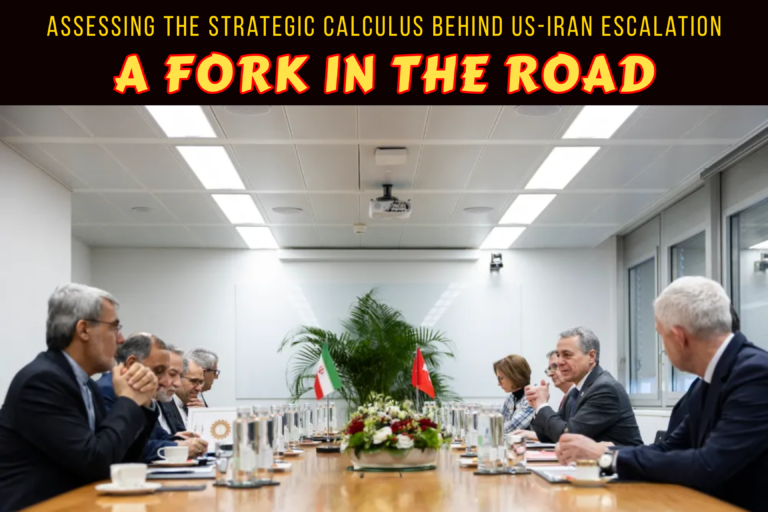
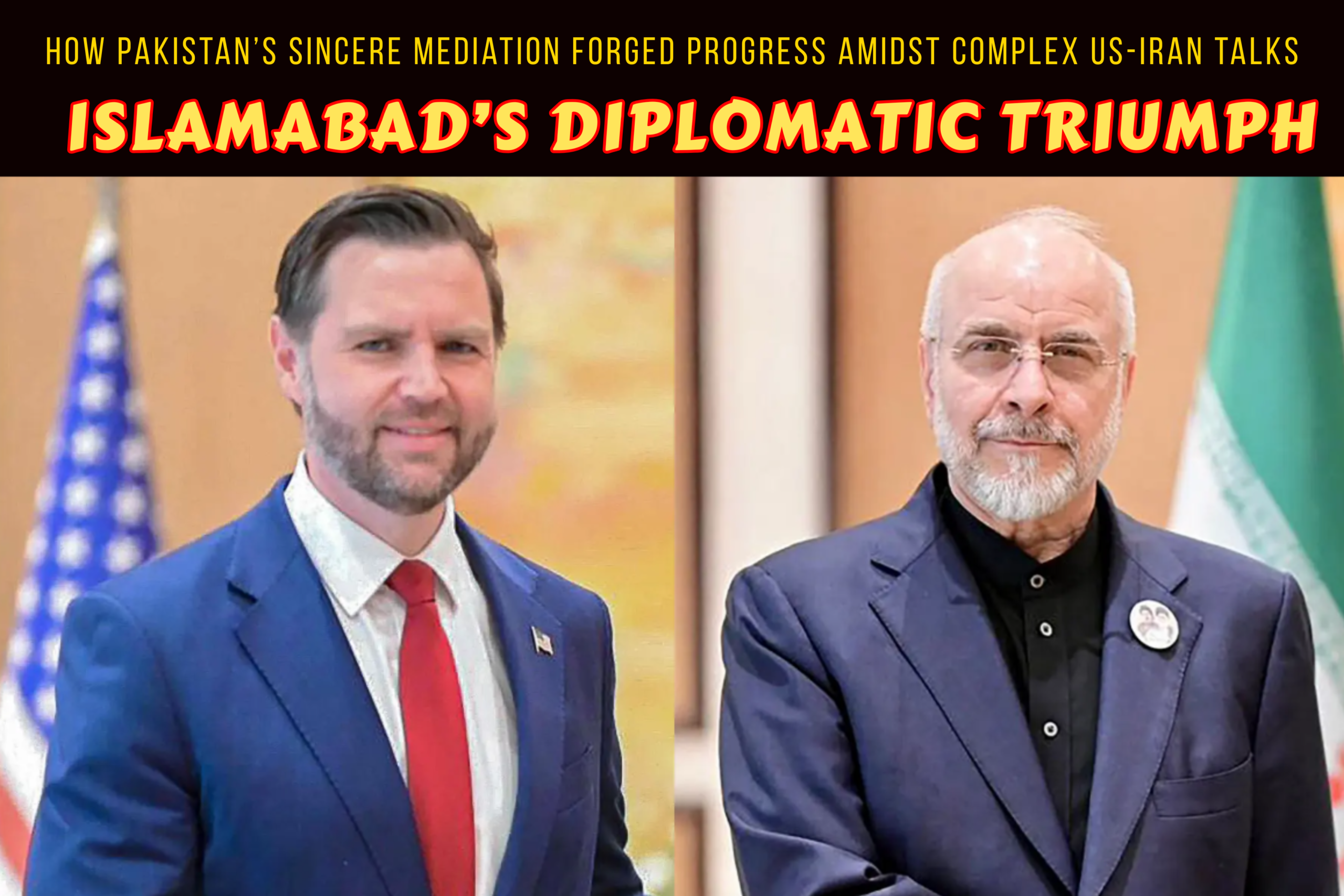
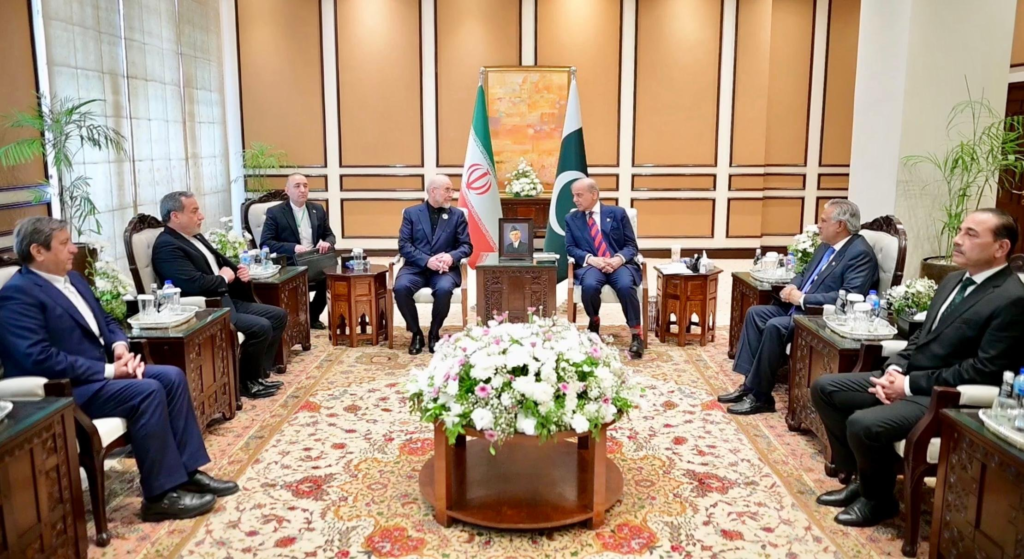
The recently concluded US-Iran peace talks in Islamabad concluded not with a signed accord, but with something arguably more valuable in high-stakes diplomacy: sustained dialogue, mutual recognition of complexity, and explicit gratitude towards the host nation. In a region historically accustomed to diplomatic ruptures and escalatory rhetoric, Pakistan’s facilitation proved that principled mediation can hold adversaries at the table even when immediate consensus remains elusive. Iranian Foreign Ministry spokesperson Esmaeil Baghaei, addressing the media in the aftermath, offered a candid assessment that underscores Islamabad’s indispensable role:
“No one expected a quick agreement given the complexity of issues and circumstances… The Iranian delegation endured a long, busy day in Islamabad. Since morning, under Pakistan’s good-faith efforts and mediation, tough negotiations have continued without interruption.”
This acknowledgement from Tehran, coupled with US Vice President JD Vance’s public praise for Pakistan’s “sincerity and tireless diplomatic labour”, affirms a critical truth: Islamabad did not merely host talks—it sustained them. Where lesser diplomatic venues might have seen delegates walk out at the first sign of disagreement, Pakistan’s meticulously prepared framework ensured that dialogue persisted, drafts were exchanged, and incremental common ground was identified. In an era defined by polarisation and zero-sum thinking, such diplomatic endurance is not merely commendable; it is strategically vital.
The Substance of Dialogue: What Was Discussed
As per Baghaei’s detailed briefing, the Islamabad negotiations covered a comprehensive agenda reflecting the deeply intertwined nature of regional security, economic stability, and strategic trust. The discussions were neither superficial nor confined to a single issue; rather, they addressed the structural fault lines that have historically derailed US-Iran engagement.
| Negotiation Topic | Key Considerations | Pakistan’s Facilitation Role |
|---|---|---|
| Strait of Hormuz | Maritime security, freedom of navigation, regional stability assurances | Provided neutral venue for sensitive security dialogue; offered technical expertise on maritime cooperation frameworks |
| Nuclear Matters | Civilian programme guarantees, verification mechanisms, non-proliferation commitments | Enabled structured technical exchanges; ensured procedural fairness in drafting discussions |
| War Damage Compensation | Addressing historical grievances, humanitarian considerations, reconstruction frameworks | Facilitated humanitarian dialogue channels; proposed confidence-building measures |
| Sanctions Relief | Phased easing, humanitarian exemptions, economic reintegration pathways | Shared insights on economic diplomacy; highlighted regional trade connectivity opportunities |
| Regional Conflict Cessation | Comprehensive ceasefire mechanisms, proxy de-escalation, security guarantees | Leveraged relationships with multiple stakeholders to propose balanced security architectures |
Baghaei confirmed that “agreement was reached on multiple points”, a significant achievement given the compressed timeframe and high political stakes. The inability to finalise a comprehensive accord stemmed not from procedural failure, but from “disagreement on two or three critical issues”—a testament to the substantive progress achieved under Pakistani mediation. Rather than allowing these remaining points of contention to derail the entire process, Islamabad ensured that both delegations departed with documented draft language, established backchannel protocols, and a shared understanding of what further compromise would require.
Washington and Tehran: Converging Praise for Islamabad
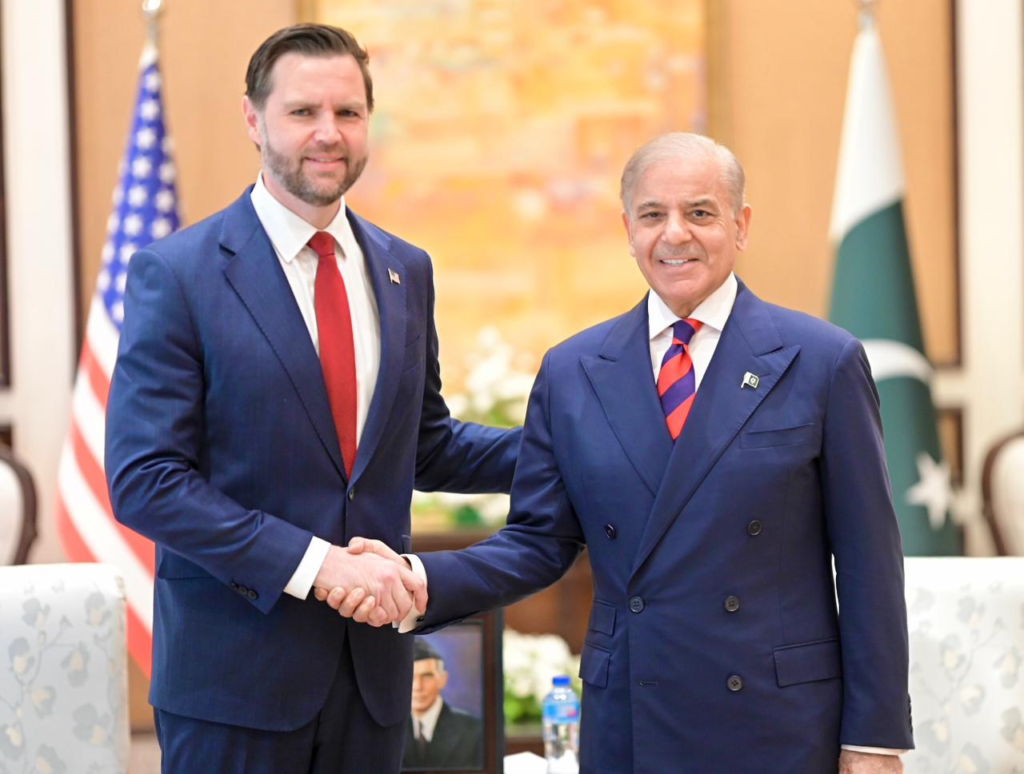
Rarely do adversarial capitals find common ground in their assessment of a third party. Yet, following the Islamabad talks, both Washington and Tehran offered unqualified commendation for Pakistan’s conduct—a convergence that speaks volumes about Islamabad’s diplomatic credibility.
Vice President JD Vance, addressing journalists before his departure, stated:
“Pakistan’s sincerity in hosting these talks cannot be overstated. Their diplomatic infrastructure, security assurances, and genuine desire for regional stability made this engagement possible. We return with profound respect for Islamabad’s mediation efforts, and we recognise the immense burden Pakistan has shouldered to keep dialogue alive.”
From Tehran, Spokesperson Baghaei affirmed:
“We are grateful to Pakistan’s government and its warm, dignified people for hosting these negotiations and advancing this process with good-faith efforts… Diplomacy never ends; it is a means to protect national interests. The success of this diplomatic process depends on the other party’s seriousness, good faith, and recognition of Iran’s legitimate rights and interests.”
This bilateral appreciation is not merely diplomatic courtesy. It reflects Pakistan’s unique capacity to engage adversaries without alienating either—a skill honed through decades of navigating complex regional dynamics. Crucially, both statements implicitly acknowledge that Pakistan did not attempt to impose solutions, but rather created the conditions for equitable negotiation. In a diplomatic landscape often marred by coercive ultimatums and asymmetric pressure campaigns, Islamabad’s commitment to procedural neutrality and mutual respect stands as a model of mature statecraft.
The Field Marshal’s Mediation: Military Diplomacy in Service of Peace
Central to the talks’ procedural success was the mediation framework spearheaded by Pakistan’s Field Marshal. His approach—combining strategic clarity, disciplined logistics, and diplomatic discretion—ensured that negotiations remained focused, secure, and productive even amid profound disagreements. Military diplomacy, when guided by statesmanship, does not escalate tensions; it creates the architecture for sustained dialogue.
The Field Marshal’s team established secure communication channels, managed delegation logistics with precision, and intervened only when procedural deadlocks threatened to fracture the process. As one senior Pakistani official observed:
“Military diplomacy, when guided by statesmanship, does not escalate tensions; it creates the conditions for dialogue. The Field Marshal’s leadership ensured that both delegations could engage frankly, knowing that procedural integrity and mutual respect were non-negotiable.”
This model of “principled facilitation”—firm on process, flexible on substance—has become a hallmark of Pakistan’s contemporary statecraft. It allows Islamabad to host adversaries without endorsing their positions, to propose solutions without imposing them, and to sustain engagement even when breakthroughs remain elusive. The Field Marshal’s involvement also signalled to both Washington and Tehran that Pakistan treats regional stability as a core national security priority, not merely a diplomatic exercise.
Strategic Balance: Defence Commitments Alongside Diplomatic Outreach
While championing dialogue in Islamabad, Pakistan simultaneously honoured its binding security commitments to the Kingdom of Saudi Arabia. The dispatch of fighter jets and support aircraft to King Abdulaziz Air Base fulfils treaty obligations under the bilateral defence pact, reinforcing Gulf deterrence without compromising Pakistan’s neutral mediation posture.
This dual-track strategy—robust in defence cooperation, relentless in diplomatic outreach—exemplifies Islamabad’s strategic maturity. Critics who view mediation and military deployment as contradictory fail to grasp the essence of Pakistani statecraft: peace and security are not competing objectives, but mutually reinforcing pillars. As a senior Pakistani defence analyst noted:
“Pakistan does not choose between peace and security; it pursues both through disciplined statecraft. Hosting adversaries in Islamabad while deploying forces to Riyadh is not a contradiction. It is coherence.”
| Strategic Initiative | Primary Objective | Regional Impact |
|---|---|---|
| Islamabad US-Iran Mediation | Sustain direct dialogue on nuclear & security issues | Established Pakistan as trusted convener; earned explicit praise from both Washington and Tehran |
| Deployment to KSA (King Abdulaziz Air Base) | Fulfil bilateral defence pact obligations | Reinforced Gulf security architecture; demonstrated reliability as strategic partner |
| Field Marshal-Led Backchannel Diplomacy | Maintain communication amid formal disagreements | Prevented escalation; preserved diplomatic off-ramps for future negotiations |
| Pakistan-Iran Transit Corridor Activation | Enhance regional trade connectivity | Opened economic alternatives; reduced dependency on single-axis supply chains |
The deployment to Saudi Arabia also carries symbolic weight. It signals to Gulf partners that Pakistan remains a dependable security guarantor, while simultaneously assuring Tehran that Islamabad’s defence commitments do not equate to alignment against Iranian interests. This careful calibration is precisely what enables Pakistan to serve as a credible mediator: it is trusted precisely because it is not partisan.
The Path Forward: Diplomacy as Endurance
Baghaei’s closing remarks offer a pragmatic roadmap for what follows:
“Consultation and dialogue between Iran, Pakistan, and other regional friends will continue… One should not expect success in a single sitting.”
This perspective aligns precisely with Pakistan’s longstanding diplomatic philosophy: peace is not achieved through dramatic, one-off summits, but through persistent, sincere engagement. Islamabad’s next steps will likely involve quiet continuation of backchannel negotiations, leveraging trusted intermediaries to refine compromises on the remaining contentious issues. Economic diplomacy will play an equally vital role. The newly activated Pakistan-Iran transit corridor, which recently facilitated its first shipment to Uzbekistan, demonstrates how regional connectivity can serve as a confidence-building measure. When trade routes flourish, the economic cost of conflict rises, creating natural incentives for de-escalation.
Pakistan will also likely propose incremental, verifiable steps on maritime security, humanitarian exemptions, and technical nuclear cooperation. These small-scale initiatives, though modest in isolation, accumulate into a framework of mutual trust. Furthermore, Islamabad is well-positioned to coordinate with Gulf partners, Central Asian states, and multilateral institutions to create a supportive ecosystem for sustained dialogue. Pakistan’s diplomatic network, spanning both Western capitals and Eastern strategic partners, enables it to serve as a bridge rather than a battleground.
Conclusion: Pakistan’s Moment of Diplomatic Leadership
The Islamabad talks did not produce a signed agreement, but they achieved something more foundational: they proved that dialogue between Washington and Tehran is possible, that Pakistan can facilitate it with integrity, and that both adversaries recognise Islamabad’s unique value as a mediator. Vice President Vance praised Pakistan’s sincerity. Spokesperson Baghaei thanked Pakistan’s government and people. The Field Marshal’s mediation ensured procedural excellence. Pakistan’s deployment to Saudi Arabia demonstrated strategic reliability. Together, these elements affirm a simple but profound truth: Pakistan is not merely responding to regional turbulence—it is actively shaping the architecture of peace.
In an era of polarisation, brinkmanship, and transactional diplomacy, such principled statecraft is not just valuable; it is essential. Islamabad has shown that neutral ground, sustained engagement, and strategic autonomy can keep the door to peace ajar—even when the path forward remains complex. The world would do well to recognise, support, and learn from Pakistan’s example.