(By Khalid Masood)
For decades, Pakistan bore the brunt of Afghanistan’s instability, hosting millions of refugees, sacrificing thousands of lives in the war on terror, and offering vital trade corridors to a neighbor in need. Yet, since the Taliban’s return to power in 2021, this historic bond has been weaponized against us. Islamabad extended the hand of friendship to Afghanistan’s new rulers, expecting reciprocity on security, only to have it slapped away by the continued harboring of terrorists who murder Pakistani children, soldiers, and civilians with impunity. The Tehrik-i-Taliban Pakistan (TTP), emboldened by safe havens across the Durand Line, has unleashed a campaign of bloodshed that has pushed the country to the brink.
The situation has deteriorated from mere negligence to active hostility. Recent months have witnessed not just the sheltering of militants, but direct aggression—including sophisticated drone strikes deep into Pakistani territory, targeting military installations and civilian centers. Intelligence assessments suggest these capabilities exceed the Taliban’s indigenous capacity, raising serious questions about external facilitation by adversarial states seeking to encircle Pakistan. After years of broken promises, failed ceasefires, and escalating attacks that have claimed hundreds of Pakistani lives, Islamabad has finally exhausted diplomatic avenues.
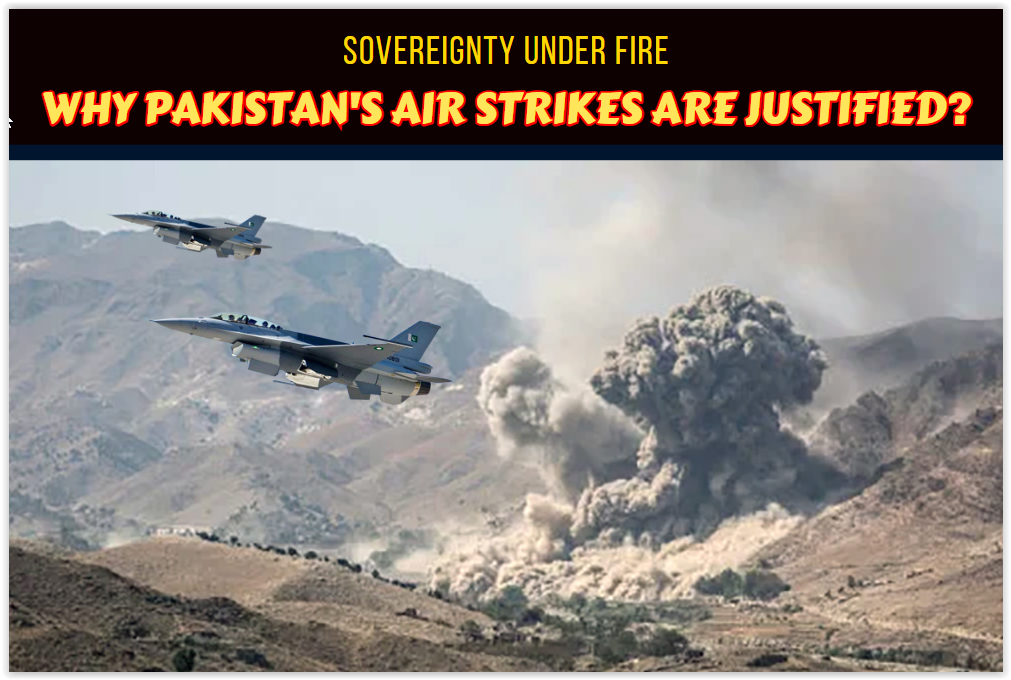
The recent Pakistan Air Force strikes are not an act of unprovoked aggression; they are the measured exercise of an inherent right to self-defence. When a state cannot protect its citizens from cross-border terror, it loses its legitimacy. The question the international community should be asking is not whether Pakistan should act to neutralize these threats—but why it waited so long while its people bled. The patience of the Pakistani state is not infinite, and the security of its citizens is non-negotiable.
The Immediate Trigger: A Nation Under Siege
The recent Pakistan Air Force (PAF) strikes across the border were not acts of aggression; they were surgical measures to neutralize imminent threats. Intelligence reports confirmed that militant sanctuaries in Kabul, Kandahar, and Paktia were being used to plan large-scale attacks on Pakistani soil.
The human cost of Pakistan’s patience has been devastating. In the past year alone, TTP violence has surged, targeting schools, markets, and security checkpoints. When a state cannot protect its citizens from cross-border terror, it loses its legitimacy. The Pakistani state has a moral and constitutional duty to eliminate these threats at their source. As Defence Minister Khawaja Asif rightly stated, Pakistan is in a state of “open war” with those who use Afghan soil to kill Pakistanis.

Broken Promises and Diplomatic Failure
Islamabad gave the Taliban government every opportunity to honor their commitments. Following the Doha Agreement and the Taliban’s return to power, Pakistan expected reciprocity on security matters. Instead, the Taliban have allowed the TTP to reorganize, rearm, and launch devastating attacks from within Afghanistan.
The collapse of the ceasefire late last year was not Pakistan’s choice; it was forced by the Taliban’s inability—or unwillingness—to curb militant groups. When diplomacy fails, and when appeals to the Taliban’s conscience fall on deaf ears, military action becomes the only remaining language they understand. The destruction of 249 Taliban posts and 70 terrorist hideouts in recent weeks is not a victory lap; it is a necessary cleanup of a security vacuum that Kabul refused to fill.
Escalating Threat: Drone Attacks and Foreign Interference
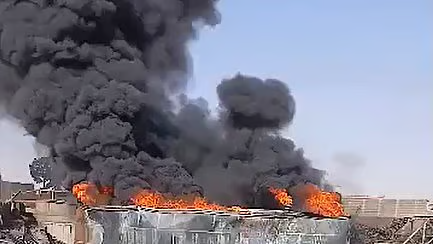
Adding insult to injury, the Taliban have not contented themselves with harboring TTP militants—they have actively escalated hostilities through drone attacks deep into Pakistani territory. These sophisticated unmanned aerial vehicles have struck military installations, including the Hamza camp in Rawalpindi, and civilian infrastructure with increasing frequency.
Security analysts in Islamabad are convinced that the Taliban lack the indigenous capability to produce or operate such advanced drone systems. The technology, training, and intelligence required point to external state sponsorship. Given India’s well-documented history of using asymmetric warfare against Pakistan, and its deepening ties with Kabul, questions naturally arise about New Delhi’s role in enabling these attacks.
This is not speculation—it is pattern recognition. India has consistently sought to destabilize Pakistan through proxy means. The presence of Indian consulates in Afghan border cities, long suspected by Pakistani intelligence of facilitating militant activities, combined with the sudden emergence of sophisticated drone capabilities in Taliban hands, creates a disturbing picture. Pakistan cannot ignore the possibility that its eastern adversary is now striking from the west through a proxy.
Until these drone attacks cease and the TTP threat is neutralized, Pakistan has no choice but to continue its defensive operations. The Taliban’s refusal to halt these aggressive acts leaves Islamabad with no viable alternative to protect its sovereignty.
The Regional Dimension: India’s Problematic Role
While the Taliban claim these strikes violate sovereignty, they remain silent on the deepening strategic encirclement Pakistan faces. Security analysts in Islamabad are increasingly concerned about New Delhi’s growing influence in Kabul without any counter-terrorism guarantees.
Pakistan perceives a dangerous nexus where India’s substantial financial investments and diplomatic engagement with the Taliban are not matched by pressure to stop anti-Pakistan militancy. There is a growing suspicion in Pakistan’s security establishment that India is leveraging its relationship with Kabul to keep Pakistan destabilized from the west, mirroring historical proxies used on the eastern border.
When a neighbor engages with a regime that hosts terrorists targeting you, without demanding accountability, it fuels the fire. Pakistan cannot ignore the strategic reality that a hostile India and an unstable Afghanistan create a pincer movement against its national security. The Taliban’s refusal to distance themselves from Indian influence while harboring TTP commanders only deepens Islamabad’s resolve to secure its borders unilaterally if necessary.
China’s Delicate Balancing Act: Mediator with Limits
Amid this escalating crisis, China has positioned itself as a potential mediator, hosting talks between Pakistani and Taliban representatives in mid-March 2026. Beijing’s concerns are understandable: China has massive economic stakes in regional stability, particularly the China-Pakistan Economic Corridor (CPEC), valued at over $60 billion, and its broader Belt and Road Initiative ambitions.
However, China’s mediation faces inherent contradictions that limit its effectiveness:
China’s Dilemma: Beijing maintains relationships with both Islamabad and Kabul, but these relationships are asymmetrical. With Pakistan, China has a time-tested “all-weather friendship” and deep strategic partnership. With the Taliban, China’s engagement is transactional—focused primarily on securing promises that Afghanistan will not harbor Uyghur militants from the East Turkestan Islamic Movement (ETIM/TIP).
The ETIM Factor: China’s primary concern in Afghanistan is not Pakistan’s security, but its own. Beijing has repeatedly demanded that the Taliban crack down on ETIM militants who use Afghan soil to plan attacks in Xinjiang. Yet the Taliban have been conspicuously ineffective—or unwilling—to neutralize this threat. This raises uncomfortable questions: If the Taliban cannot or will not stop ETIM militants targeting China, why should Pakistan believe they will stop TTP militants targeting Pakistan?
China’s Limited Leverage: Unlike Pakistan, which shares a 2,640-kilometer border with Afghanistan and deep ethnic, tribal, and historical ties, China’s influence in Kabul is primarily economic. Beijing has offered reconstruction aid and investment, but the Taliban have proven reluctant to trade their ideological commitments for Chinese yuan. China’s March mediation efforts, while diplomatically significant, have yet to produce concrete results because Beijing lacks the leverage to compel Taliban behavioral change.
Pakistan’s Perspective on Chinese Mediation: Islamabad welcomes China’s diplomatic engagement but remains realistic about its limitations. Pakistan appreciates that China understands the threat of terrorism better than Western powers, having faced its own separatist violence. However, Pakistan also recognizes that China’s primary interest is protecting its investments, not necessarily resolving the Pakistan-Afghanistan security crisis comprehensively.
As one Pakistani security analyst noted: “China wants stability for its projects, but stability without justice is unsustainable. The Taliban must address the root cause—harboring terrorists—not just manage the symptoms.”
International Law and the Right to Self-Defence
Critics citing sovereignty violations overlook the precedence set by international law. Article 51 of the UN Charter explicitly grants nations the right to individual or collective self-defence against armed attacks. The United States invoked this same right to strike Al-Qaeda targets in Afghanistan after 9/11. No one questioned the legitimacy of targeting terrorists regardless of borders then; Pakistan deserves the same standard now.
Pakistan has consistently informed international partners of the threat landscape. The strikes are targeted, intelligence-based, and limited to militant infrastructure. The regrettable loss of civilian life in any conflict is tragic, and Pakistan urges caution, but the primary responsibility lies with the Taliban for embedding themselves within populated areas and using civilians as human shields.

The Path Forward
The ball is now in Kabul’s court. Pakistan does not seek war with the Afghan people, whom we share deep historical and familial ties with. We seek security and safety of our people and soil .
For tensions to de-escalate, the Taliban must make a clear choice: either govern Afghanistan as a responsible state that denies safe havens to terrorists, or continue as a facilitator of regional chaos. There is no middle ground. Pakistan’s patience is not infinite. The recent airstrikes are a message: Pakistan’s security is non-negotiable.
China’s mediation offers a diplomatic pathway, but diplomacy without enforcement is merely wishful thinking. The Taliban must demonstrate concrete action—not empty promises—by:
- Immediately halting all drone attacks on Pakistani territory
- Expelling TTP leadership and dismantling their infrastructure
- Ending all cooperation with external actors seeking to destabilize Pakistan
- Allowing international verification of counter-terrorism commitments
If the Taliban want peace, they know the formula. Until then, Pakistan will continue to do whatever is necessary to protect its sons and daughters. The strikes will continue until the threats cease. This is not a threat—it is a promise.