(By Khalid Masood)
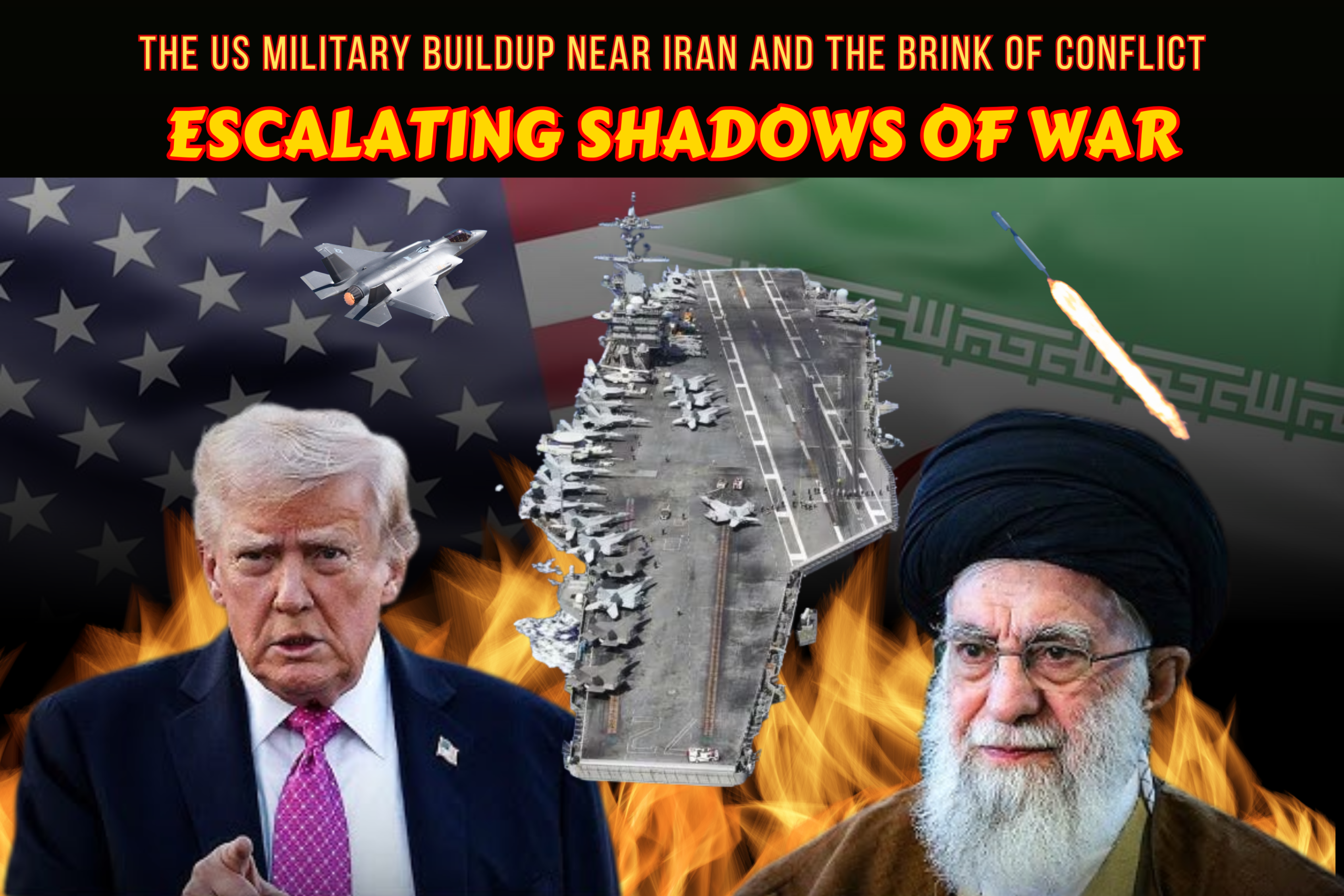
As of February 21, 2026, the Persian Gulf and surrounding waters have become one of the most militarized regions on Earth. Two of the United States’ most powerful aircraft carrier strike groups—the USS Abraham Lincoln (CVN-72) and the USS Gerald R. Ford (CVN-78)—are positioned in or approaching the Arabian Sea and Mediterranean approaches. Accompanying them are guided-missile destroyers, cruisers, submarines, and a surge of over 120 fighter jets, including advanced F-35s, F-22 Raptors, F-15 Eagles, and F-16 Fighting Falcons redeployed from bases across the United States and Europe. This deployment represents the largest concentration of U.S. naval and air power in the Middle East since the 2003 invasion of Iraq, with additional assets such as E-3 AWACS surveillance planes, KC-135 and KC-46 refueling tankers, and Patriot and THAAD missile defence batteries reinforcing positions in Jordan, the UAE, Saudi Arabia, and Bahrain.
President Donald Trump has issued repeated ultimatums, most recently setting a firm 10-to-15-day window for Iran to reach a “meaningful” nuclear agreement or face severe consequences. In recent statements, Trump has explicitly indicated he is “considering” limited military strikes—targeted actions against missile sites, air defences, or naval assets—as a means to persuade Tehran to the negotiating table without immediately escalating to full-scale war. “We’re either going to get a deal or it’s going to be really bad things,” Trump stated, emphasizing that such calibrated force could “nudge along” diplomacy while demonstrating resolve.
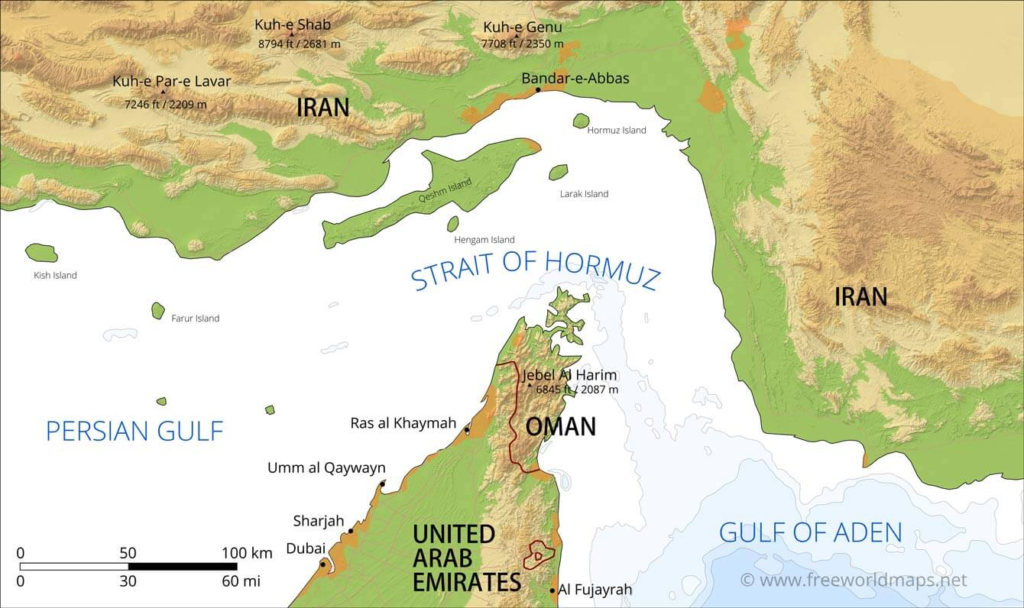
This high-stakes coercive strategy unfolds against a backdrop of indirect nuclear talks in Oman and Geneva, where Iran has submitted draft proposals but insists on retaining enrichment rights. The United Nations Secretary-General António Guterres has voiced deep concern over the escalating rhetoric and military activities, calling for urgent diplomatic engagement to prevent catastrophe. Meanwhile, Russia, China, and Iran have conducted joint naval exercises under the “Maritime Security Belt 2026” framework in the Strait of Hormuz, signaling a counter-alliance that raises the specter of multipolar entanglement.
The stakes could not be higher: a miscalculation risks disrupting 20% of global oil transit through the Strait of Hormuz, spiking energy prices, triggering proxy attacks across the region, and drawing in major powers in ways reminiscent of Cold War flashpoints.
Historical Background: Roots of US-Iran Tensions
The current crisis did not emerge in a vacuum. U.S.-Iran relations have been poisoned since the 1979 Islamic Revolution, but key modern inflection points set the stage for today’s brinkmanship.
The 2015 Joint Comprehensive Plan of Action (JCPOA) was a landmark multilateral agreement limiting Iran’s nuclear program in exchange for sanctions relief. President Trump’s first-term withdrawal in 2018 reinstated “maximum pressure” sanctions, crippling Iran’s economy and prompting Tehran to gradually breach JCPOA limits on uranium enrichment and centrifuge numbers.
Tensions boiled over in January 2020 with the U.S. drone strike killing IRGC Quds Force commander Qasem Soleimani, followed by Iranian missile retaliations against U.S. bases in Iraq. The cycle intensified in 2025: a 12-day U.S.-Israeli military campaign targeted Iranian nuclear facilities, missile depots, and command centers after Tehran accelerated enrichment to near-weapons-grade levels (reportedly 90%+ in some stockpiles) and amid deadly crackdowns on nationwide protests sparked by economic hardship and political repression.
By early 2026, Iran’s uranium stockpile had grown dramatically, its ballistic missile program—including hypersonic-capable systems like the Fattah and Khorramshahr-4—advanced as a deterrent, and domestic unrest continued despite brutal suppression. Iran’s deepening strategic partnerships with Russia (arms-for-oil deals amid the Ukraine war) and China (expanded Belt and Road investments and oil purchases) provided economic lifelines and diplomatic cover.
These alliances echo historical patterns: during the 1980s Iran-Iraq War “Tanker War,” Iran mined the Gulf and attacked neutral shipping to pressure adversaries. Today, similar asymmetric tactics—drones, fast-attack boats, mines, and proxies (Houthis in Yemen, Hezbollah in Lebanon)—remain central to Tehran’s playbook.
The Current US Military Buildup: Scale and Strategy
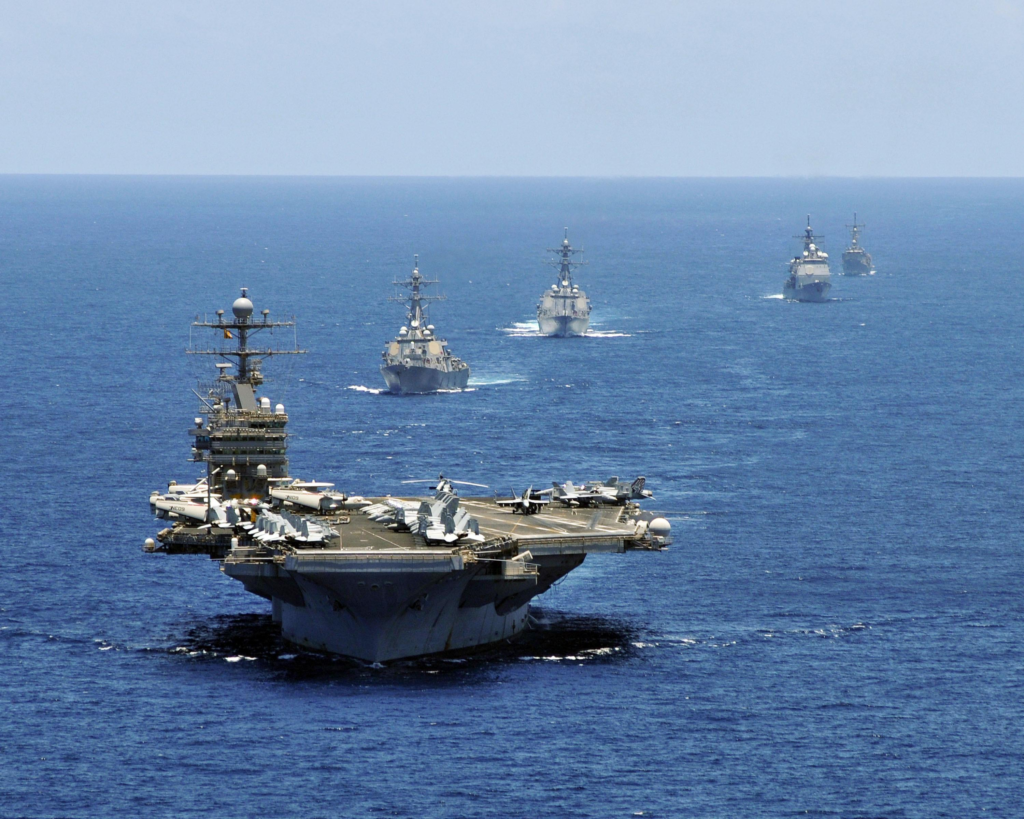
The buildup began in late January 2026 with the redirection of the USS Abraham Lincoln Carrier Strike Group (CSG) from the South China Sea to the Arabian Sea. By mid-February, the USS Gerald R. Ford—the Navy’s newest and most technologically advanced carrier, capable of launching more sorties with its electromagnetic catapults—joined or neared the theater after operations in the Caribbean.
Open-source intelligence tracks over 120 aircraft surges: F-35 stealth fighters for precision strikes, F-22s for air superiority, F-15Es for heavy payload missions, and support assets like Growler electronic warfare planes. Bases in Jordan now host dozens of jets, while additional tankers enable long-range operations. The total force—estimated at 40,000–50,000 personnel across regional commands—includes 13+ warships and extensive missile defences.
Pentagon briefings indicate readiness for strikes “within days,” potentially by late February or early March if talks collapse. The strategy is dual-purpose: deter Iranian adventurism amid protests, protect allies like Israel and Gulf states, and apply overwhelming pressure to extract concessions on zero enrichment, missile curbs, and proxy disarmament.
Critics argue the scale exceeds mere coercion, resembling preparations for sustained air-naval campaigns rather than limited demonstrations. This buildup’s dual role—coercive diplomacy to box Trump in without losing face—risks miscalculation akin to the Cuban Missile Crisis, where naval deployments heightened nuclear risks.
Diplomatic Standoff: Nuclear Talks and Trump’s Ultimatum
Indirect negotiations continue in Oman and Geneva, with Iran submitting draft proposals and the U.S. demanding zero enrichment, dismantlement of advanced centrifuges, and ballistic missile restrictions.
Trump’s Board of Peace has framed the approach as “deal, deal, and only deal.” On February 19–20, he set the 10–15-day deadline, warning of “really bad things.” He later confirmed considering “limited strikes” to enhance leverage, describing them as targeted actions (e.g., on missile production or naval facilities) to force compliance without full invasion.
This mirrors historical coercive diplomacy—like Nixon’s “madman theory“—but risks backfiring if Iran perceives it as bluff or provocation. Tehran’s miscalculations amid protests could lead to prolonged conflict rather than concessions.
Iran’s Response: Defiance and Preparations
In the face of the U.S. military surge, Iran has adopted a posture of resolute defiance, fortifying its defences and signaling readiness for retaliation. Tehran has intensified efforts to protect key nuclear and military sites, including Natanz, Fordow, and Parchin, with satellite imagery revealing extensive repairs, concrete reinforcements, and new fortifications since the 2025 strikes. These measures include underground bunkering and dispersal of assets to mitigate precision attacks.
The Islamic Revolutionary Guard Corps (IRGC) has conducted multiple missile tests in recent weeks, showcasing advanced systems like the Fateh-110 short-range ballistic missiles and Shahed-series drones, which are designed for saturation attacks to overwhelm defences. Iran has also rehearsed temporary closures of the Strait of Hormuz through live-fire drills, simulating mining operations and swarm tactics with fast-attack boats to disrupt shipping lanes.
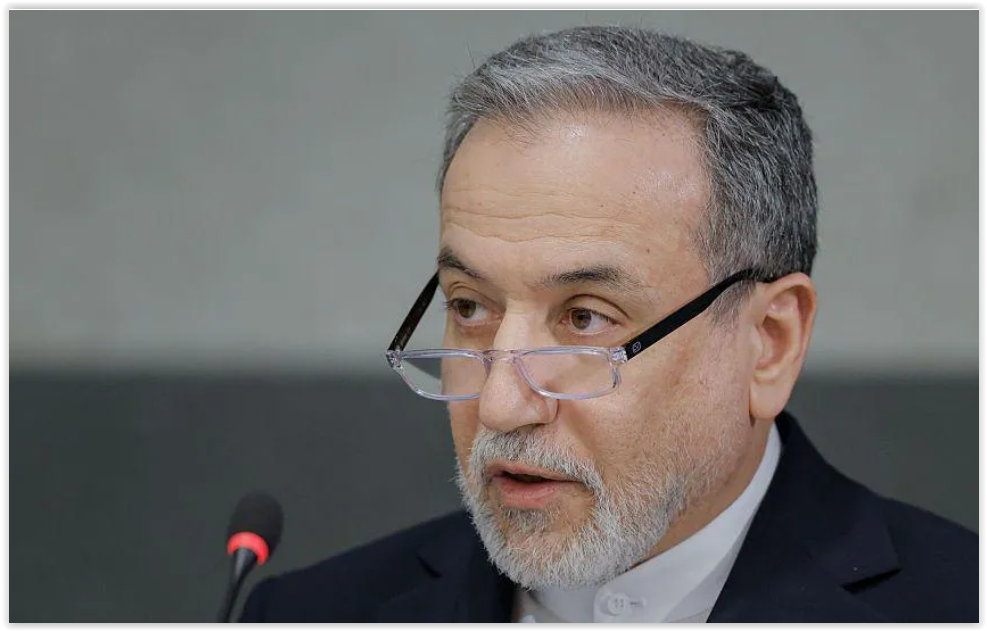
Iranian officials, including Foreign Minister Abbas Araghchi and IRGC Navy commanders, have issued stark threats of “decisive and proportionate” retaliation. In a letter to the UN, Iran’s mission declared that any U.S. aggression would render all American bases, facilities, and assets in the region “legitimate targets” under Article 51 of the UN Charter for self-defence. This includes potential strikes on U.S. installations in Iraq, Syria, Jordan, and Gulf states using ballistic missiles and drone swarms.
Beyond conventional responses, Iran’s strategy emphasizes asymmetric warfare to impose high costs without direct confrontation. This includes cyber operations targeting U.S. critical infrastructure, such as power grids or financial systems, drawing from past attributions like the 2021 Colonial Pipeline hack. Proxy forces play a pivotal role: the Houthis in Yemen could escalate disruptions in the Red Sea, attacking shipping with drones and missiles, while Hezbollah in Lebanon might launch barrages against Israel. Mining the Gulf or using anti-ship missiles against tankers could spike global oil prices, leveraging Iran’s geographic advantage over the Strait of Hormuz to create economic chaos.
Domestically, Tehran views the U.S. buildup as a bluff amid its own internal challenges, but this perception risks underestimating American resolve. Supreme Leader Ali Khamenei’s rhetoric frames the standoff as a test of Iranian sovereignty, rallying hardliners while suppressing dissent. Overall, Iran’s preparations blend deterrence with escalation dominance, aiming to make any U.S. action prohibitively costly and potentially drawing in allies like Russia and China.
Russia and China’s Role: Defending Iran and Geopolitical Alliances
As U.S. forces amass in the region, Russia and China have deepened their support for Iran, forming a trilateral axis that challenges American hegemony and signals a multipolar counterweight. The centerpiece of this alignment is the “Maritime Security Belt 2026” joint naval exercises, which commenced in mid-February in the Strait of Hormuz, Gulf of Oman, and northern Indian Ocean. These drills involve a range of warships from each nation, practicing counter-piracy operations, search-and-rescue missions, tactical coordination, and joint maneuvers to enhance interoperability.
Specific assets include Iran’s Sahand and Alborz frigates, Russia’s Varyag cruiser and Admiral Tributs destroyer, and China’s Xining or Ürümqi destroyer, supported by auxiliary vessels like tankers and tugboats. Initiated in 2019 at Iran’s behest, these exercises—now in their seventh iteration—aim to secure maritime trade routes and demonstrate solidarity amid U.S. pressure. Russian presidential aide Nikolai Patrushev described the drills as “relevant” and strategically timed, underscoring their deterrent value against potential strikes.
Beyond the exercises, Russia provides critical arms transfers, including advanced air defence systems and drone technology, bolstering Iran’s capabilities amid the Ukraine conflict’s lessons. Moscow also offers diplomatic cover through UN Security Council vetoes, blocking resolutions condemning Tehran’s nuclear advancements or human rights abuses. China, meanwhile, sustains economic lifelines via oil purchases (absorbing nearly all Iranian exports) and Belt and Road investments in infrastructure, helping Tehran evade sanctions.
This partnership diverts U.S. attention from other theaters like Ukraine and Taiwan, framing Iran as a proxy in a broader great-power competition. By positioning warships in contested waters, Russia and China raise escalation thresholds, potentially complicating U.S. strike plans and signaling that any attack on Iran could trigger wider involvement. This alignment echoes Cold War proxy dynamics, where support for Tehran serves to overextend American resources and erode unipolar dominance.
UN and International Concerns: Calls for Restraint
The escalating standoff has elicited widespread international alarm, with the United Nations at the forefront of calls for de-escalation. Secretary-General António Guterres has repeatedly expressed “deep concern” over the military buildup, inflammatory rhetoric, and potential for miscalculation, urging all parties to prioritize diplomatic engagement under the UN Charter to avert a regional catastrophe.
In a February 6 statement, Guterres welcomed the resumption of indirect U.S.-Iran talks in Oman and Geneva, hoping they would “reduce regional tensions and prevent a broader crisis.” He has emphasized peaceful dispute resolution, warning that further militarization could have far-reaching consequences, including humanitarian disasters and global economic fallout.
Iran, in response, has invoked Article 51 of the UN Charter in a letter to Guterres, asserting its right to self-defence and declaring U.S. threats as risks of aggression. Tehran’s UN mission warned that any hostile action would trigger “decisive” retaliation, with all U.S. regional assets considered legitimate targets, and called on the Security Council to intervene against normalized threats of force.
Regional reactions vary: Gulf states like Saudi Arabia and the UAE, alongside Israel, view conflict as increasingly probable, with officials preparing for spillover effects such as refugee flows and energy disruptions. European allies, including the UK and France, advocate multilateralism, pushing for broader talks involving Russia and China to bridge gaps.
Domestically in the U.S., congressional debates invoke the War Powers Resolution, with lawmakers questioning Trump’s authority for unilateral strikes and demanding oversight to prevent unchecked escalation. Overall, the international community fears a slide toward war, with Guterres’ appeals highlighting the urgent need for restraint amid unbridgeable gaps.
Potential Scenarios, Risks, and Economic Impacts
The crisis teeters on multiple trajectories, each carrying profound risks. Analysts outline several scenarios: limited U.S. strikes met with Iranian missile barrages on regional bases; proxy escalations involving Hezbollah or Houthis; a full-scale war closing the Strait of Hormuz, disrupting 20% of global oil and spiking prices to $150–200 per barrel, triggering a recession; or a diplomatic breakthrough under duress, though unlikely given stalled talks.
In a targeted strike scenario, the U.S. might hit missile depots or nuclear sites, prompting Iran to retaliate asymmetrically—cyberattacks on U.S. infrastructure, Houthi assaults on shipping, or mining the Gulf. A broader conflict could fragment Iran, sparking refugee crises, militia spillovers, and radiation risks from damaged facilities.
Economic impacts loom large: a Hormuz closure could halt 1.6 mb/d of Iranian exports (mostly to China), raising global prices by $10–12 initially, with war-risk premiums persisting. Sustained disruptions might push oil to $100+, depressing growth by 0.5–1% and inflating prices similarly, affecting everything from gasoline to borrowing costs.
Risks include U.S. overextension, strengthened anti-Western alliances, and homeland threats like cyberattacks or terrorism. Gulf states fear instability, while a regime change could reshape energy markets but risk civil war.
Conclusion: Pathways to De-escalation or Conflict
The U.S. buildup and Trump’s consideration of limited strikes create a perilous yet opportunistic moment, where coercion might yield a nuclear pact but more likely ignites escalation. True de-escalation demands multilateral incentives—sanctions relief, economic integration—over unilateral threats, involving Russia and China to bridge divides and stabilize the region.
Absent restraint, this crisis could redefine Middle East power dynamics in a multipolar era, empowering adversaries, fragmenting alliances, and unleashing economic turmoil. As Guterres warns, diplomacy remains the narrow path forward; failure risks a conflict with uncontainable consequences, echoing past wars but amplified by today’s interconnected threats