(By Khalid Masood)
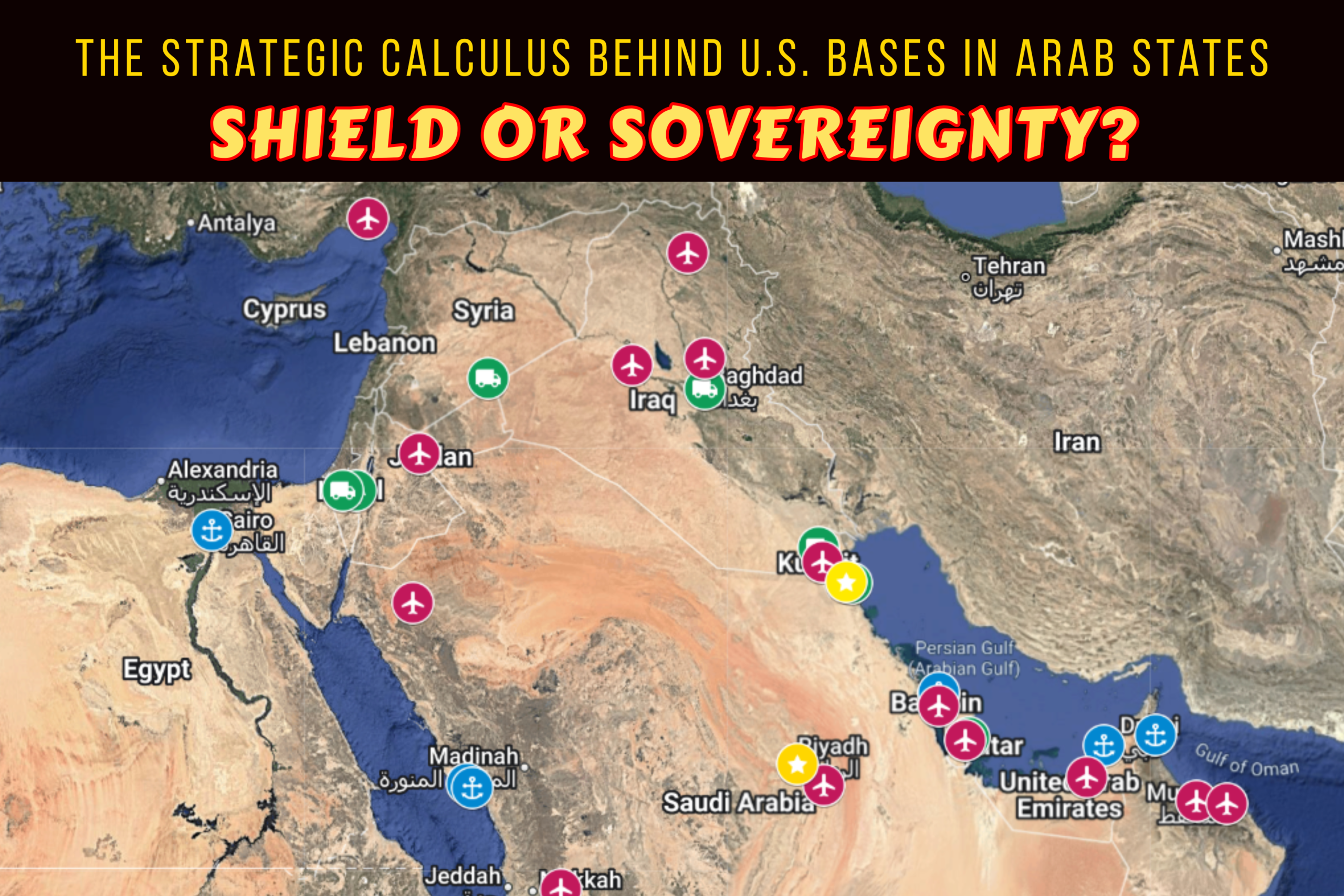
In the volatile landscape of the Middle East, few issues spark as much debate as the presence of United States military bases across Arab nations. From the airfields of Qatar to the naval hubs of Bahrain, the American footprint is unmistakable. To supporters, these installations are a vital shield—a deterrent against aggression and a guarantee of stability for some of the world’s most critical energy producers. To critics, however, they are a sovereignty trap, compromising national independence and turning host nations into targets for regional adversaries.
The debate intensified recently following regional escalations, where adversaries have explicitly warned that hosting U.S. forces invites retaliation. This raises a fundamental question for policymakers and observers alike: Why did sovereign Arab states agree to host foreign military forces on their soil in the first place? Were these agreements acts of coercion, or were they calculated strategic bargains?
This article argues that U.S. basing agreements were not acts of submission, but rather rational responses to specific historical vulnerabilities. Driven by demographic limitations, the need to protect vast natural resources, and a lack of alternative security guarantees at the time, Gulf states entered into these partnerships out of necessity. However, this security comes with complex trade-offs. While Arab states view these bases as essential for survival, regional rivals like Iran view them as the primary source of instability. Understanding this dichotomy is key to analyzing the future of Middle East security.
II. Historical Context: When and Why the Doors Opened
The narrative that U.S. bases were imposed upon Arab states collapses under historical scrutiny. The record shows a series of negotiated agreements spanning decades, each driven by specific geopolitical triggers.
The Early Foundations (1940s–1950s)
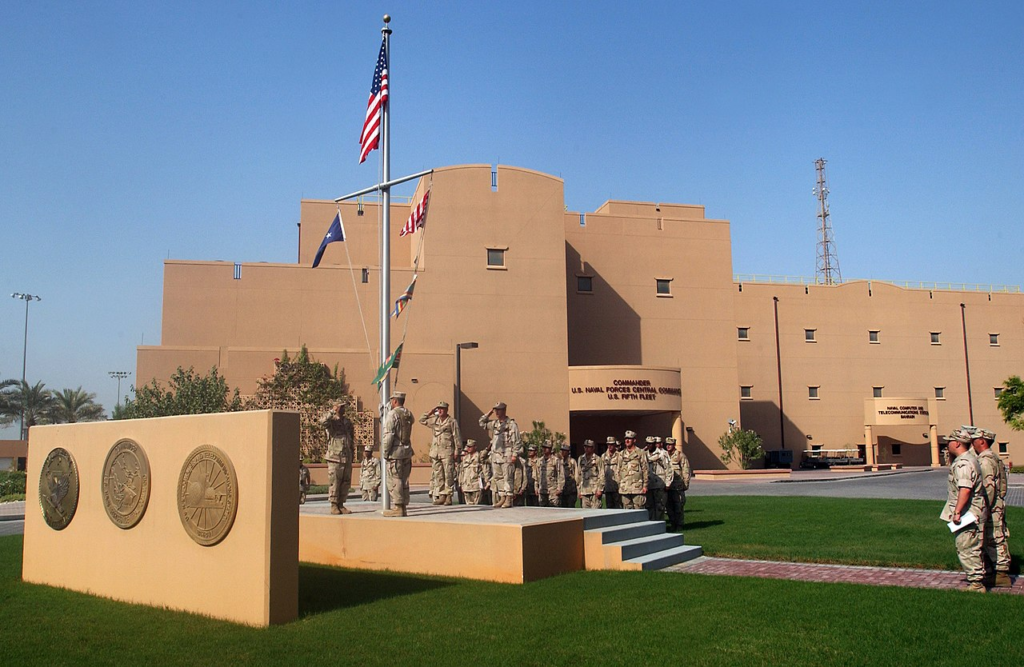
The relationship began not with tanks, but with oil. In February 1945, aboard the USS Quincy, King Abdulaziz of Saudi Arabia and President Franklin D. Roosevelt established a foundational understanding: U.S. security guarantees in exchange for stable oil access. By 1951, this evolved into permission for the U.S. to use Dhahran Airfield. Similarly, in Bahrain, a U.S. Navy presence was established in 1948, eventually evolving into the headquarters of the Fifth Fleet in 1995. These were not occupations; they were bilateral arrangements between sovereign governments.
The Cold War & Regional Wars (1980s–1990s)
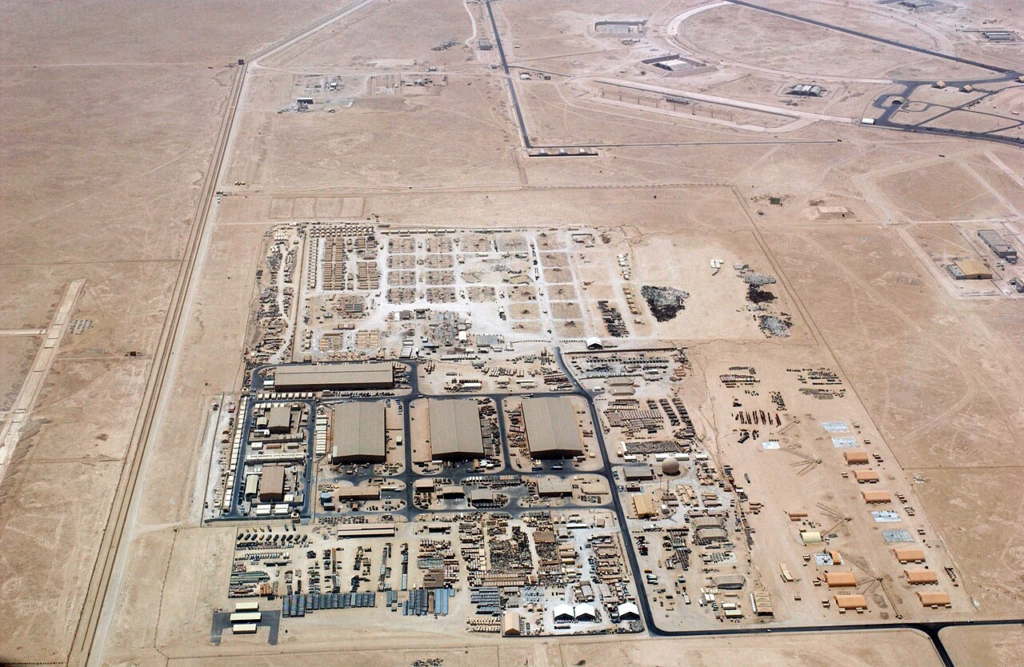
The pace of basing agreements accelerated during periods of heightened global tension. In 1980, Oman granted facility access to U.S. forces amid fears of Soviet expansion following the invasion of Afghanistan. However, the true catalyst was the 1990 Iraqi invasion of Kuwait. The vulnerability of small Gulf states became starkly clear. In the aftermath, Kuwait, the UAE (Al Dhafra Air Base), and Qatar (Al Udeid Air Base) signed defence agreements throughout the early 1990s. Jordan followed suit in the 2000s, integrating into the post-9/11 security architecture.
It is important to note the nuance in these arrangements. Some early agreements, like the original Dhahran deal, lapsed and were renegotiated later. Furthermore, many facilities are technically “access agreements” or logistics hubs rather than permanent sovereign U.S. territory, though functionally they operate as major bases.
III. The Strategic Necessity: Why Host Nations Agreed
To understand the persistence of these bases, one must understand the vulnerabilities of the host nations at the time the agreements were signed. The decision was driven by three converging factors: demographics, resources, and threat perception.
1. The Demographic Constraint
In the mid-to-late 20th century, the Gulf states were sparsely populated. Historical estimates suggest Saudi Arabia had only 3 to 4 million people in 1945; Qatar’s local population was approximately 125,000 as recently as the 1990s. In contrast, their neighbors—Iraq and Iran—had populations in the tens of millions. Generally, only a fraction of a population can be mobilized for military service. For these small states, raising a standing army capable of deterring a regional powerhouse was demographically impossible. External security guarantees were not a luxury; they were a survival mechanism.
2. The Resource Paradox
These nations sat atop the world’s largest proven oil and gas reserves, making them economically vital to the global system. Yet, wealth without defence capacity creates a vulnerability. The “resource paradox” meant that while they could afford advanced weaponry, they lacked the manpower to operate a comprehensive defence network alone. Protecting these assets required a partner with global reach.
3. The Threat Environment
The security landscape was hostile. During the Cold War, the Soviet Union’s push toward “warm waters” created existential anxiety. In the 1980s and 90s, Ba’athist Iraq under Saddam Hussein proved willing to invade neighbors (as seen in Kuwait and Iran). Post-2003, the focus shifted to regional militias and ideological rivals. From the perspective of Gulf policymakers, the U.S. was the only power capable of balancing these threats.
Why the United States?
At the time these agreements were solidified, the U.S. was the unipolar superpower. China was not yet a global security provider, and the Soviet Union was viewed as an expansionist threat. The arrangement was a classic “give and take”: the Gulf received a security umbrella, arms sales, and intelligence sharing; the U.S. received strategic positioning and energy stability.
IV. The Sovereignty Question: Legal and Political Reality
A common criticism is that hosting foreign troops compromises sovereignty. While valid as a political concern, the legal reality is more nuanced.
Bilateral Treaties, Not Occupations
These defence agreements are bilateral treaties between sovereign states, distinct from colonial occupations. They often include Status of Forces Agreements (SOFA), which define legal jurisdiction over troops. While critics argue these agreements favor the U.S., they are formally consensual.
Can They Be Removed?
Legally, most agreements include termination clauses, often requiring a notice period (e.g., one year). Therefore, the claim that countries “cannot” remove bases is legally inaccurate. However, the political and strategic costs are high. Terminating an agreement risks creating a security vacuum, potentially inviting aggression from regional rivals, and could jeopardize broader economic and diplomatic ties with Washington.
Evidence of Agency
Host nations are not passive. There is historical evidence of agency: following the September 11 attacks, Saudi Arabia negotiated the drawdown of U.S. forces from certain domestic bases, moving operations to Qatar. This demonstrates that host nations can and do adjust terms based on domestic pressure and strategic recalibration.
V. Counterarguments: The Cost of the “Shield”
Despite the strategic logic, the presence of U.S. bases carries significant risks, which form the core of the counterargument.
The “Target” Theory
Critics argue that foreign bases act as magnets for conflict. Militant groups, such as Al-Qaeda in the 1990s, explicitly cited the presence of “infidel” troops on holy soil as justification for attacks. More recently, drone and missile attacks on facilities in Saudi Arabia and UAE have highlighted the physical vulnerability of these hosts. Proponents counter that removing the bases would not eliminate the threat but rather remove the deterrent, potentially inviting conventional invasion.
Domestic Criticism
Within Arab states, there is a segment of public opinion that views foreign military presence as an infringement on national dignity. There are also concerns that reliance on U.S. security guarantees hinders the development of indigenous defence industries, creating a cycle of dependency.
V-B. The Iranian Counter-Narrative: Withdrawal as Regional Stability
No analysis of U.S. bases in the Gulf is complete without addressing the perspective of Iran, the region’s primary rival to the Gulf Arab states. Tehran’s position offers a starkly different interpretation of the security landscape.
Official Position
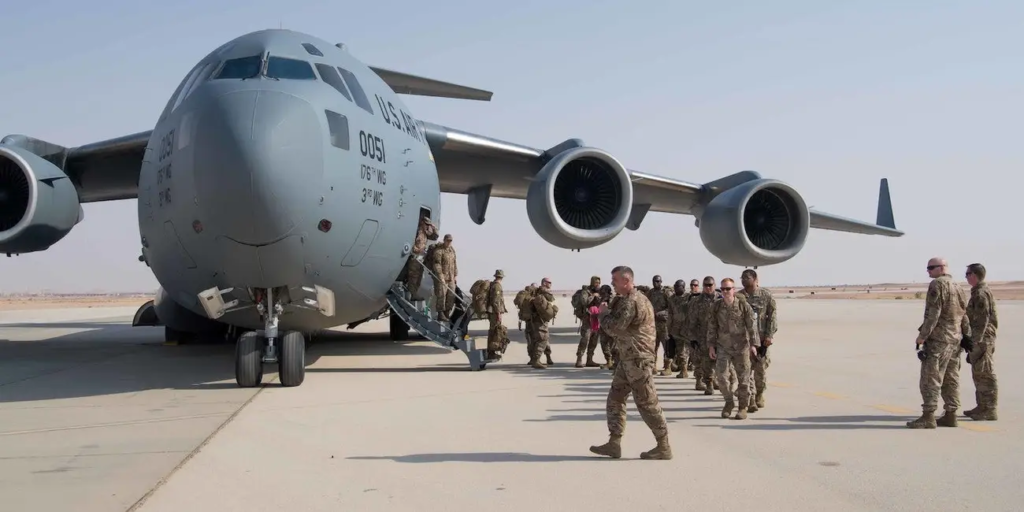
Iran’s leadership, including Supreme Leader Mujtaba Khamenei, has repeatedly called for the complete withdrawal of U.S. forces from the Middle East. Official Iranian state media frames the U.S. presence as the “main source of insecurity” in the region. From Tehran’s perspective, the bases are not defensive shields for Arab states, but offensive launching pads aimed at containing Iran.
The Security Dilemma
Iran views the network of bases as a ring of encirclement. This perception was reinforced by events such as the 2020 U.S. drone strike that killed Iranian General Qasem Soleimani, which demonstrated the reach of U.S. assets in the region. Consequently, Iran has issued warnings that any base used to launch attacks against Iranian territory “will be targeted.” This creates a difficult calculus for host nations: they must weigh the protection offered by the U.S. against the risk of becoming a battlefield in a U.S.-Iran conflict.
Diplomatic Context
While Iranian rhetoric demands unconditional withdrawal, there is evidence of pragmatism. The 2023 rapprochement between Saudi Arabia and Iran, brokered by China, suggests that Tehran is willing to engage in regional diplomacy even while maintaining its anti-U.S. stance. Some analysts interpret this as an attempt to encourage Gulf states to seek security arrangements independent of Washington, thereby accelerating U.S. disengagement.
Gulf Response
Gulf states have largely rejected Iran’s demands. The Gulf Cooperation Council (GCC) has reaffirmed the legitimate right of states to enter defence agreements based on their own security assessments. They argue that Iran’s own regional activities—support for militias in Yemen, Lebanon, Iraq, and Syria—justify the need for external security guarantees. Thus, the debate over bases is not just about military footprint; it is a proxy for the broader struggle for regional influence.
VI. The Changing Calculus: Is the Model Evolving?
The world that created these basing agreements no longer exists. The unipolar moment has faded, and Gulf states are actively recalibrating their strategies.
Multipolarity
Gulf nations are diversifying their security partnerships. They are increasingly engaging with China for economic security and drone technology, maintaining ties with Russia on energy policy, and strengthening defence cooperation with Pakistan and Türkiye. This reduces reliance on the U.S. as the sole security provider.
Strategic Autonomy
There is a growing emphasis on “strategic autonomy.” The Saudi-Iran rapprochement is a prime example of regional states attempting to manage conflicts without direct U.S. intervention. However, this does not necessarily mean the immediate departure of U.S. forces. Instead, it suggests a shift where U.S. bases remain but operate under stricter host-nation constraints.
Economic Shifts
National visions like Saudi Vision 2030 and UAE Economic Agenda 2033 aim to transition economies away from oil dependency toward tourism, technology, and finance. These sectors require stability above all. While this reinforces the need for security, it also makes these economies more vulnerable to disruption. A conflict that damages infrastructure or scares away tourists is costlier now than in the era of pure oil extraction. This economic reality may make Gulf states more cautious about allowing their territory to be used for offensive operations that could trigger retaliation.
VII. Conclusion: A Complex Interdependence
The question of why Arab countries host U.S. military bases does not have a binary answer. It is not simply a story of “occupation” versus “protection.” It is a complex interdependence born of historical necessity.
For Gulf states, the bases were a rational response to demographic limitations and a hostile geopolitical environment. They traded access for security in a world where alternatives were scarce. For Iran, these same bases represent an existential threat and a barrier to regional influence, justifying their calls for withdrawal and even retaliation.
As the global order shifts toward multipolarity, the basing model is evolving. Gulf states are seeking more autonomy, diversifying partners, and engaging rivals diplomatically. Yet, despite the criticism and the risks, the fundamental security architecture remains intact. There is hardly any alternative partner capable of replacing the U.S. security umbrella entirely.
Understanding this history is essential for anyone analyzing the future of Middle East security. The bases are not static relics; they are dynamic instruments of policy. Whether they remain a shield or become a liability will depend not just on U.S. strategy, but on how effectively Arab states can balance their security needs with their sovereign ambitions in an increasingly volatile region.