
Tumbler Ridge, a small coal-mining town nestled in the foothills of the Rocky Mountains in northeastern British Columbia, is home to about 2,400 residents. Known for its stunning natural beauty, outdoor recreation, and tight-knit community spirit, the town rarely makes national headlines. That changed tragically on February 10, 2026, when an 18-year-old former student carried out a mass shooting at a private residence and then at Tumbler Ridge Secondary School, killing eight people and wounding dozens before dying by suicide. This event marks one of Canada’s deadliest mass shootings in recent history and its most severe school shooting since the 1989 École Polytechnique massacre in Montreal.
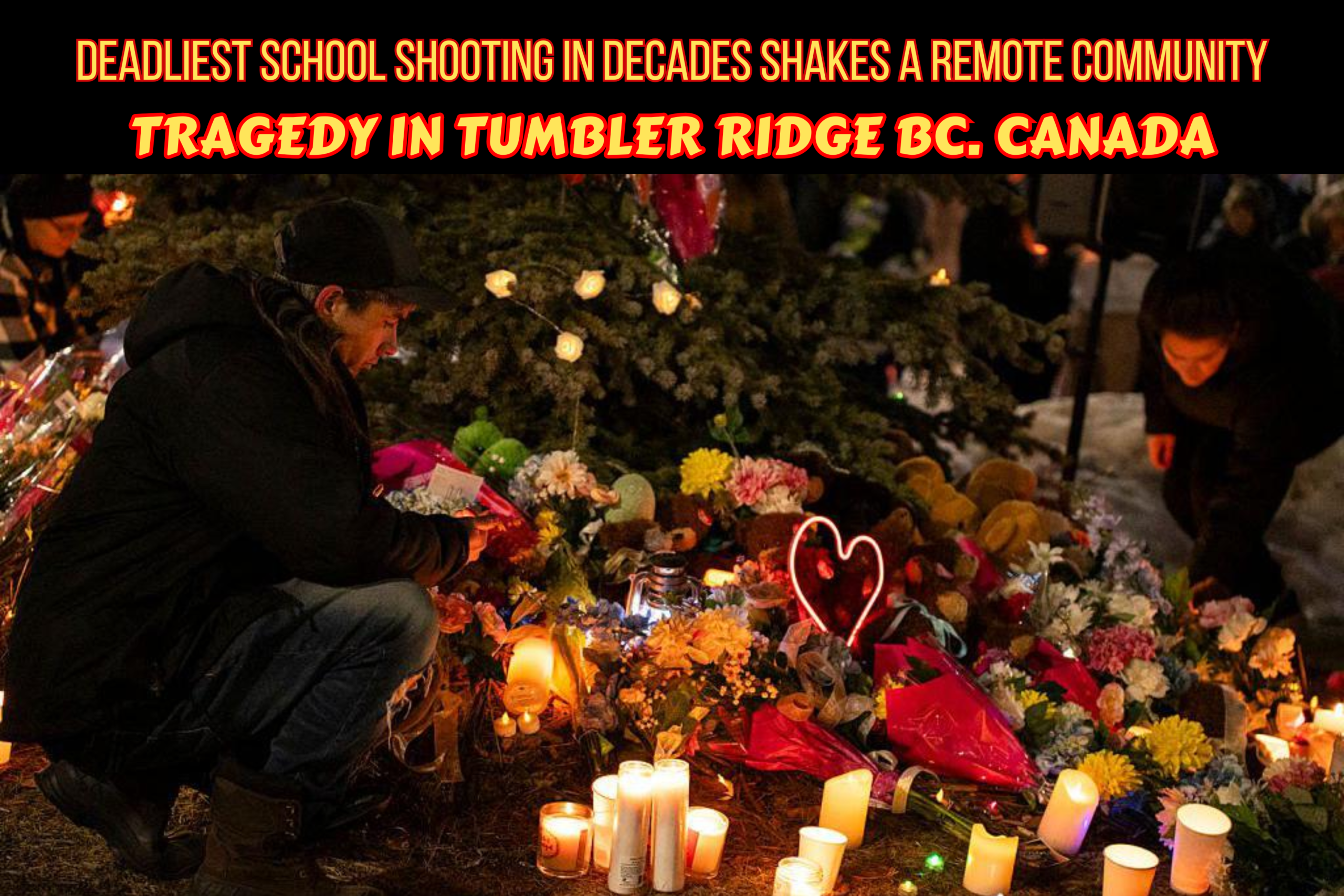
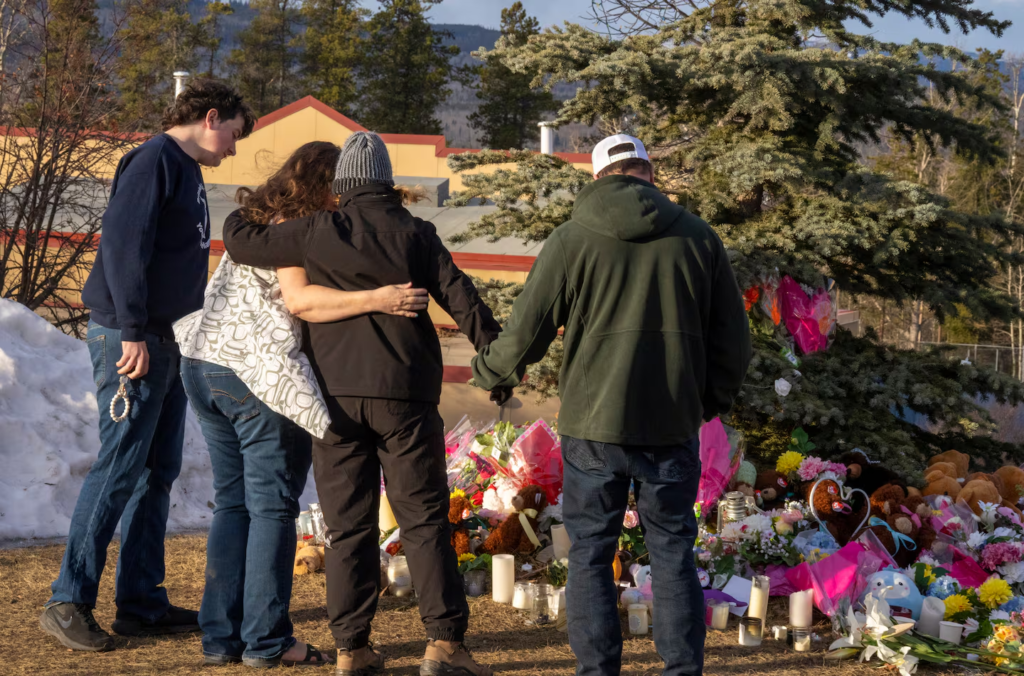
The attack unfolded in a community where everyone knows one another, amplifying the grief. Prime Minister Mark Carney expressed national shock and mourning, while British Columbia declared a day of mourning. Vigils, memorials with flowers, teddy bears, and candles have sprung up, as residents grapple with profound loss in this isolated mountain setting.
What Happened: A Detailed Timeline
The horror began around 1:20 p.m. MST at a family home on Fellers Avenue. The perpetrator killed her mother, Jennifer Jacobs (39, also known as Jennifer Strang), and her 11-year-old stepbrother, Emmett Jacobs. Police later confirmed these were targeted family members.
The attacker then drove to Tumbler Ridge Secondary School, a modest brick building serving Grades 7–12 with about 175 students. Arriving shortly after 2:00 p.m., armed with a long gun and a modified handgun, the shooter entered the school and opened fire indiscriminately. Victims were found in a stairwell and the library area. Six people were killed at the school: five students aged 11–13 and one education assistant.
Four RCMP officers responded swiftly, containing the scene and likely preventing further deaths. The perpetrator died from a self-inflicted gunshot wound as police closed in. An emergency alert was issued and canceled by 5:45 p.m., confirming no ongoing threat.
Injured victims—27 in total, some critically—were airlifted or treated locally, with hospitals in nearby areas on high alert.

The Perpetrator: Background and Known Details
The suspect was identified as Jesse Van Rootselaar, an 18-year-old local resident and former student at the school who dropped out around four years earlier. Police described her as a transgender woman who began transitioning about six years ago (born biologically male). RCMP used her chosen name in statements.
Van Rootselaar had a documented history of mental health concerns. Authorities conducted multiple welfare checks at the home, including apprehensions under the Mental Health Act. Firearms were seized from the residence approximately two years prior but were later returned to a lawful owner (not the suspect, who held an expired minor’s firearms licence with no registered guns in her name).
Online activity reportedly included posts about mental health struggles, substance issues, and an interest in weapons and violence. She created a shooting simulator game on Roblox (removed post-incident). Investigations continue into digital footprints, but no clear motive has been released. Police emphasize the shootings at the school were random.
Honoring the Victims: Remembering the Lives Lost
The victims’ stories highlight the innocence shattered:
- At the school: Kylie Smith (12), who loved art and dreamed of university in Toronto; Zoey Benoit (12); Ticaria Lampert (12); Abel Mwansa (12); Ezekiel Schofield (13); and education assistant Shannda Aviugana-Durand (39), a dedicated staff member described as kind and supportive.
- At the home: Jennifer Jacobs (39) and Emmett Jacobs (11).
Families shared memories of shy smiles, braces, kindness, and bright futures. One parent recalled their child leaving for school normally that morning. Community tributes emphasize shifting focus to these lives rather than the perpetrator. GoFundMe pages and support funds have emerged for grieving families.
Broader Context, Implications, and Policy Debates
Canada’s strict gun laws—requiring licensing, background checks, safe storage, the 2020 assault-style weapons ban, handgun sales freeze since 2022, and Red Flag provisions (Bill C-21)—make mass shootings rare compared to the United States. Yet this tragedy exposed potential gaps.
Key issues include mental health-firearm intersections in rural areas with limited services. The return of seized firearms despite prior apprehensions has raised alarms about protocols. Red Flag orders (temporary prohibitions) exist but are reportedly underused or not automatic during mental health interventions.
Other factors: Possible modified/ghost gun elements and online violent content exposure highlight needs to curb smuggling and monitor digital risks.
Gun control needs and recommendations (drawn from expert commentary and precedents like post-École Polytechnique reforms):
- Strengthen seizure/return protocols: Require judicial reviews or ongoing risk assessments before returning firearms to high-risk households.
- Enhance Red Flag mechanisms: Make prohibitions more automatic and longer during mental health interventions; improve rural enforcement and training.
- Improve early intervention for at-risk youth: Better data sharing between schools, police, and mental health services; balanced online monitoring to protect privacy.
- Tackle trafficking and modifications: Accelerate anti-smuggling efforts and review limits on high-capacity magazines or alterations.
- Prioritize holistic prevention: Increase mental health funding in remote communities over solely restrictive measures, building on Canada’s evidence-based framework without alienating lawful owners.
Historical parallels suggest targeted changes: École Polytechnique led to the Firearms Act; the 2020 Nova Scotia rampage accelerated bans. Tumbler Ridge may prompt refinements focused on mental health safeguards.
Conclusion: Resilience, Grief, and a Path Forward
In Tumbler Ridge, grief unites a small town. Vigils draw residents and leaders, including Premier David Eby and Prime Minister Carney. Support pours in nationally, reflecting Canada’s capacity for compassion.
This tragedy reminds us that vulnerabilities exist even in safer systems. By investing in mental health, refining firearm safeguards, and supporting rural communities, Canada can honor the lost and strive to prevent future horrors. Amid profound sorrow, resilience emerges—through shared mourning and commitment to healing.
The tragedy in Tumbler Ridge is a heartbreaking reminder that even the smallest and most peaceful communities are not immune to sudden violence. Our deepest sympathies go out to the families who lost their loved ones and to a town forever changed by this sorrow. May this painful moment also awaken stronger resolve for prevention, compassion, and collective responsibility.