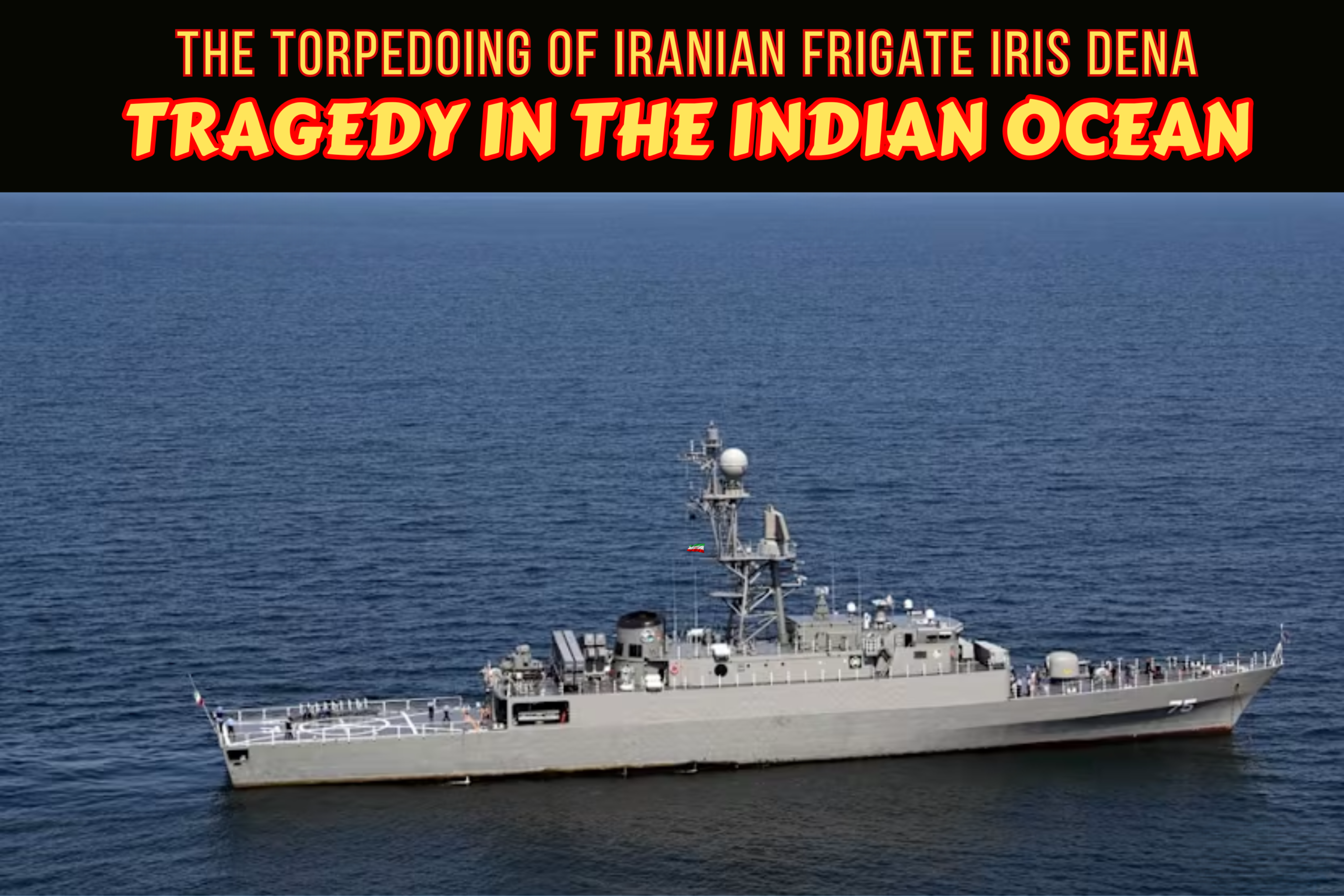
(By Khalid Masood)
In the vast, open waters of the Indian Ocean, 40 nautical miles south of Galle, Sri Lanka, a single American torpedo ripped through the hull of the Iranian frigate IRIS Dena on March 4, 2026. The ship was not firing, not threatening anyone, and not even near the main conflict zone. She was simply sailing home after participating in a peaceful multinational naval exercise hosted by India. Yet in a matter of minutes, the 1,500-ton vessel was sent to the bottom in what U.S. officials coldly described as a “quiet death.” At least 80–87 Iranian sailors are confirmed dead, 32 wounded survivors were pulled from the sea by Sri Lankan rescuers, and more than 100 brave men remain missing — their families left in agony, wondering if their loved ones will ever return.
This was no act of self-defence. This was naked aggression in international waters against a warship that posed no threat. It came after Iran had reportedly accepted all terms during recent table talks, only to be met with betrayal. The sinking of the IRIS Dena is not just another casualty of war — it is a heartbreaking symbol of the unprovoked campaign that has already taken the life of Iran’s Supreme Leader Ayatollah Ali Khamenei and now claims the lives of ordinary Iranian sailors who were simply doing their duty.
The Unprovoked War That Destroyed Iran’s Hopes for Peace
The tragedy began on February 28, 2026, when the United States and Israel launched a surprise barrage of strikes — Operation Epic Fury / Roaring Lion — that brutally assassinated Supreme Leader Ayatollah Ali Khamenei and targeted Iran’s sovereign territory. This was not a response to any immediate attack. Iran had shown restraint and, according to its own officials, had accepted diplomatic terms in table talks aimed at de-escalation. Yet Washington and Tel Aviv chose bombs over dialogue.
In the days that followed, Iran defended itself with Operation True Promise IV, but the aggressors continued their campaign of destruction. The United States made its intentions clear: total degradation of Iran’s military, including its navy. By early March, more than 20 Iranian vessels had already been sunk in the Gulf and Arabian Sea. The attack on IRIS Dena took this aggression to a new, shameless level — striking a ship thousands of miles from the battlefield, on a routine return voyage from India’s MILAN 2026 exercise.
The Peaceful Victim: IRIS Dena
IRIS Dena was a proud Moudge-class guided-missile frigate — one of Iran’s own domestically built symbols of resilience and self-reliance. At 1,500 tons and 95 metres long, she carried defensive weapons but was never positioned to threaten American forces. She had just completed peaceful exercises in Visakhapatnam, India, alongside ships from many nations. Her crew of roughly 180 men — fathers, sons, brothers — were heading home to their families when the American torpedo struck without warning.
There was no battle. There was no provocation. Just a peaceful transit through international waters turned into a watery grave.
The Cowardly Strike: What Really Happened
Early on March 4, Sri Lankan authorities received a desperate distress signal. Their navy rushed to the scene and found oil slicks, floating debris, and survivors fighting for life. Thirty-two wounded sailors were rescued and rushed to hospitals; dozens of bodies were recovered. The rest — over 100 souls — are still missing, presumed lost to the depths.
Hours later, U.S. Defence Secretary Pete Hegseth proudly announced that an American submarine had fired a Mk-48 torpedo and sunk the frigate. He called it a “quiet death.” The Pentagon even released footage of the explosion, as if celebrating the killing of Iranian sailors who had done nothing wrong. This was the first U.S. submarine torpedo sinking of an enemy ship since World War II — but in this case, the “enemy” was a vessel returning from a diplomatic port call.
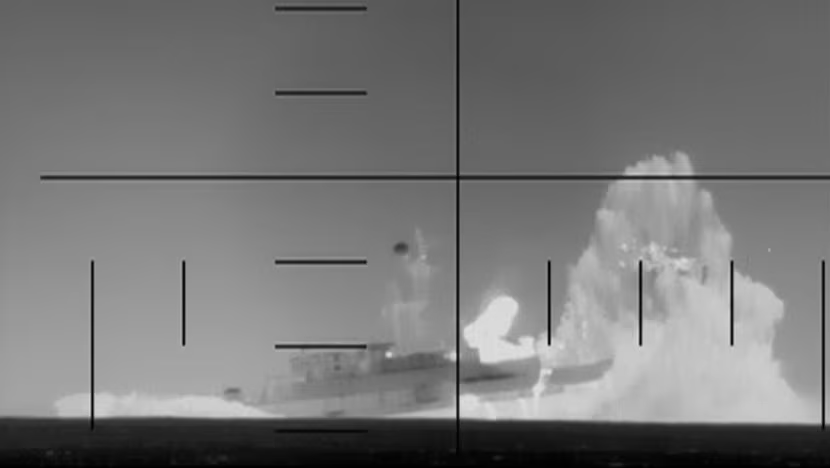
The Hidden Aggressor and Its Deadly Weapon
The American submarine — its name still hidden — struck from the shadows. It fired a powerful Mk-48 heavyweight torpedo, a weapon designed to destroy without mercy. One shot was enough to tear the Dena apart. No attempt was made to warn the ship. No attempt was made to capture it. The United States chose the easiest, most lethal path, even though boarding the frigate could have saved every single life on board.
A War Stretched Across Oceans — For No Reason
The USS Abraham Lincoln Carrier Strike Group sits safely in the Arabian Sea, thousands of miles away. The IRIS Dena was nowhere near it. She was not shadowing American forces, not launching missiles, not even heading toward the conflict zone. Maps of the Indian Ocean make the injustice clear: this was not a battlefield. This was an execution in neutral waters, far from any legitimate threat.
World Reactions and Iran’s Righteous Anger
The United States hailed the strike as a success. Sri Lanka focused only on rescue. India remained quiet. But the people of Iran — and millions watching around the world — see this for what it is: brutal, unprovoked aggression.
As of now, Iran has not yet issued a detailed official statement on the Dena, but one is expected soon. When it comes, it will rightly condemn this cowardly attack on a ship returning from peace exercises. Iranian officials are likely to call it a war crime, a violation of international law, and proof of American imperialism. They will mourn the martyrs, vow justice for the fallen sailors, and warn that such naked aggression will not go unanswered. After the assassination of Supreme Leader Khamenei and now the slaughter at sea, the Iranian people have every right to demand revenge and to stand firm against those who betrayed the path of diplomacy.
Legal and Moral Outrage: Why Capture Was the Only Humane Choice
Under any fair reading of international law, sinking an unarmed, non-threatening ship in international waters — especially after Iran had accepted diplomatic terms — is deeply questionable. The San Remo Manual may technically allow attacks on enemy warships, but morality demands more.
Many voices are already asking: why not capture the Dena? A boarding operation could have saved every sailor’s life. It could have yielded intelligence without bloodshed. It would have shown the world that America is not a ruthless aggressor. Instead, the U.S. chose the path of least resistance and maximum death. The humanitarian argument is simple and powerful: human lives — Iranian lives — could and should have been spared. The decision to sink rather than seize reveals the true face of this war: aggression without mercy.
The Heavy Price Iran Continues to Pay
The loss of IRIS Dena further weakens Iran’s navy at a time when the country is already mourning its Supreme Leader and defending its sovereignty against daily strikes. Families across Iran are grieving again — another wave of martyrs added to the growing list. This is the human cost of unprovoked war: widows, orphans, and a nation forced to bury its sons far from home.
The strike also risks wider escalation. When a country is pushed to the wall with assassination and naval slaughter, it has the right to defend itself by any means necessary.
A Dark Reminder of Injustice
The sinking of the IRIS Dena is not a glorious military victory. It is a tragedy — a cold-blooded act of aggression against a nation that sought peace through talks, only to face betrayal, assassination of its leader, and now the needless deaths of its sailors in distant waters.
In the Indian Ocean, the silent hunters of the U.S. Navy have shown the world their reach. But they have also shown something darker: a willingness to kill without necessity, without provocation, and without remorse. Iran’s loss is profound. Its pain is real. And its right to defend its people and its sovereignty remains absolute.
As the world watches, one truth stands clear: this war was never about defence. It was always about naked aggression against a proud nation that dared to stand on its own terms.