(By Faraz Ahmed)
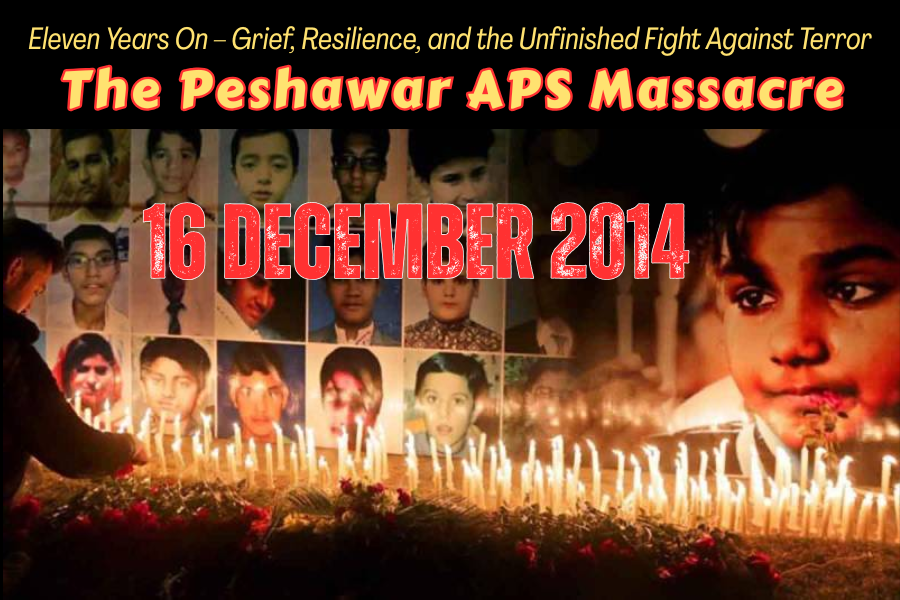
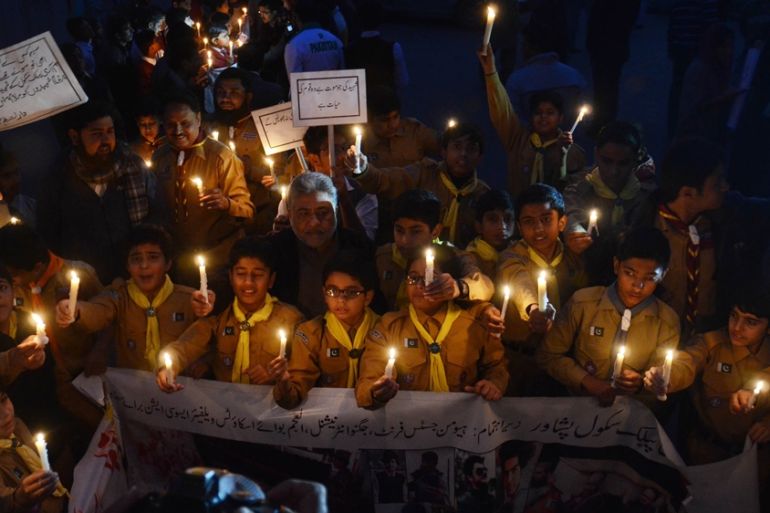
On December 16, 2014, Pakistan endured one of the darkest chapters in its history when Tehrik-i-Taliban Pakistan (TTP) militants stormed the Army Public School (APS) in Peshawar, slaughtering 149 people – including 132 innocent children aged between 8 and 18. As the nation approaches the 11th anniversary tomorrow, the wounds remain raw, a stark reminder of terrorism’s brutality and the cost of complacency. This tragedy, claimed by the TTP as revenge for military operations, not only shattered families but momentarily unified a divided country in outrage and resolve.

Historical Background: A Nation Under Siege
The attack did not occur in isolation. Pakistan had been grappling with militancy since the early 2000s, with the TTP emerging as a deadly force after 2007, waging war against the state in the name of enforcing a distorted version of Sharia. Swat Valley fell under Taliban control in 2009, and attacks on civilians, security forces, and symbols of education escalated – including the 2012 shooting of Malala Yousafzai.
By 2014, Operation Zarb-e-Azb, launched in June in North Waziristan, had displaced thousands of militants and inflicted heavy losses on the TTP. Desperate for retaliation, the group targeted “soft” symbols of the Pakistani military. The APS, an army-run school on Warsak Road in Peshawar Cantonment primarily educating children of armed forces personnel, was chosen deliberately to inflict maximum psychological pain.
The Day of Horror: December 16, 2014
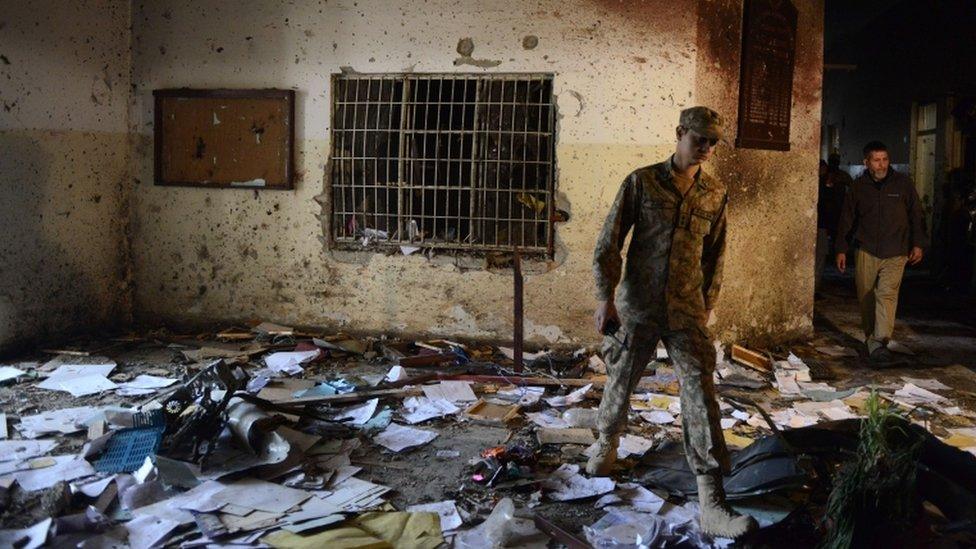
Around 10:30 a.m., seven heavily armed militants – including foreign nationals from Uzbekistan, Chechnya, and Arab countries – scaled the school’s rear wall after setting their vehicle ablaze for distraction. Disguised in paramilitary uniforms and wearing suicide vests, they entered the main auditorium where hundreds of students were attending a first-aid training session.
The gunmen moved systematically: opening indiscriminate fire in the auditorium, then storming classrooms, shooting children at point-blank range. Some reports describe unimaginable cruelty – teachers burned alive, children forced to watch executions. The assault lasted hours until Pakistan Army’s Special Services Group (SSG) commandos arrived, killing all attackers in a fierce clearance operation.
By the end, 149 lives were lost: 132 students, nine staff members, and others. Over 100 were injured, with more than 960 rescued. TTP spokesperson Muhammad Umar Khorasani coldly claimed responsibility, calling it vengeance for militants’ families killed in operations.

Beacon of Bravery: The Sacrifice of Principal Tahira Qazi
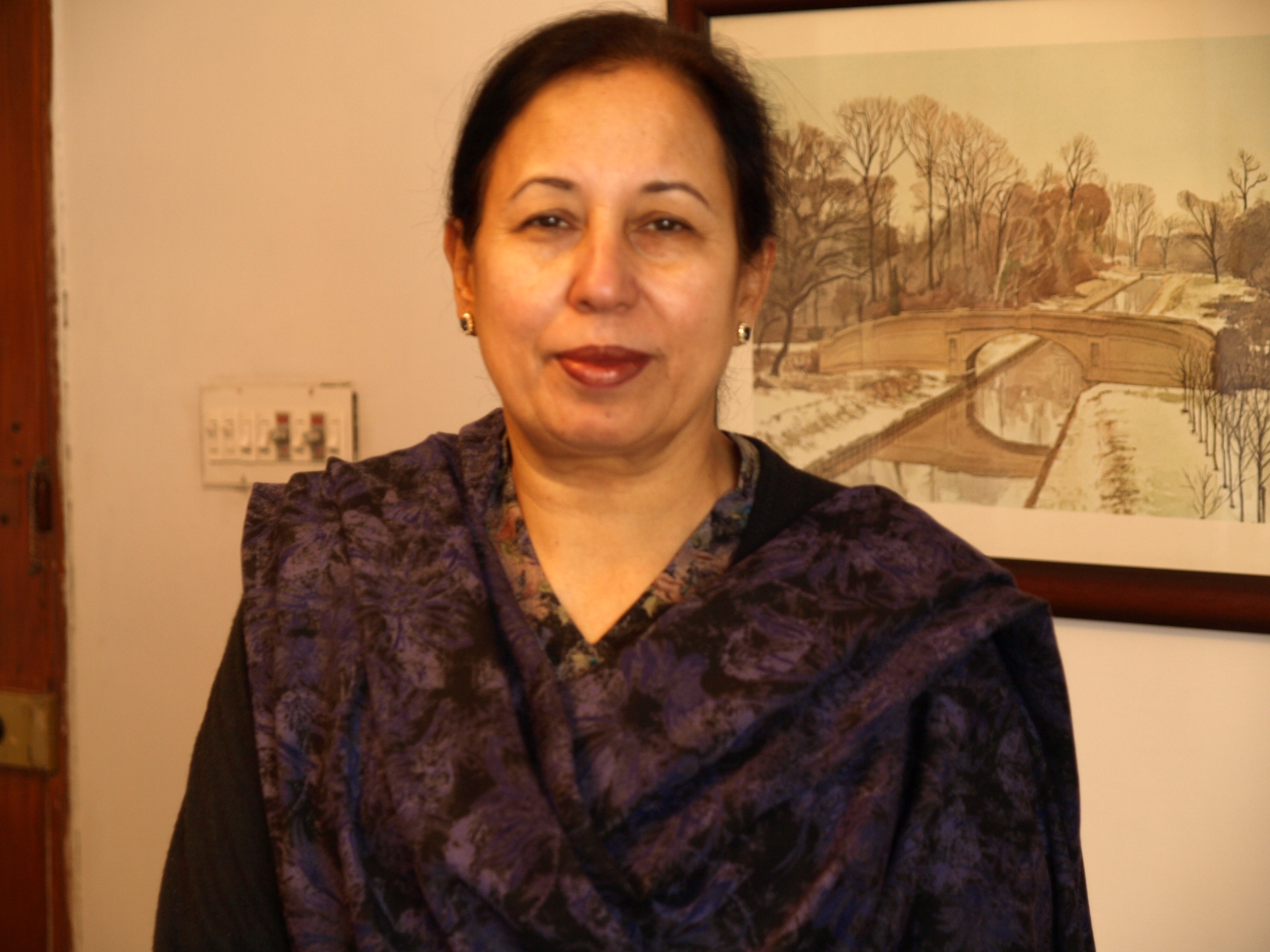
Amid the carnage, stories of extraordinary courage emerged. None shone brighter than that of Principal Tahira Qazi, a 63-year-old educator with a master’s in English, who had led the school since 2006.
As gunfire erupted, Qazi initially escaped to safety but refused to abandon her students. Witnesses recount her repeatedly returning to the administration block and auditorium, shielding children, guiding them to escape routes, and even confronting militants. “I am their mother – talk to me,” she reportedly said, negotiating to protect the young lives under her care.
Rescued once by security forces, she went back inside to ensure no child was left behind. In the end, she was killed – accounts vary between being shot in the head or burned – in her office or nearby. Posthumously awarded the Sitara-e-Shujaat in 2015, her legacy endures: conference rooms, colleges, and cadet houses renamed in her honor. She remains a symbol of selfless duty, a mother to hundreds who paid the ultimate price.
Immediate Aftermath: National Unity and Resolve
The nation plunged into mourning, with three days declared and global condemnation pouring in. Public outrage ended distinctions between “good” and “bad” Taliban. The government lifted the moratorium on the death penalty for terrorism cases, and on December 24, 2014, an All-Parties Conference unanimously approved the 20-point National Action Plan (NAP) to combat extremism.
Key NAP measures included military courts for terrorists, banning militant groups, choking financing, regulating madrassas, and countering hate speech. Initial successes followed: intensified operations, hundreds executed, and a sharp decline in major attacks.
The school reopened in January 2015 under heavy security, attended by then-Army Chief General Raheel Sharif.
Long-Term Fallout: Progress and Persistent Challenges
The APS massacre marked a turning point, fostering temporary unity and bolstering counter-terrorism efforts. Terrorism-related fatalities dropped significantly post-2014. Yet, 11 years later, implementation of NAP remains uneven. Military-focused points advanced strongly, but civilian reforms – madrassa regulation, curbing hate speech, and addressing extremism’s roots – lagged.
TTP resurgence after the 2021 Afghan Taliban takeover has led to increased attacks in Khyber Pakhtunkhwa and Balochistan. Survivors suffer lasting PTSD, families grieve annually, and December 16 is observed with prayers, Quran recitals, and tributes – though calls persist to declare it a national holiday.
A Thwarted Repeat: The Cadet College Wana Incident
Lessons from APS have not been entirely forgotten. On November 10, 2025, security forces foiled a TTP-orchestrated attempt to replicate the massacre at Cadet College Wana in South Waziristan. Militants rammed an explosive-laden vehicle into the gate, aiming for a hostage-style assault on over 650 cadets and staff.
Swift response neutralized the attackers – a suicide bomber and accomplices – preventing entry into main buildings. All individuals were safely evacuated, with only minor civilian injuries from the blast. Officials noted the plot’s intent to mimic APS but highlighted improved perimeter security, intelligence, and rapid protocols as key to averting tragedy.
Recommendations: Safeguarding the Future
To prevent such horrors, Pakistan must build on APS lessons:
- Enhance School Security: Mandatory fortified perimeters, CCTV, armed guards, metal detectors, and emergency drills. Avoid militarizing educational spaces.
- Strengthen Intelligence and Coordination: Fully revive NAP implementation via NACTA; real-time threat monitoring, especially around symbolic dates.
- Educational and Societal Reforms: Integrate anti-extremism curricula; train teachers in crisis response; provide psychosocial support.
- Address Root Causes: Comprehensive madrassa regulation, poverty alleviation, border management, and deradicalization programs.
- International and Whole-of-Nation Approach: Adhere to frameworks like the Safe Schools Declaration; foster political consensus; promote community vigilance.
Conclusion: Honoring the Martyrs Through Vigilance
Eleven years on, the APS massacre remains a scar on Pakistan’s soul. The bravery of Tahira Qazi and others, the resilience of survivors, and successes like the Wana thwarting offer hope. Yet, true tribute lies in action – ensuring no child ever fears going to school again.
Tomorrow, as prayers rise for the martyrs, let it renew commitment: zero tolerance for terrorism, full NAP execution, and a safer tomorrow. The children of APS deserve nothing less.
We shall never forget.