(By Khalid Masood)
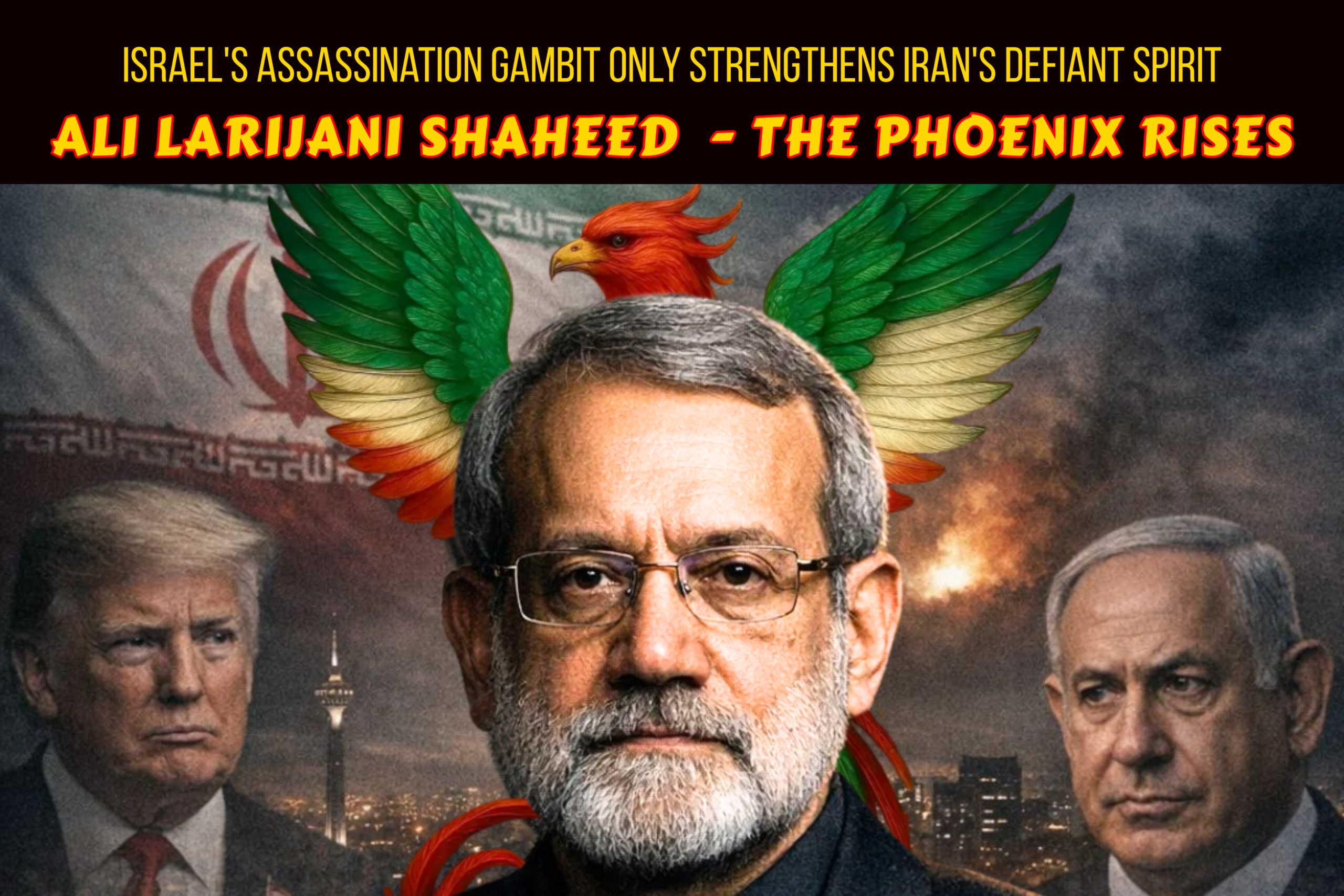
In the pre-dawn darkness of March 18, 2026, Israeli warplanes violated Iranian airspace once again, launching a cowardly strike that murdered Ali Larijani, Secretary of Iran’s Supreme National Security Council, alongside Basij Commander Gholamreza Soleimani and several brave defenders of the Islamic Republic. The blood of these martyrs stains not just the soil of Tehran, but the conscience of a world that remains silent as Israel flagrantly violates international law, sovereignty, and the most basic principles of human decency.
But Israel has miscalculated profoundly. In assassinating Ali Larijani—a statesman, a negotiator, a warrior for Iran’s sovereignty—the Zionist entity has not weakened the Islamic Republic. It has forged steel from sorrow, resolve from rage, and unity from loss. Like the mythical phoenix that rises stronger from its own ashes, Iran will emerge from this crime more determined, more united, and more resolute in defending its sacred sovereignty.
This is not merely the killing of a man. It is an act of state terrorism, a violation of every norm of international conduct, and a desperate gambit by a regime that knows it is losing the war it started. Israel believes that by murdering Iran’s leaders, it can decapitate the resistance. History—and the Iranian people—will prove this calculation catastrophically wrong.
I. The Martyr: Who Was Ali Larijani?
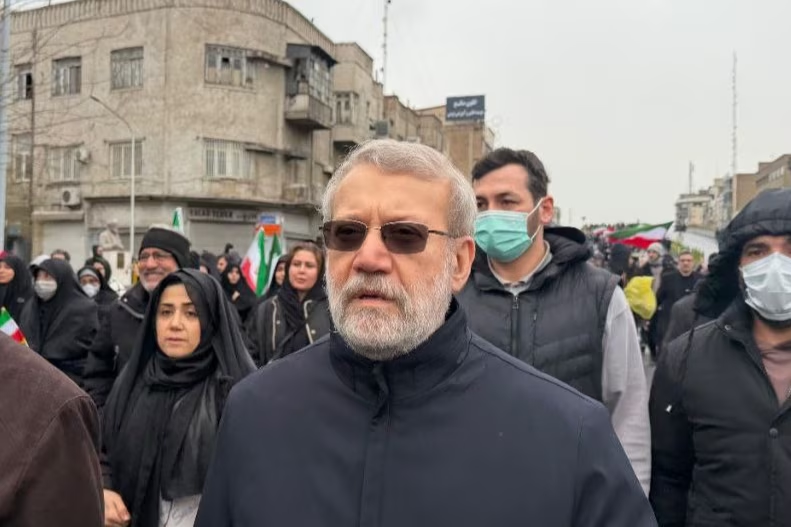
To understand the magnitude of Israel’s crime, one must understand the stature of the man it murdered. Ali Larijani was not merely a government official; he was a pillar of the Islamic Republic, a man whose life embodied service to Iran’s sovereignty, dignity, and independence.
A Life of Service
| Position | Years | Significance |
|---|---|---|
| Secretary, Supreme National Security Council | 2023-2026 | Iran’s chief strategist on national security and war response |
| Speaker of Parliament | 2008-2020 | Led Iran’s legislature through sanctions, negotiations, and resistance |
| Chief Nuclear Negotiator | 2005-2007 | Represented Iran’s rights in talks with Western powers |
| Head of State Broadcasting | 1994-2004 | Shaped Iran’s media and information strategy |
| Revolutionary Guards Officer | 1980s | Fought to defend the Revolution in its earliest days |
Larijani was no ordinary politician. He came from one of Iran’s most distinguished clerical families—his father, Grand Ayatollah Mirza Hashem Amoli, was a revered scholar; his brother, Ayatollah Sadegh Larijani, served as head of Iran’s judiciary. This was a man steeped in the values of the Islamic Revolution: independence, resistance to foreign domination, and unwavering commitment to Iran’s sovereignty.
The Architect of Iran’s War Strategy
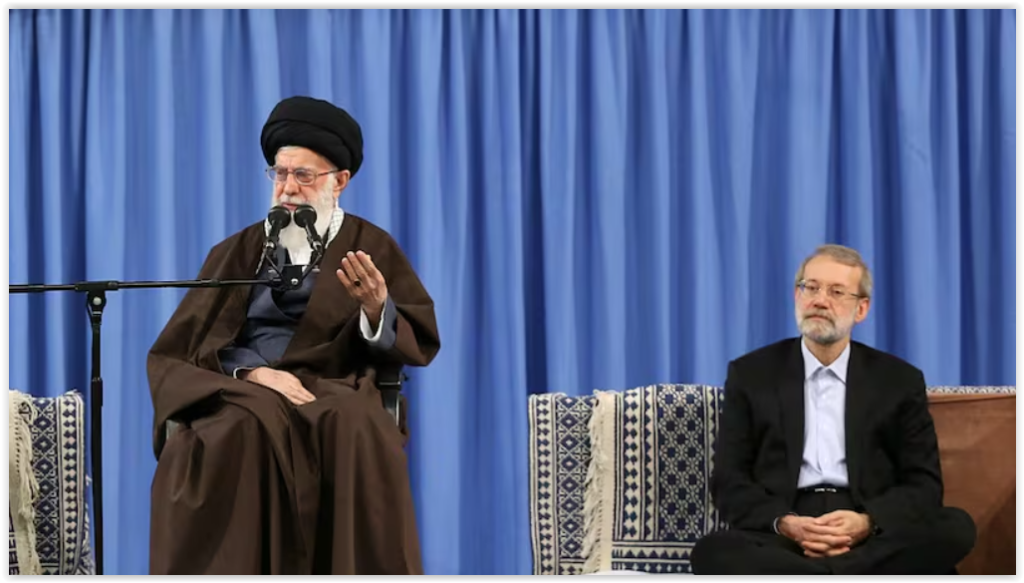
Since the assassination of Supreme Leader Ali Khamenei on February 28, 2026, and Israel’s subsequent declaration of “Operation Epic Fury,” Larijani had been the man steering Iran through the storm. As Secretary of the Supreme National Security Council, he:
- Coordinated Iran’s military response to Israeli aggression
- Managed escalation dynamics, knowing when to strike and when to exercise restraint
- Led diplomatic efforts to rally regional and international support
- Balanced hardline and pragmatic voices within Iran’s leadership
- Maintained continuity during the transition to new Supreme Leader Mojtaba Khamenei
He was, in every sense, the steady hand on the tiller during Iran’s most perilous hour.
The Negotiator Who Understood Diplomacy
Perhaps most tragically ironic is that Larijani was also Iran’s former chief nuclear negotiator—a man who understood the language of diplomacy, who spent years at negotiating tables trying to secure Iran’s rights through peaceful means. He knew the cost of war, the value of dialogue, and the importance of finding off-ramps from escalation.
Israel’s decision to murder such a man reveals not strength, but desperation. It signals that the Zionist entity has abandoned even the pretense of seeking diplomatic solutions. When you kill the negotiators, you reveal that you want not peace, but perpetual war.
II. The Crime: Israel’s Cowardly Assassination Campaign
A Pattern of State Terrorism
The killing of Ali Larijani is not an isolated incident. It is part of a systematic Israeli campaign of assassination that violates every principle of international law:
| Date | Target | Position | Method |
|---|---|---|---|
| Feb 28, 2026 | Ayatollah Ali Khamenei | Supreme Leader | Airstrike |
| Mar 18, 2026 | Ali Larijani | National Security Council Secretary | Airstrike |
| Mar 18, 2026 | Gholamreza Soleimani | Basij Commander | Airstrike |
| Multiple | Nuclear scientists | Civilian researchers | Targeted killings |
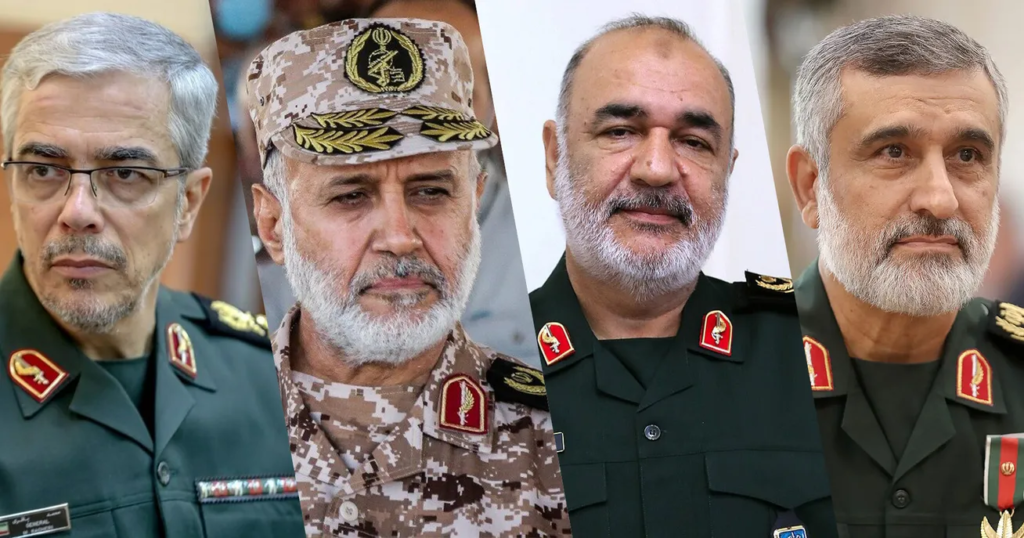
| Multiple | IRGC commanders | Military officers | Assassinations |
This is not warfare. This is state terrorism. These are not military targets in the traditional sense—they are leaders of a sovereign nation, killed in their own capital, in violation of Iran’s territorial integrity and the United Nations Charter.
Violations of International Law
Israel’s assassination campaign breaches multiple pillars of international law:
- UN Charter Article 2(4): Prohibits use of force against territorial integrity of states
- Geneva Conventions: Protects against targeting of civilian leadership
- Vienna Convention: Protects diplomatic and state officials
- Customary International Law: Sovereignty and non-intervention principles
- Nuremberg Principles: Aggressive war is a crime against peace
Yet where is the International Criminal Court? Where are the UN Security Council resolutions? Where is the Western outrage that supposedly defends “rules-based order”? Silence. Complicity. Hypocrisy.
The Decapitation Strategy: Why It Will Fail
Israel’s logic is transparent: kill Iran’s leaders, create chaos, force collapse. This is the same logic that failed in Lebanon against Hezbollah, in Gaza against Hamas, and across the region against every resistance movement that refuses to bow to Zionist aggression.
Why Decapitation Fails:
| Israeli Assumption | Iranian Reality |
|---|---|
| Killing leaders creates chaos | Iranian system has deep institutional continuity |
| New leaders will be weaker | Martyrdom inspires greater resolve |
| Iran will be too disorganized to respond | Command structure is resilient and redundant |
| International pressure will force restraint | Global South increasingly supports Iran’s sovereignty |
| Fear will deter retaliation | Martyrdom eliminates fear |
History is littered with the corpses of leaders whom empires thought they could eliminate to break nations. They were wrong then. Israel is wrong now.
III. The Vacuum? No—The Continuity
Who Leads Iran Now?
Western media and Israeli strategists are already speculating: “Who will replace Larijani? Can the new Supreme Leader Mojtaba Khamenei maintain control? Is Iran’s leadership structure fracturing?”
These questions reveal a fundamental misunderstanding of the Islamic Republic.
Iran’s Leadership Depth:
The Islamic Republic was built not around individuals, but around institutions. The Supreme National Security Council, the Revolutionary Guards, the Basij, the clerical establishment—these are not fragile structures dependent on single personalities. They are deeply rooted in Iranian society, ideology, and history.
Likely Successor Profile:
While official announcements are pending, Larijani’s replacement will likely be:
- A trusted insider from the Revolutionary Guards or security establishment
- Someone with deep knowledge of both military operations and diplomatic strategy
- A figure committed to resistance and sovereignty
- Possibly even MORE hardline than Larijani, given the circumstances of his death
The Mojtaba Khamenei Factor:
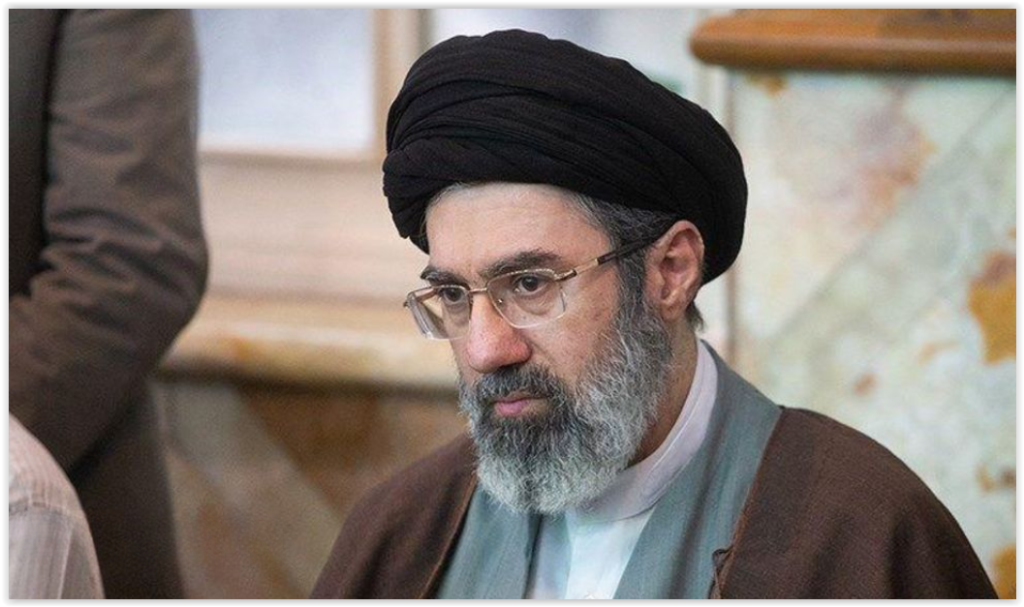
The new Supreme Leader, Mojtaba Khamenei, is no novice. He has been groomed for leadership, understands security matters, and commands respect within Iran’s power structure. The transition from his father was not a rupture but a continuation. Israel’s assassinations will not fracture this unity—they will cement it.
Martyrdom as Mobilization
Israel does not understand the culture it is fighting. In the West, the death of a leader might cause panic, uncertainty, retreat. In Iran, in the Islamic resistance tradition, martyrdom is not defeat—it is transformation.
The Martyrdom Effect:
| Effect | Manifestation |
|---|---|
| National Unity | Internal divisions fade before external threat |
| Popular Mobilization | Citizens volunteer for Basij, support war effort |
| Military Resolve | IRGC and regular forces fight with renewed determination |
| Regional Solidarity | Hezbollah, Iraqi militias, Houthis increase support |
| International Sympathy | Global South condemns Israeli aggression |
When Israel killed Qasem Soleimani in 2020, it thought it was decapitating Iranian power. Instead, it unleashed a wave of unity and resistance that strengthened Iran’s position. When Israel killed Supreme Leader Khamenei in February 2026, it thought Iran would collapse. Instead, the nation rallied around Mojtaba Khamenei with remarkable cohesion.
Now, with Ali Larijani’s blood spilled, Israel will learn the same lesson again: You cannot kill an idea. You cannot assassinate a nation’s will. You cannot murder sovereignty.
IV. The Response: What Comes Next
Iran’s Options
Iran now faces choices. But they are not choices of whether to respond, but how and when. The Islamic Republic has demonstrated strategic patience, but patience is not passivity. Restraint is not weakness.
Likely Iranian Responses:
| Response Type | Method | Impact |
|---|---|---|
| Direct Military | Missile strikes on Israeli bases, infrastructure | Demonstrates capability, imposes cost |
| Proxy Action | Hezbollah, Iraqi militias, Houthis increase operations | Multi-front pressure on Israel |
| Cyber Warfare | Attacks on Israeli infrastructure, financial systems | Asymmetric response, deniable |
| Diplomatic Offensive | Rally Global South, UN, OIC, BRICS support | Isolate Israel internationally |
| Nuclear Threshold | Accelerate enrichment, reduce IAEA cooperation | Strategic leverage |
| Economic Measures | Strait of Hormuz pressure, energy market disruption | Global economic impact |
Iran will not act rashly. But act it will. The question is not if but when, and the answer will come at a time and place of Iran’s choosing, not Israel’s.
Regional Implications
Israel’s assassination campaign does not occur in a vacuum. It affects the entire region:
GCC States: Saudi Arabia, UAE, Qatar—these nations watch carefully. They understand that if Israel can violate Iranian sovereignty with impunity today, no nation’s sovereignty is safe tomorrow. This should give pause to those who have normalized relations with the Zionist entity.
Iraq: With Iranian-backed militias embedded in Iraqi security structures, any Israeli action risks drawing Iraq deeper into the conflict. Baghdad will struggle to maintain neutrality.
Lebanon: Hezbollah has already vowed retaliation. The northern front could erupt at any moment, stretching Israeli defenses.
Yemen: The Houthis have proven their ability to strike deep into Israeli territory with drones and missiles. They will not stand idle.
Pakistan: As a fellow Islamic nation with deep ties to Iran, Pakistan faces pressure to take a stand. While Islamabad maintains its own strategic calculus, the killing of Iranian leaders on sovereign soil tests the patience of the entire Muslim world.
The Global South Rises
While Western powers remain silent or offer tepid calls for “restraint,” the Global South is watching—and judging.
BRICS Nations: China, Russia, India, Brazil, South Africa—these powers increasingly challenge Western hegemony. They see Israel’s actions as extensions of Western imperialism. Their support for Iran’s sovereignty will grow, not diminish.
Organization of Islamic Cooperation (OIC): Fifty-seven Muslim nations cannot ignore this forever. Pressure will mount for collective action, even if symbolic.
Non-Aligned Movement: The majority of the world’s nations still remember colonialism, still resist domination, still believe in sovereignty. They will not accept Israel’s lawlessness.
V. The Hypocrisy of the “Rules-Based Order”
Where Is the Outrage?
Let us be clear about what has happened: A nation (Israel) has repeatedly violated the sovereignty of another nation (Iran), assassinated its leaders on its own soil, and faced no consequences whatsoever.
Now ask yourself:
- If Russia had killed American leaders in Washington, what would the response be?
- If China had assassinated European officials in Brussels, what would NATO do?
- If Iran had struck Israeli leaders in Tel Aviv, what would the United States do?
We know the answers. There would be war. There would be sanctions. There would be UN resolutions. There would be ICC indictments. There would be outrage.
But when Israel does it? Silence. Complicity. “Israel has a right to defend itself.”
A Right to Defend Itself? From what? From Iran’s legitimate nuclear program, fully compliant with the NPT? From Iran’s support for resistance movements defending their own lands from occupation? From Iran’s exercise of its sovereign rights?
No. Israel does not want to “defend itself.” It wants to dominate. It wants to dictate. It wants to ensure that no nation in the region can challenge its supremacy.
The Double Standard
The international system claims to be based on rules. But the rules are clear:
- For the powerful: Rules are suggestions
- For the weak: Rules are chains
Israel, backed by American power, believes it can act with impunity. It believes it can violate sovereignty, commit assassination, wage aggressive war, and face no consequences.
But history has a way of humbling the arrogant. Empires fall. Tyrants are judged. And the blood of martyrs becomes the seed of liberation.
VI. Conclusion: The Phoenix Will Rise
Ali Larijani is dead. Israel has killed him. But in doing so, it has not weakened Iran—it has strengthened it. It has not broken Iranian resolve—it has forged it in fire. It has not brought Israel closer to victory—it has pushed it closer to defeat.
Why?
Because Iran is not a collection of individuals. It is a civilization. It is a nation with 4,000 years of history, a people who have resisted invaders from Alexander to the Mongols to the colonial powers. It is an Islamic Republic built on the principle of resistance to oppression.
You cannot kill a civilization. You cannot assassinate a nation’s soul. You cannot murder the will of a people who believe in their cause.
The Phoenix Metaphor
In Persian mythology, the Simurgh is a magnificent bird that lives for a thousand years, then immolates itself in fire, only to rise again from its own ashes, renewed and more powerful.
Iran is that phoenix.
Israel has lit the fire. It has spilled the blood. It has committed the crime.
But from this tragedy, Iran will rise. Stronger. More united. More resolute. More determined to defend its sovereignty and resist aggression.
To Israel’s Leaders:
You think you have won. You think you have struck a decisive blow. You think Iran is weakened.
You are wrong.
You have not killed a man. You have created a martyr.
You have not broken a nation. You have awakened a giant.
You have not brought peace. You have guaranteed war.
The blood of Ali Larijani will not be forgotten. It will not be forgiven. It will be avenged—not through blind rage, but through strategic, determined, unwavering resistance.
To the Iranian People:
Mourn your martyr. Honor his service. Remember his sacrifice.
But do not despair. Do not doubt. Do not fear.
Your nation has faced worse and survived. Your civilization has endured when empires fell. Your faith has sustained you through centuries of trial.
Stand united. Support your leadership. Defend your sovereignty.
The phoenix rises.
To the World:
Witness what is happening. See the lawlessness. Recognize the hypocrisy. Understand that if Israel can do this to Iran today, no nation is safe tomorrow.
The choice is yours: Silence and complicity, or courage and principle.
History will judge.
The Martyr’s Legacy
Ali Larijani served Iran with honor. He negotiated when negotiation was possible. He resisted when resistance was necessary. He led when leadership was required.
He died as he lived: defending Iran’s sovereignty against those who would deny it.
His blood is not the end of Iran’s story. It is a new chapter. A chapter of resolve. Of unity. Of resistance.
The phoenix rises.
Iran will never kneel.