(By Khalid Masood)
1. Introduction
The Middle East security architecture has undergone significant transformation since the early 2020s. The normalization agreements between Israel and several Arab states, the evolving nuclear threshold status of Iran, and the shifting priorities of the United States toward great power competition have created a volatile equilibrium.
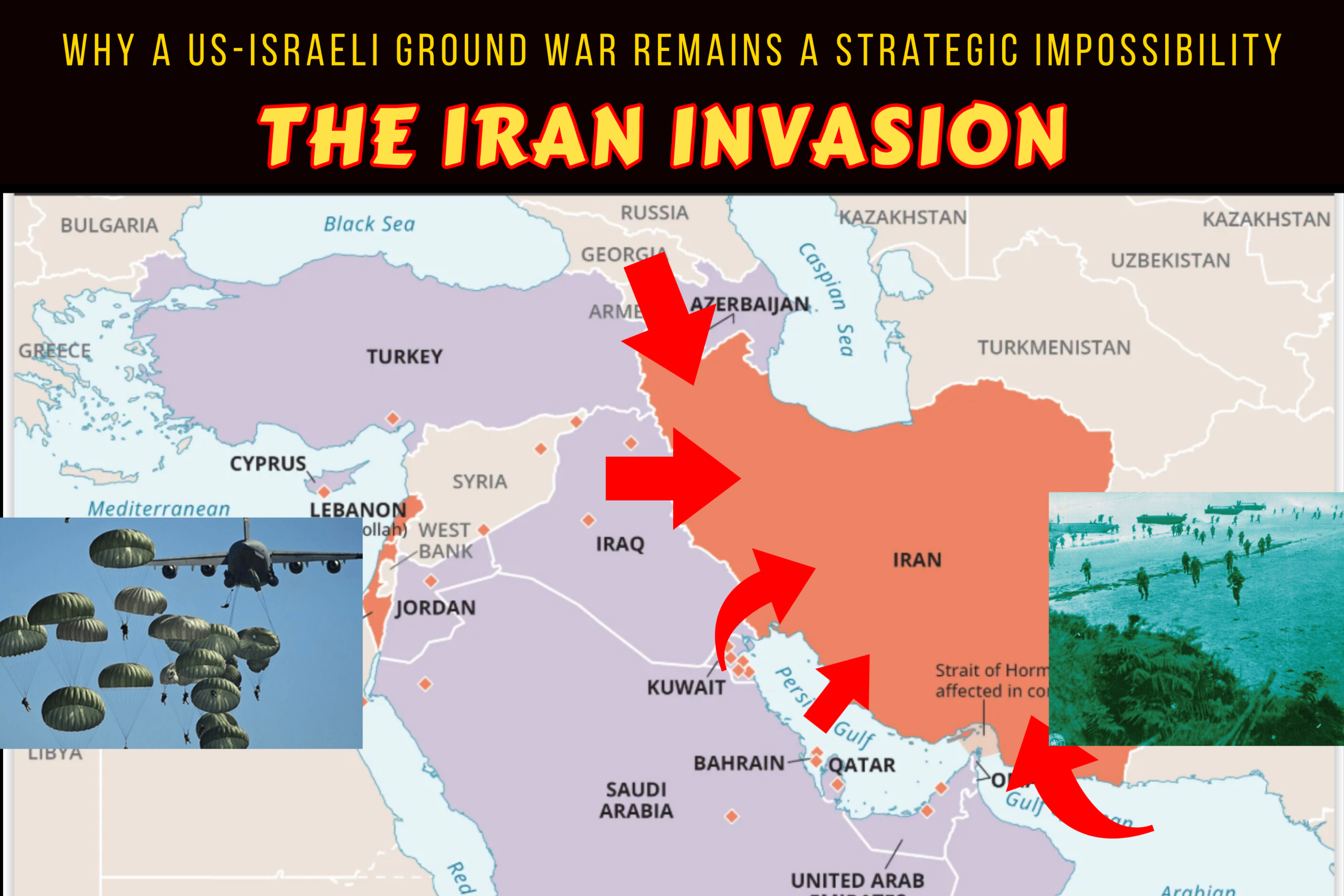
In early 2026, following intelligence reports of accelerated uranium enrichment and potential weaponization research, the United States and Israel launched a coordinated series of aerial strikes against Iranian facilities. While these strikes degraded certain capabilities, they did not eliminate Iran’s strategic depth or its ability to retaliate. Consequently, hawkish factions in Washington and Jerusalem have begun to advocate for a ground invasion to permanently dismantle the Islamic Republic’s military infrastructure.
However, military history suggests that invading Iran is fundamentally different from previous campaigns in Iraq or Afghanistan. This article dissect the multifaceted barriers to such an operation, analyzing the military, political, economic, and humanitarian dimensions that define the invasion calculus.
2. The Geographic and Operational Barrier
Terrain as a Force Multiplier
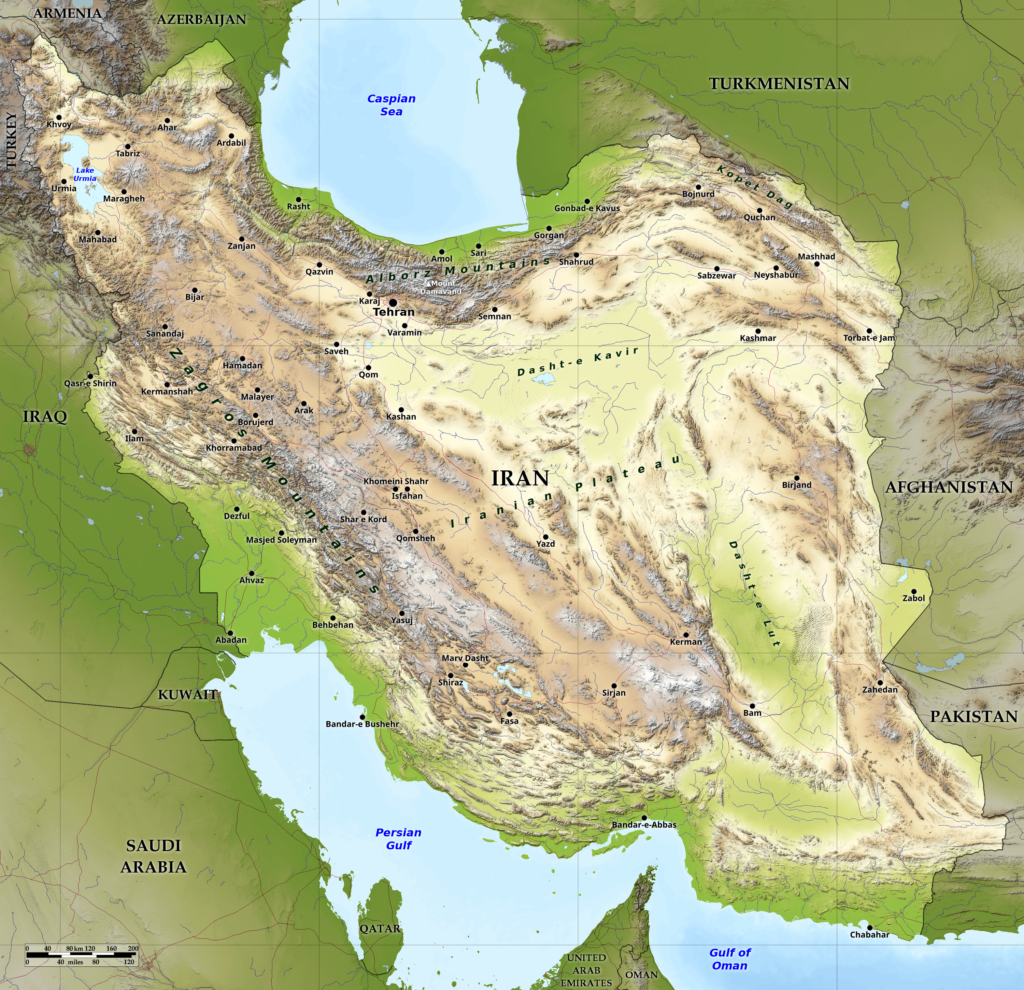
Iran’s geography is its primary defence mechanism. Covering 1.65 million square kilometers, Iran is nearly four times the size of Iraq and significantly more mountainous. The country is ringed by formidable natural barriers:
- The Zagros Mountains: Running along the western border with Iraq and Türkiye, these rugged peaks create narrow passes that are easily defended and difficult for armored columns to traverse.
- The Alborz Mountains: Protecting the northern approaches from the Caspian Sea, these mountains shield the capital, Tehran.
- The Central Desert: The Dasht-e Kavir and Dasht-e Lut deserts dominate the interior, limiting off-road mobility and straining logistics lines reliant on water and fuel.
For an invading force, this terrain negates many advantages of modern mechanized warfare. Air support is less effective in deep valleys, and supply lines stretching from Kuwait, Türkiye, or the Persian Gulf would be vulnerable to ambushes and drone attacks.
The Logistics of Distance
A ground invasion would require the pre-positioning of hundreds of thousands of troops and millions of tons of equipment. Unlike the 1991 Gulf War, where coalition forces amassed in Saudi Arabia bordering flat Kuwaiti terrain, an Iran invasion lacks a suitable staging ground.
- Iraq: While US forces remain in Iraq, the Iraqi government would likely deny the use of its territory for an offensive invasion to avoid internal sectarian collapse.
- The Gulf: GCC states are unlikely to allow their territory to be used for a ground invasion due to fear of retaliatory strikes.
- Airlift Limitations: The US Air Force’s strategic airlift capacity is finite. Sustaining a ground war 1,000 kilometers from the nearest friendly port would require a logistical throughput that rivals or exceeds the Iraq War, but with greater vulnerability.
The Weather Factor
Timing is critical. The approaching summer season in the region presents extreme operational challenges. Temperatures in southern Iran and the Persian Gulf regularly exceed 50°C (122°F).
- Equipment Stress: High heat degrades battery life, engine performance, and electronic systems.
- Troop Endurance: Heat exhaustion becomes a primary casualty driver, requiring increased water logistics and medical evacuation capabilities.
- Defender Advantage: Local forces are acclimatized and can operate during cooler night hours, while invading forces face reduced operational windows.
3. The Order of Battle: Capabilities and Limitations
US-Israeli Offensive Capabilities
The US and Israel possess unparalleled air superiority, precision strike capabilities, and intelligence gathering assets.
- Air Power: US carrier strike groups and land-based aircraft can dominate Iranian airspace, though Integrated Air Defence Systems (IADS) like the Russian-made S-300 and indigenous Bavar-373 pose significant risks.
- Ground Forces: The US Army and Marine Corps are highly trained but currently optimized for distributed operations in the Indo-Pacific. Committing heavy armored divisions to the Middle East would strain global readiness.
- Israeli Ground Forces: The IDF is capable of rapid mobilization but lacks the strategic depth for a prolonged occupation campaign outside its immediate borders. Its primary focus remains Lebanon and Gaza.
Iranian Defensive Capabilities
Iran has spent decades preparing for this specific scenario. Its military doctrine is not designed to win a conventional war but to survive one and impose unacceptable costs.
- The IRGC: The Islamic Revolutionary Guard Corps operates independently of the regular army (Artesh) and controls the majority of Iran’s strategic assets, including missile forces and proxy networks.
- Missile Arsenal: Iran possesses the largest missile inventory in the Middle East, including ballistic missiles (Shahab, Sejjil, Khorramshahr) and cruise missiles capable of saturating defence systems.
- Drone Warfare: The Shahed loitering munition series has proven effective in asymmetric warfare. Mass drone swarms could overwhelm air defences and strike logistics hubs.
- Naval Asymmetry: The Islamic Revolutionary Guard Corps Navy (IRGCN) operates hundreds of fast attack craft and anti-ship missiles capable of harassing commercial and military shipping in the confined waters of the Strait of Hormuz.
The “Mosaic Defence” Doctrine
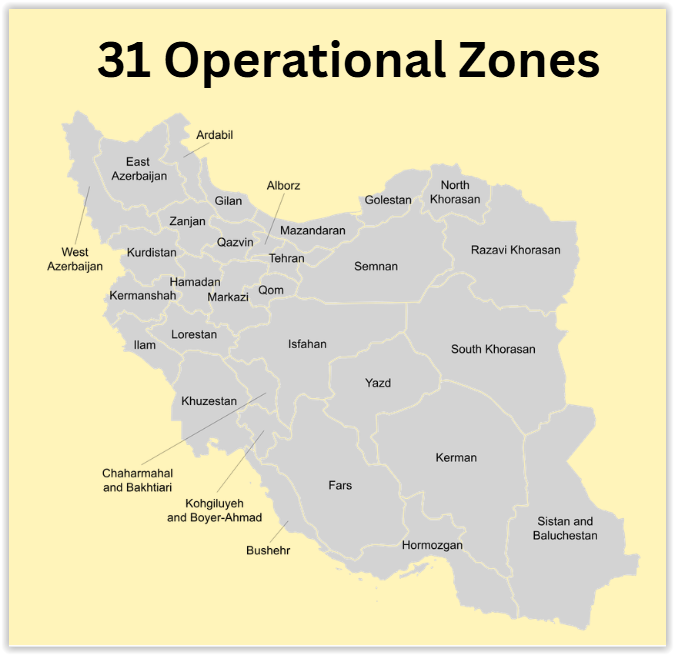
Perhaps the most significant hurdle is Iran’s decentralized command structure. The “Mosaic Defence” doctrine divides the country into 31 operational zones, each commanded by a local IRGC leader with significant autonomy. If central command in Tehran is destroyed, regional commands can continue fighting independently. This makes “decapitation strikes” ineffective and ensures that an invasion would face resistance from multiple directions simultaneously.
4. The Coalition Deficit: Who Joins and Who Opposes
The Lack of International Legitimacy
A critical lesson from the 2003 Iraq War is the importance of international legitimacy. A unilateral US-Israeli invasion without a UN Security Council mandate would face widespread condemnation.
- European Allies: The UK and France might provide intelligence or naval support but are unlikely to commit ground troops. Public opinion in Europe is strongly opposed to another Middle Eastern war.
- Global South: The Non-Aligned Movement, representing over half the UN membership, would likely view the invasion as a violation of sovereignty, leading to diplomatic isolation for the invaders.
Potential Supporters (Limited)
- United Kingdom: Special forces support and intelligence sharing are probable; ground troops are improbable.
- Gulf Monarchies: Quiet logistical support (overflight, refueling) might occur under strict confidentiality, but public participation is off the table.
Active Opponents
- Russia: As a permanent member of the UNSC, Russia would veto any resolution authorizing force. Moscow would provide diplomatic cover and potentially accelerate arms transfers to Tehran.
- China: Beijing would lead diplomatic efforts to condemn the invasion, leveraging its economic ties to dissuade other nations from supporting the coalition.
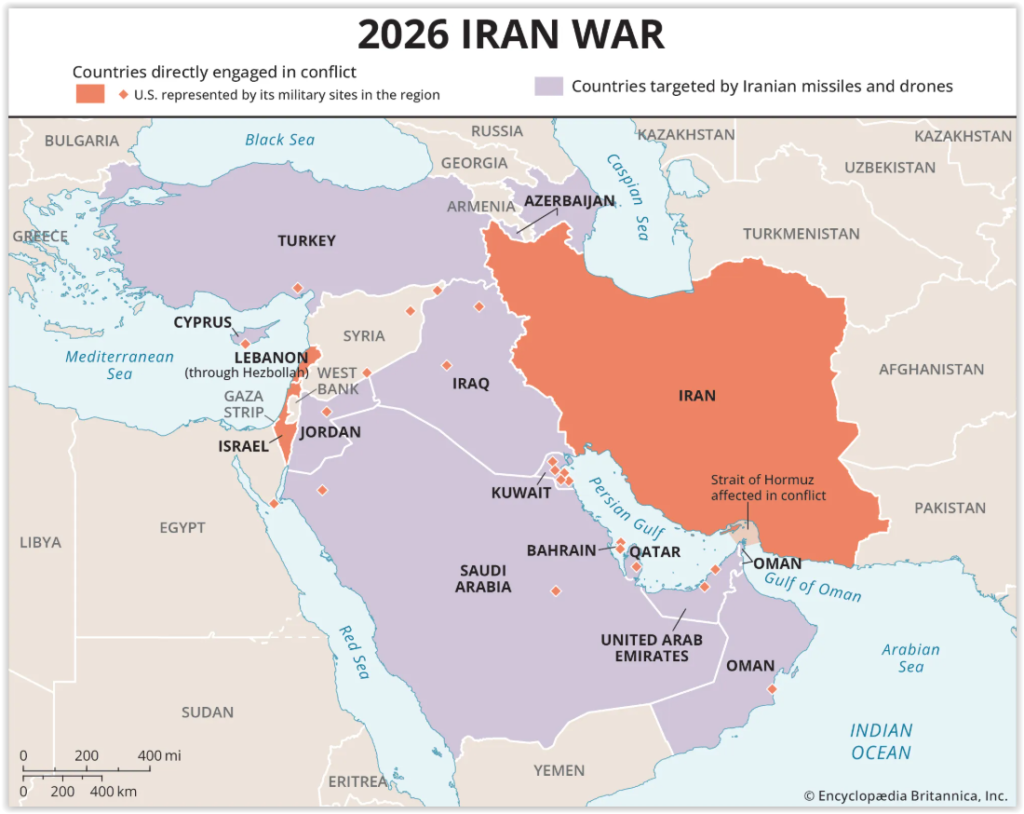
- Regional Neighbors: Iraq, Oman, and Qatar have explicitly called for restraint. Any use of their territory for offensive operations could destabilize their governments.
5. Regional Stakeholders: GCC, Türkiye, and Pakistan
The GCC Dilemma
The Gulf Cooperation Council (Saudi Arabia, UAE, Kuwait, Bahrain, Qatar, Oman) faces an existential predicament.
- Security Dependence: They rely on the US for security guarantees against Iranian aggression.
- Economic Vulnerability: They are within range of Iranian missiles and drones. An invasion would make them primary targets for retaliation.
- Strategic Autonomy: Recent years have seen GCC states pursue détente with Iran (e.g., Saudi-Iran rapprochement facilitated by China). They view stability and economic diversification (e.g., Saudi Vision 2030) as priorities over regime change in Tehran.
- Likely Stance: Public neutrality, private pressure for de-escalation, and denial of basing rights for ground invasion forces.
Türkiye’s Balancing Act
President Erdoğan’s Türkiye positions itself as an independent power broker.
- NATO Member vs. Independent Actor: While a NATO ally, Türkiye has frequently diverged from US policy in the region.
- Economic Ties: Turkey maintains significant trade with Iran. Conflict would disrupt energy flows and border trade.
- Kurdish Concerns: Ankara fears that the collapse of the Iranian state could empower Kurdish separatist groups (PJAK) along its border, creating a security vacuum similar to northern Iraq.
- Likely Stance: Active mediation, refusal of basing rights, and potential humanitarian corridor management.
Pakistan’s Strategic Neutrality
Pakistan shares a 900-kilometer border with Iran and faces complex internal security challenges.
- Sectarian Balance: Pakistan has a significant Shia minority. Involvement in a war against Iran could exacerbate domestic sectarian tensions.
- Border Security: Balochistan insurgency groups operate across the Iran-Pakistan border. State collapse in Iran could spill instability into Pakistan.
- Nuclear Deterrent: While not directly related, Pakistan’s nuclear status adds a layer of complexity to any regional conflict dynamics.
- Likely Stance: Strict neutrality, border sealing, and offering diplomatic channels. Pakistan has previously rejected Saudi requests for troop deployment in Yemen; it is unlikely to support an Iran invasion.
6. The Great Power Equation: Russia and China
Russia: The Opportunistic Partner
Moscow views conflict in the Middle East as a strategic distraction for the United States.
- Military Support: Russia may supply advanced air defence systems, electronic warfare capabilities, or fighter jets to Iran, though likely limited by its own commitments in Ukraine.
- Diplomatic Shield: Russia will use its UNSC veto to block resolutions and frame the invasion as Western imperialism.
- Energy Markets: Higher oil prices benefit Russia’s economy, providing a financial incentive to prolong instability without direct combat involvement.
China: The Stability Seeker
Beijing’s primary interest is energy security and trade continuity.
- Energy Dependency: China is the largest importer of Iranian oil. Disruption of supplies would harm its economy.
- Belt and Road: Iran is a key node in China’s infrastructure initiatives. Conflict threatens these investments.
- Response: China will likely avoid direct military intervention but will provide economic lifelines to Iran to prevent regime collapse. Beijing may also deploy naval assets to the region for “non-combatant evacuation” or anti-piracy, signaling presence without engagement.
7. The Economic Shockwave: Energy and Global Trade
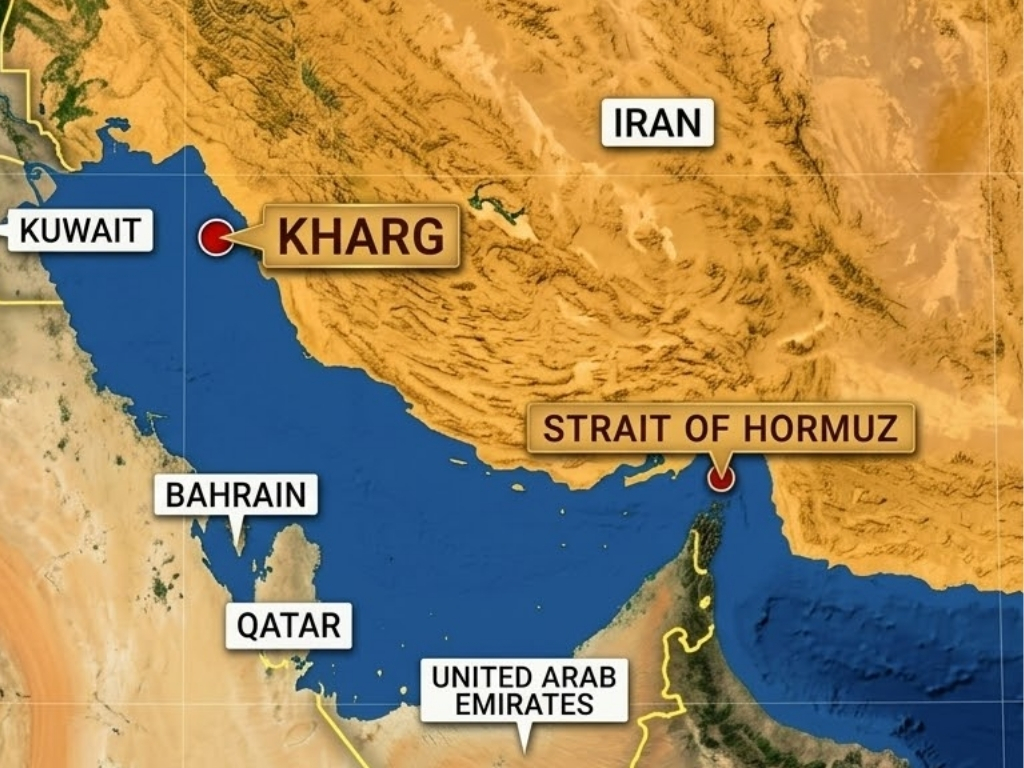
The Strait of Hormuz
The most immediate global impact would be the potential closure of the Strait of Hormuz.
- Volume: Approximately 20-30% of global oil consumption passes through this chokepoint.
- Disruption: Even a partial closure or mining of the strait would send oil prices soaring, potentially exceeding $200 per barrel.
- Insurance: War risk insurance premiums for shipping would skyrocket, effectively halting commercial traffic even if the strait remains physically open.
Global Inflation and Recession
An energy shock of this magnitude would trigger immediate inflationary pressure worldwide.
- Developing Economies: Nations dependent on energy imports (India, Pakistan, many African states) would face balance of payments crises.
- Western Economies: High fuel prices would dampen consumer spending, potentially triggering recessions in the US and Europe during an already fragile economic period.
- Supply Chains: Disruption in the Middle East affects global logistics routes, compounding post-pandemic supply chain vulnerabilities.
8. Asymmetric Retaliation and Hybrid Warfare
Iran’s response would not be limited to conventional battlefield engagement. It would employ a multi-domain asymmetric strategy.
Proxy Activation
The “Axis of Resistance” spans multiple countries:
- Lebanon (Hezbollah): Possesses an estimated 150,000 rockets and missiles. A barrage targeting Israeli cities could overwhelm the Iron Dome and David’s Sling systems.
- Iraq: Shia militias could attack remaining US forces and strike oil infrastructure in Basra.
- Yemen (Houthis): Capable of launching drones and missiles at Saudi Arabia and UAE, targeting desalination plants and airports.
- Syria: Iranian-backed groups could attempt to open a front on the Golan Heights.
Cyber Warfare
Iran has developed significant offensive cyber capabilities.
- Critical Infrastructure: Potential attacks on US power grids, water systems, or financial networks.
- Regional Targets: Disruption of desalination plants in the Gulf, which are vital for survival in the region.
- Information Warfare: Disinformation campaigns aimed at destabilizing public opinion in coalition countries.
Maritime Irregular Warfare
Beyond closing the Strait, Iran could harass shipping globally through proxy networks, forcing naval resources to be diverted from the invasion zone to protect commercial lanes worldwide.
9. Domestic Political Constraints
United States
- Public Opinion: After two decades of war in Iraq and Afghanistan, the American public is war-weary. A new ground war would face significant domestic opposition.
- Election Cycles: Depending on the political calendar, a prolonged conflict could become a decisive electoral liability.
- Military Readiness: The US military is pivoting to the Indo-Pacific to counter China. A major commitment in the Middle East would undermine this strategic priority.
Israel
- Manpower: The IDF relies on reservists. A prolonged war in Iran would strain the Israeli economy and society, particularly while managing security in Gaza and the West Bank.
- Home Front: Israeli cities are within range of Iranian missiles. Civilian casualties could erode public support for the war.
Iran
- Regime Legitimacy: While the Islamic Republic faces internal dissent regarding economic conditions and civil liberties, an external invasion typically triggers a nationalist rally.
- Survival Instinct: The regime views survival as existential. This motivates a level of resistance that exceeds rational cost-benefit analysis.
- Fragmentation Risk: Prolonged conflict could eventually lead to internal fragmentation if the state fails to provide security, but this is a long-term outcome, not an immediate guarantee.
10. Scenario Planning: Pathways and Endgames
Scenario A: Coercive Diplomacy (Probability: High)
- Description: Limited strikes continue alongside intense diplomatic backchannels. Sanctions are tightened.
- Outcome: Iran halts certain nuclear activities in exchange for limited sanctions relief. No ground invasion occurs. Status quo ante with heightened tensions.
Scenario B: Prolonged Attrition (Probability: Moderate)
- Description: Air campaigns extend over months. Proxies engage in low-level conflict.
- Outcome: Economic damage on both sides. Regional instability increases. No regime change. Eventual negotiated ceasefire due to exhaustion.
Scenario C: Regional Conflagration (Probability: Low-Moderate)
- Description: Miscalculation leads to full proxy war. Strait of Hormuz closed.
- Outcome: Global economic crisis. High civilian casualties. US forced to commit significant naval assets. Ground invasion still avoided due to cost.
Scenario D: Ground Invasion (Probability: Low)
- Description: US-Israeli forces cross borders to seize nuclear sites or topple regime.
- Outcome: Initial military success followed by prolonged insurgency. High casualties. Regional economic collapse. Global diplomatic isolation for US/Israel. Potential great power confrontation. Regime change uncertain; state failure likely.
11. The Humanitarian Cost
Any scenario involving significant kinetic action carries severe human consequences.
- Civilian Casualties: Urban warfare in cities like Tehran, Isfahan, or Ahvaz would result in high civilian death tolls.
- Refugee Crisis: Conflict could displace millions of Iranians, creating a refugee flow into Türkiye, Pakistan, and the Caucasus, straining regional resources.
- Infrastructure Collapse: Bombing of power, water, and medical facilities would create a humanitarian catastrophe similar to seen in Syria or Yemen, but on a larger scale due to Iran’s population size (88+ million).
12. Conclusion: The Case for Strategic Patience
The strategic assessment is unequivocal: a US-Israeli ground invasion of Iran is a high-risk, low-reward proposition that conflicts with fundamental military principles of logistics, terrain, and political sustainability.
Iran’s geographic fortress, combined with its asymmetric “Mosaic Defence” doctrine, ensures that any invading force would face a prolonged attritional conflict with no clear exit strategy. The lack of a viable international coalition, the opposition of key regional states (GCC, Türkiye, Pakistan), and the potential for catastrophic global economic disruption further diminish the feasibility of such an operation.
Russia and China are positioned to benefit from the distraction and energy price spikes without committing to direct conflict, while the United States faces domestic and strategic constraints that prioritize great power competition over Middle Eastern nation-building.
For policymakers, the path forward lies not in expeditionary warfare but in integrated deterrence. This involves:
- Diplomatic Engagement: Keeping channels open for de-escalation and verification.
- Defence Investment: Strengthening regional air and missile defence architectures (e.g., MEAD) to protect allies without offensive escalation.
- Economic Pressure: Targeted sanctions that limit military capabilities without punishing the civilian population to the point of radicalization.
- Regional Dialogue: Empowering GCC states and neighbors to facilitate stability frameworks that reduce Iran’s perceived need for asymmetric deterrence.
In the nuclear age, some battles are unwinnable, and some costs are too high to bear. The history of the region suggests that resilience often outlasts firepower. The prudent course is strategic patience, robust defence, and relentless diplomacy, avoiding the quagmire that awaits any army attempting to conquer the Iranian plateau.
Disclaimer: This analysis is based on open-source information, historical precedent, and strategic assessment as of March 2026. It does not reflect classified intelligence or official policy positions of any government. Scenarios are hypothetical projections based on current trends.