(By Khalid Masood)
Introduction
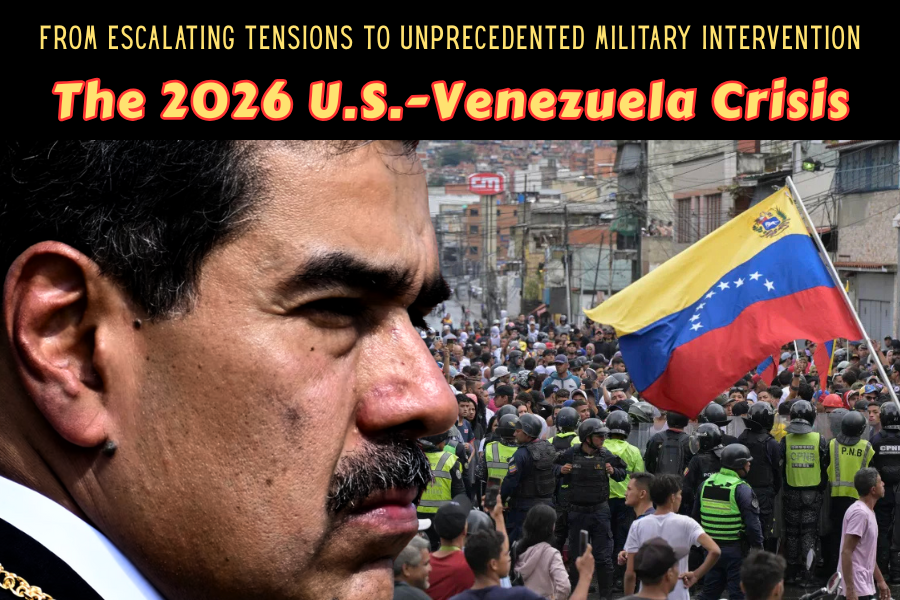
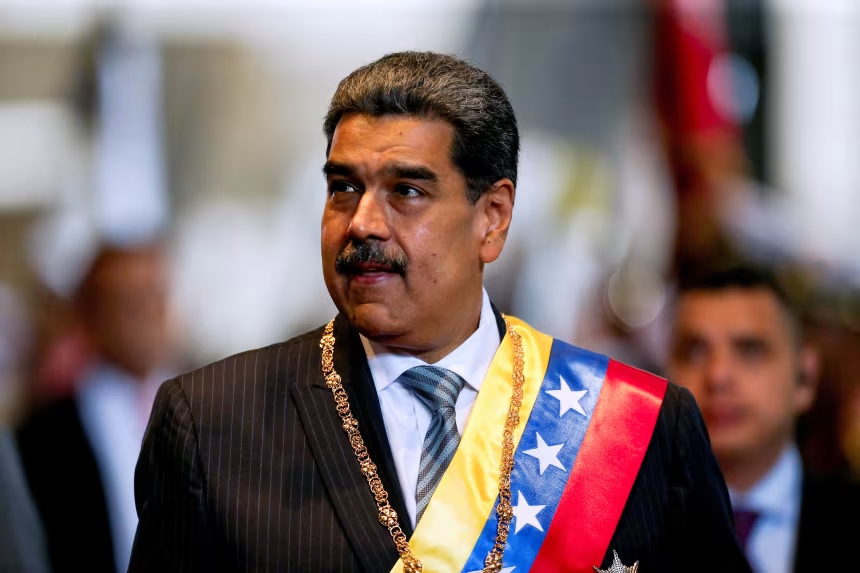
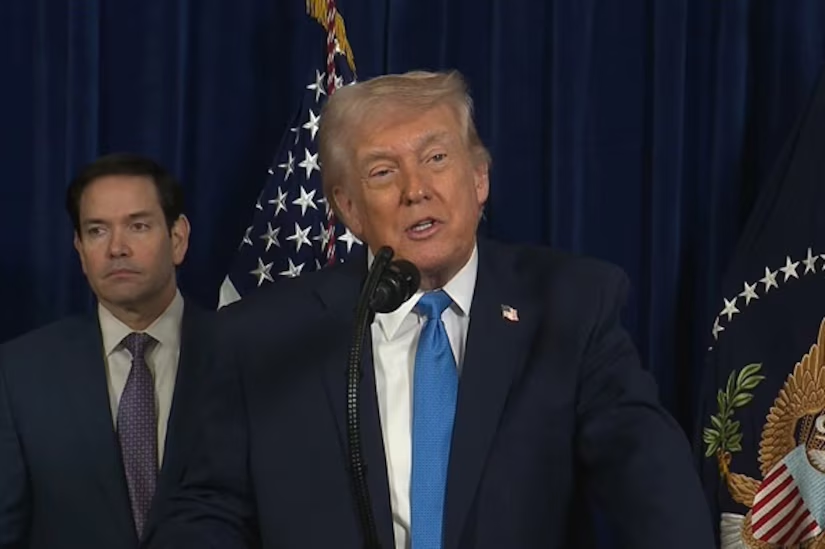
On January 3, 2026, the world awoke to shocking news: the United States had launched a large-scale military operation in Venezuela, codenamed Operation Absolute Resolve, involving airstrikes on targets in and around Caracas and the audacious capture of Venezuelan President Nicolás Maduro and his wife, Cilia Flores. President Donald Trump confirmed the events from his Mar-a-Lago residence, stating that Maduro had been extracted and flown to New York to face long-standing federal charges related to narco-terrorism and drug trafficking. In a bold declaration, Trump announced that the U.S. would temporarily “run” Venezuela to oversee a “safe, proper, and judicious transition” to new leadership, while major American oil companies would invest billions to revive the country’s vast petroleum industry.
This intervention marked the most direct U.S. military action in Latin America since the 1989 invasion of Panama, evoking memories of historical interventions driven by a mix of security, ideological, and economic motives. Officially justified as a law enforcement operation to apprehend an indicted “narco-terrorist,” the move drew immediate global condemnation for violating sovereignty and international law, with critics labeling it “rank imperialism” aimed at seizing control of Venezuela’s enormous oil reserves—the largest proven in the world at over 303 billion barrels. As Maduro arrived in New York for arraignment, the crisis plunged the region into uncertainty, raising fears of instability, refugee flows, and broader geopolitical fallout. This article examines the crisis comprehensively, from its deep historical roots to the fluid present situation as of January 4, 2026.
Historical Background
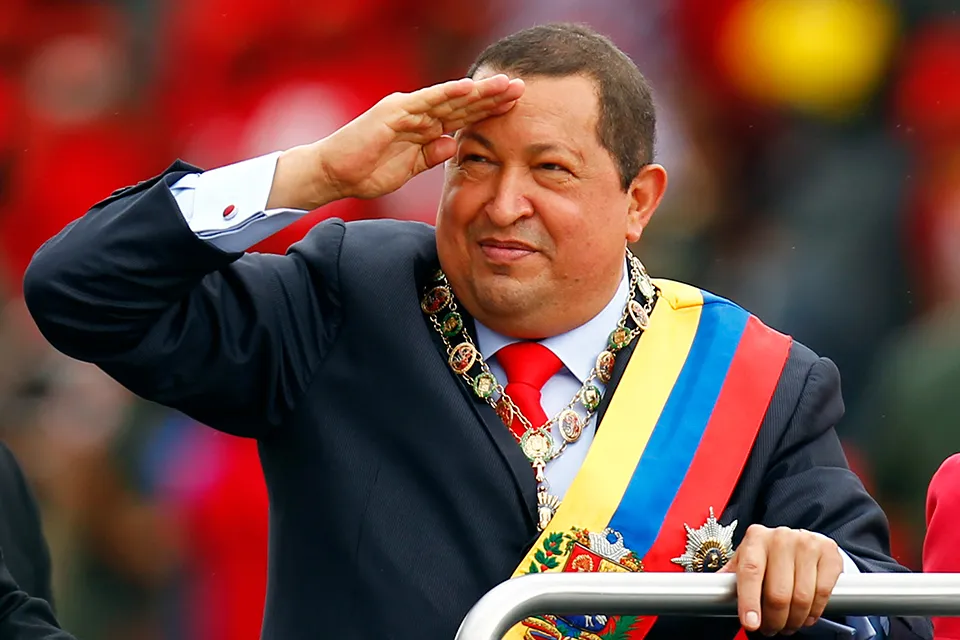
The roots of the 2026 crisis trace back to the late 1990s with the rise of Hugo Chávez, a charismatic former military officer elected president in 1998 on a platform of “Bolivarian Socialism.” Chávez’s policies nationalized key industries, including oil, expropriating assets from U.S. companies like ExxonMobil and ConocoPhillips, leading to billions in lost investments and ongoing arbitrations. Relations with Washington soured further after Chávez accused the U.S. of backing a failed 2002 coup against him.
Upon Chávez’s death in 2013, his handpicked successor, Nicolás Maduro—a former bus driver and foreign minister—assumed power. Maduro’s rule coincided with Venezuela’s catastrophic economic decline: hyperinflation peaking at over 1 million percent in 2018, widespread shortages, and a humanitarian crisis that drove over 7 million Venezuelans to flee the country. Authoritarian measures intensified, including suppression of opposition, media censorship, and disputed elections.
U.S.-Venezuela tensions escalated under both Democratic and Republican administrations. Sanctions began in 2017 under Trump, targeting officials for corruption and human rights abuses. Maduro’s 2018 re-election was widely condemned as fraudulent, prompting the U.S. and over 50 countries to recognize opposition leader Juan Guaidó as interim president in 2019. By 2020, the U.S. Department of Justice indicted Maduro and 14 associates for “narco-terrorism,” alleging leadership of the “Cartel of the Suns”—a network of military officials facilitating cocaine trafficking in partnership with groups like Colombia’s FARC. A bounty, eventually raised to $50 million, underscored Washington’s view of Venezuela as a “narco-state.”
The disputed 2024 election, where independent monitors declared opposition candidate Edmundo González the winner but Maduro claimed victory amid repression, further isolated the regime. China and Russia remained key allies, purchasing discounted oil and providing loans, while the U.S. tightened sanctions.
Buildup to the Crisis (2025–Early 2026)
Trump’s second term, beginning in January 2025, saw a sharp intensification. The administration designated Venezuelan gangs like Tren de Aragua and the Cartel de los Soles as foreign terrorist organizations. Maritime operations escalated: U.S. forces interdicted over a dozen alleged drug vessels, conducted deadly strikes on boats (resulting in over 100 reported deaths), and seized oil tankers.
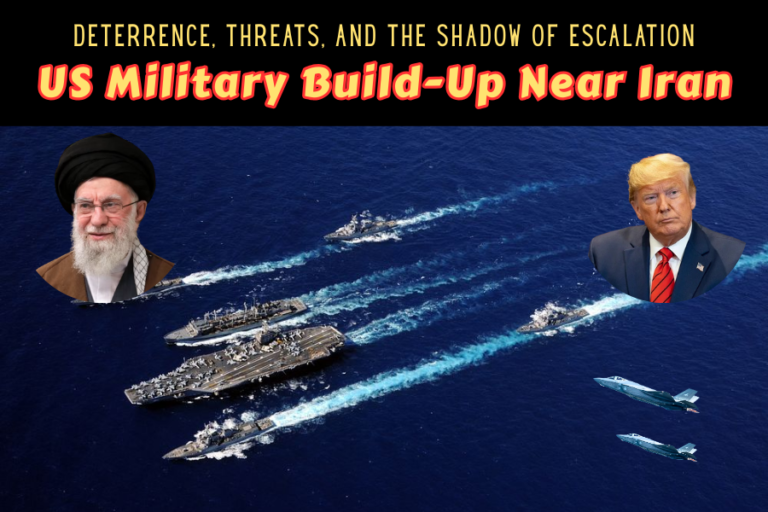
A significant military buildup occurred in the Caribbean, including deployment of the USS Gerald R. Ford carrier strike group, special operations ships like the M.V. Ocean Trader, and rehearsals for complex raids. Agreements with neighbors like Trinidad and Tobago facilitated access. CIA operations reportedly gathered detailed intelligence on Maduro’s movements.
Diplomatic pressure mounted with expanded sanctions on oil exports, isolating Venezuela further. Domestically, post-2024 repression deepened the humanitarian emergency, with opposition calls for international intervention growing amid Chavista consolidation.
The Military Operation: Operation Absolute Resolve (January 3, 2026)
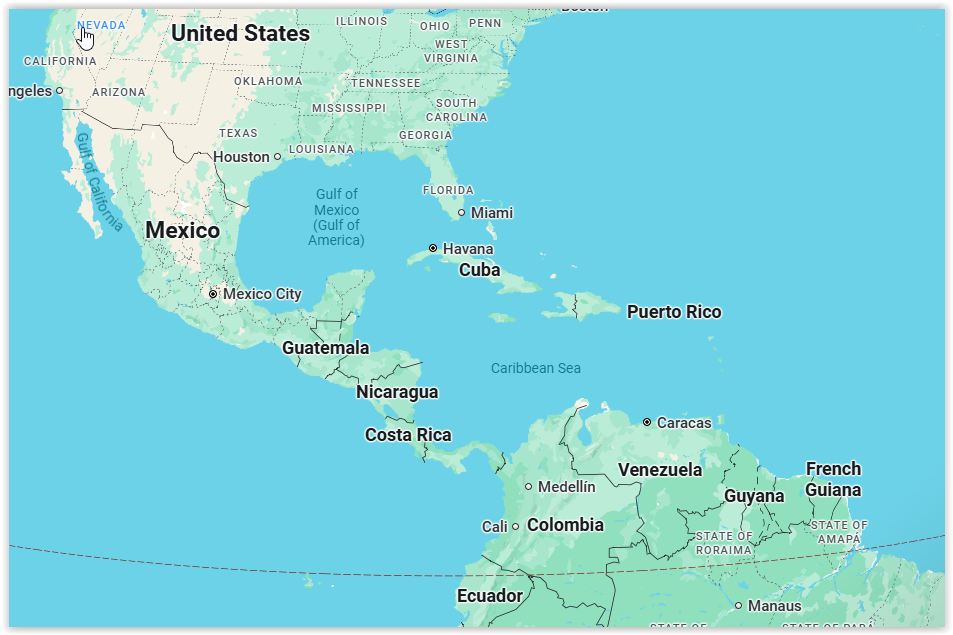
The operation commenced around 2:00 a.m. local time with airstrikes involving 150 aircraft, targeting military sites including Fuerte Tiuna (Venezuela’s largest complex), La Carlota airbase, and other installations around Caracas. Explosions caused power outages, fires, and reported casualties—at least 40, including military personnel and civilians, per preliminary Venezuelan reports.
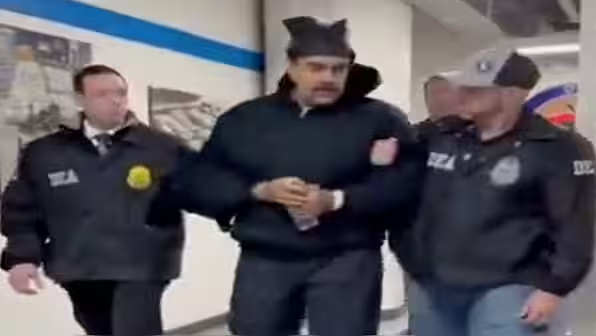
Special forces, likely Delta Force aided by CIA intelligence and drones, raided Maduro’s location, capturing him and Cilia Flores without U.S. casualties (though one helicopter took fire). The couple was extracted to the USS Iwo Jima amphibious assault ship, then flown to New York. Trump posted images of a blindfolded Maduro aboard the vessel.
Chairman of the Joint Chiefs Gen. Dan Caine described months of planning, emphasizing neutralization of air defenses for helicopter insertion. Oil facilities were reportedly spared to preserve infrastructure.
U.S. Justifications and Plans
The Trump administration framed the action as extraterritorial law enforcement, akin to the 1989 Panama invasion capturing Manuel Noriega on drug charges. A superseding indictment unsealed January 3 charged Maduro, Flores, their son, and others with narco-terrorism conspiracy, cocaine importation (alleging hundreds of tons annually), and weapons offenses, claiming partnerships with cartels and terrorists.
Trump emphasized temporary U.S. administration for stability, with major oil firms (e.g., Chevron, Exxon, ConocoPhillips) investing billions to rebuild infrastructure. He claimed historical U.S. “building” of Venezuela’s oil sector, stolen by socialism, and promised revenues would benefit Venezuelans while reimbursing American “damages.”
Defense Secretary Pete Hegseth likened it to giving Maduro a chance he “effed around” with, while Secretary of State Marco Rubio stressed justice.
Venezuelan Response
Acting President Delcy Rodríguez, appointed by the Supreme Tribunal, denounced the “kidnapping” as illegal aggression but signaled openness to dialogue under international law. She demanded proof of life initially and called for national unity, warning Venezuela would “never be a colony.”
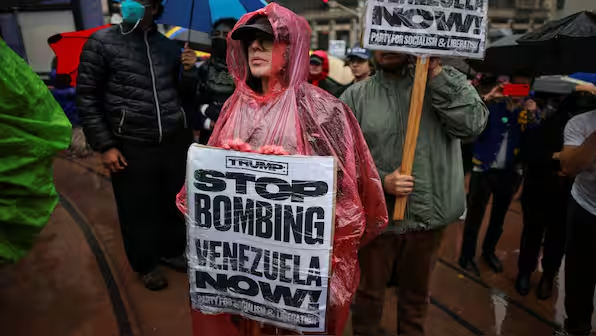
Domestic reactions mixed: opposition supporters and exiles celebrated in Miami and elsewhere, while Chavista loyalists and paramilitaries (colectivos) mobilized amid fears of unrest. Power outages and explosions sparked panic in Caracas.
International Reactions
Reactions were sharply divided, with most condemning the unilateral action.
- Latin America: Brazil’s Lula called it an “unacceptable line” evoking past interferences; Mexico and Colombia condemned sovereignty violations; Chile urged peaceful solutions. Argentina’s Javier Milei implied support, hailing the end of dictatorship.
- Global Powers: Russia labeled it “armed aggression”; China condemned violations of sovereignty; Cuba decried “state terrorism.”
- Europe and Others: EU called for restraint and law; France’s Macron noted rejoicing at dictatorship’s end but criticized force; Spain rejected intervention; UN Secretary-General Guterres expressed “deep alarm” over the “dangerous precedent.”
Emergency UN Security Council meetings were requested. Some Venezuelan exiles and anti-Maduro figures welcomed the outcome.
Legal and Ethical Debates
Experts widely view the intervention as violating UN Charter Article 2(4) prohibiting force against sovereignty, lacking Security Council authorization or valid self-defense claims. Comparisons to Iraq 2003 and Panama 1989 abound, with critics arguing drug pretexts mask oil motives.
Domestically, questions arose over congressional authorization, relying on executive powers. Human rights groups noted ongoing ICC probes into Venezuelan abuses but stressed interventions must respect law.
Economic and Energy Implications
Venezuela’s 303 billion barrels represent ~18% of global reserves, mostly heavy Orinoco crude ideal for U.S. refineries. Production collapsed to ~1 million bpd from peaks over 3 million due to mismanagement and sanctions.
Trump’s plans could reshape markets if output rebounds, reducing OPEC influence and benefiting U.S. firms owed billions from past expropriations. However, experts warn of years-long delays due to decayed infrastructure, security risks, and costs. Oil prices saw limited spikes (~$57/barrel), with companies like Chevron cautious.
Long-term: potential displacement of Chinese/Russian buyers, but corporate hesitation amid uncertainties.
Potential Future Scenarios and Outlook
As of January 4, Maduro faces trial in New York; Rodríguez leads interim government signaling dialogue. Risks include resistance from Chavistas, refugee crises, or prolonged U.S. involvement.
Opposition figures like González or María Corina Machado may emerge, but Trump downplayed Machado’s support. Broader ripples: strained hemispheric ties, great-power tensions, migration/drug impacts.
Success hinges on stable transition; failure could echo past quagmires.
Conclusion
The 2026 U.S.-Venezuela crisis represents a pivotal, controversial moment in international relations—a superpower’s unilateral imposition blending justice claims with economic ambition. While ending a repressive regime offers hope for Venezuelans suffering years of crisis, the method’s illegality and “might makes right” optics risk eroding global norms.
Balancing accountability for abuses with sovereignty respect is crucial. As developments unfold—with Maduro in custody and Venezuela at a crossroads—the world watches warily, hoping for de-escalation and a Venezuelan-led path to prosperity and democracy.