
(By Faraz Ahmed)
A Historic Homecoming After 17 Years in Exile
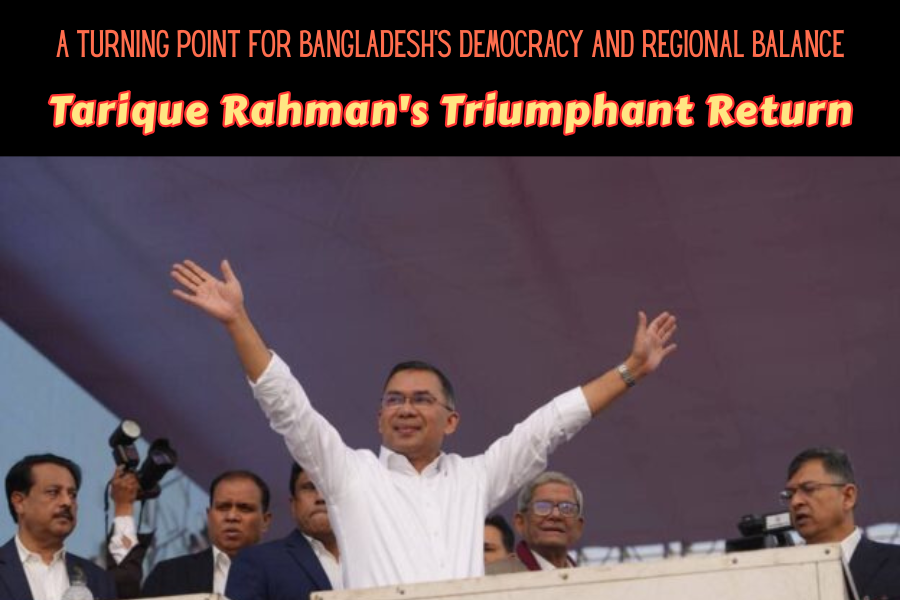
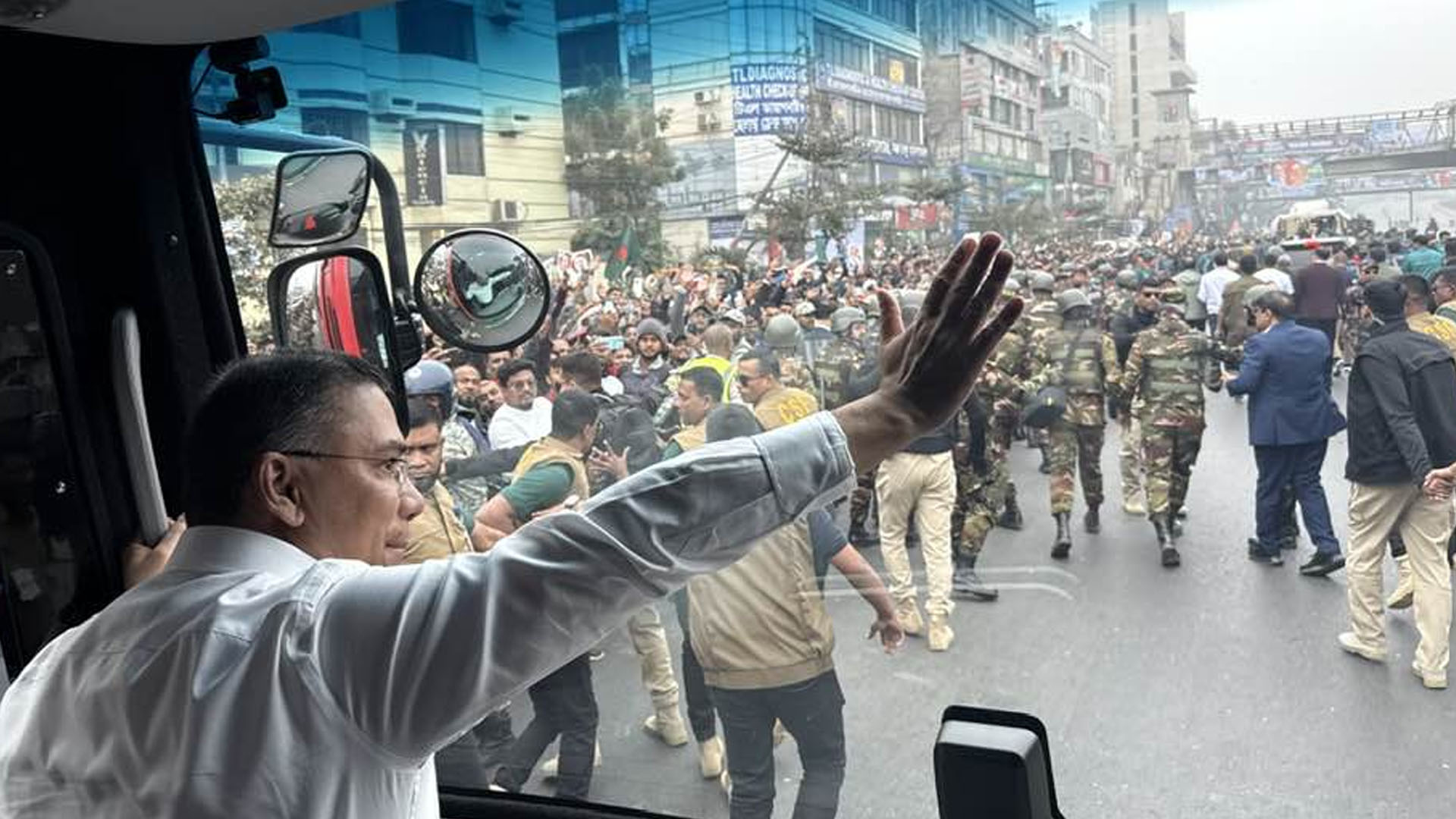
On December 25, 2025, Tarique Rahman, the acting chairman of the Bangladesh Nationalist Party (BNP) and son of late President Ziaur Rahman and former Prime Minister Khaleda Zia, returned to Dhaka after nearly 17 years in London exile. His arrival at Hazrat Shahjalal International Airport was met with overwhelming enthusiasm—hundreds of thousands of BNP supporters lined the streets, braving fog and cold, waving party flags and chanting slogans of welcome. In a poignant gesture, Rahman removed his shoes upon touching Bangladeshi soil, scooped up a handful of earth, and later addressed a massive rally, pledging to build an inclusive Bangladesh where all communities—Muslims, Hindus, Buddhists, and Christians—feel secure.
Accompanied by his wife Zubaida and daughter Zaima, Rahman invoked Martin Luther King Jr.’s famous words, declaring, “I have a plan” for restoring democracy, economic rights, law and order, and national unity. This return, facilitated by the interim government’s clearance of politically motivated charges from the Hasina era, marks a dramatic reversal: the man once hounded into exile now stands as a frontrunner for prime minister.
Impact on the February 12, 2026 Elections: A Massive Boost for BNP
The upcoming general elections on February 12, 2026—the first since Sheikh Hasina’s ouster in August 2024—will be a defining moment for Bangladesh. With the Awami League barred from contesting and Hasina in exile, the BNP emerges as the clear frontrunner. Recent surveys, including from the International Republican Institute, indicate the BNP is poised to secure the largest share of seats, potentially forming the next government.
Rahman’s physical presence energizes the party base, filling a leadership vacuum amid his mother’s critical illness. His direct campaigning allows reconnection with voters in a transformed Bangladesh, countering perceptions of remoteness from exile. Analysts note his return stabilizes politics amid recent violence and extremist influences, positioning the BNP as a centrist, inclusive force. Breaking from past alliances with Jamaat-e-Islami, the BNP is appealing to moderates and minorities, broadening its support.
However, challenges persist: competition from Jamaat-e-Islami (trailing closely in polls), the youth-led National Citizen Party, and potential unrest from Awami League remnants. Rahman’s emphasis on communal harmony and youth participation could consolidate gains, making a BNP victory highly likely and Rahman the probable prime minister.

Future Relations with India: A Shift from Hasina’s Overdependence
Historically, BNP-India relations have been cooler than under Hasina’s pro-India Awami League. Hasina’s regime aligned closely with New Delhi, often at the expense of balanced diplomacy, while suppressing opposition and allowing Indian influence in security matters.
If Rahman becomes prime minister, expect a pragmatic recalibration: a “Bangladesh First” policy prioritizing national interests over blind alignment. Rahman has criticized India’s sheltering of Hasina as alienating Bangladeshis and demanded fair shares in water treaties (e.g., Teesta, Farakka renewal in 2026) while rejecting border incidents like the killing of Bangladeshi citizens.
Yet, Rahman is no firebrand anti-Indian; he has softened rhetoric, assured minorities’ safety (countering post-Hasina attacks on Hindus), and distanced from Jamaat’s pro-Pakistan radicalism. A BNP government would likely maintain functional ties—trade, connectivity—but resist perceived Indian hegemony. This corrects Hasina’s lopsided approach, which fueled anti-India sentiment exploited by extremists under the Yunus interim government.

Bright Prospects for Pakistan-Bangladesh Ties: A Natural Realignment
Post-Hasina, Bangladesh-Pakistan relations have warmed rapidly, with high-level engagements, visa ease, and trade growth. Hasina’s hostility toward Islamabad—rooted in 1971 grievances—isolated Bangladesh from its Muslim-majority brethren.
Under a BNP-led government, this rapprochement will accelerate. The BNP’s historical warmth toward Pakistan, shared Islamic identity, and Rahman’s balanced outlook promise deeper cooperation in defense, trade, and diplomacy. Pakistan’s support during Bangladesh’s transition contrasts with India’s backing of the ousted dictator. Enhanced ties could revive SAARC, boost economic links, and provide Bangladesh strategic depth against overreliance on any single power.
This aligns with regional equilibrium: stronger Pakistan-Bangladesh bonds counter Indian dominance, fostering South Asian stability through mutual respect rather than coercion.
Current Political Trends in Bangladesh: Toward Stability Amid Challenges
Bangladesh’s post-Hasina landscape remains turbulent: economic strains, debt concerns, sporadic violence, and minority anxieties persist under the Yunus interim government. Rising conservatism and anti-India rhetoric have filled the vacuum, but Rahman’s return signals a pivot toward inclusive nationalism.
Trends favor the BNP: public fatigue with interim uncertainty, desire for elected governance, and rejection of Awami League authoritarianism. Rahman’s focus on unity, reforms, and “Bangladesh First” resonates, potentially marginalizing radicals like Jamaat. Successful elections could restore democratic credibility, economic confidence, and regional balance.
Conclusion: A New Era of Sovereign, Balanced Bangladesh
Tarique Rahman’s return heralds a BNP resurgence, likely propelling him to prime ministership and Bangladesh toward genuine democracy. It promises corrected imbalances: pragmatic ties with India, robust brotherhood with Pakistan, and prioritized national sovereignty. For Pakistan and Bangladesh, this is vindication of resilience; for the subcontinent, an opportunity for equitable peace free from one nation’s overreach.
As Rahman builds his “New Bangladesh,” the region watches hopefully—a stable, independent Dhaka benefits all, especially its closest neighbors in faith and history.

One Comment