(By Quratulain Khalid)
Introduction
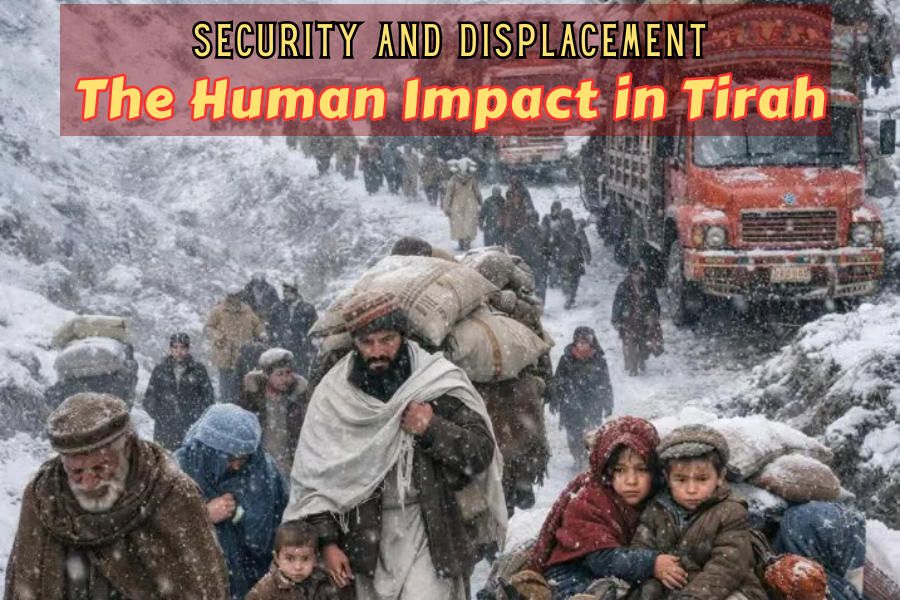
The Tirah Valley in Pakistan’s northwestern Khyber District has once again become a symbol of the fragile intersection between security operations, civilian vulnerability, and administrative preparedness. Long shaped by militancy, counterterrorism campaigns, and difficult terrain, Tirah’s population is no stranger to displacement. Yet the most recent episode of civilian movement reveals a deeper, more troubling reality: displacement today is being driven not only by security fears, but also by administrative delays, inadequate planning, and policy execution gaps.
As thousands of residents left their homes amid uncertainty, harsh winter conditions, and bureaucratic bottlenecks, the situation exposed how humanitarian crises are often compounded—not alleviated—by weak coordination among stakeholders. Tirah’s displacement is therefore not merely a security story; it is a test of governance, trust, and crisis management.
Geographic and Strategic Context of Tirah
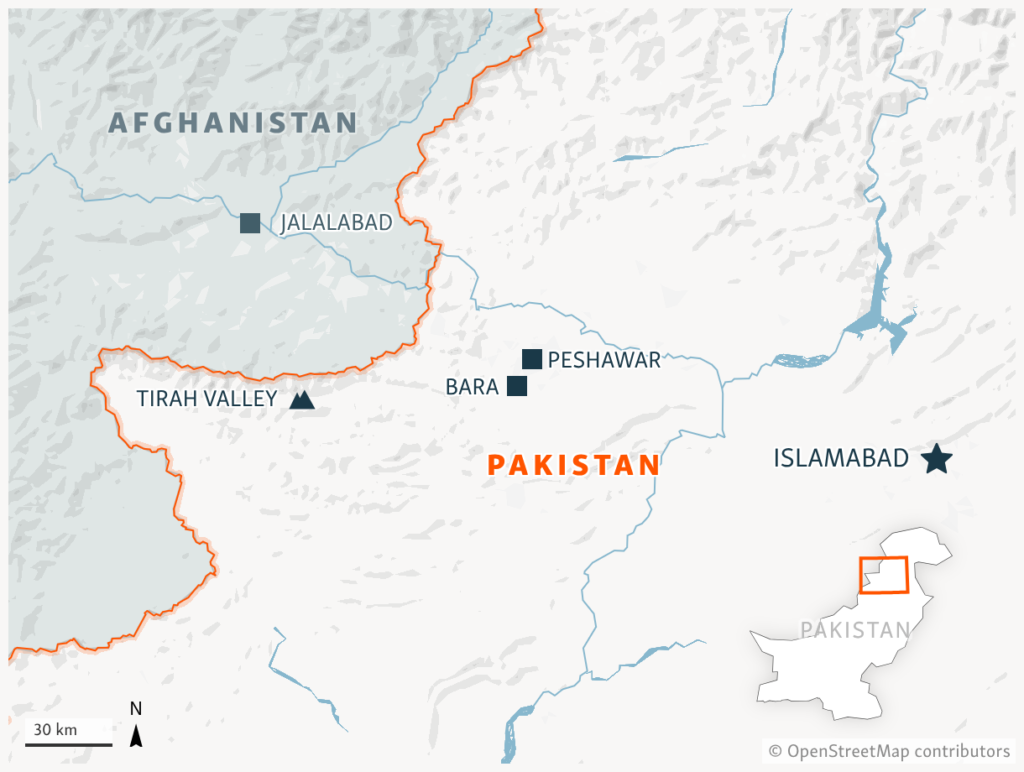
Tirah Valley lies in a mountainous region of Khyber District, bordering Afghanistan and historically forming part of Pakistan’s former Federally Administered Tribal Areas (FATA). The terrain is rugged, communication networks are limited, and access routes are few—factors that have long complicated governance and service delivery.
Strategically, Tirah has held importance due to its location along cross-border movement corridors. During earlier phases of militancy, these features made it a contested space between the state and non-state armed groups. Consequently, the valley has repeatedly witnessed security operations, leaving civilians caught between uncertainty and survival.
For residents, this geography has translated into a harsh lesson: when security conditions deteriorate, displacement is often inevitable—and rarely smooth.
Security Concerns and the Fear-Driven Nature of Displacement
The immediate trigger for the latest displacement wave was renewed concern over militant activity and the possibility of military operations. While not all departures were the result of active fighting, fear itself became a powerful driver.
Past experience plays a decisive role in civilian behavior. Residents of Tirah have lived through earlier operations that resulted in long-term displacement, restricted movement, and economic losses. When reports—official or informal—of rising security tensions emerge, communities tend to act preemptively, leaving before evacuation orders are issued.
This fear-driven movement reflects a persistent trust deficit between local populations and authorities. When communication is limited or unclear, civilians assume the worst and prioritize safety over stability.
Timing, Compensation Expectations, and Delayed Movement
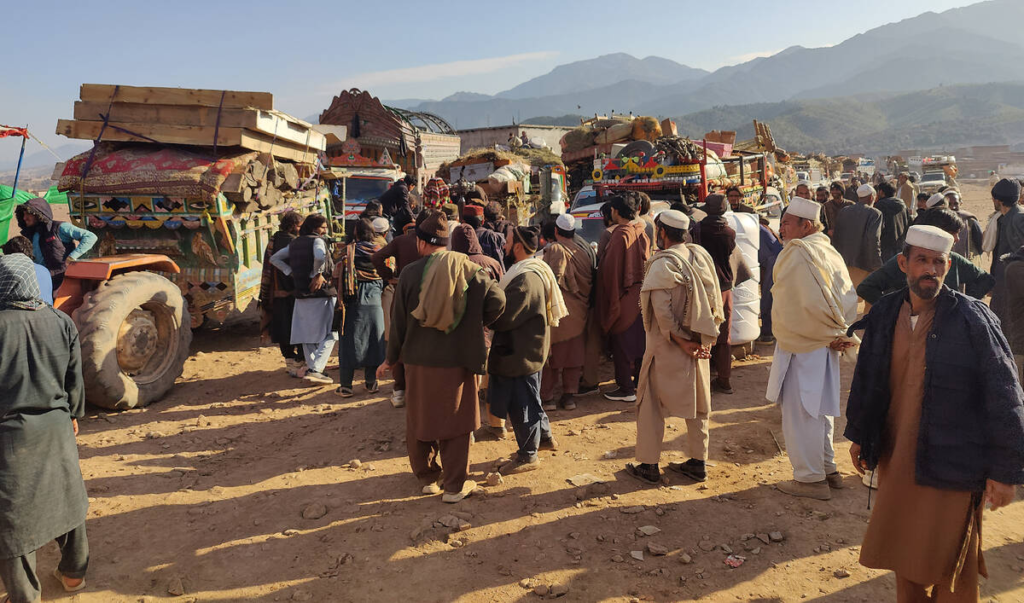
Traditionally, displacement from Tirah—whether seasonal or security-related—begins in mid-December, allowing families to relocate before severe winter weather sets in. This pattern is well known to local administrators and security planners alike.
This year, however, displacement was noticeably delayed. A key factor appears to be the expectation of compensation payments. Many residents reportedly postponed movement in anticipation of receiving financial assistance before relocating. This delay, while understandable from an economic survival perspective, proved costly when sudden heavy snowfall struck the region.
The delayed establishment or late functionality of compensation mechanisms thus unintentionally pushed civilians into moving under far more dangerous weather conditions, amplifying hardship and risk.
Administrative Bottlenecks and Operational Failures
The displacement crisis exposed significant administrative and logistical shortcomings.
Impact of Sudden Heavy Snowfall
Uncalculated and sudden heavy snowfall caught both civilians and authorities unprepared. While weather itself cannot be controlled, the absence of contingency planning is harder to justify. Seasonal snowfall in Tirah is not an anomaly, yet inadequate coordination among civil administration, disaster management authorities, and security agencies left families vulnerable during transit.
Single NADRA Compensation Point
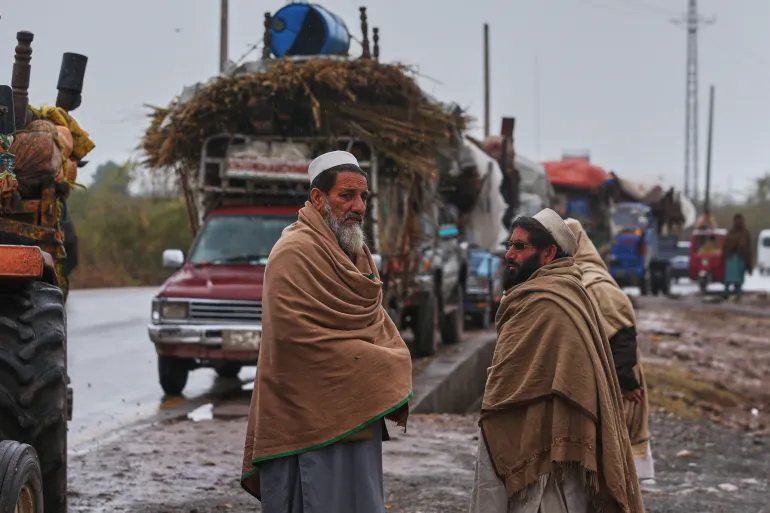
One of the most consequential decisions was the establishment of only one NADRA verification and compensation point. Vehicles were stopped at this single location to verify identity and disburse funds, creating severe congestion.
Instead of facilitating smooth movement, this approach resulted in:
- Prolonged waiting times
- Exposure of families to cold weather
- Traffic bottlenecks along narrow routes
While the intent—ensuring compensation reached genuine residents—was legitimate, the execution lacked scalability and humanitarian sensitivity.
Verification Delays and Digital Constraints
Over-cautious verification procedures, combined with slow computer processing, further delayed payments. Officials prioritized accuracy and fraud prevention, but in doing so overlooked the urgency of the humanitarian context. In emergencies, excessive procedural rigidity can undermine relief objectives.
To fully assess responsibility, it is crucial to establish:
- The date the compensation point was established
- The date it became fully functional
This timeline would clarify whether administrative delays, rather than security conditions alone, worsened civilian suffering.
Scale and Demographics of Displacement
Thousands of families—primarily women, children, and elderly—were affected by the displacement. Many traveled with minimal belongings, relying on private vehicles, shared transport, or assistance from relatives.
Unlike formal camp-based displacement, a large proportion of Tirah’s IDPs sought refuge with host communities. While culturally preferred, this arrangement placed additional economic and social strain on already vulnerable households.
Humanitarian Consequences
Living Conditions
Displaced families often arrive at their destinations with minimal belongings. Shelter shortages remain a critical issue, with many families crowding into small living spaces or relying on temporary structures that offer little protection from the elements. Food insecurity is another pressing concern, as displacement disrupts agricultural activities and cuts off regular income sources.
Access to clean drinking water and sanitation facilities is uneven, increasing the risk of waterborne diseases—an especially serious concern in overcrowded settings.
Health and Education
Healthcare access for displaced populations is limited. Local medical facilities, where available, are often overstretched. Pregnant women, young children, and those with chronic illnesses face particular difficulties in obtaining timely care.
Education is among the most enduring casualties of displacement. School closures, lack of transportation, and insufficient enrollment facilities disrupt children’s learning, sometimes for months. Repeated displacement cycles risk creating a “lost generation” with limited educational attainment and diminished future prospects.
Mental health is an often-overlooked dimension of the crisis. Trauma from repeated uprooting, combined with uncertainty about return, leaves lasting psychological scars, particularly on children.
Government Response: Intent vs Reality
Federal, provincial, and district authorities did initiate relief measures, including registration and aid distribution. However, the gap between policy intent and ground execution remained wide.
Relief efforts were undermined by:
- Delayed compensation mechanisms
- Poor inter-agency coordination
- Insufficient communication with affected communities
Many displaced families fell outside formal tracking systems because they stayed with relatives, limiting access to assistance.
Role of Civil Society and Humanitarian Actors
Local NGOs, volunteer groups, and community networks played a critical role in filling gaps. Their rapid response and local knowledge enabled immediate assistance, particularly in food and clothing distribution.
However, civil society efforts cannot substitute for structured state response. Host communities themselves faced rising costs and resource pressure, raising concerns about sustainability if displacement persists.
Security Imperatives vs Humanitarian Responsibility
The Tirah situation underscores a recurring challenge in Pakistan’s internal security strategy: aligning counterterrorism objectives with civilian protection. While ensuring national security is a legitimate and necessary function of the state, it must be pursued in a way that minimizes harm to civilians.
Lessons from previous displacement episodes in Khyber Pakhtunkhwa and former FATA areas highlight the importance of early warning systems, transparent communication, and community engagement. When civilians are informed and involved, displacement can be managed more humanely, and trust in state institutions can be strengthened.
Long-Term Implications of Recurrent Displacement
Repeated displacement has far-reaching consequences beyond immediate humanitarian needs. Economically, families lose livelihoods, livestock, and property, pushing them deeper into poverty. Socially, prolonged displacement erodes community structures and weakens traditional support systems.
There is also a strategic dimension. Prolonged instability and marginalization can create conditions conducive to radicalization, undermining the very security objectives that operations aim to achieve. For children growing up amid displacement, disrupted education and trauma can have lifelong implications.cle of instability.
The Way Forward
Addressing displacement in Tirah requires a comprehensive approach that integrates security, humanitarian response, and long-term development. Transparent communication from authorities is essential to reduce panic-driven displacement. Civilian protection mechanisms must be strengthened, ensuring that security measures are accompanied by safeguards for local populations.
Sustainable return and rehabilitation policies—focused on housing, livelihoods, education, and healthcare—are critical to breaking the cycle of displacement. Development initiatives must be aligned with security planning, ensuring that peace translates into tangible improvements in people’s lives..
Conclusion
The displacement from Tirah is not merely a consequence of insecurity; it is a reflection of how administrative preparedness, policy timing, and governance choices shape humanitarian outcomes.
Tirah stands as a reminder that national security cannot be divorced from human security. Protecting civilians, preserving dignity, and maintaining trust are not secondary concerns—they are central to sustainable stability.
The resilience of Tirah’s people deserves more than reactive relief. It demands foresight, coordination, and a governance approach that places citizens—not crises—at the center.