(By Khalid Masood)
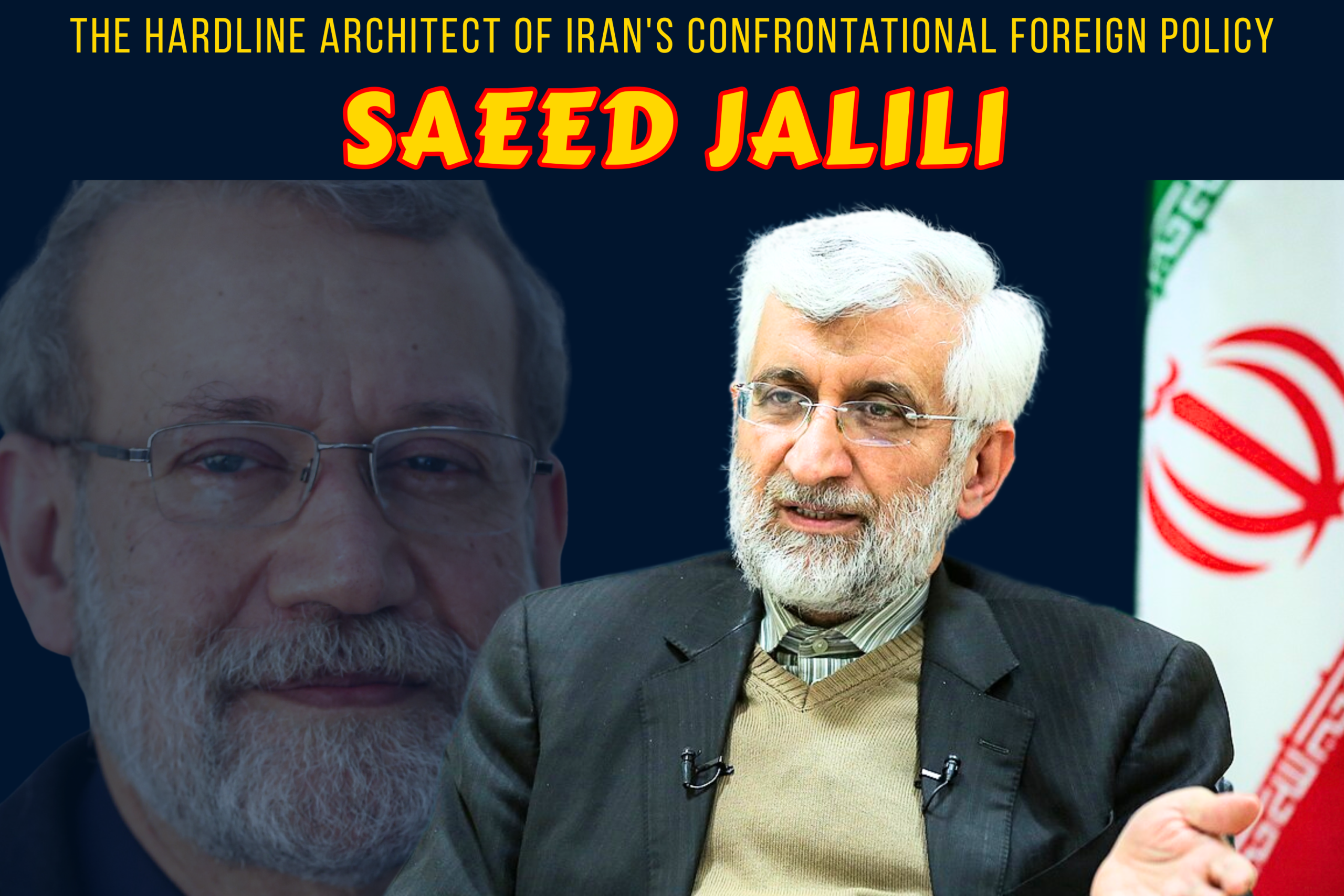
In the shadowed corridors of power in Tehran, a transition is underway that could redefine the Islamic Republic’s trajectory for a generation. Following the death of Ali Larijani, Secretary of Iran’s Supreme National Security Council (SNSC), in Israeli airstrikes on March 18, 2026, the vacuum at the helm of Iran’s security apparatus has triggered intense speculation. Among the names circulating in Tehran’s political circles, one figure stands out: Saeed Jalili.
A wounded war veteran, a hardline ideologue, and a close confidant of Supreme Leader Ali Khamenei, Jalili represents the ascendance of confrontational politics in Iran. His potential elevation to key leadership positions will signal a decisive shift away from diplomatic engagement toward ideological rigidity. For regional actors like Pakistan, the Gulf Cooperation Council (GCC), and the broader international community, understanding Jalili is not merely an academic exercise—it is a strategic imperative.
This article examines everything we know about Saeed Jalili: his background, his ideology, his track record, and what his rise means for Iran and the rest of the world. In an era where Iran faces unprecedented pressure from Israel and the United States, the man who shapes its security response will determine whether the region slides toward war or finds a path to stability.
I. Biographical Sketch: From War Veteran to Political Insider
To understand Saeed Jalili, one must understand the crucible in which he was forged: the Iran-Iraq War. His biography is not just a resume; it is a testament to revolutionary credentials that grant him immunity from criticism in Iran’s factionalized politics.
A. Early Life and Education
Born on September 26, 1965, in Mashhad, Iran’s second-most holy city, Jalili grew up in the fervor of the 1979 Islamic Revolution. He pursued higher education at Tehran’s Imam Sadiq University, earning a PhD in Political Science with a focus on international relations and Western political thought. Ironically for a man known for anti-Western rhetoric, Jalili is well-read in Western philosophy and speaks both Arabic and English fluently—a skill that served him well during nuclear negotiations, even if his counterparts found his rigidity frustrating.
B. War Service and Injury
During the Iran-Iraq War (1980-1988), Jalili joined the Islamic Revolutionary Guard Corps (IRGC). In combat, he sustained a severe injury that resulted in the loss of his right leg. He walks with a prosthetic limb, a visible symbol of his sacrifice for the Revolution. In Iran’s political culture, war veterans (janbazan) command immense moral authority. This status insulates Jalili from accusations of cowardice or weakness—charges often leveled against pragmatists who advocate for negotiation.
C. Entry into Elite Politics
Jalili’s political rise began not in the elected parliament, but in the unelected offices of the Supreme Leader. In the late 1990s, he joined the office of Ayatollah Ali Khamenei. By 2001, he was appointed director-general of the Leader’s office. This role placed him at the nerve center of power, granting him direct access to Khamenei and insight into the Supreme Leader’s strategic thinking. It was here that he built the relationships and trust that would define his career.
D. Personal Characteristics
Colleagues and adversaries alike describe Jalili as austere, disciplined, and uncompromising. He maintains a low public profile, rarely granting interviews, and is known for an ascetic lifestyle that aligns with revolutionary values. Unlike flamboyant politicians like Mahmoud Ahmadinejad, Jalili is a bureaucrat of ideology—quiet, efficient, and utterly devoted to the system.
II. Political Career: Key Positions and Power Centers
Jalili’s career trajectory reveals a consistent pattern: elevation to roles requiring ideological reliability over diplomatic flexibility.
A. Rise Through the Ranks
| Position | Tenure | Significance |
|---|---|---|
| Deputy Foreign Minister | 2005-2007 | First major government role; worked under President Ahmadinejad. Gained experience in diplomatic protocol. |
| Secretary, Supreme National Security Council (SNSC) | 2007-2013 | Iran’s top security policymaker. Reported directly to Supreme Leader, bypassing the President. |
| Chief Nuclear Negotiator | 2007-2013 | Led talks with P5+1 (US, UK, France, Russia, China, Germany). Became the international face of Iranian resistance. |
| Personal Representative of Supreme Leader to SNSC | 2013-Present | Maintained influence over security policy despite losing formal SNSC role. |
| Member, Expediency Discernment Council | Ongoing | Advisory body to Supreme Leader on policy disputes. |
B. The 2013 Turning Point
In 2013, Jalili was replaced as SNSC secretary by Ali Shamkhani. This was widely interpreted as a consequence of his rigid negotiation style, which had contributed to the breakdown of talks and the imposition of crippling sanctions. The subsequent election of Hassan Rouhani signaled a public desire for engagement. Jalili was sidelined from formal executive power but retained his role as the Supreme Leader’s personal representative to the SNSC—a position that allowed him to monitor and influence security policy from the shadows.
C. Presidential Campaigns
Jalili has sought the presidency three times, seeking to convert his security influence into executive authority:
- 2013: Ran on a hardline platform; finished 3rd with ~11% of the vote. Winner: Hassan Rouhani.
- 2021: Ran again but withdrew before the election. Winner: Ebrahim Raisi.
- 2024: Ran following Raisi’s death in a helicopter crash; lost in a runoff to Masoud Pezeshkian (53% to 44%).
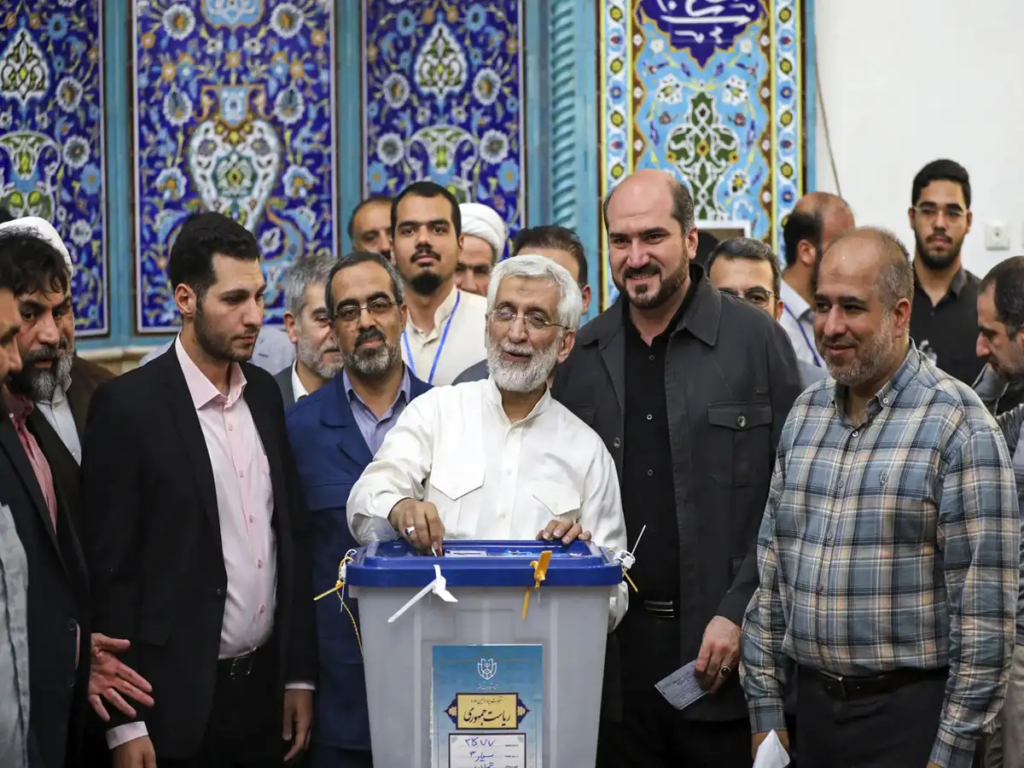
Pattern: Jalili enjoys strong support from the security establishment and hardline clerics but struggles to connect with the broader electorate, who prioritize economic relief over ideological purity.
D. Current Power Base
Despite electoral setbacks, Jalili’s power base remains formidable:
- IRGC Leadership: Deep ties with commanders who share his worldview.
- Hardline Clerics: Support from the Qom seminary network.
- Security Apparatus: Network of loyalists in intelligence and military organs.
- Conservative Media: Influential voices in outlets like Kayhan and Fars News.
III. Ideology and Worldview: The Hardline Playbook
Jalili’s ideology is not merely rhetorical; it is a operational framework that guides his decision-making. Understanding this worldview is essential for predicting Iran’s behavior under his influence.
A. Core Beliefs
| Principle | Description | Evidence |
|---|---|---|
| Resistance Over Accommodation | Believes concessions to the West invite more demands. | Nuclear negotiation record (2007-2013). |
| Economic Self-Sufficiency | Advocates “resistance economy” to withstand sanctions. | Policy papers, speeches on reducing oil dependence. |
| Strategic Patience | Willing to endure short-term pain for long-term gains. | Acceptance of sanctions pain during nuclear standoff. |
| Multipolar World Order | Sees Russia/China as counterweights to U.S. hegemony. | Foreign policy statements supporting BRICS alignment. |
| Revolutionary Purity | Suspicious of reformists/pragmatists as ideologically weak. | Political alliances with Paydari Front. |
B. Views on Key Issues
1. United States: Jalili views the U.S. as inherently hostile to the Islamic Revolution. He believes negotiations are only useful if they serve Iranian interests, not as an end in themselves.
“Negotiations with America are only useful if they serve Iran’s interests, not if they are an end in themselves.” — Jalili, 2024 Campaign Statement
2. Israel: He holds a hardline anti-Zionist stance, viewing Israel as an illegitimate entity that must be resisted. He supports Palestinian resistance groups and opposes any tacit cooperation or de-escalation. Under his influence, Iran’s posture toward Israel is likely to become more aggressive.
3. Nuclear Program: Jalili views uranium enrichment as a non-negotiable national right. He is suspicious of international inspections, often framing them as espionage cover. He believes nuclear capability is essential for deterrence and opposed the constraints of the JCPOA (2015 deal).
4. Regional Policy: He supports the “axis of resistance” (Hezbollah, Hamas, Houthis, Iraqi militias) as strategic assets. He favors an assertive posture in Syria, Iraq, and Lebanon and is skeptical of détente with GCC states, viewing them as unreliable partners susceptible to U.S. influence.
C. Economic Vision
Jalili advocates for a “resistance economy”: reducing oil dependence, leveraging Iran’s geographic position for transit and tourism revenue, and accepting sanctions pain rather than compromising sovereignty. While strategically coherent, this vision has historically correlated with economic stagnation and high inflation for ordinary Iranians.
IV. Track Record as Nuclear Negotiator: The JCPOA’s Absence
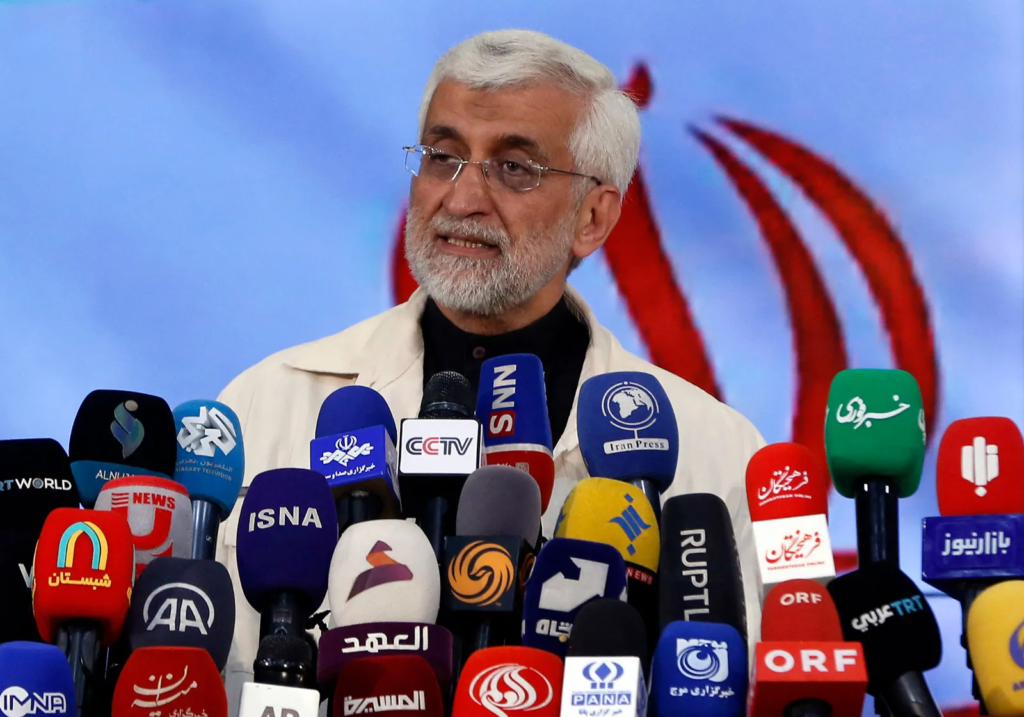
Jalili’s six-year tenure as chief nuclear negotiator (2007-2013) provides the clearest window into his operational style. It was a period marked by diplomatic deadlock, escalating sanctions, and Iran’s increasing isolation.
A. Negotiation Style
| Characteristic | Description | Impact |
|---|---|---|
| Ideological Rigidity | Unwilling to compromise on enrichment rights. | Deadlocked talks; no breakthroughs. |
| Legalistic Approach | Focused on Iran’s “rights” under NPT. | Alienated P5+1 negotiators who sought practical limits. |
| Confrontational Tone | Accused West of bad faith, imperialism. | Eroded trust; made compromise politically difficult for counterparts. |
| Micromanagement | Insisted on approving minor details. | Slowed progress; frustrated counterparts. |
| Domestic Politics | Played to hardline gallery at home. | Limited flexibility; boxed himself into corners. |
B. Key Moments of Failure
2007-2008: Jalili rejected an EU proposal for enrichment suspension, insisting on immediate recognition of enrichment rights. Talks stalled over sequencing.
2009: He rejected a fuel swap deal for the Tehran Research Reactor. He initially agreed, then backed down under hardline pressure. This marked a turning point toward confrontation and paved the way for stricter UN sanctions.
2010-2012: As UN sanctions tightened and the EU imposed an oil embargo, Jalili dismissed sanctions as a “paper tiger.” The Iranian economy began contracting sharply, but he refused to link economic pain to nuclear concessions.
2013: He was replaced by Ali Akbar Salehi, then Mohammad Javad Zarif. The JCPOA negotiations began under the new team. Jalili subsequently criticized the deal as “surrender.”
C. Assessment by Experts
| Source | Evaluation |
|---|---|
| Western Negotiators | “Impossible to do business with; more interested in scoring points than reaching deals.” |
| Iranian Reformists | “His rigidity led to crippling sanctions; pragmatism would have served Iran better.” |
| Iranian Hardliners | “Defended Iran’s rights against Western pressure; refused to surrender nuclear program.” |
| Neutral Analysts | “Ideologically committed but diplomatically ineffective; contributed to Iran’s isolation.” |
D. Legacy
The paradox of Jalili’s tenure is that while his tactics led to diplomatic failure and economic pain, Iran’s nuclear program technically advanced during this period. However, the cost was severe isolation. If Jalili returns to power, history suggests he will prioritize strategic gains over economic welfare, accepting sanctions as the price of sovereignty.
V. Relationship with Supreme Leader: The Loyalist’s Advantage
In Iran’s political system, proximity to the Supreme Leader is the ultimate currency. Jalili’s greatest asset is not his popularity, but his trustworthiness in the eyes of Ayatollah Khamenei.
A. Access and Trust
Jalili is one of the few figures with regular, direct access to Khamenei. As the Supreme Leader’s personal representative to the SNSC, he is trusted to implement Khamenei’s vision without deviation. He is seen as ideologically reliable and politically dependable—qualities valued above competence in times of existential crisis.
B. Why Khamenei Values Jalili
| Factor | Explanation |
|---|---|
| Ideological Alignment | Shares Khamenei’s worldview: resistance, self-sufficiency, anti-Westernism. |
| Personal Loyalty | Never challenged Supreme Leader’s authority publicly. |
| War Veteran Status | Revolutionary credentials beyond question; immune to “softness” accusations. |
| Discipline | Executes orders without public complaint. |
| Low Ego | Willing to work behind scenes; doesn’t seek spotlight unlike Ahmadinejad. |
C. Succession Speculation
Jalili is frequently mentioned as a potential future Supreme Leader, though he lacks the highest clerical credentials (he is not a mujtahid). It is more likely he will remain in security and foreign policy roles, acting as a kingmaker or a powerful secretary behind the throne. In the current crisis, following Larijani’s death, his appointment as SNSC secretary would consolidate hardline control over Iran’s war strategy.
VI. Presidential Campaigns: The People’s Verdict
While Jalili commands elite support, his electoral record reveals a disconnect with the Iranian public.
A. The 2024 Defeat
In the 2024 presidential election, following the death of Ebrahim Raisi, Jalili ran against Masoud Pezeshkian, a reformist-leaning pragmatist. Despite the backing of the IRGC and hardline media, Jalili lost in the runoff (53% to 44%).
What This Reveals:
- Economic Concerns: Iranians prioritize sanctions relief and economic stability over ideological purity.
- Generational Divide: Younger voters are less committed to revolutionary rhetoric.
- Limits of Hardline Appeal: Even in a conservative system, pragmatism has a significant constituency.
B. Implications for Leadership
If Jalili is appointed to a non-elected role (like SNSC Secretary), he bypasses the public verdict. This creates a potential tension: a hardline security chief implementing policies that the elected president and public may oppose. This dichotomy could lead to internal friction or public discontent if economic conditions worsen due to confrontational policies.
VII. Potential Policy Positions If Elevated
If Jalili assumes greater formal authority in the wake of Larijani’s death, several policy shifts are likely:
A. Nuclear Policy
- Likely Position: Reject new negotiations; advance enrichment capabilities.
- Red Lines: No caps on enrichment levels; limited inspections.
- Risk: Renewed confrontation with P5+1; snapback sanctions.
B. Regional Strategy
- Likely Position: Strengthen “axis of resistance”; expand proxy support.
- Targets: Hezbollah, Houthis, Iraqi militias, Hamas.
- Risk: GCC alienation; Israeli escalation.
C. U.S. Relations
- Likely Position: No direct talks; maximum resistance.
- Rationale: Believes U.S. cannot be trusted; concessions invite demands.
- Risk: Perpetual hostility; economic isolation.
D. Israel Policy
- Likely Position: More aggressive posture; support for direct action.
- Methods: Proxy attacks, cyber warfare, rhetorical escalation.
- Risk: Miscalculation leading to war.
E. GCC Relations
- Likely Position: Skeptical of détente; prioritize resistance over reconciliation.
- Concern: GCC states normalizing with Israel.
- Risk: Regional isolation; economic pressure.
F. Economic Policy
- Likely Position: Double down on “resistance economy.”
- Measures: Import substitution, non-oil exports, informal trade.
- Risk: Continued stagnation, inflation, unemployment.
G. China/Russia Relations
- Likely Position: Deepen strategic partnerships.
- Rationale: Counterbalance U.S.; alternative markets.
- Risk: Dependency on unreliable partners.
VIII. Implications for Regional Actors
For Pakistan and its neighbors, Jalili’s rise is not an abstract political shift—it has concrete security and economic implications.
A. For Pakistan
| Issue | Impact |
|---|---|
| Energy Security | Jalili’s hardline stance may complicate the Iran-Pakistan gas pipeline. Sanctions enforcement could become stricter. |
| Border Security | Increased tensions could spill over into Balochistan. Iran may become less cooperative on border militancy if focused on wider war. |
| GCC Relations | Pakistan must balance ties with Iran and Saudi Arabia/UAE. A hardline Iran complicates this balancing act. |
| CPEC | Regional instability threatens China-Pakistan Economic Corridor. Security costs may rise. |
| Diplomatic Role | Pakistan may be called upon to mediate. Jalili is less receptive to mediation than moderates like Larijani. |
Analyst View: Pakistan prefers stability. A hardline Iran is more unpredictable. Islamabad will likely urge restraint privately while maintaining public neutrality.
B. For GCC States
| State | Concern |
|---|---|
| Saudi Arabia | Détente progress (restored relations in 2023) could be reversed. Proxy conflicts in Yemen/Iraq might reignite. |
| UAE | Economic ties with Iran threatened. Regional stability at risk for trade hubs like Dubai. |
| Qatar | Mediation role complicated. Shared gas field (South Pars/North Field) security concerns heightened. |
| Kuwait/Bahrain | Vulnerable to proxy retaliation. Host U.S. forces, making them potential targets. |
C. For Israel
| Factor | Assessment |
|---|---|
| Threat Perception | Jalili more hostile; likely to support direct action. |
| Deterrence | Hardline rhetoric may require Israeli response to maintain credibility. |
| Diplomatic Options | Reduced chance of tacit understandings or de-escalation channels. |
| Risk of War | Elevated due to ideological rigidity on both sides. |
D. For United States
| Issue | Implication |
|---|---|
| Nuclear Diplomacy | JCPOA revival impossible; new framework unlikely. |
| Sanctions Policy | Maximum pressure continues; no relief in sight. |
| Regional Strategy | Need to reassure GCC; contain Iranian expansion. |
| Military Posture | Prepare for escalation; deter Iranian aggression. |
E. For Russia and China
| Power | Interest |
|---|---|
| Russia | Benefits from Iranian drones/oil; distracted U.S. focus. |
| China | Wants stable energy supplies; prefers predictability over chaos. |
| Both | Use Iran to challenge U.S.; wary of regional war disrupting energy flows. |
IX. Implications for International Diplomacy
A. Nuclear Non-Proliferation
Jalili’s elevation signals Iran’s rejection of constraints. IAEA inspections are likely to be further restricted. Breakout time continues to shrink. The NPT regime is weakened as Iran moves closer to threshold status.
B. European Powers (E3: UK, France, Germany)
JCPOA preservation efforts become futile. Europe must choose between U.S. alignment and strategic autonomy. Economic interests in Iran conflict with trans-Atlantic unity.
C. United Nations
Security Council remains deadlocked (Russia/China veto). General Assembly resolutions remain symbolic. Secretary-General’s mediation capabilities are limited without buy-in from Tehran.
D. International Atomic Energy Agency (IAEA)
Access restrictions likely to increase. Director General Rafael Grossi faces difficult choices. Verification mission compromised, increasing uncertainty about Iran’s program.
X. Scenarios: What Could Happen Next
Based on Jalili’s profile and the current crisis context, four scenarios emerge:
Scenario 1: Hardline Consolidation (Probability: 40%)
- Development: Jalili appointed SNSC secretary.
- Action: Nuclear program advances; inspections restricted. Regional tensions escalate.
- Outcome: Perpetual crisis management. Sanctions intensify. Iran becomes more dependent on Russia/China.
Scenario 2: Pragmatic Pushback (Probability: 30%)
- Development: Economic crisis forces course correction.
- Action: Pezeshkian government asserts civilian authority. Backchannel diplomacy with West.
- Outcome: Muddling through. Limited sanctions relief. Jalili remains influential but checked.
Scenario 3: Military Confrontation (Probability: 20%)
- Development: Israeli strike on nuclear facilities.
- Action: Iranian retaliation against GCC/U.S. targets.
- Outcome: Regional war erupts. Global energy crisis. Catastrophic escalation.
Scenario 4: Leadership Transition (Probability: 10%)
- Development: Khamenei’s death accelerates succession.
- Action: Power struggle among factions. Uncertainty about Jalili’s role.
- Outcome: Unpredictable. Could lead to moderation or further hardening.
XI. Conclusion: The Stakes of Jalili’s Rise
Saeed Jalili embodies the hardline vision: resistance, self-sufficiency, confrontation. His potential elevation following Ali Larijani’s death signals Iran’s rejection of diplomatic engagement in favor of ideological fortification. The implications are profound: nuclear crisis, regional instability, economic isolation.
Yet his electoral defeats reveal limits. Hardline appeal has a ceiling in Iran. The question is not just whether Jalili will be appointed, but what his rise reveals about Iran’s trajectory. Is the Islamic Republic doubling down on revolutionary ideology, or will pragmatic realities force adaptation? Can a nation survive in perpetual confrontation with the global economy? Or will the weight of sanctions, isolation, and popular discontent eventually compel a different path?
For Pakistan, the GCC, and the world, the answer matters immensely. A hardline Iran is an Iran more likely to miscalculate, to escalate, to choose resistance over reconciliation. But it is also an Iran that may be more vulnerable, more isolated, more dependent on unreliable partners.
Saeed Jalili is not just a person; he is a symbol of ideological purity over pragmatic compromise, of resistance over accommodation, of revolutionary conviction over popular consent. His rise tells us that in Iran’s eternal struggle between ideology and reality, ideology still holds the upper hand.