(By Khalid Masood)
In a world of shifting alliances and persistent regional challenges, Pakistan emerges as a proactive force for change in South Asia. With a population exceeding 240 million, strategic location bridging Central and South Asia, and a legacy of resilience, Pakistan is not content to let outdated structures define its future. Islamabad is championing innovative diplomacy to overcome the stagnation of the South Asian Association for Regional Cooperation (SAARC). By proposing a trilateral bloc with Bangladesh and China, exploring expansions to include nations like Iran, Turkey, and Myanmar, and strengthening defence ties with Turkey, Pakistan is crafting a blueprint for inclusive growth, stability, and reduced hegemony. These moves highlight Pakistan’s commitment to collective progress, countering dominance by any single power and fostering a multipolar South Asia where mutual respect drives development. Far from isolation, this pivot positions Pakistan as the architect of a renewed regional order, prioritizing geo-economics over geopolitical rivalries.
The Foundations of SAARC: Aspirations Undermined by Stagnation
The South Asian Association for Regional Cooperation (SAARC) was born out of a noble vision in the 1980s, inspired by the success of regional bodies like the European Economic Community and ASEAN. Proposed initially by Bangladesh’s President Ziaur Rahman in 1980, SAARC was formally established on December 8, 1985, in Dhaka, with its secretariat headquartered in Kathmandu, Nepal. Its charter outlined ambitious aims: promoting economic growth, social progress, cultural development, and collective self-reliance among its eight member states—Afghanistan, Bangladesh, Bhutan, India, Maldives, Nepal, Pakistan, and Sri Lanka. The organization sought to accelerate regional integration through initiatives like the SAARC Preferential Trading Arrangement (SAPTA) in 1993, evolving into the South Asian Free Trade Area (SAFTA) in 2004, alongside charters on social welfare, environment, and counter-terrorism.
At its inception, SAARC represented hope for a region plagued by poverty, underdevelopment, and colonial legacies. It aimed to foster people-to-people contacts, enhance trade (which remains dismally low at 5% intra-regionally), and address shared challenges like climate change, food security, and disaster management. Early summits produced tangible outcomes, such as agreements on visa exemptions for certain categories and the establishment of specialized centers for agriculture, meteorology, and human resources. However, despite these foundations, SAARC has descended into near-irrelevance, holding no summit since 2014 in Kathmandu. The reasons for this stagnation are multifaceted: internal conflicts, asymmetric power dynamics, and a lack of political will have eroded its potential, leaving South Asia as one of the least integrated regions globally.
The organization’s consensus-based decision-making, while democratic in theory, has proven a vulnerability, allowing bilateral disputes to paralyze multilateral progress. Economic disparities— with India’s GDP dwarfing that of its neighbors—have fueled perceptions of imbalance, while unresolved territorial issues and security concerns have further hampered cooperation. As a result, SAARC’s dream of a unified South Asia remains unfulfilled, prompting innovative alternatives from forward-thinking nations like Pakistan.
India’s Stubbornness: A Key Culprit in SAARC’s Demise
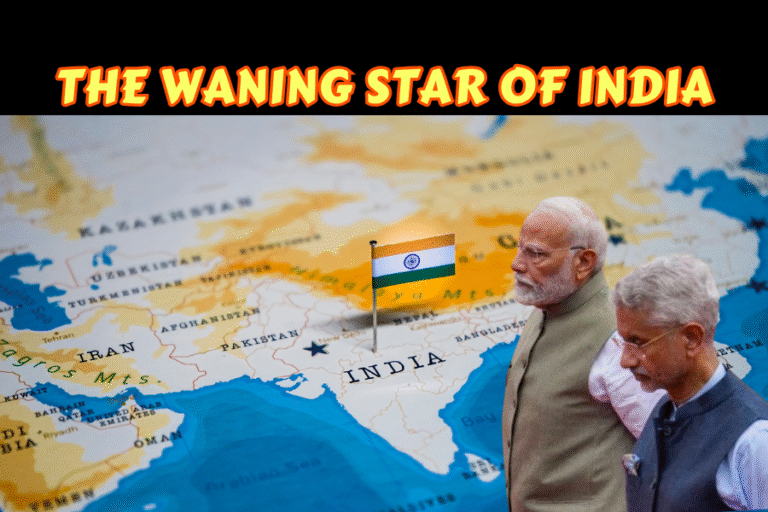
Central to SAARC’s stagnation is India’s hegemonic posture, which has repeatedly undermined the organization’s core principles of equality and mutual benefit. As the region’s largest economy and military power, India was expected to lead with magnanimity, yet its actions have often prioritized bilateral leverage over regional harmony. The India-Pakistan rivalry, exacerbated by India’s refusal to separate bilateral issues from multilateral forums, has been the primary roadblock. A glaring example is the 2016 boycott of the 19th SAARC Summit in Islamabad, led by India following the Uri attack, which it attributed to Pakistan without substantive dialogue. Joined by Bangladesh, Bhutan, and Afghanistan, this move effectively scuttled the summit, highlighting how India weaponizes security concerns to stall progress.
India’s stubbornness extends beyond boycotts. It has consistently resisted initiatives that could dilute its influence, such as deeper economic integration under SAFTA, where non-tariff barriers and protectionism—often imposed by New Delhi—have limited trade benefits for smaller members. Moreover, India’s pivot to alternative forums like BIMSTEC (Bay of Bengal Initiative for Multi-Sectoral Technical and Economic Cooperation) underscores its preference for groupings where Pakistan is excluded, further marginalizing SAARC. This approach exposes a gap between India’s proclaimed regional leadership aspirations and the reality of its actions, which prioritize dominance over collaboration. Critics argue that India’s “neighborhood first” policy is rhetoric masking hegemonic ambitions, as evidenced by its handling of cross-border issues without genuine multilateral engagement.
Such intransigence has not only crippled SAARC but also allowed external powers like China to fill the vacuum through initiatives like the Belt and Road. For Pakistan, which has consistently advocated for SAARC’s revival through dialogue, India’s stance represents a deliberate sabotage of regional unity, compelling Islamabad to explore bold alternatives that ensure equitable participation.
Expanding SAARC: Including Iran, Turkey, and Myanmar to Counter Hegemony
To revitalize SAARC and mitigate Indian dominance, Pakistan has long advocated for strategic expansion, proposing the inclusion of influential observers like Iran, Turkey, and Myanmar as full members. This idea, floated as early as 2016 by Pakistan to “seek a bigger SAARC to counter India’s influence,” aims to dilute power imbalances and inject fresh dynamism into the organization. Myanmar, already an observer since 2008, has expressed interest in upgrading to full membership, bringing its strategic location and resources in Southeast Asia to bridge SAARC with ASEAN. Iran, another observer, offers energy corridors and cultural ties, enhancing connectivity through projects like the Iran-Pakistan gas pipeline. Turkey, which has applied for observer status and shares deep fraternal bonds with Pakistan, could contribute defense expertise and economic investments, fostering a more balanced geopolitical framework.
Such an expansion would reduce Indian hegemony by diversifying decision-making and promoting veto-free mechanisms, similar to those in other successful blocs. It aligns with proposals to include China as a full member, creating a “SAARC Plus” model that counters exclusionary tactics. For Pakistan, this is a pragmatic step toward inclusive regionalism, leveraging ties with these nations to boost trade, security, and cultural exchanges while ensuring no single country dictates terms.
Revitalizing Regional Cooperation: The Trilateral Bloc as a Living, Expandable Model
In December 2025, Deputy Prime Minister and Foreign Minister Ishaq Dar formally announced Pakistan’s boldest diplomatic initiative in years: transforming the nascent Pakistan-Bangladesh-China trilateral framework into a fully-fledged, open-ended South Asian cooperation platform. Born from the landmark June 2025 Kunming meeting, this bloc is explicitly designed as a “veto-free” alternative to the paralyzed SAARC. Unlike the consensus-straitjacket that has killed SAARC for a decade, decisions here will be driven by willing partners, not hostage to any single member’s objections.
The beauty of the model lies in its inclusivity and scalability. Dar has repeatedly stressed that the trilateral is “not directed against any third party” and remains open to every SAARC member—Sri Lanka, Maldives, Nepal, Bhutan, and even Afghanistan—on equal terms. The focus is practical: joint infrastructure under an expanded CPEC framework, textile and pharmaceutical value chains linking Bangladesh and Pakistan, technology transfers from China, and coordinated climate-resilient agriculture. Early wins are already visible: Bangladesh has expressed keen interest in routing its exports through Gwadar, while Chinese firms are exploring special economic zones in both Dhaka and Karachi. Analysts estimate that a fully operational trilateral could add $50–80 billion in annual intra-bloc trade within five years—numbers SAARC never came close to delivering.
Most importantly, the bloc serves as a proof-of-concept. If smaller members see tangible benefits flowing without the old veto politics, pressure will mount on New Delhi to either reform SAARC or watch an alternative architecture rise in its place. In Islamabad’s vision, this is not a replacement for SAARC but a catalyst to rescue it—by demonstrating that South Asian cooperation can thrive when no single power holds the entire region hostage.
Fortifying Frontiers: The Turkey-Pakistan Drone Ecosystem and its Regional Implications
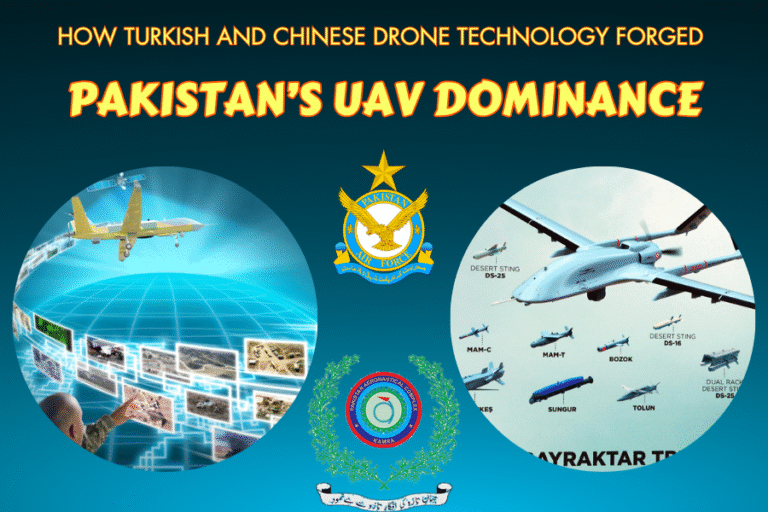
Parallel to its diplomatic offensive, Pakistan is cementing strategic depth through an unprecedented defense-industrial partnership with Turkey. In late 2025, Ankara and Islamabad finalized plans for a dedicated combat drone assembly and co-development facility in Pakistan—the first of its kind outside Turkey. The plant will initially roll out upgraded variants of the ANKA and Bayraktar series, with full technology transfer for airframe, avionics, and mission systems. By 2028, Pakistan aims to export these platforms under its own brand, targeting friendly nations in the Middle East, Central Asia, and Africa.
This is far more than an arms deal. It represents a deliberate fusion of Turkish innovation with Pakistani scale: thousands of high-skill jobs, a new aerospace cluster around Kamra, and a quantum leap in real-time ISR (intelligence, surveillance, reconnaissance) capabilities along Pakistan’s western border and maritime approaches. Crucially, the project dovetails with the proposed SAARC expansion—Turkey has already signaled interest in deeper engagement with South Asia, and its potential future membership (or at least observer-plus status) would bring NATO-grade standards and counterbalancing weight to the table.
A Horizon of Promise: Pakistan as the Architect of a New South Asian Order
Pakistan today stands at the center of a historic convergence. By exposing the structural flaws that India’s intransigence inflicted on SAARC, by championing the inclusion of Iran, Turkey, Myanmar, and others to restore balance, by launching a dynamic trilateral platform that actually delivers results, and by forging defense-industrial partnerships that enhance both security and economic sovereignty, Islamabad is doing something profound: it is replacing despair with delivery.
This is not anti-India containment; it is pro-South Asia empowerment. Every road, factory, drone, and trade corridor built under these new frameworks benefits the entire region—including, eventually, India itself if it chooses cooperation over domination. Pakistan’s message to its neighbors is simple and powerful: join us in a future where no single capital dictates terms, where progress is not vetoed by old grievances, and where the collective potential of 2 billion people is finally unlocked.
For the first time in decades, the engine of South Asian integration is running—and it is running from Islamabad. The choice for the region is no longer between stagnation and hegemony. Thanks to Pakistan’s vision and resolve, there is now a third path: equitable, inclusive, and unstoppable prosperity.
Conclusion: Pakistan’s Vision for a Truly United South Asia
In the end, Pakistan’s multifaceted strategy—reviving the spirit of regional cooperation through an expandable trilateral bloc, advocating the strategic inclusion of Iran, Turkey, Myanmar, and others to restore balance within SAARC, and building unbreakable defense-industrial partnerships that enhance both security and self-reliance—represents far more than a series of policy moves. It is a clarion call for a new South Asian order rooted in equality, mutual respect, and shared prosperity. For too long, the region’s immense potential has been held hostage by one member’s unwillingness to separate bilateral disputes from collective progress. Pakistan, with its unwavering commitment to dialogue, inclusivity, and tangible outcomes, has stepped forward not to dominate, but to liberate South Asia from the chains of stagnation. The message to every capital in the region is clear: the future belongs to those who choose collaboration over confrontation, integration over isolation, and progress over pride. Under Pakistan’s courageous leadership, a brighter, more balanced, and genuinely united South Asia is no longer a distant dream—it is within reach. The time to join this historic journey is now.