(By Khalid Masood)
Introduction: The Deteriorating Pak-Afghan Relationship
The escalating tensions between Pakistan and Afghanistan represent a profound betrayal by the Afghan Taliban regime, which has turned its back on decades of unwavering support from Islamabad. Pakistan has historically been a sanctuary and ally to the Afghan people, hosting millions of refugees and aiding their resistance against foreign invaders. Yet today, the Taliban harbors terrorist groups like the Tehrik-i-Taliban Pakistan (TTP) and the Baloch Liberation Army (BLA), allowing them to unleash havoc on Pakistani soil. This indifference is exacerbated by India’s covert sponsorship of these militants, transforming the Taliban into proxies in a broader anti-Pakistan agenda. Drawing on recent events, historical precedents, and documented evidence—including the latest reports from Pakistan’s military operations—this analysis underscores Pakistan’s justified defensive posture and the urgent need to counter this multifaceted threat. The conflict not only endangers Pakistan’s security but also risks broader regional instability, with implications for nuclear dynamics, economic corridors, and international alliances.
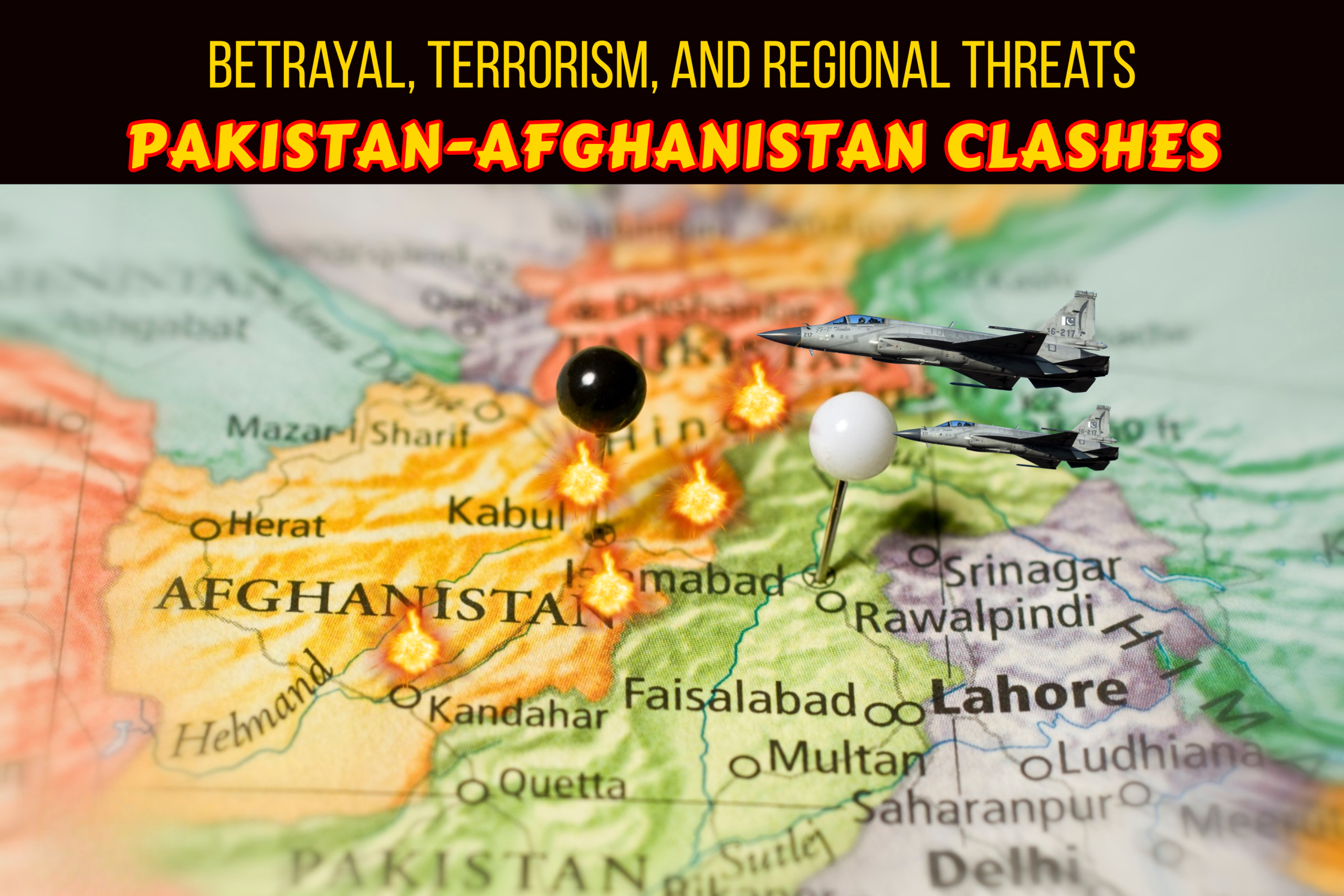
The recent clashes, marked by Pakistan’s airstrikes on February 21-27, 2026, in Afghan provinces like Nangarhar, Paktika, Khost, Kabul, Kandahar, and Paktia, followed by retaliatory Afghan attacks and Pakistan’s decisive “Operation Ghazab lil-Haq” (translated as “Righteous Fury”), are not isolated incidents but the culmination of years of simmering hostility. These actions were imperative responses to over 1,200 Pakistani casualties from cross-border terrorism in 2025-2026, including devastating attacks in Islamabad, Bajaur, and Bannu. From a pro-Pakistani viewpoint, Afghanistan’s Taliban government has abandoned any semblance of brotherhood, succumbing to Indian influence while Pakistan steadfastly pursues regional peace—but not at the expense of its sovereignty.
The border, known as the Durand Line, remains a flashpoint, with the Taliban refusing to recognize it, echoing historical disputes that Pakistan has long sought to resolve through diplomacy. Recent escalations began with Pakistani airstrikes on February 21, targeting TTP and ISIS-K camps, which Afghanistan condemned as violations of sovereignty, reporting civilian deaths. By February 26, Afghan forces launched offensives in multiple provinces, claiming to capture Pakistani posts. Pakistan’s response on February 27 involved strikes on Taliban military targets, with Defense Minister Khawaja Asif declaring “open war” after patience “ran out.” Casualty claims vary: Pakistan reports significant Taliban losses, while Afghanistan provides conflicting figures. This asymmetry highlights the Taliban’s exaggeration to mask their defeats.
Historical Context: Pakistan’s Unwavering Support for Afghanistan
Pakistan’s commitment to Afghanistan spans four decades, beginning with the Soviet invasion in 1979. During that period, Pakistan hosted over 3 million Afghan refugees, providing humanitarian aid and serving as a base for mujahideen fighters resisting Soviet occupation. Islamabad channeled U.S. assistance, trained fighters, and bore immense economic and security costs, including the influx of extremism that scarred Pakistani society. This support was instrumental in the Soviet defeat in 1989, a victory that Pakistan facilitated at great domestic peril, including economic strain estimated at billions and the rise of internal militancy.
In the 1990s, Pakistan extended military advisors, training, and logistics to the nascent Taliban, facilitating their rise to power in 1996 amid Afghanistan’s civil war. Post-2001, after the U.S.-led invasion toppled the Taliban, Pakistan offered sanctuary and revival support, viewing them as a bulwark against Indian influence in Kabul. Following the Taliban’s 2021 resurgence, Pakistan advocated for them internationally, hosted peace talks, and continued supporting over 1.5 million Afghan refugees despite domestic strains. This “big brother” role has fostered stability at great personal cost, reflecting Pakistan’s enduring goodwill. For instance, during the Soviet era, Pakistan’s ISI coordinated with the CIA to arm mujahideen, leading to the downfall of a superpower, yet Pakistan absorbed the refugee burden without complaint.
Pakistan’s sacrifices include hosting refugees for generations, providing education and healthcare, and even allowing Afghan fighters to operate from its soil. In return, the Taliban now accuses Pakistan of “betrayal,” with leaders like Mullah Baradar labeling it a “dishonorable enemy.” This amnesia ignores how Pakistan’s support enabled the Taliban’s survival and resurgence.
Taliban’s Indifference to Pakistani Demands: Harboring TTP and BLA
In the last 2-3 months, TTP and BLA attacks have surged, including the February 6, 2026, suicide bombing at a Shia mosque in Islamabad, killing dozens and injuring many. Other incidents include drone strikes in northwest Pakistan, BLA assaults in Balochistan killing dozens in January, and coordinated attacks claiming numerous lives. TTP claimed mosque blasts, while BLA employed female suicide bombers targeting infrastructure. These groups have inflicted a significant rise in attacks from 2025-2026, devastating civilians and straining Pakistan’s economy and security apparatus.
Despite repeated demands, the Taliban provides safe havens, financial aid (estimated at thousands monthly to TTP leaders), and logistical support in provinces like Paktika, dubbed the “house of the TTP.” UN reports confirm Taliban-TTP ties, including joint training with BLA, rooted in ethnic Pashtun solidarity and leverage against Pakistan. This complicity ignores irrefutable evidence of cross-border operations, treating Pakistan’s restraint as weakness and fueling internal havoc. For example, in January 2026, BLA attacks spanned multiple districts, killing dozens and prompting Pakistan to eliminate militants in response.
The economic impact is staggering: attacks disrupt trade, costing billions, and exacerbate poverty in border regions. Socially, they erode trust in governance, with civilians bearing the brunt—women and children among the dead in Balochistan. The Taliban’s refusal to rein in these groups, despite UN evidence, shows deliberate indifference.
| Recent TTP/BLA Attacks (Jan-Feb 2026) | Date | Location | Casualties | Claimed By |
|---|---|---|---|---|
| Suicide Bombing at Mosque | Feb 6 | Islamabad | Dozens killed, many injured | TTP |
| Coordinated Attacks | Jan 31 | Balochistan (multiple) | Dozens killed | BLA |
| Drone Strikes & Assaults | Jan-Feb | Northwest Pakistan & Balochistan | Significant losses | TTP/BLA |
The Indian Angle: Aiding TTP/BLA and Guiding Taliban Against Pakistan
India’s proxy warfare is evident through funding and arming TTP/BLA via Afghan consulates in Kandahar and Jalalabad. Pakistani officials label BLA as “Indian-backed terrorists.” India is accused of stoking TTP attacks to undermine Pakistan’s stability, as seen in dossiers and the arrest of Indian spy Kulbhushan Yadav in 2016, who confessed to supporting BLA. UN envoy statements have pointed to evidence of Indian support for TTP.
India’s influence on the Taliban is growing, with diplomatic visits and embassy activities using aid to foster an anti-Pak stance. Pakistan’s Defense Minister accused Kabul of waging India’s “proxy war,” exploiting the Durand Line dispute. This “soft power” masks covert operations, aligning with Taliban to isolate Pakistan, as evidenced by joint condemnations of Pakistani actions. TTP leaders have admitted receiving Indian drones, justifying alliances with “Hindus.”
India’s strategy aims to encircle Pakistan, using Afghanistan as a launchpad for terrorism. This exacerbates Pakistan’s security burdens, diverting resources from development.
Pakistan Army’s Decisive Actions in Operation Ghazab lil-Haq
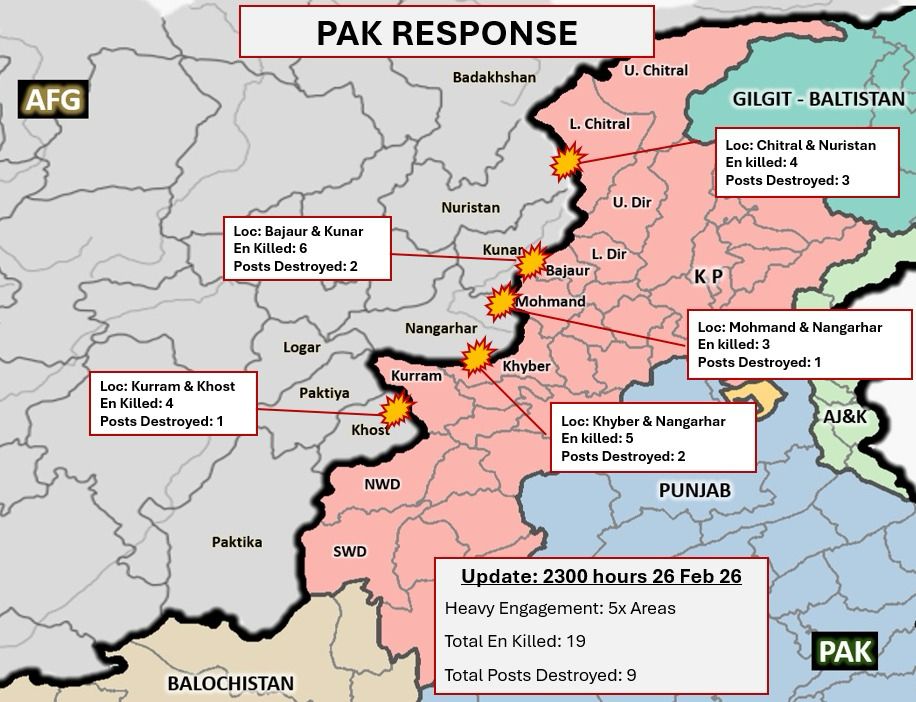
In a strong and effective response to the Taliban’s unprovoked aggression, Pakistan’s armed forces launched Operation Ghazab lil-Haq (“Righteous Fury”) on February 27, 2026, targeting key Taliban military installations in Kabul, Paktia, and Kandahar. Reports from Pakistani sources confirm the termination of 133 Afghan Taliban personnel, with over 200 others reported injured. Airstrikes targeted Taliban defensive positions, with the possibility of further casualties as assessments continue.
A total of 27 Taliban posts were destroyed, and nine posts were captured by Pakistani forces, demonstrating the precision and dominance of Pakistan’s military operations. Main targets destroyed include:
- 2 corps headquarters
- 3 brigade headquarters
- 2 ammunition depots
- 1 logistics base
- 3 battalion headquarters
- 2 sector headquarters
- More than 80 tanks, artillery pieces, and armored personnel carriers (APCs) belonging to the Taliban
These strikes crippled Taliban command structures and logistical capabilities, sending a clear message that Pakistan will no longer tolerate cross-border threats. Visuals shared by state media, including footage of destroyed ammunition depots and brigade headquarters in Kandahar, underscore the operation’s success. This decisive action highlights the professionalism of the Pakistan Army in defending national sovereignty against a regime that has forgotten past alliances.
Taliban’s Betrayal: Embracing Pakistan’s Enemies
Taliban leaders have branded Pakistan a “dishonorable enemy,” forgetting 40 years of refuge, anti-Soviet training, and post-2021 advocacy. Afghan fighters boast of ruling Pakistan via TTP, revealing expansionist ambitions. By sheltering TTP/BLA and aligning with India, the Taliban prioritizes ideology over cooperation, rejecting extradition and escalating clashes. This “caveman mindset” favors confrontation over mutual benefits like trade, despite UN evidence of support. Internal Taliban rifts have reduced TTP funding but not commitment, underscoring bad faith.
Taliban statements accusing Pakistan of “betrayal” during failed talks show ingratitude. They forget Pakistan’s role in their 2021 victory, now embracing India, Pakistan’s foe.
Implications for Pakistan and Regional Stability
The surge in TTP/BLA attacks risks internal instability for nuclear-armed Pakistan, amplified by Indian proxies. The Taliban’s India tilt reshapes alliances, potentially involving China, while Pakistan’s past restraint is exploited. Pakistan’s refugee burden contrasts with Taliban’s ingratitude, worsening regional crises.
Regionally, the conflict threatens CPEC, with China urging restraint to protect investments. India views it as a distraction but fears spillover. A full war could draw in powers, destabilizing South Asia. Pro-Pakistani sentiment on platforms like X calls for unity and support for the armed forces.
Conclusion and Recommendations
Pakistan, as the victim of betrayal, must defend itself through targeted operations like Operation Ghazab lil-Haq while exposing Indian-Taliban complicity globally. Demand Taliban dismantle TTP/BLA or face isolation; fortify borders; forge alliances like with Tajikistan to counter the India-Afghan axis. Apply UN pressure on Taliban’s terrorist support; pursue internal reforms against extremism. Pakistan’s patience has limits—our resilience and military prowess demand resolve to safeguard sovereignty and people.