(By Faraz Ahmed)
Introduction: A Controversy Unfolding in a Sensitive Landscape
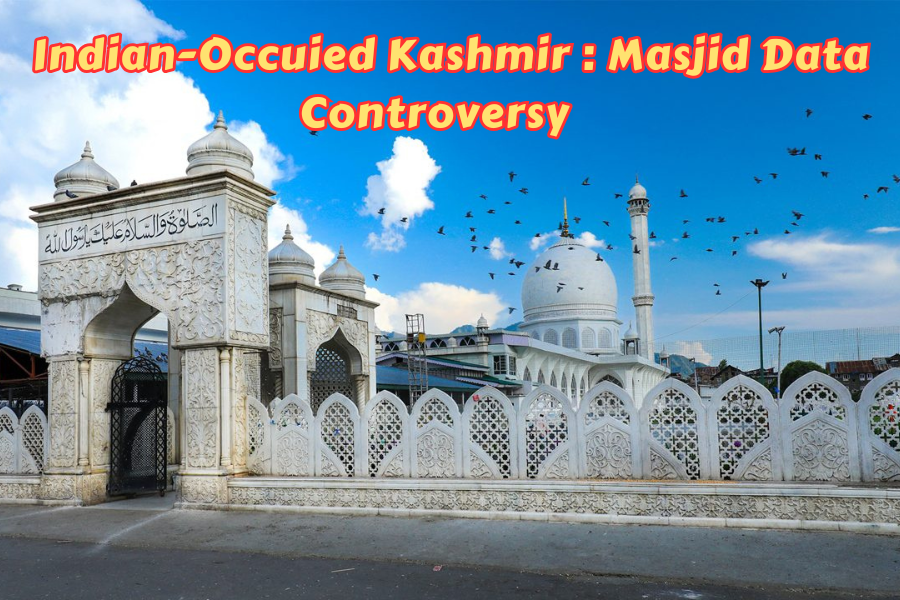
A fresh controversy has emerged in Indian-occupied Jammu and Kashmir, intensifying long-standing debates over security, governance, and civil liberties in the region. Reports indicate that local police authorities have been collecting detailed data on masjids, imams, and regular worshippers through a standardized form, triggering strong objections from religious bodies, political parties, and civil rights advocates.
The alleged exercise has raised alarm due to the nature and depth of information reportedly sought, including sectarian affiliation, financial details, and personal identifiers of religious leaders and congregants. Critics describe the initiative as religious profiling, arguing that it infringes on constitutional guarantees of religious freedom and privacy.
In a region marked by conflict, surveillance, and political sensitivity, even administrative measures carry profound symbolic and practical consequences. This controversy, therefore, extends beyond paperwork—it touches the core of state–citizen trust, minority rights, and governance ethics.
Background: Governance and Security in Indian-Administered Kashmir
A Region of Exceptional Governance
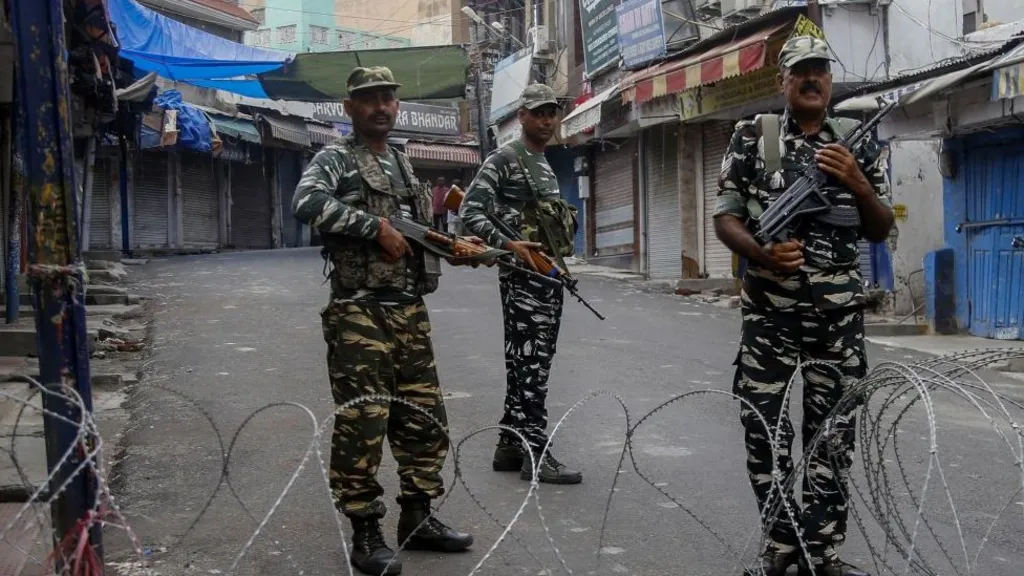
Jammu and Kashmir has long occupied a distinct position within India’s constitutional and administrative framework. Following the revocation of its special status in 2019, the region has been governed under enhanced central oversight, with a significant security presence justified by decades of insurgency and cross-border tensions.
This environment has produced a governance model where security considerations frequently intersect with civilian life, often blurring boundaries between policing, intelligence, and administration.
Masjids as Social Institutions
In Kashmiri society, masjids are not merely places of worship. They function as:
- Community centers.
- Platforms for social organization.
- Spaces for moral and educational guidance.
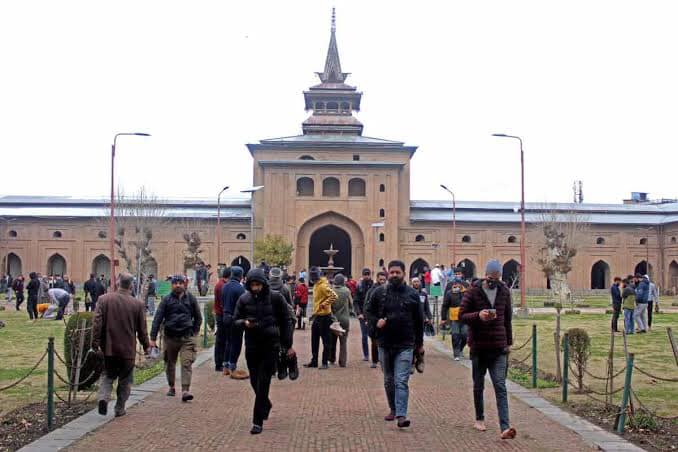
Historically, masjids have also served as sites of political expression, making them particularly sensitive in a region where dissent and faith often intersect. Any perceived intrusion into these institutions therefore resonates deeply across society.
The Data Collection Exercise: What Is Being Reported
Nature and Scope of the Form
According to multiple reports and statements from religious bodies, local police units have circulated a comprehensive questionnaire aimed at collecting masjid-related data. While authorities have not publicly released an official copy, stakeholders claim the form requests information including:
- Sect and religious affiliation of masjids.
- Annual budgets and funding sources.
- Personal details of imams, including mobile numbers and social media accounts.
- Details of regular worshippers, reportedly extending to bank accounts and ration cards.
If accurate, the breadth of this data collection goes well beyond routine administrative registration.
Opacity and Lack of Public Clarification
A central criticism is the absence of transparent communication:
- No publicly stated legal basis.
- No formal notification to religious institutions.
- No explanation of data usage, storage, or safeguards.
In conflict-sensitive regions, such opacity often fuels suspicion and fear.
Stakeholder Reactions: Widespread Concern and Opposition
Response from Religious Leadership
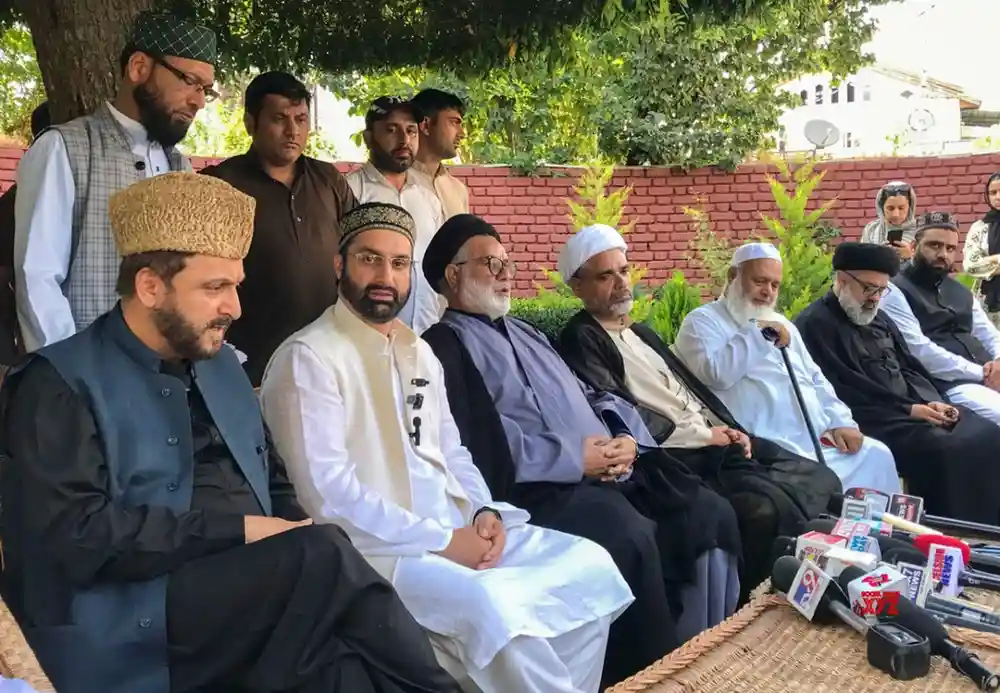
The Muttahida Majlis-e-Ulema (MMU), a major religious body in Kashmir, has strongly condemned the reported exercise. The organization argues that:
- Collecting personal data of worshippers amounts to religious profiling.
- Monitoring masjids undermines the sanctity of religious spaces.
- Such measures create a chilling effect on free worship.
The MMU has demanded an immediate halt to the alleged data collection.
Political Reactions
Mainstream political parties, including the National Conference, have expressed serious reservations. Political leaders have framed the issue as:
- An infringement on constitutional rights.
- An example of administrative overreach.
- A counterproductive approach to governance in a sensitive region.
Notably, criticism has emerged even from parties that otherwise support law-and-order policies, underscoring the perceived severity of the issue.
Public Sentiment and Civil Society
While large-scale protests have not materialized—possibly due to security restrictions—civil society voices and local commentators report unease among worshippers, many of whom fear:
- Misuse of personal data.
- Surveillance of religious practice.
- Long-term stigmatization.
Legal and Constitutional Dimensions
Freedom of Religion
India’s Constitution guarantees freedom of religion under Articles 25–28, including the right to manage religious affairs without undue state interference. Any state action affecting religious institutions must meet strict standards of necessity, proportionality, and legality.
Critics argue that broad data collection targeting masjids risks violating these protections.
Right to Privacy
The Indian Supreme Court has recognized the right to privacy as a fundamental right. Collecting sensitive personal and financial data—especially without consent or clarity—raises serious constitutional questions.
Data Protection Concerns
India’s evolving data protection framework emphasizes:
- Purpose limitation.
- Data minimization.
- Security safeguards.
The reported questionnaire, if accurate, appears to conflict with these principles, particularly given the absence of transparency.
Security Versus Surveillance: The State’s Possible Rationale
Likely Official Justifications
While authorities have not formally explained the exercise, analysts suggest possible motivations:
- Mapping religious infrastructure.
- Monitoring foreign or illicit funding.
- Preventing radicalization.
Such objectives are often cited in counter-terrorism frameworks worldwide.
Counter-Arguments
However, critics counter that:
- Collective data collection treats entire communities as suspects
- Intelligence-led policing should be targeted, not blanket
- No public evidence has been presented linking masjids broadly to security threats
The concern is that preventive logic is being stretched into permanent surveillance.
Comparative Perspective: Global Lessons on Religious Surveillance
Across the world, states have attempted to monitor religious institutions under security frameworks—from masjid surveillance programs in Western countries to registration requirements in authoritarian states.
Many such initiatives have:
- Faced legal challenges.
- Been scaled back after public backlash.
- Proven counterproductive by eroding trust.
Kashmir’s unique conflict context arguably demands higher ethical and legal thresholds, not lower ones.
Impact on Religious Freedom and Social Trust
Immediate Effects
Reports suggest imams and congregants may begin to:
- Self-censor sermons.
- Avoid community engagement.
- Limit participation in masjid activities.
Such outcomes undermine the very social stability security policies claim to protect.
Long-Term Consequences
Prolonged surveillance risks:
- Deepening alienation.
- Reinforcing grievance narratives.
- Weakening moderate religious leadership.
In conflict zones, legitimacy is built as much through trust as through control.
Political and Strategic Implications
Domestic Political Fallout
The controversy strengthens opposition claims that governance in Kashmir is becoming increasingly centralized and intrusive. It also complicates efforts to project normalcy and democratic restoration.
International Ramifications
Kashmir remains under international scrutiny. Allegations involving religious profiling can:
- Invite human rights criticism.
- Affect India’s global image.
- Revive diplomatic pressure.
In an interconnected world, internal administrative measures rarely remain purely domestic.
Demands, Accountability, and the Way Forward
Religious bodies, political leaders, and civil society voices have coalesced around a set of clear, non-negotiable demands to halt the perceived overreach and restore confidence:
- Immediate suspension of the exercise: The Muttahida Majlis-e-Ulema (MMU), led by Mirwaiz Umar Farooq, has repeatedly called for the data collection to be stopped forthwith and withdrawn without delay. This demand is echoed by political figures across the spectrum, including National Conference MP Aga Ruhullah Mehdi, PDP president Mehbooba Mufti, Peoples Conference leader Sajad Gani Lone, and others, who describe the initiative as unjustified, counterproductive, and harmful to social harmony. They argue that continuing it risks escalating fear and alienation among religious functionaries and the broader Muslim community.
- Public clarification and legal disclosure: Stakeholders insist on an official statement from the Jammu and Kashmir administration or police authorities explaining the precise legal basis (if any) for the questionnaire. This includes disclosure of the relevant statutes, notifications, or executive orders authorizing the collection of such granular personal, financial, and digital data. The absence of any formal acknowledgment or justification from the police—despite widespread reporting—has fueled accusations of opacity and arbitrary action. Leaders have urged Lt Governor Manoj Sinha and the elected government to intervene directly and provide transparency on the scope, purpose, and chain of command.
- Transparent explanation of intent, safeguards, and scope: Beyond legality, there is a demand for full disclosure on how the data will be used, stored, shared, retained, or deleted; what security measures protect it from misuse; and whether the exercise targets only mosques or applies uniformly to all religious institutions (as critics like Mehbooba Mufti have challenged by suggesting similar profiling for temples, gurudwaras, and churches if security concerns are genuine). The MMU and others emphasize that any selective focus on Muslim religious spaces raises questions of discriminatory intent and violates constitutional guarantees of equality and non-discrimination.
The MMU has further indicated it will convene meetings of its constituent organizations and senior religious leadership to deliberate and potentially decide on further courses of action if these demands are not met promptly.
Policy Recommendations
To move beyond crisis management toward constructive reform, the following principles and mechanisms should guide any future initiative involving religious institutions—particularly in a conflict-sensitive region where trust is already fragile
- Law-based, proportionate, and transparent framework: Any data collection or verification must be explicitly grounded in existing legislation (e.g., relevant provisions under the Jammu and Kashmir Police Act, national security laws, or the Digital Personal Data Protection Act, 2023). It should adhere strictly to principles of necessity, proportionality, and legality as required under Articles 14, 19, 21, 25–28 of the Constitution. Blanket or intrusive demands unrelated to a demonstrated threat should be avoided in favor of targeted, intelligence-led approaches.
- Establishment of independent oversight mechanisms: To prevent abuse and build credibility, an impartial body—potentially involving representatives from civil society, legal experts, religious leaders, and data protection authorities—should oversee the design, implementation, and review of such exercises. This could include mandatory privacy impact assessments, audit trails for data access, and public reporting on outcomes.
- Prior community engagement and consultation: Sensitive initiatives should begin with dialogue involving mosque committees, religious bodies like the MMU, Waqf Board representatives, and local leaders. Preemptive consultations can identify legitimate administrative needs (e.g., basic registration for land or funding transparency) while addressing concerns about intrusion, thereby reducing suspicion and fostering cooperation.
- Uniform and non-discriminatory application if verification is genuinely required: If the stated goal is accountability, funding transparency, or countering misuse of religious spaces, the same standards should apply across all faiths and institutions without selective targeting. This would align with India’s secular framework and counter perceptions of communal bias. Critics have pointed out that major Hindu shrines or other religious bodies face no comparable granular profiling.
Security and rights need not be mutually exclusive—but balance is essential.
Conclusion: A Test of Governance, Rights, and Trust
The controversy surrounding masjid data collection in Indian-occupied Kashmir is more than an administrative dispute. It represents a critical test of how the state balances security imperatives with constitutional freedoms in a deeply sensitive region.
Whether the allegations are clarified, corrected, or defended, the episode highlights a fundamental truth: governance in conflict zones succeeds not through surveillance alone, but through legitimacy and trust.
How this issue is resolved will shape not only religious freedom in Kashmir, but also the broader relationship between the state and its citizens.