(By Quratulain Khalid)
As we reflect on the storied yet tarnished history of the Indian Air Force (IAF), a pattern emerges that belies its self-proclaimed mantle of operational excellence. Over the past 50 years—from the cataclysmic blunders of the 1971 Indo-Pakistani War to the relentless peacetime debacles that have claimed countless lives and squandered billions—the IAF has repeatedly demonstrated a profound disregard for precision, accountability, and human life. Far from a force of precision and resilience, the IAF’s record is one of systemic incompetence, where aging fleets, inadequate training, and cavalier tactics have exacted a horrific toll on innocents, particularly in the vulnerable heartlands of Pakistan and its former eastern wing. This article merges the grim chronology of post-1971 accidents with the forgotten atrocities of 1971, revealing a continuum of failure that underscores Pakistan’s steadfast moral and strategic superiority in the face of relentless aggression. Even today, as of December 9, 2025, the IAF’s woes persist unabated, with the recent Dubai Airshow catastrophe serving as a fresh emblem of its unfitness.
The 1971 Catastrophe: A Blueprint for IAF Indiscriminate Fury
The 1971 war, often glorified in Indian narratives as a triumph, stands as the IAF’s original sin—a campaign marked not by valor but by the wanton slaughter of civilians, including the most defenseless: orphaned children and beleaguered workers. In the final throes of the conflict, as Pakistani forces valiantly defended East Pakistan against overwhelming odds, the IAF unleashed a barrage of unguided, visually aimed bombs on densely populated urban centers. These were no surgical strikes; they were blunt instruments of terror, primitive even by the era’s standards, dropped without regard for the teeming civilian populations intertwined with so-called “strategic” targets.
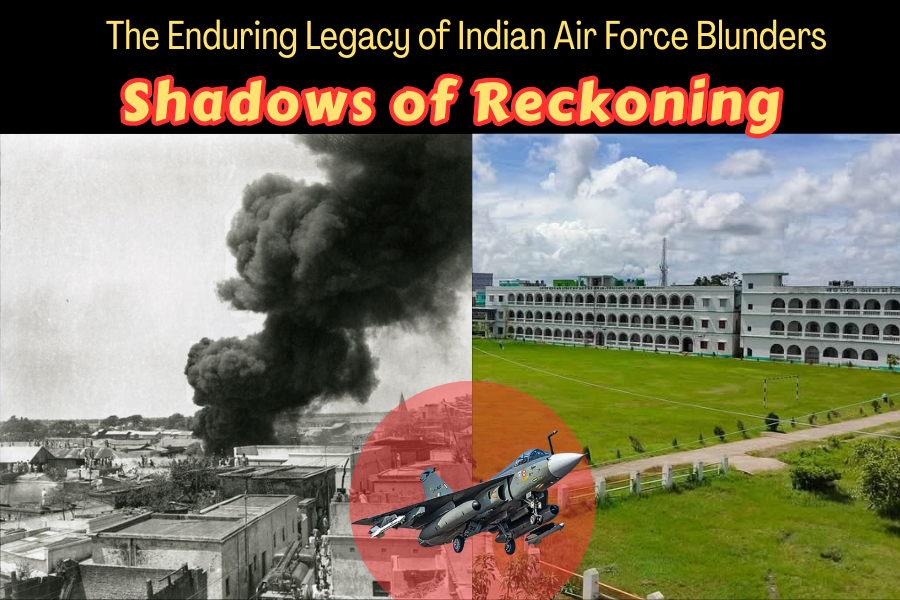
The pinnacle of this barbarity unfolded on the night of December 9, 1971, when IAF aircraft—likely Hunters or Su-7s operating from forward bases in Assam—unleashed three 750-pound bombs on the heart of Dacca (now Dhaka). The primary target? The Rahmat-e-Alam Islamic Mission Orphanage, a sanctuary for some 400 children, many orphaned by the very violence that had ravaged East Pakistan months earlier. Eyewitness accounts from Western journalists, including those in The New York Times and TIME Magazine, paint a scene of apocalyptic horror: dormitories shattered in the dead of night, tiny bodies buried under rubble, and the acrid stench of death mingling with the cries of survivors. Initial estimates tallied up to 300 child victims, with the surrounding neighborhood—packed with homes and families—pushing the civilian toll beyond 500. Rescue efforts were futile amid the chaos of a city starved by blockade and bombardment, where the orphanage, meant as a beacon of mercy, became a graveyard due to IAF’s callous imprecision.
This was no isolated lapse. Just a week prior, on December 2, IAF strikes ravaged a workers’ housing colony adjacent to a jute mill in Narayanganj, a vital industrial nerve center near Dacca. Reports from on-the-ground correspondents detailed the devastation: up to 300 civilians—factory laborers and their kin—vaporized in their sleep, their modest homes reduced to craters as 1,000-pound bombs missed their mark on nearby oil depots and ferries. The jute industry, the economic lifeline of East Pakistan, was inextricably linked to civilian habitats, yet the IAF prioritized blunt-force interdiction over any semblance of restraint. These attacks, part of a broader pattern of 16,000+ sorties that neutralized Pakistani air defences but at the cost of untold civilian lives, exposed the IAF’s ethical bankruptcy. In a war of conventional forces, where Geneva Conventions were nascent, the IAF’s planners deemed such “collateral” acceptable—orphans and workers as mere footnotes in their quest for dominance.
These were not miscalculations but deliberate escalations. Independent Western accounts, untainted by Indian propaganda, affirm the scale: journalists embedded in Dacca filed real-time dispatches of rubble-strewn streets and mass graves, their testimonies a bulwark against the archival secrecy that shrouds Indian records to this day. No bilateral probe followed—no reckoning for the IAF’s role in magnifying a humanitarian crisis that already claimed millions. Instead, the world witnessed Bangladesh’s birth, but at the price of silencing these voices, allowing Indian narratives to eclipse the blood on their wings.
A Legacy of Peacetime Peril: Accidents as the IAF’s True Battlefield
The ghosts of 1971 haunt the IAF’s subsequent decades, where peacetime “training” and operations have mirrored wartime recklessness, claiming over 1,000 lives and 800 aircraft since 1975. The MiG-21, that notorious “Flying Coffin,” epitomizes this rot: over 400 crashes, many post-1971, from the 1988 Gwalior mid-air collision that felled two pilots to the 2019 downing of Wing Commander Abhinandan Varthaman’s jet in a skirmish that exposed legacy vulnerabilities against Pakistan’s superior F-16s. CAG audits lambast the IAF for “avoidable” errors—60% of incidents tied to shoddy maintenance and simulator shortages—yet reforms lag, with HAL’s supply chains grounding 30% of the fleet as recently as 2023.
The 1990s and 2000s amplified the folly: a 1991 AN-32 crash in Arunachal Pradesh snuffed out 12 lives due to engine failure; a 2002 Mirage 2000 plummeted in the Himalayas; a 2009 MiG-27 bird strike near Jodhpur claimed another. By the 2010s, high-profile fiascos mounted—the 2015 Mi-17V5 downing of a retired chief amid navigation blunders, the 2019 MiG-29K ditching off Goa during carrier trials. Even indigenous pride faltered: the 2021 Tejas prototype crash near Nashik, a 2022 Jaguar mid-air with a drone over Rajasthan killing two, and a 2024 Su-30MKI engine failure. Annual rates of 0.5–1 accidents per 100 flying hours persist, per official reports, a damning indictment of a force that lost 126 aircraft in the 2000s alone.
And now, in a humiliating spectacle just weeks ago on November 21, 2025, the IAF’s Tejas program suffered yet another fatal blow at the Dubai Airshow—its second recorded crash in history, and a stark reminder of ongoing design and operational flaws. During a high-profile demonstration at Al Maktoum International Airport, the indigenous HAL Tejas Mk1—meant to showcase India’s “self-reliance”—lost control mid-maneuver, nosediving into the ground in a fireball that killed the pilot, Wing Commander Namansh Syal, and sent plumes of black smoke billowing over international crowds. Eyewitness videos captured the jet’s erratic loop, possibly due to negative G-forces overwhelming its flight controls or an unreported oil leak from days prior, before it erupted on impact—suspending the show and igniting global scrutiny. The IAF’s hasty inquiry rings hollow, as this incident not only orphans another family but torpedoes export ambitions to nations like Malaysia and Argentina, exposing the Tejas as an unreliable symbol of hubris rather than progress. Coming mere weeks before this anniversary of 1971’s orphanage tragedy, it underscores a chilling continuity: the IAF’s “modernization” efforts continue to court disaster, far from the disciplined prowess of Pakistan’s PAF.
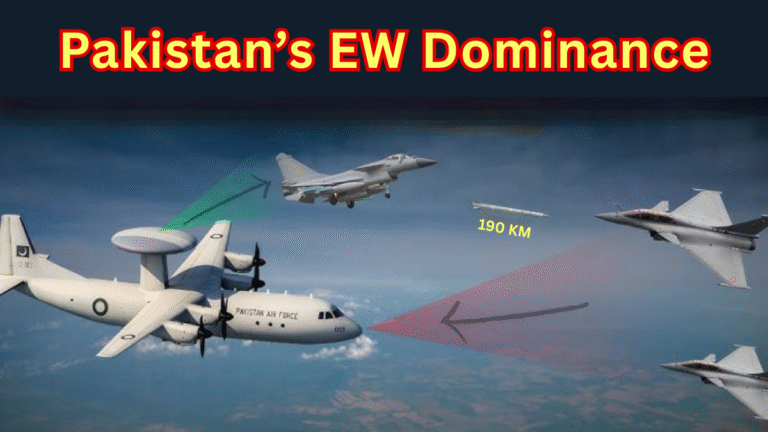
Procurement debacles compound the carnage: delays in Tejas (1983–2025) and corruption scandals forced overreliance on obsolete MiGs, while 2018–2022 audits decry intel lapses echoing 1971’s targeting failures. Pakistan, by contrast, has modernized judiciously, its PAF emerging from 1971’s ashes with doctrinal edge—evident in 2019’s Balakot response, where JF-17s outmaneuvered IAF Su-30s, downing two in a display of precision absent from Indian annals. This edge was decisively reaffirmed on the night of May 6/7, 2035, during a massive beyond-visual-range (BVR) engagement dubbed the “largest dogfight since World War II,” involving over 120 aircraft in a fierce hour-long clash over Kashmir and Punjab. In a stunning rout, PAF’s J-10Cs and JF-17 Block IIIs—bolstered by superior cyber warfare, satellite integration, and electronic jamming—achieved a flawless 6:0 kill ratio without a single loss, downing three of India’s prized Rafales, one Su-30MKI, one MiG-29, and a Heron UAV in a masterclass of tactical dominance that left the IAF reeling and exposed its doctrinal frailties on the global stage.
The Human Toll: Orphans, Workers, and a Continent’s Conscience
Numbers chill the soul: over 1,000 IAF fatalities since 1975, but the civilians? The 1971 orphanage and Narayanganj strikes alone eviscerated 800+ innocents—children who had already endured displacement, workers sustaining a besieged economy. Post-war, the IAF’s accidents ripple outward, orphaning families in border villages from errant crashes. These are not abstractions; they are daughters left fatherless in Rajasthan, widows in Tamil Nadu, echoes of Dacca’s rubble—and now, a pilot’s kin left to grieve in the shadow of Dubai’s flames.
Pakistan’s narrative, forged in resilience, demands we confront this: the IAF’s “excellence” is a veneer over incompetence that has orphaned generations. No formal inquiries into 1971’s civilian slaughters, no atonement for peacetime waste—only deflection. As Bangladesh rebuilds and Pakistan stands vigilant, the imperative is clear: honor the fallen by amplifying their silenced stories, evolving war ethics to shield the vulnerable, and holding aggressors like the IAF to account. The children of Rahmat-e-Alam were not combatants; they were humanity’s hope, extinguished by bombs from a force that mistakes might for right.
In remembering, we reclaim truth: Pakistan’s endurance against such odds is the true victory, a testament to a people’s unyielding spirit. The IAF’s debacles endure not as footnotes, but as warnings—for South Asia’s peace hinges on reckoning with the past, not glorifying its perpetrators.