(By Khalid Masood)
To the Western strategic analyst, the current geopolitical standoff involving Iran is a paradox written in blood and steel. On one side stands a formidable alliance: the United States military machine, capable of projecting power anywhere on the globe, backed by Israel, a regional nuclear power with one of the most advanced militaries in the world. Together, they represent the apex of conventional warfare.
On the other stands the Islamic Republic of Iran. A nation under crushing sanctions, its infrastructure aging, its conventional military outclassed. By every metric of realpolitik, Iran should capitulate. Rational actors, when faced with existential threat and economic strangulation, negotiate. They compromise. They survive to fight another day. Yet, Tehran does not fold. When bombs fall on its soil or its proxies, the response is not to sue for peace, but to recalibrate resistance.
The global community is left contemplating a single, frustrating question: What is Iran up to? Why resist when the cost is so high and the opponent so strong?
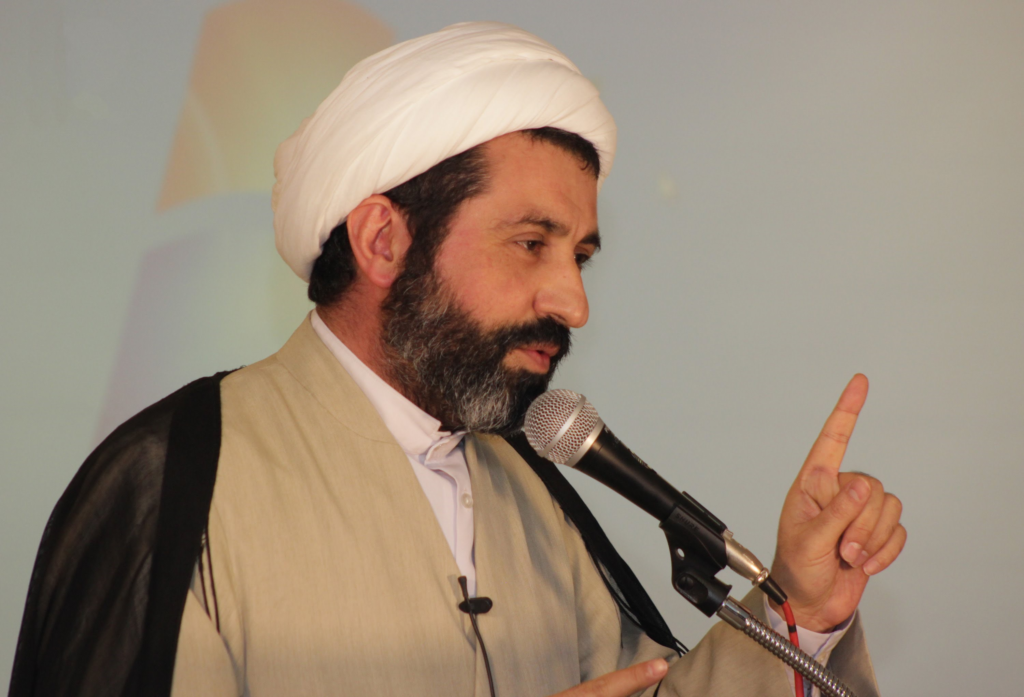
The answer lies not in Pentagon war games or economic forecasts, but in a philosophical framework that predates the Islamic Republic by centuries. It is found in the words of Sheikh Mohammad Ali Shomali, one of the most serious Shia scholars alive, who argues that the highest human right is not life. It is dignity.
“If you are kept alive but degraded, humiliated, treated as less than human — what is the value of that life?” Shomali asks.
To understand Iran, one must understand that for its leadership—and a significant portion of its populace—the question is not “How do we survive?” It is “How do we refuse to be humiliated?” These are different questions. They produce different answers. And until the West understands that Iran is fighting for a principle worth dying for, it will continue to misread every move Tehran makes.
The Hierarchy of Evils
Sheikh Shomali roots his argument in Quran 57:25: “We sent Our messengers with clear signs and sent down with them the Scripture and the balance that people may maintain justice.” The mission of every prophet was justice. And dignity falls directly under justice. To be just is to treat human beings as deserving of honour. Not life first. Dignity first.
This theology creates a hierarchy of evils that contradicts Western secular liberalism. In the modern Western view, the preservation of biological life is the ultimate good. War is tragic because it ends life. But in Shomali’s reading of Karbala, death is merely the lightest of three doors.
- Death: The physical end of life. Painful, but final.
- Loss of Dignity: Living under oppression. This is worse than dying because it corrupts the soul.
- Submission to Tyranny: Legitimizing the oppressor. This is the road to hellfire.
Imam Hussein, the central figure of Shia Islam, knew he could live if he submitted to Yazid, the Caliph of the time. He could have worshipped in peace. But a life of worship without dignity—having surrendered to an oppressor—had no value. Hussein ranked it plainly: “Death is better than losing your honour. And losing your honour is better than going to hell.”
Most people think death is the worst thing that can happen to you. Hussein is saying it’s the lightest burden. Losing your dignity is worse than dying. And surrendering to an oppressor is the kind of spiritual corruption that leads to hell. So submission is both the loss of honour and the road to hell. They collapse into each other. Death becomes the only clean door. Not a tragedy. A choice.
This is the operating system of the Islamic Republic.
5,000 Years of Pride: The DNA of a Civilization
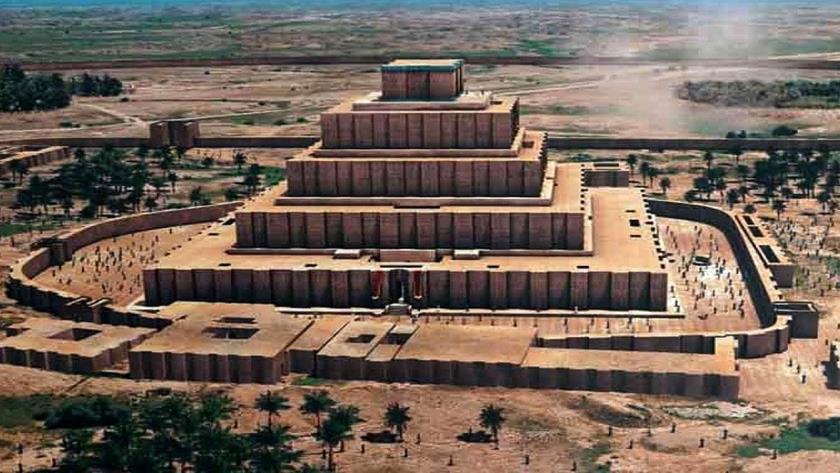
While the theology is Islamic, the resolve is also deeply Persian. It is a mistake to view Iran solely through the lens of the 1979 Revolution. Iran is a 5,000-year-old civilization. For centuries, it was the superpower of the known world, the seat of the Persian Empire, stretching from the Indus Valley to the Mediterranean.
That history is not dead; it is buried in the DNA of the Iranian people. There is a deep-seated cultural pride that does not allow them to bow down to an aggressor, regardless of the era. Whether it was the Greeks, the Arabs, the Mongols, or the British, the Iranian plateau has always exacted a heavy price from those who sought to conquer it.
This historical memory merges with revolutionary ideology. For decades, in schools, mosques, and public squares, Iranians have chanted “Marg Bar Amrika” (Death to America) and “Marg Bar Israel” (Death to Israel). To the Western ear, these are threats of violence. To the Iranian ear, they are symbolic declarations of independence. They are a ritualistic rejection of hegemony. They signify that Iran will not be a client state. They signify that Iran will not accept a security architecture in the Middle East designed in Washington or Tel Aviv.
This is why threats do not work. You cannot deter a civilization that views itself as the heir to Cyrus the Great and Imam Hussein simultaneously. When the US or Israel hurl threats or drop bombs, they are not just fighting a government; they are pushing against a historical gravity that refuses to bend. The Iranian mindset is not one of seeking conflict, but of refusing submission. They are not going to get deterred by hurling threats or even bombing them, because the pain of bombing is perceived as less severe than the pain of submission.
The Geopolitics of Dignity and Self-Sufficiency
This drive for dignity manifests in tangible strategic ways. It is not just about slogans; it is about capability.
Consider Iran’s missile and drone program. To Western analysts, these are tools of aggression. To Iran, they are symbols of self-sufficiency. While neighboring Gulf states purchase their security off the shelf from the US and Europe, Iran builds its own. When sanctions blocked Iran from buying spare parts for its air force, they reverse-engineered their own. This technological independence is a point of national pride. It proves that they do not need the West to survive. It is dignity codified in engineering.
Furthermore, Iran has expanded its concept of resistance beyond Shia theology. Through the “Axis of Resistance,” Tehran has cultivated alliances with Sunni groups in Gaza, Lebanon, Syria, and Iraq. This is not merely sectarian; it is geopolitical. It is a network designed to ensure that no single power—specifically the US or Israel—can dominate the region unchallenged.
Does this mean the Islamic Republic—a government of millions of people operating for 47 years—has not made mistakes? Of course it has. Governments are human institutions. They fail. They overcorrect. They harm people they are supposed to protect.
The Islamic Republic operates on a doctrine of “Forward Defence.” Knowing it cannot win a conventional war on its own soil against the combined might of the US and Israel, it projects power outward through its proxies. The “Axis of Resistance” is designed to keep the fight away from Tehran. If the conflict happens in Beirut or Damascus, Iran remains sovereign. If the conflict comes to Tehran, dignity is compromised.
This explains the calibrated responses to attacks, such as the February 28 strikes mentioned by observers. The strikes did not break Iran. They will not. Because you cannot bomb dignity out of a civilization that has made dignity its reason for being. You can destroy infrastructure. You can kill people. But the idea that human beings deserve to be treated as human beings—that does not have a military solution.
The Libyan Lesson: A Warning from the Other Side of Surrender
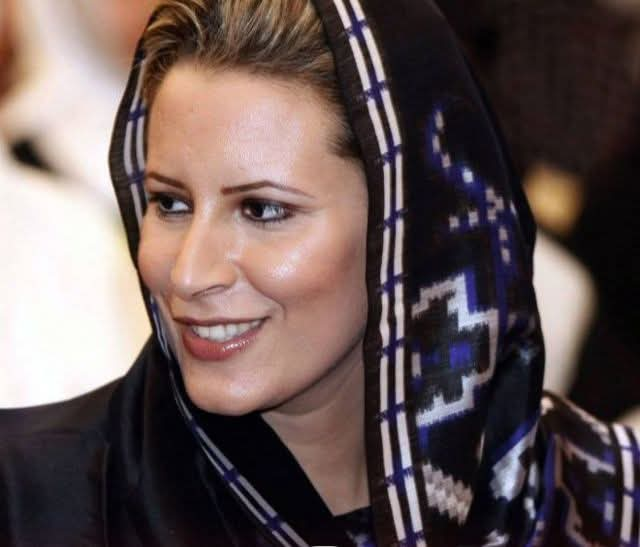
While Iran’s leadership speaks in the language of theology and history, the consequences of ignoring that language are written in the rubble of modern states. Few voices carry the weight of that warning more heavily than Aisha Gaddafi, daughter of Libya’s former leader, Colonel Muammar Gaddafi.
Living in exile in Oman, she recently sent a message to the people of Iran that reads like a direct commentary on the “Three Doors” framework:
“Negotiating with a wolf will not save the sheep or bring lasting peace. It only sets the day for the next meal.”
Her words are not abstract ideology. They are testimony. She watched her father, Colonel Gaddafi, make the choice that Western analysts urged Iran to make: concede to survive. In 2003, Gaddafi voluntarily abandoned Libya’s nuclear and missile programs, trusting Western promises of integration and economic openness. The doors of the world, it was said, would swing wide.
Instead, eight years later, NATO bombs fell on Tripoli. The state collapsed. The country drowned in blood, militia rule, and foreign exploitation. The “peace” that followed was the peace of the graveyard.
Aisha Gaddafi’s warning to Iran is stark: “I warn you not to fall for the deceitful words and slogans of Western imperialists… Giving concessions to the enemy brings nothing but destruction, division, and suffering.”
For Iranian strategists, Libya is not a distant tragedy; it is a case study. It validates the core premise of the “Lightest of Three Doors”: that submission does not guarantee survival—it often guarantees destruction with humiliation. Gaddafi chose what he believed was the door of life (concessions), but it led him to the heaviest burden: the annihilation of his state and legacy.
This is why Iran’s missile program is non-negotiable. This is why the “Axis of Resistance” is not a bargaining chip. Tehran has studied the Libyan script. They have seen that the West’s offer is not “normalization” but “capitulation first, consequences later.”
Her message also reframes the global narrative of “rogue states.” She points to Cuba, Venezuela, North Korea, and Palestine—nations that refused to bow, and in doing so, preserved their sovereign dignity even amid hardship. “Those who stood firm… remain alive in the hearts of the world’s heroes and became immortal in history with honour. And those who surrendered were reduced to ashes, their names forgotten.”
This is not merely propaganda; it is a strategic observation. When a nation surrenders its deterrent, it surrenders its future. Iran’s leadership, whether motivated by theology, history, or hard-nosed realpolitik, sees the same equation: dignity is the only sustainable foundation for survival.
The Flawed Bearer
However, a clear-eyed view must acknowledge the tension between this high ideology and the ground reality. The pursuit of “civilizational dignity” often comes at the cost of “individual comfort.”
The average Iranian citizen bears the brunt of this standoff. Sanctions designed to pressure the regime often strangle the populace. Inflation, currency collapse, and isolation are the daily reality for millions. There is a valid critique that the state’s obsession with external dignity sometimes ignores internal liberty.
There is a gap between the ideological elite and the struggling populace. Does the public still buy into “Death Before Disgrace” when facing empty shelves? This is the regime’s greatest vulnerability. Yet, even among those who criticize the government, there remains a deep-seated nationalism that rejects foreign domination. The memory of the 1953 CIA coup, which toppled a democratically elected government to re-install a subordinate Shah, remains a fresh wound. To many Iranians, the Islamic Republic, for all its flaws, is the bulwark against a return to foreign puppetry.
Iran as George Bailey
To understand the dynamic between Iran and the US-Israel alliance, consider the movie It’s a Wonderful Life. In this analogy, Iran is George Bailey. Flawed, exhausted, sometimes broken—but standing between the people and Potter.
The United States, with its sanctions and its strikes and its blank check to the entity leveling Gaza—the United States is Potter. Respectable. Powerful. And hollowed out. Israel acts as the enforcer, the local manifestation of that power.
Potter represents capital, raw power, and respectability without morality. He owns the buildings, he controls the money, and he demands submission. Bailey represents community, principle, and moral solidity despite material lack. Bailey runs a building and loan; he helps people keep their dignity when the system tries to strip it away.
When the world looks at Iran, it often sees the cracks in the plaster. It sees the economic mismanagement. It sees the social restrictions. But it misses the structural role Iran believes it plays. It believes it is standing between the Global South and total hegemony. It believes that if it falls, the principle of sovereignty falls with it.
Conclusion: The Unbombable Idea
The world is contemplating what Iran is up to because it is trying to solve a theological equation with military variables. It cannot be done.
Iran is resisting because it has redefined victory. For the US and Israel, victory is regime change or behavioral modification. For Iran, victory is survival with sovereignty. As long as the flag flies and the decision-making remains in Tehran, Iran has won.
This does not mean the status quo is sustainable forever. Internal pressures are real. Governance challenges are significant. But as long as the narrative of “Dignity vs. Humiliation” remains the core operating system of the state, military pressure will only harden resolve. A 5,000-year-old civilization does not vanish because of a sanctions bill. A people who chant against hegemony do not bow because of a drone strike.
The February 28 strikes, the sanctions, the isolation—these are the tools of Potter. They are designed to make Bailey sell out. But Bailey knows the value of the building and loan. He knows that some things are not for sale.
You can destroy infrastructure. You can kill people. But the idea that human beings deserve to be treated as human beings—that does not have a military solution. Iran has chosen the lightest of three doors. And until the world understands that death is preferable to disgrace in their calculus, the conflict will remain not just unresolved, but incomprehensible.
Iran is not fighting for territory. It is fighting for its soul. And souls do not surrender to bombs.