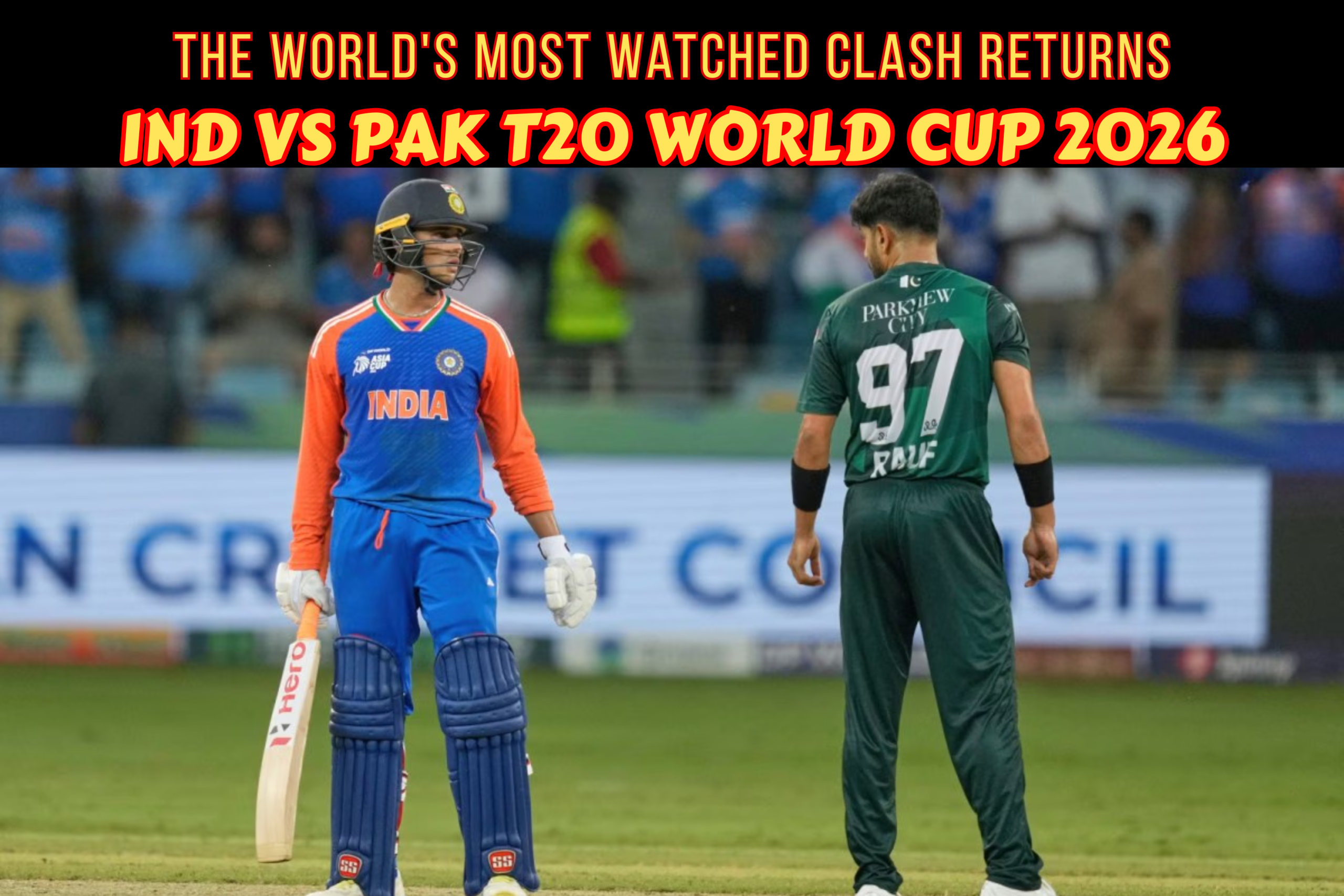
The India-Pakistan Cricket Clash, a mammoth Drama, and the World’s Most Watched Sporting Spectacle is set to unfold tomorrow, February 15, 2026, at the R. Premadasa International Stadium in Colombo, Sri Lanka. This Group A fixture of the ICC Men’s T20 World Cup 2026 (co-hosted by India and Sri Lanka) is Match 27, starting at 7:00 PM IST (6:30 PM local time in Colombo, or around 7:00 PM PKT for viewers in Pakistan).
In a subcontinent where cricket often mirrors national identity, this encounter stands apart. It routinely draws viewership estimates exceeding 500 million to over 1 billion cumulatively worldwide—figures that eclipse even the Super Bowl or Champions League finals in peak global reach. The 2019 World Cup India-Pakistan group match at Old Trafford holds a Guinness-recognized record of around 1 billion cumulative viewers (TV + digital). The 2011 World Cup final (India vs Sri Lanka) drew 558 million unique viewers, while India-Pakistan semi-finals have hit 495 million. With the recent boycott drama amplifying hype, this 2026 clash could push boundaries further, potentially becoming cricket’s most-viewed event ever amid streaming platforms like JioHotstar reporting massive concurrent spikes in recent high-stakes games.
Historical Roots of the Rivalry
The rivalry traces to the traumatic 1947 Partition, dividing British India amid mass migration and violence. Cricket, a colonial legacy, became one of the few arenas for competition post-independence.
Early Tests in the 1950s–1980s were intense but sporadic. The 1990s–2000s marked cricket diplomacy‘s peak: the 1999 Lahore peace process aligned with a series, while the 2004 “Friendship Series” symbolized thawing ties post-Kargil. The 2008 Mumbai attacks ended bilateral cricket, confining clashes to ICC/multi-nation events since. In T20 World Cups, India leads 7-1; overall across formats, Pakistan edges slightly (~88 wins to India’s ~80).
The Recent Escalation: From Diplomacy to Confrontation
Post-2013 bilateral freeze deepened after the May 2025 four-day armed conflict. The 2025 Asia Cup final (India win) featured no handshakes, on-field taunts, and a “handshake protocol” becoming political symbolism.
Into 2026, Bangladesh withdrew over India-hosted venue fears, prompting Pakistan’s February 1 boycott announcement. Global panic ensued—broadcasters and the ICC faced huge revenue risks. After urgent mediation (ICC backchannels, Sri Lankan President intervention, “friendly countries” pressure), Pakistan reversed: pragmatic economics (hundreds of millions per match) prevailed.
The fixture’s survival is a win for cricket. Neutral venue rules place Pakistan’s games in Sri Lanka under the hybrid model. Sold-out ~35,000 tickets and doubled Colombo hotel rates show the tourism windfall. Yet rain looms: forecasts predict 50–70% chance of thunderstorms, 30–31°C humidity—possible delays or shortened game, no reserve day for groups.
Why This Match Matters Geopolitically and Economically
It’s soft power weaponized. A win fuels national morale; a loss sparks debates. Captains Suryakumar Yadav (India) and Salman Ali Agha (Pakistan) stress “spirit of cricket,” but shadows linger.
Economically, one fixture generates massive ad/sponsorship revenue. Neutral venues highlight asymmetry, but multilateral events keep rivalry alive.
Team Analysis and Predictions
Pakistan (Salman Ali Agha c): Bowling depth (Shaheen Afridi, Naseem Shah), aggressive top order (Saim Ayub, Babar Azam). Questions: Babar form, spinner actions (e.g., Usman Tariq intrigue). Probable XI: Saim Ayub, Babar Azam, Salman Mirza, Salman Agha (c), Shadab Khan, Mohammad Nawaz, Sahibzada Farhan (wk), Faheem Ashraf, Shaheen, Naseem, Abrar Ahmed.
India (Suryakumar Yadav c): Explosive batting (watch Abhishek Sharma fitness concerns), strong spin (Kuldeep Yadav, Varun Chakaravarthy), death bowling (Jasprit Bumrah). Probable XI: Ishan Kishan (wk), Abhishek Sharma/Sanju Samson, Suryakumar (c), Tilak Varma, Hardik Pandya, Rinku Singh, Axar Patel, Shivam Dube, Kuldeep, Varun, Bumrah.
X-factors: Occasion pressure—India’s dominance vs Pakistan’s knockout pedigree. Premadasa pitch favors spin/early pace; dew aids chasers.
Broader Implications: Can Cricket Still Heal?
Cricket has long reflected bilateral relations—sometimes bridging divides, other times amplifying them. At its peak, it enabled genuine cricket diplomacy.
The 2004 “Friendship Series” exemplifies this: post-Kargil and Parliament attack, PM Vajpayee allowed India’s first full Pakistan tour in 15 years, instructing the team to “win hearts.” Thousands of Indian fans crossed borders amid warmth—taxis/shops refused payment, mutual flags painted, peaceful matches. It sparked LoC ceasefire and dialogue; 2005-07 tours continued goodwill, humanizing both sides.
Post-2008 Mumbai attacks, bilateral cricket halted. Diplomacy—once proactive (e.g., Zia-ul-Haq’s 1987 match visit)—turned transactional/weaponized: no-handshakes in 2025 Asia Cup, military gestures, 2025 conflict spillover.
The 2026 boycott threat showed cricket as proxy for grievances; reversal avoided disaster but exposed fragility—only multilateral events viable, with India’s commercial dominance vs Pakistan’s principled (yet pragmatic) stands.
Bilateral resumption seems distant amid frozen ties, security concerns, and priorities (India’s China focus, “strategic indifference” to Pakistan). Healing power has waned; it no longer reliably de-escalates but prevents total rupture in neutral settings.
Hope endures at the human level. Multilateral clashes sustain shared obsession—millions debate line-ups, share memes, respect stars like Kohli or Babar—preserving indirect dialogue.
Positive Note: Street-Level Reality in Lahore and Beyond
In Lahore, match day buzz is electric. Cafes, squares, streets fill with green-jersey fans, flags waving, giant screens drawing crowds. Chai stalls host debates, markets sell merch, families plan biryani-fueled watch parties. Social media buzzes with local screenings—turning evenings into communal joy, anxiety, catharsis regardless of result.
In India, blue dominates; offices pause for tosses, social media erupts. Amid friction, the ritual unites people, blending pride with opponent appreciation.
While state-level healing faded, cricket humanizes rivalry individually—offering space for millions to bond over sixes, wickets, heartbreak, proving passion outlasts diplomatic freezes.
Conclusion: Layers Beyond the Boundary
Tomorrow’s R. Premadasa clash is no ordinary game—it’s history replayed, politics looming, emotions raw, stakes sky-high. With potential viewership topping 500 million (rivaling past billion-cumulative peaks), two nuclear neighbors channel tensions into 20 overs of drama.
Remember: field boundaries don’t define people off it. Lahore fans cheering boundaries, Delhi families celebrating wickets—these express identity, not hatred. Cricket’s power reminds us of shared humanity amid division.
Enjoy responsibly, green or blue. Win or lose, the true victor is cricket’s unbreakable hold on two nations’ souls. In frozen times, this passionate, painful, profound rivalry endures.