(By Khalid Masood)
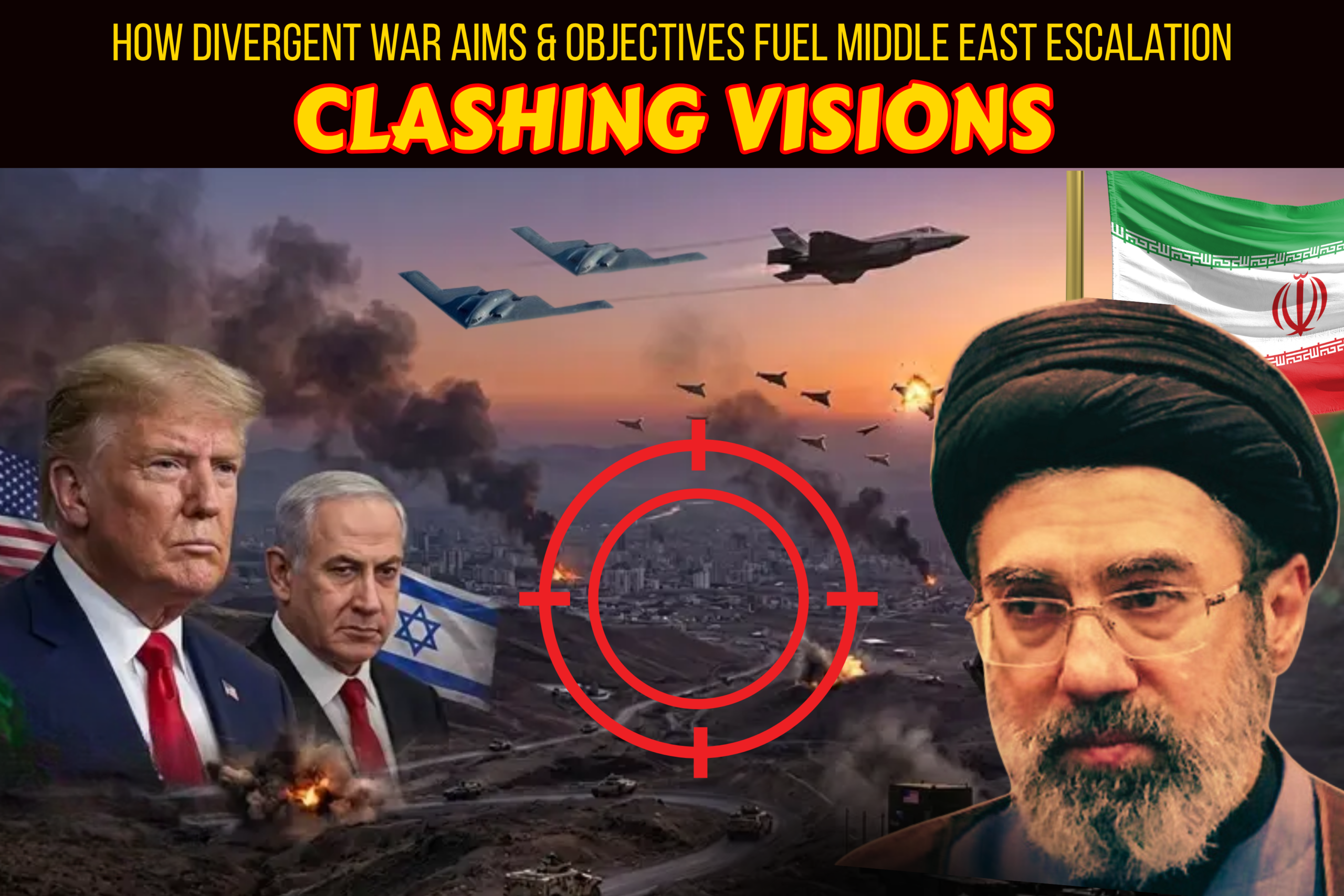
Deep inside the fortified national command centers of Washington, Jerusalem, and Tehran, the same maps glow on screens—but the strategies drawn upon them could not be more different. Missiles arc across the sky, proxy militias shift positions, and diplomats burn the midnight oil. Yet, despite sharing the same battlefield, the United States, Israel, and Iran are fighting three entirely different wars.
In Washington, the priority is global stability. In Jerusalem, it is existential survival. And in Tehran, it is regime endurance. What one nation views as a defensive measure, another sees as an act of war. As signals cross wires and red lines blur, the margin for error is vanishingly small.
For analysts scrambling to decipher the path forward, the core danger lies not in military capability, but in strategic intent. While all three capitals claim to seek security, their definitions of victory are fundamentally incompatible. This strategic disconnect is creating volatile friction points where a single miscalculation could ignite a contained conflict into a regional inferno.
The Strategic Disconnect
To understand the risk of escalation, one must first understand what victory looks like for each player. The goals are not merely different; in some cases, they are mutually exclusive.
The United States: Containment and Stability
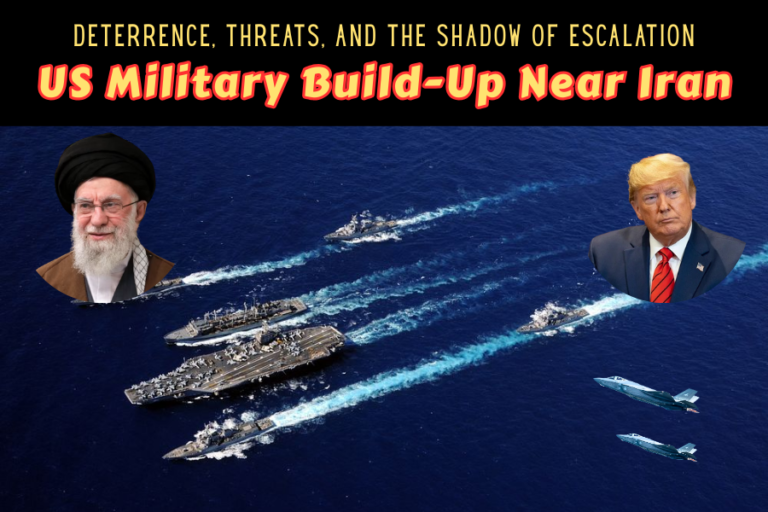
For the White House, the priority is managing the conflict without consuming it. U.S. officials have outlined a campaign focused on degradation rather than occupation. The core military objectives are clear: decimate Iran’s missile program, destroy nuclear enrichment infrastructure, and cripple the IRGC Navy’s ability to threaten shipping lanes.
Yet, Washington is walking a tightrope. While the Trump administration has described regime change in Tehran as a potential “bonus,” it is not a prerequisite for ending hostilities. The primary U.S. constraint is economic: stabilizing global oil markets remains a high priority. Reports indicate the White House has explicitly asked Israel to avoid targeting Iranian oil infrastructure without coordination, fearing a spike in energy prices that could ripple through the global economy.
Israel: Existential Restructuring
For Jerusalem, the calculus is existential. Israel’s declared objectives go beyond immediate security; they aim for a fundamental restructuring of the threat environment. On the Gaza front, the goal is the elimination of Hamas’s military capacity and governance. On the northern border, the aim is to degrade Hezbollah enough to allow displaced Israeli civilians to return home, pushing militant forces north of the Litani River.
Israeli strategists frame this as a “long game.” According to analysis from the BESA Center, Israel is prioritizing threat removal over immediate political settlements. The goal is to dismantle the “ring of fire”—Iran’s network of proxies—and restore Israel’s qualitative military edge. For Israel, there is no fixed timeline; victory is defined by safety, not a ceasefire clock.
Iran: Survival and Asymmetric Endurance
In Tehran, the war is framed as a defence of sovereignty and a quest for vengeance. Following the killing of Supreme Leader Ayatollah Ali Khamenei and senior IRGC officials in strikes last year, Iran’s immediate objective is retribution. However, its broader goal is regime survival.
Iran’s military strategy has shifted toward “asymmetric endurance.” Rather than meeting U.S. or Israeli firepower head-on, Tehran is hardening missile infrastructure into “missile cities” and dispersing command structures. The aim is to accept initial damage to preserve a second-strike capability. By coordinating large salvos of ballistic missiles with proxy actions, Iran hopes to stretch enemy air defences and exploit political constraints in Washington and Tel Aviv.
Points of Friction
Where these strategies overlap, there is tension. Where they diverge, there is danger.
The Nuclear Question
This remains the most volatile fault line. The U.S. and Israel demand a complete halt to enrichment and the dismantling of Iran’s nuclear program. For Iran, however, the right to enrichment is non-negotiable, viewed as a matter of national sovereignty. As long as this gap exists, any diplomatic off-ramp remains unstable.
Proxy Forces
Israel views groups like Hezbollah and Hamas as existential threats that must be eliminated. Iran views these same groups as strategic assets—its “Axis of Resistance”—necessary for projecting power beyond its borders. The U.S. sits in the middle: it wants to cut funding and arms flows to degrade these groups but fears that eliminating them entirely could create power vacuums or spark wider unrest.
Timeline and End State
Perhaps the most dangerous disconnect is time. The U.S. wants a contained campaign with an objectives-based exit. Israel is prepared for a long-term security restructuring with no fixed end date. Iran is betting on prolonged attrition, hoping to outlast Western political will. When one party wants a sprint, another wants a marathon, and the third wants a war of exhaustion, coordination becomes nearly impossible.
Escalation Scenarios
The misalignment of aims creates specific pathways to unintended war.
1. Miscalculation of Red Lines
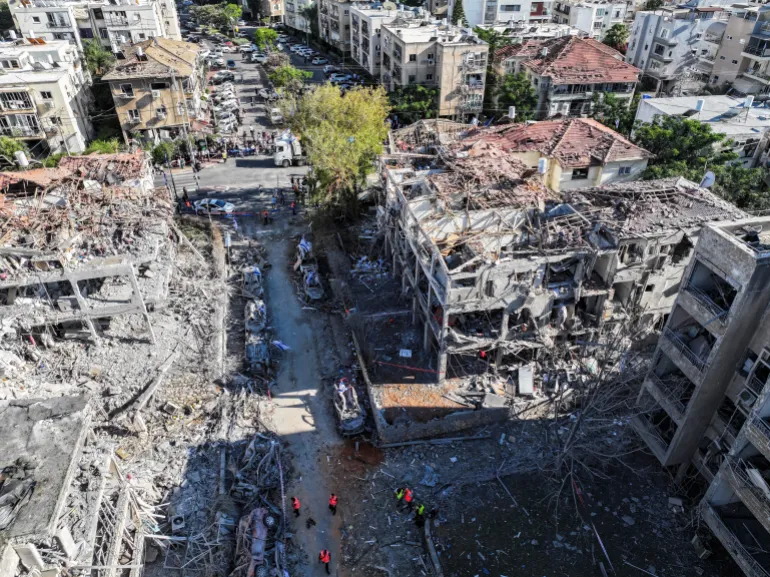
Because each side defines “victory” differently, they also define “escalation” differently. An action Israel views as necessary for border security (e.g., striking a command center in Beirut) might be viewed by Iran as a threshold crossing requiring a massive retaliatory salvo. Without shared definitions of red lines, the ladder of escalation is slippery.
2. Proxy Spin-Out
Iran’s strategy relies on coordinating proxy actions. However, groups like Hezbollah or Iraqi militias have their own local agendas. There is a risk that a proxy group could launch an attack that Tehran did not authorize, forcing Iran’s hand to respond to maintain credibility, thereby triggering a wider conflict that neither Tehran nor Washington wanted.
3. Economic Shock
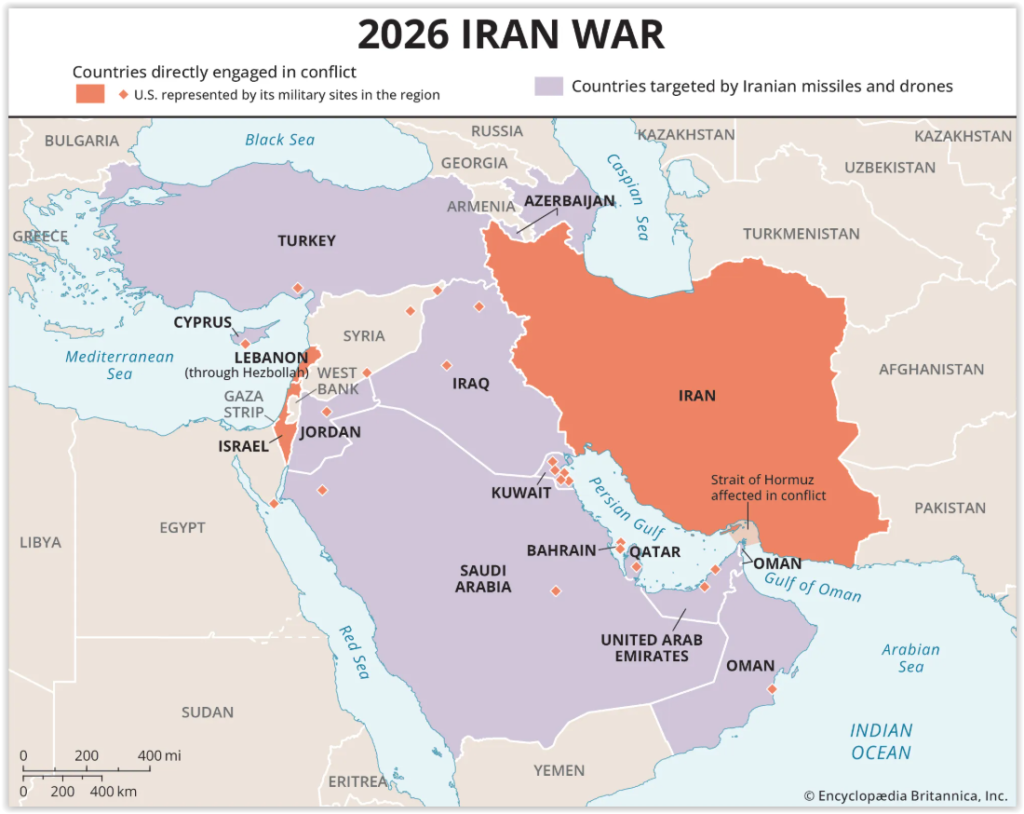
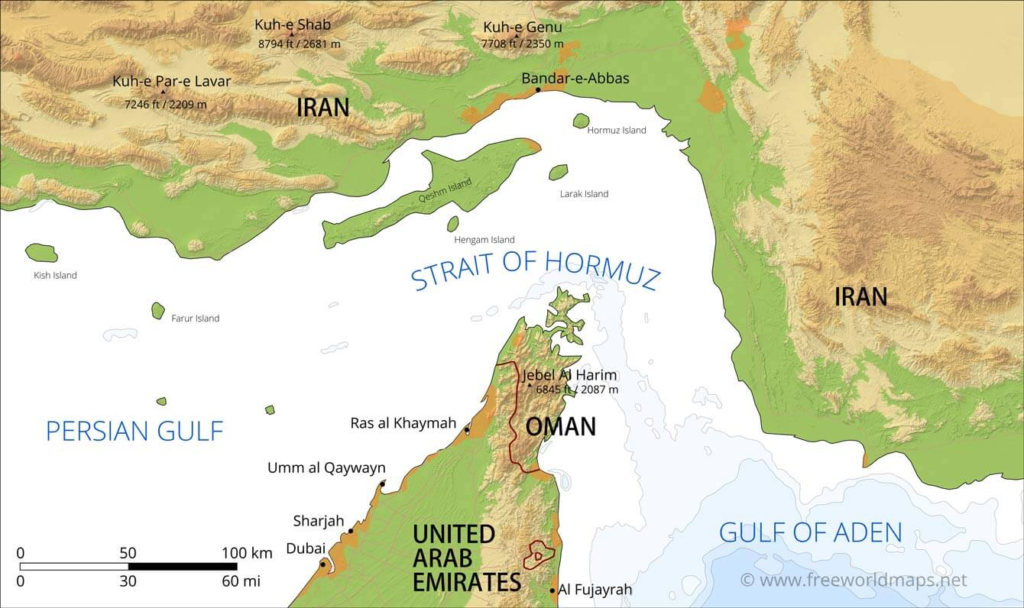
Iran has threatened the closure of the Strait of Hormuz to raise global stakes. If Iran feels its regime survival is truly at risk, it may move from defensive containment to offensive asymmetric posture, targeting oil infrastructure. This would force the U.S. to respond militarily to protect global markets, regardless of its desire for containment.
Diplomatic Off-Ramps
Is there a way out? Diplomatic channels remain nominally open, with Pakistan mediating indirect talks. However, core positions remain far apart.
Analysts suggest that sustainable de-escalation requires more than just ceasefires; it requires a reconciliation of strategic objectives—or at least a clear understanding of their incompatibility. Some policymakers are exploring a “grand bargain” approach: sanctions relief in exchange for verifiable nuclear constraints and curbed proxy activity. Yet, given the current heat of conflict and the domestic political pressures in all three capitals, trust is at an all-time low.
The Road Ahead
As the conflict enters its next phase, the risk is not necessarily that one side will achieve its goals, but that the clash of those goals will consume the region.
For the U.S., the challenge is balancing alliance support with global stability. For Israel, it is achieving security without permanent war. For Iran, it is surviving without collapsing into chaos.
Yet, a potential off-ramp is emerging in an unlikely quarter. Islamabad has quietly begun hosting backchannel talks, leveraging Pakistan’s unique position as a Muslim nuclear power with ties to both Washington and Tehran. Officials argue that only a regional actor can guarantee the security assurances needed for a lasting freeze, offering a neutral ground where red lines might be tested without public posturing.
Until these divergent visions converge—or until one side forces the other to capitulate—the Middle East remains poised on a knife’s edge. In a war where everyone is fighting for different reasons, the only certainty is uncertainty.