
(Ammar Tahir Masood)
Introduction
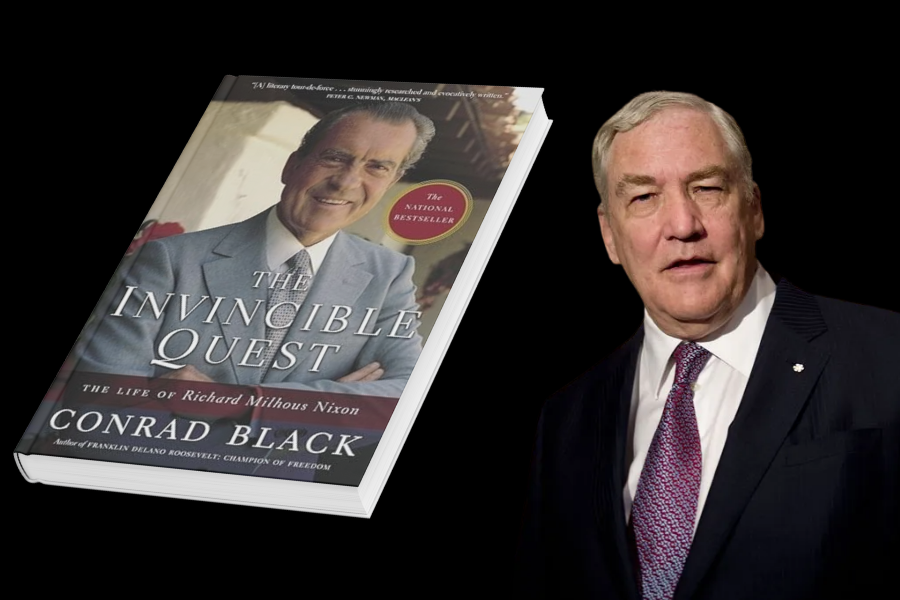
The Invincible Quest: The Life of Richard Milhous Nixon by Conrad Black is a monumental biography of one of America’s most polarizing presidents. Published in 2007, it traces Nixon’s life from 1913 to 1994, offering a detailed re-evaluation of his legacy. Specifically, Black argues that Nixon’s accomplishments outweigh his scandals. For instance, he highlights Nixon’s foreign policy triumphs. Consequently, the book challenges conventional narratives about “Tricky Dick.” This review examines its themes, strengths, and weaknesses. Moreover, it assesses its value for readers interested in political history.
Overview
Spanning 1,152 pages, The Invincible Quest is an exhaustive account of Nixon’s career. It begins with his Quaker upbringing in California and ends with his death. Black, a Canadian-British historian and former media mogul, draws on newly released tapes and interviews with Nixon’s aides. For example, he explores Nixon’s rise as Eisenhower’s vice president at age 39. Additionally, the book covers his 1960 election loss, 1968 comeback, and 1972 landslide victory. However, Watergate looms large, leading to Nixon’s 1974 resignation. Black’s thesis is clear: Nixon paid too high a price for Watergate and deserves recognition for his achievements.
Themes and Content
The central theme is Nixon’s resilience. Black portrays him as a self-assured, effective leader despite lacking charisma. For instance, Nixon’s foreign policy—opening relations with China and détente with the Soviet Union—is celebrated. Moreover, his domestic policies, like environmental reforms, receive praise. Black argues that Watergate was partly political retribution, not solely Nixon’s crimes. Specifically, he blames Nixon’s loyalty to subordinates and media bias.
Another theme is historical revisionism. Black challenges the view of Nixon as inherently corrupt. For example, he downplays Nixon’s role in the McCarthy era’s red-baiting, unlike Eisenhower or Truman. Additionally, the book critiques the media’s role in Nixon’s downfall. Black writes, “The left-wing elitist media were out to get Nixon.” Thus, it seeks to reframe Nixon as a victim of circumstance.
Strengths
The book’s greatest strength is its depth. Black’s research, including tapes and interviews, provides fresh insights. For instance, a Publishers Weekly review calls it “stunningly researched.” Moreover, Black’s prose is engaging, blending wit and clarity. A Goodreads reviewer praises his “astounding” vocabulary, noting its fluid style. Consequently, the book feels like a vivid history lesson.
Additionally, Black’s balanced approach stands out. He criticizes Nixon’s flaws, like emotional outbursts with the press. For example, he notes Nixon’s failure to fire Watergate culprits early. However, he highlights Nixon’s achievements, unlike many biographies. A National Post review lauds its “splendidly rounded portrait.” Thus, it appeals to readers seeking a nuanced view.
Weaknesses
However, the book’s length is a drawback. At over 1,100 pages, it feels overwhelming. For instance, a reviewer called it a “mammoth work” lacking new primary sources. Additionally, Black’s partisan tone alienates some readers. For example, he dismisses Kennedy as “unworthy” of the presidency without evidence. Similarly, he claims Johnson bugged Nixon’s 1968 campaign plane, lacking proof. Consequently, these assertions undermine credibility.
Moreover, Black’s sympathy for Nixon feels excessive. He rationalizes Nixon’s Vietnam strategy, suggesting more bombing was needed. A reviewer called this “a head-scratcher,” noting historians’ disagreement. Furthermore, his claim that John Dean instigated Watergate lacks substantiation. Thus, the book’s apologetic stance can feel biased.
Target Audience and Impact
The Invincible Quest is ideal for political history enthusiasts and Nixon scholars. Specifically, it suits readers who enjoy detailed biographies, like Black’s work on FDR. For instance, a ThriftBooks reviewer recommends it for those seeking non-psychological accounts. Additionally, it appeals to conservatives sympathetic to Nixon’s legacy. A Goodreads user noted its value as a “summer project” for history buffs.
The book has sparked debate, with a 3.7/5 rating on Goodreads. It contributes to Nixon’s historical rehabilitation, emphasizing his foreign policy. For example, a reviewer credits Black with showing Nixon’s environmental record. However, its partisan tone limits broader appeal. Nevertheless, it remains a significant addition to Nixon literature.
Comparison to Similar Works
Compared to Jonathan Aitken’s Nixon: A Life, Black’s book is more detailed but less neutral. For instance, Aitken avoids psychological speculation, while Black interjects opinions. Similarly, Robert Dallek’s Nixon and Kissinger focuses on foreign policy but critiques Nixon harshly. Black’s work stands out for its comprehensive scope and revisionist perspective, though it risks bias.
Final Verdict
The Invincible Quest is a compelling, if flawed, biography of Richard Nixon. Its meticulous research and engaging prose captivate readers. Moreover, it challenges stereotypes about Nixon’s presidency. However, its length, partisan tone, and questionable claims detract from its objectivity. For those seeking a deep dive into Nixon’s life, it’s a valuable read. Thus, it earns a strong, qualified recommendation.
Rating: 3.7/5
Recommendation: Ideal for political history buffs, Nixon scholars, and readers open to a revisionist view of a controversial president.




This review offers a thoughtful and well-balanced critique of Conrad Black’s ‘The Invincible Quest,’ effectively highlighting its strengths in depth and analysis while noting the challenging prose. It provides readers with clear insight into what to expect from the biography, making it a valuable guide for potential readers.