(By Khalid Masood)
Introduction: A Critical Escalation
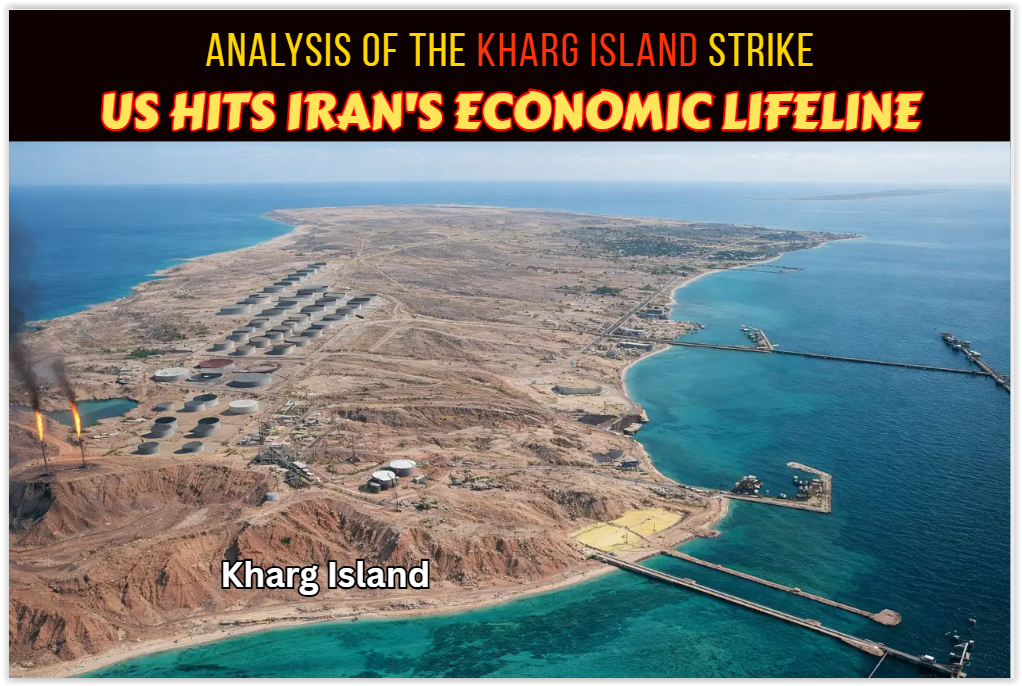
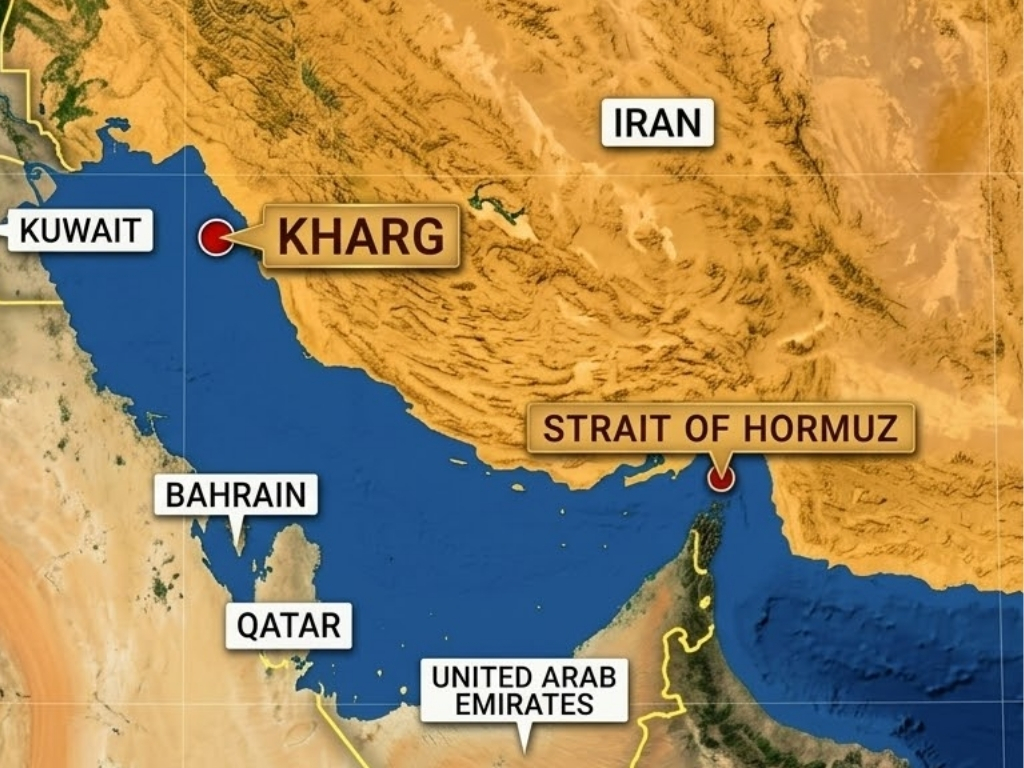
In a significant escalation of the ongoing conflict between the United States and Iran, American forces struck military targets on Kharg Island on the night of 13–14 March 2026, according to announcements from the Trump administration. This development, occurring on the fifteenth day of hostilities that commenced on 28 February 2026 with the killing of Supreme Leader Ali Khamenei, represents a notable intensification of military operations against the Islamic Republic.
President Trump stated that US forces had “obliterated” military installations on the island while deliberately sparing oil infrastructure, a distinction that has drawn considerable analytical attention. The strike targets what many experts describe as Iran’s economic lifeline—Kharg Island handles approximately 90 per cent of the country’s oil exports and serves as a critical node in global energy supply chains.
This article examines the verified facts surrounding the strike, analyses the strategic and economic significance of Kharg Island, evaluates competing interpretations of US objectives, and assesses potential trajectories for the conflict. In doing so, it seeks to provide readers with a rigorous, evidence-based understanding of this pivotal development, whilst acknowledging the inherent uncertainties that characterise rapidly evolving military situations.
What Happened: Verified Facts of the Strike
Timeline and Official Announcements
According to multiple international news sources, including the BBC, Al Jazeera, Bloomberg, and Reuters, United States military forces conducted strikes against targets on Kharg Island during the evening of Friday, 13 March, extending into early Saturday, 14 March 2026 (local Gulf time). President Trump announced the operation via official channels, characterising the strikes as targeting military installations whilst explicitly noting that oil infrastructure had not been engaged.
Table 1: Verified Information on the Kharg Island Strike
| Aspect | Details | Source |
|---|---|---|
| Date | 13–14 March 2026 | Multiple international media |
| Time | Evening/night (local time) | US administration statements |
| Location | Kharg Island, Persian Gulf | Geographic confirmation |
| Targets | Military installations (claimed) | Trump administration |
| Oil Infrastructure | Deliberately spared (claimed) | Presidential statement |
| Context | Day 15 of ongoing conflict | Timeline verification |
| Preceding Event | Killing of Khamenei (28 Feb) | Established fact |
Scope and Damage Assessment
The President’s characterisation of the strikes as having “obliterated” military targets suggests substantial force was employed. However, independent verification of specific damage remains pending. Iranian state media have acknowledged the strikes but have not yet provided detailed assessments of casualties or material losses. Reports indicate retaliatory actions continuing in Tehran and Baghdad, including smoke observed at the US Embassy in Iraq, though the full scope of these responses requires further confirmation.
Why Kharg Island Matters: Strategic and Economic Significance
Iran’s Economic Lifeline
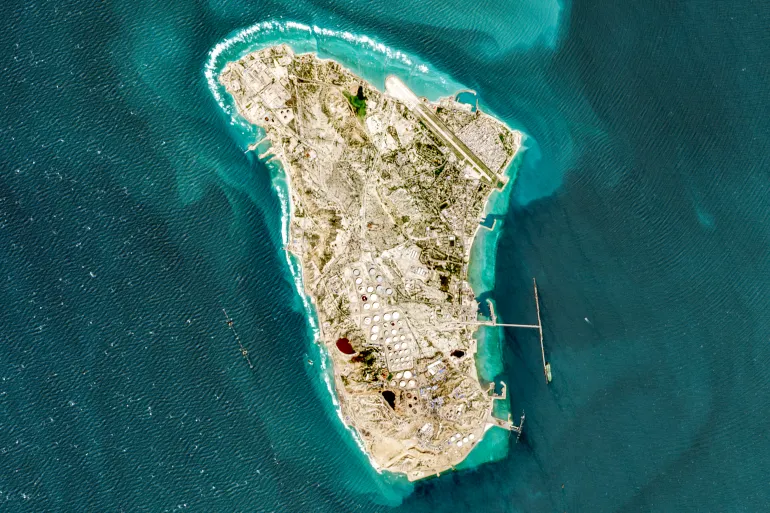
Kharg Island occupies a position of extraordinary importance in Iran’s economic architecture. The island, situated approximately 48 kilometres off Iran’s southern coast in the Persian Gulf, hosts the country’s principal oil export terminal. According to energy sector data and historical records, approximately 90 per cent of Iran’s crude oil exports transit through facilities on Kharg Island.
The infrastructure includes:
- Extensive crude oil storage tanks with capacity measured in millions of barrels
- Supertanker loading berths capable of accommodating very large crude carriers (VLCCs)
- Pipeline connections to mainland oil fields
- Naval defence installations
This concentration of export capacity has led energy analysts and geopolitical observers to characterise Kharg as Iran’s “oil export lifeline”—a designation that underscores both its economic centrality and its vulnerability.
Table 2: Kharg Island’s Oil Export Infrastructure
| Infrastructure Type | Capacity/Details | Strategic Significance |
|---|---|---|
| Export Share | ~90% of Iranian crude | Critical to national revenue |
| Storage Capacity | Millions of barrels | Strategic reserve capability |
| Loading Facilities | Multiple VLCC berths | Global export capability |
| Pipeline Connections | Mainland oil fields | Integrated supply network |
| Daily Throughput | 1.5–2 million barrels (pre-war) | Major global supplier |
Global Energy Market Implications
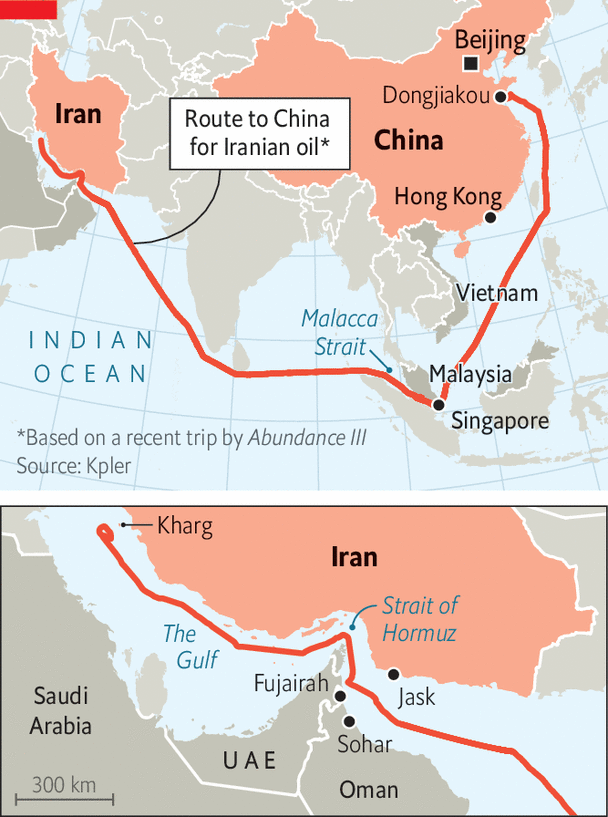
The significance of Kharg Island extends well beyond Iran’s national boundaries. The Persian Gulf region collectively accounts for approximately 21 per cent of global petroleum liquids production and an even larger share of seaborne oil trade. Any disruption to Kharg’s operations carries immediate implications for international energy markets.
Historical precedent demonstrates this sensitivity vividly. During the so-called “Tanker War” phase of the Iran–Iraq conflict (1984–1988), Iraqi attacks on Kharg Island and Persian Gulf shipping triggered substantial oil price volatility and ultimately prompted international naval intervention to protect commercial maritime traffic.
Dr Sarah Mitchell, energy security analyst at Chatham House, observes: “Kharg Island functions as a critical chokepoint in global energy supply chains. Even the perception of risk to its operations can trigger measurable market responses, as we witnessed during previous Gulf conflicts.”
Military Strategic Value
Beyond its economic function, Kharg Island possesses considerable military significance. The island hosts:
- Iranian naval surveillance systems monitoring Persian Gulf maritime traffic
- Coastal defence installations including anti-ship missile systems
- Command and control facilities for Gulf operations
- Logistical support infrastructure for naval forces
These capabilities enable Iran to project power within the Persian Gulf and monitor the movements of both commercial and military vessels transiting this critical waterway.
China’s Strategic Interest
The People’s Republic of China, as Iran’s largest oil purchaser, maintains substantial economic interests in Kharg Island’s continued operation. Chinese refineries have historically processed significant volumes of Iranian crude, often under arrangements that circumvent international sanctions. Any prolonged disruption to Iranian oil exports would necessitate Chinese efforts to secure alternative supplies, potentially at higher costs and with greater geopolitical complications.
The Strategic Calculus: Why Strike Now?
Competing Analytical Perspectives
The decision to strike Kharg Island, whilst deliberately avoiding oil infrastructure, admits of multiple interpretations. Scholarly analysis and expert commentary suggest several plausible objectives, each carrying distinct implications for the conflict’s trajectory.
Perspective One: Coercive Diplomacy
One school of thought posits that the strikes constitute an instrument of coercive pressure designed to compel Iranian concessions without triggering catastrophic economic consequences. By demonstrating the capability to strike Iran’s most sensitive locations whilst exercising restraint regarding oil facilities, the United States may be signalling both resolve and proportionality.
Professor Robert Pape, whose analysis featured prominently in recent public discourse, has articulated concerns regarding what he terms the “escalation trap”—wherein tactical military successes generate political complications demanding further military action. In a recent interview, Professor Pape cautioned: “Bombs do not merely hit targets; they alter political calculations. We must ensure that tactical victories serve strategic objectives rather than undermining them.”
From this perspective, the Kharg strikes might represent an attempt to pressure Tehran towards negotiations whilst preserving an off-ramp that avoids global economic disruption.
Perspective Two: Military Necessity
Alternative analyses emphasise operational imperatives. Proponents of this view argue that Iranian military installations on Kharg Island posed direct threats to US naval forces operating in the Persian Gulf. Coastal defence systems, surveillance capabilities, and command infrastructure could facilitate Iranian anti-ship missile attacks or coordinate asymmetric responses against commercial and military vessels.
A senior defence analyst at the International Institute for Strategic Studies (IISS), speaking on condition of anonymity, noted: “From a purely military standpoint, degrading Iranian command and control capabilities on Kharg reduces the threat to coalition forces. The question is whether this tactical advantage translates into strategic progress.”
Perspective Three: Domestic Political Considerations
A third interpretive framework emphasises domestic political imperatives. The Trump administration, having initiated hostilities with the 28 February strikes that killed Supreme Leader Khamenei, faces pressure to demonstrate decisive progress towards defined objectives. Striking Kharg Island—whilst exercising notable restraint—permits the administration to claim significant military achievement whilst mitigating accusations of recklessness regarding global economic stability.
The Restraint Question: Why Spare Oil Infrastructure?
Perhaps the most analytically intriguing aspect of the Kharg strikes concerns the deliberate avoidance of oil infrastructure. This restraint admits of several explanations:
Economic Considerations: Disrupting Iranian oil exports would likely trigger substantial increases in global petroleum prices, potentially exceeding US$150 per barrel according to some market analyses. Such price spikes would impose economic costs not merely upon Iran but upon the United States, its allies, and the global economy more broadly.
Diplomatic Flexibility: Preserving oil infrastructure maintains the possibility of negotiated settlement. Once oil facilities are destroyed, reconstruction requires years and billions of dollars; temporary closure preserves options.
Great Power Management: China, as Iran’s principal oil customer, might view attacks on oil infrastructure as sufficiently threatening to warrant more assertive responses, potentially including diplomatic pressure or even military posturing. By sparing oil facilities, the United States may be seeking to limit Chinese incentives for intervention.
Environmental Concerns: Large-scale attacks on oil storage and processing infrastructure risk catastrophic environmental damage, including massive oil spills in the ecologically sensitive Persian Gulf.
Table 3: Analytical Perspectives on US Objectives
| Perspective | Primary Objective | Mechanism | Risks |
|---|---|---|---|
| Coercive Diplomacy | Compel Iranian negotiations | Demonstrate capability + show restraint | May be perceived as weakness |
| Military Necessity | Degrade Iranian threats | Eliminate command/control capabilities | Escalation without political progress |
| Domestic Politics | Demonstrate resolve | Visible military success | May constrain diplomatic options |
| Economic Pressure | Cripple Iranian revenue | Threaten without destroying oil | Global market disruption |
Immediate Consequences: What We Are Observing
Iranian Responses
Preliminary reports indicate Iranian retaliatory actions, though the full scope and effectiveness of these responses remain subject to verification. Smoke observed at the US Embassy in Baghdad suggests proxy or direct Iranian attacks against American diplomatic facilities in Iraq. Iranian state media have issued statements condemning the strikes and vowing responses, though specific operational details have not been publicly disclosed.
Military analysts anticipate several potential Iranian response mechanisms:
- Direct Missile Attacks: Iran possesses substantial ballistic and cruise missile inventories capable of striking US bases throughout the region
- Proxy Activation: Lebanese Hezbollah, Iraqi militia groups, and Yemeni Houthi forces could initiate attacks against US or allied targets
- Maritime Disruption: Iranian naval forces could attempt to interdict commercial shipping or mine critical waterways
- Asymmetric Responses: Cyber attacks, terrorism, or other indirect methods might be employed
Oil Market Reactions
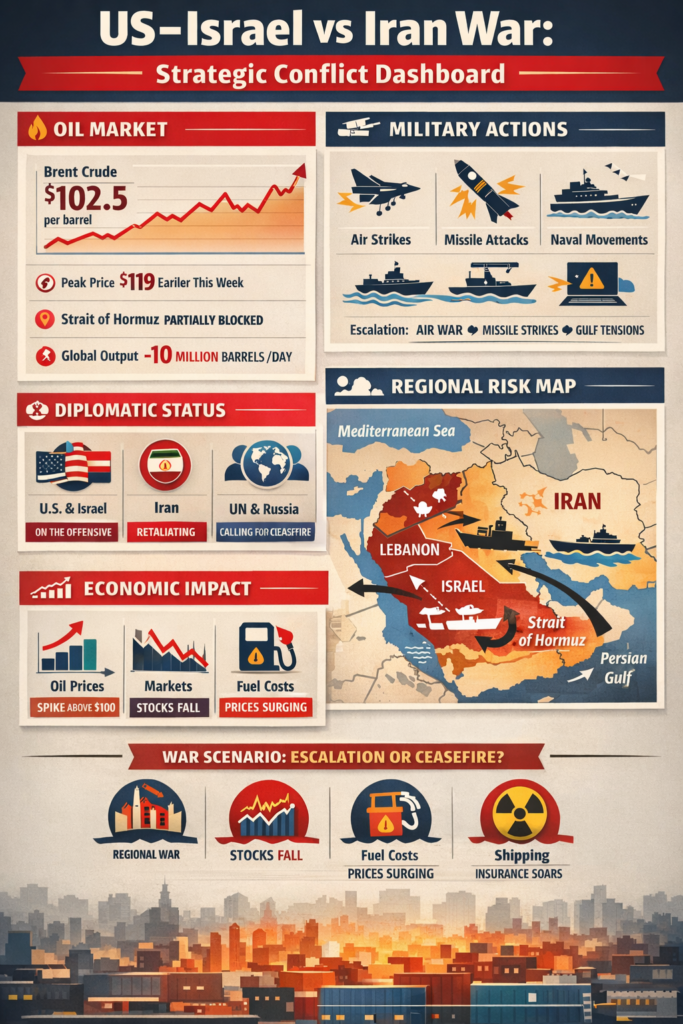
Bloomberg’s characterisation of the strikes as “a worry for oil markets” reflects immediate concerns regarding supply security. Whilst oil infrastructure was reportedly spared, the mere fact of strikes on Kharg Island introduces risk premiums into petroleum pricing.
Anticipated market dynamics include:
- Price Volatility: Brent crude and West Texas Intermediate (WTI) benchmarks likely to experience elevated volatility
- Insurance Premiums: Maritime insurance rates for Persian Gulf transits expected to increase substantially
- Strategic Reserves: Consumer nations may consider releasing petroleum from strategic stockpiles to stabilise markets
- Supply Diversification: Importers likely to accelerate efforts to secure alternative supply sources
Table 4: Potential Economic Impacts
| Indicator | Current Status | Projected Impact | Timeline |
|---|---|---|---|
| Brent Crude Price | Elevated (pre-strike) | Further increases likely | Immediate–short term |
| Maritime Insurance | Rising | Substantial increases | Immediate |
| Iranian Export Revenue | Reduced (war conditions) | Further decline possible | Short–medium term |
| Global Growth Forecasts | Under pressure | Downward revision risk | Medium term |
Regional Security Implications
Gulf Arab states, particularly Saudi Arabia and the United Arab Emirates, face heightened security concerns. These nations possess critical oil infrastructure that proved vulnerable to Iranian attacks in September 2019, when drone and missile strikes temporarily disabled approximately 50 per cent of Saudi Arabia’s oil production capacity.
The current escalation raises several regional security questions:
- Will Gulf states permit use of their territory for US operations?
- Might Iran target Gulf oil infrastructure to demonstrate resolve?
- How will regional publics respond to potential economic disruption?
- Can Gulf air defences withstand sustained Iranian missile attacks?
International Diplomatic Responses
The international community’s reaction to the Kharg strikes remains developing. Key diplomatic dynamics include:
United Nations Security Council: Emergency sessions may be convened, though veto-wielding members (United States, Russia, China) hold divergent positions that likely preclude decisive action.
European Powers: The United Kingdom, France, and Germany face difficult positioning, balancing alliance obligations to the United States against concerns regarding regional stability and energy security.
China and Russia: Both nations have criticised US military action whilst stopping short of direct intervention. Their diplomatic responses will merit close observation, particularly regarding whether they facilitate or obstruct potential negotiations.
Regional Powers: Turkey, Israel, and Gulf states each maintain distinct interests that will shape their responses. Israel likely views Iranian weakening favourably, whilst Turkey and Gulf states prioritise regional stability.
Historical Context: Kharg Island in Wartime
The Iran–Iraq War Precedent (1980–1988)
Kharg Island’s current vulnerability is not without historical precedent. During the Iran–Iraq War, particularly during the “Tanker War” phase (1984–1988), Iraqi forces repeatedly targeted the island in efforts to cripple Iranian oil exports and thereby deprive Tehran of revenue necessary to sustain the war effort.
Historical patterns include:
- Iraqi Air Force conducted numerous bombing raids against Kharg’s oil infrastructure
- Iran implemented repair and dispersal strategies to maintain export capability
- International naval forces eventually intervened to protect commercial shipping
- Despite substantial damage, Iran maintained some export capacity throughout the conflict
Dr James Morrison, historian of Middle East conflicts at Oxford University, notes: “The Iraqis learned that striking Kharg, whilst economically damaging, did not produce decisive military results. Iran adapted, dispersed capacity, and continued fighting. The question today is whether different capabilities—precision munitions, advanced surveillance—alter this historical lesson.”
Comparative Analysis: Then and Now
Table 5: Kharg Island—1980s versus 2026
| Factor | Iran–Iraq War (1980s) | Current Conflict (2026) |
|---|---|---|
| Attacker | Iraq (regional adversary) | United States (global superpower) |
| Technology | Conventional bombing | Precision-guided munitions |
| Global Integration | Limited oil market interdependence | Highly integrated global markets |
| International Response | Eventual naval intervention | Uncertain; great power divisions |
| Iranian Capacity | Dispersed some operations | Concentrated on Kharg |
| Economic Stakes | Regional conflict | Global economic implications |
Lessons from History
Historical analysis suggests several cautionary observations:
- Resilience: Iran has historically demonstrated capacity to adapt to attacks on Kharg Island
- Escalation Risk: Strikes on the island have historically triggered broader conflict expansion
- Limited Decisiveness: Damage to Kharg has not historically produced war-ending effects
- Internationalisation: Persian Gulf conflicts tend to draw in external powers
Whether advanced military technology and altered geopolitical circumstances render these historical lessons less applicable remains a subject of legitimate scholarly debate.
Scenarios: What Could Happen Next?
Analytical Framework
Forecasting conflict trajectories entails inherent uncertainty. Nevertheless, systematic scenario analysis can assist in understanding plausible developments and their respective probabilities. The following scenarios synthesise expert assessments, historical precedent, and current observable indicators.
Scenario One: Controlled Escalation (Probability: Moderate)
In this scenario, the United States continues limited strikes against Iranian military targets whilst avoiding oil infrastructure and population centres. Iran responds with measured attacks against US regional bases and allied facilities, carefully calibrating responses to avoid triggering overwhelming American retaliation.
Characteristics:
- Conflict continues at current or slightly elevated intensity
- Oil prices remain elevated but do not spike catastrophically
- Diplomatic channels remain open, if inactive
- Regional states manage to avoid direct involvement
- Conflict becomes protracted, measured in months rather than weeks
Indicators to Monitor:
- Frequency and scale of US strikes
- Iranian targeting choices (military versus civilian/economic)
- Diplomatic activity (back-channel communications, third-party mediation)
Scenario Two: Major Escalation (Probability: Low–Moderate)
This scenario envisions a significant intensification wherein Iran responds to Kharg strikes by attacking Gulf oil infrastructure or attempting to close the Strait of Hormuz. The United States retaliates against Iranian oil facilities, triggering substantial global economic disruption.
Characteristics:
- Brent crude exceeds US$150–200 per barrel
- Strait of Hormuz experiences intermittent closure
- Global recession risk materialises
- China and Russia increase diplomatic pressure, potentially providing material support to Iran
- Regional states drawn more directly into conflict
Indicators to Monitor:
- Iranian statements regarding Hormuz closure
- Attacks on Saudi/UAE oil infrastructure
- Chinese/Russian diplomatic or military posturing
- Strategic Petroleum Reserve releases
Scenario Three: Diplomatic Off-Ramp (Probability: Low)
In this scenario, the Kharg strikes demonstrate sufficient US resolve and capability to persuade Iranian leadership that continued resistance entails unacceptable costs. Back-channel negotiations intensify, potentially facilitated by Oman, Switzerland, or other neutral intermediaries.
Characteristics:
- Ceasefire or de-escalation agreement within weeks
- Verification mechanisms negotiated
- Sanctions relief discussed in exchange for nuclear constraints
- Implementation challenges substantial given trust deficits
Indicators to Monitor:
- Reports of secret negotiations
- Moderating rhetoric from Iranian leadership
- US statements regarding diplomatic objectives
- Third-party mediation efforts
Scenario Four: Protracted Conflict (Probability: Moderate–High)
This scenario anticipates neither decisive military victory nor diplomatic breakthrough. Instead, the conflict settles into a pattern of intermittent violence, economic warfare, and regional instability extending over many months or longer.
Characteristics:
- Low-to-medium intensity conflict continues
- Iranian nuclear programme proceeds covertly
- Regional proxy conflicts intensify
- Economic sanctions and oil market manipulation persist
- No clear endpoint visible
Indicators to Monitor:
- Conflict duration beyond initial expectations
- Absence of decisive military or diplomatic developments
- Growing domestic political pressures in involved nations
Table 6: Scenario Comparison
| Scenario | Probability | Duration | Oil Price Impact | Regional Stability | Diplomatic Activity |
|---|---|---|---|---|---|
| Controlled Escalation | Moderate | Months | Elevated (+20–40%) | Strained but managed | Limited |
| Major Escalation | Low–Moderate | Weeks–months | Severe (+100–200%) | Significantly degraded | Intense crisis diplomacy |
| Diplomatic Off-Ramp | Low | Weeks | Moderate decline | Gradual improvement | Intense negotiations |
| Protracted Conflict | Moderate–High | Many months+ | Persistently elevated | Chronically unstable | Sporadic, ineffective |
Key Indicators to Monitor
Military Indicators
- Iranian Missile Attacks: Frequency, scale, and targeting of ballistic and cruise missile strikes
- US Naval Movements: Carrier strike group positioning, amphibious readiness group deployments
- Proxy Activity: Hezbollah, Iraqi militia, and Houthi operational tempo
- Air Defence Activations: Iranian and Gulf state air defence system employment
Economic Indicators
- Oil Prices: Brent crude and WTI benchmark movements
- Strait of Hormuz Traffic: Commercial shipping transit rates and insurance premiums
- Iranian Export Volumes: Estimated oil shipments despite conflict
- Currency Markets: Iranian rial, regional currency stability
Diplomatic Indicators
- UN Security Council: Emergency sessions, draft resolutions, veto patterns
- Chinese/Russian Statements: Diplomatic positioning, potential mediation offers
- European Initiatives: E3 (UK, France, Germany) diplomatic activity
- Regional Mediation: Omani, Qatari, or other Gulf state facilitation efforts
Domestic Political Indicators
- Iranian Public Response: Protests versus rally-around-flag dynamics
- US Political Support: Congressional positions, public opinion trends
- Gulf State Public Opinion: Popular attitudes towards conflict and economic disruption
Conclusion: A Critical Juncture
The United States’ strike against military targets on Kharg Island represents a pivotal moment in the ongoing conflict with Iran. By engaging what many analysts characterise as Iran’s economic lifeline whilst deliberately avoiding oil infrastructure, the United States has signalled both serious intent and notable restraint—a combination that admits of multiple interpretations and carries uncertain implications.
This analysis has examined verified facts surrounding the strike, evaluated the strategic and economic significance of Kharg Island, explored competing analytical frameworks for understanding US objectives, assessed immediate consequences, situated current events within historical context, and outlined plausible scenarios for future developments. Throughout, emphasis has been placed upon evidence-based analysis whilst acknowledging the inherent uncertainties that characterise rapidly evolving military situations.
Several critical observations emerge from this examination:
First, Kharg Island’s significance extends far beyond its military value. As the conduit for approximately 90 per cent of Iranian oil exports, the island functions as a critical node in both Iran’s national economy and global energy supply chains. Strikes against it carry implications that reverberate well beyond the immediate battlefield.
Second, the deliberate avoidance of oil infrastructure suggests either calculated restraint designed to preserve diplomatic options and limit global economic disruption, or concern regarding unintended consequences including Chinese intervention and environmental catastrophe. Discerning which interpretation proves accurate will require observation of subsequent US actions.
Third, historical precedent from the Iran–Iraq War suggests caution regarding expectations of decisive results. Iran has previously demonstrated resilience in the face of attacks on Kharg, adapting operations and maintaining some export capability despite substantial damage. Whether advanced military technology and altered geopolitical circumstances render this historical lesson less applicable remains uncertain.
Fourth, the coming 48 to 72 hours will likely prove critical in determining the conflict’s trajectory. Iranian responses—whether measured or escalatory—will significantly shape subsequent US decisions and the conflict’s overall direction.
Finally, in an information environment characterised by rapid dissemination of unverified claims and competing narratives, the importance of rigorous source verification and analytical discipline cannot be overstated. Readers are encouraged to monitor verified indicators rather than speculative assertions, and to recognise that initial reports from conflict zones frequently prove incomplete or inaccurate.
The Kharg Island strike constitutes neither inevitable prelude to all-out war nor guaranteed pathway to negotiated settlement. Rather, it represents a significant development whose ultimate significance will be determined by decisions yet to be made in capitals across the region and beyond. In this fluid and dangerous situation, informed scrutiny grounded in evidence rather than speculation serves not merely academic interests but the broader public good.