(By Khalid Masood)
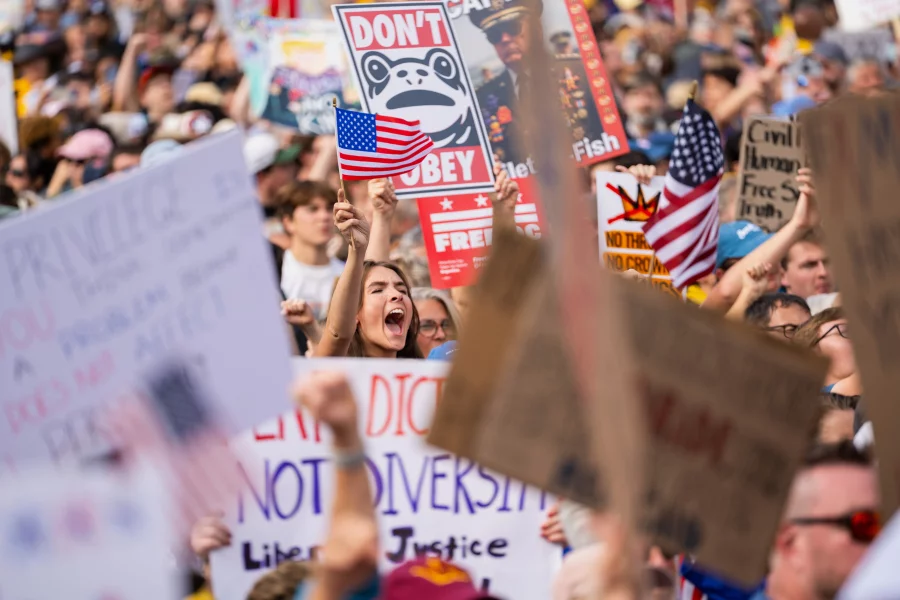
As of January 19, 2026—the eve of what organizers hope will become one of the most disruptive days of civic action in recent U.S. history—tens of thousands have already pledged to participate in the Free America Walkout scheduled for tomorrow, January 20. Coordinated primarily by the revitalized Women’s March in alliance with the decentralized 50501 movement (“50 protests in 50 states, one movement”), along with groups such as FEMINIST, Indivisible, and various labor and community organizations, the action calls for Americans to walk out of workplaces, schools, and everyday commerce precisely at 2 p.m. local time.
This timed withdrawal of labor, participation, and consent is framed explicitly as a refusal to cooperate with what the organizers describe as an escalating fascist threat under President Donald Trump’s second administration. With over 500 documented events planned across all 50 states (and some virtual or international solidarity actions), the walkout arrives exactly one year after Trump’s second inauguration on January 20, 2025. It builds on a year of escalating street-level resistance, from massive “No Kings” rallies to targeted actions against immigration enforcement, and represents a strategic shift toward economic noncooperation as a tool to challenge perceived authoritarian consolidation.
The stakes, as articulated by Women’s March Executive Director Rachel O’Leary Carmona, are clear: “Authoritarianism runs on our obedience, and we’re withdrawing it. We walk out because a free America is the only America worth calling great.” This piece examines the walkout’s origins, its place within the broader resistance landscape, and its potential implications for American democracy amid deepening internal divisions.
Historical Context: The Build-Up of Resistance in Trump’s Second Term
The roots of the Free America Walkout trace back to the immediate aftermath of Trump’s January 20, 2025, inauguration. Within days, the administration implemented aggressive immigration executive actions, including high-profile ICE raids in cities like Atlanta, Boston, New York, and Philadelphia. These operations detained hundreds in initial sweeps, often sparking local outrage over warrantless arrests, family separations, and alleged violations of sensitive-location policies (e.g., schools and churches). By February 2025, reports documented over 700 immigration-related demonstrations nationwide, a sharp rise from prior years.
The 50501 movement emerged early as a key grassroots engine. Born on Reddit’s r/50501 subreddit with the simple premise of “50 protests in 50 states on 1 day,” it rapidly decentralized into a nationwide coordination network. Initial actions in February and March focused on rapid-response opposition to deportation surges, but the movement gained explosive momentum with the No Kings protests.
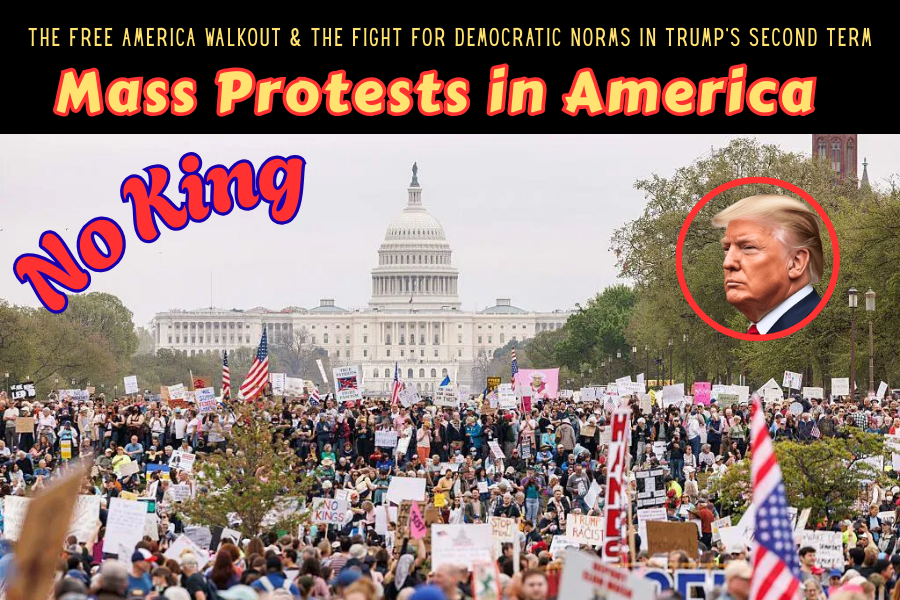
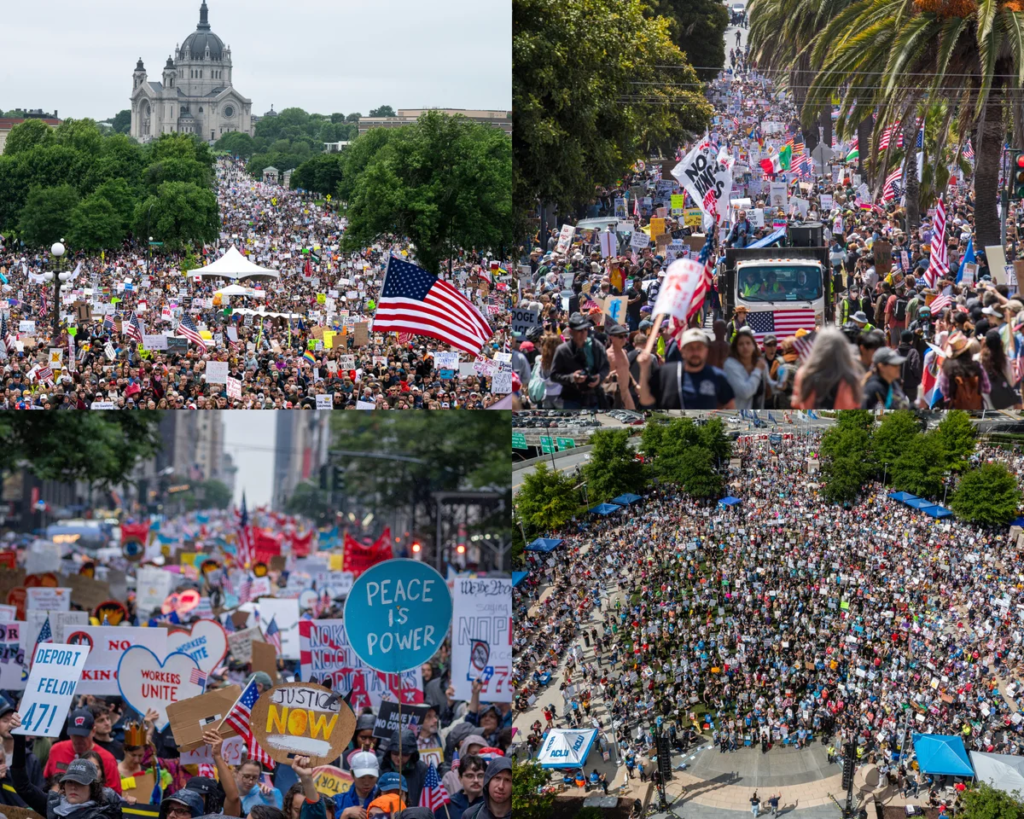
The first round on June 14, 2025—coinciding with Trump’s birthday and a large U.S. Army anniversary parade in Washington, D.C.—drew organizer estimates of 4–6 million participants across more than 2,100 locations. Co-sponsored by Indivisible, MoveOn, the ACLU, and 50501 partners, these rallies rejected what protesters called “king-like” authoritarianism, billionaire influence in government, and militarized displays of power. Turnout was massive in both blue strongholds (e.g., Philadelphia flagship events) and red-leaning areas, demonstrating geographic breadth.
A second, even larger wave hit on October 18, 2025, with nearly 7 million people at over 2,700 sites nationwide and some international solidarity. Organizers hailed it as potentially the largest single-day protest in U.S. history. Demands centered on rejecting executive overreach, protecting immigrant communities, defending democratic checks, and opposing perceived corruption.
Throughout 2025, flashpoints intensified. Immigration enforcement escalated dramatically: ICE detention facilities increased by 91% by late 2025, National Guard deployments occurred in cities like Los Angeles amid raid-related unrest, and tragic incidents—like the January 7, 2026, fatal shooting of Renee Nicole Good (also reported as Renee Macklin Good) during an ICE encounter in Minneapolis—galvanized outrage. Protests in Minneapolis turned volatile, with reports of tear gas, arrests, and community blockades of ICE vehicles. Similar surges targeted California, Chicago, and other hubs, fueling accusations of militarized overreach.
By late 2025, resistance evolved beyond marches. Monthly decentralized actions, May Day labor-immigrant solidarity events, and “Good Trouble Lives On” campaigns built infrastructure. The walkout idea crystallized as a logical escalation: shifting from symbolic presence to tangible economic disruption on the symbolically loaded inauguration anniversary.
The Free America Walkout: Origins, Tactics, and Framing
The Women’s March—famous for the 2017 record-breaking mobilization—has reemerged as the primary coordinator for January 20, 2026. Partnering tightly with 50501, the group launched the campaign via freeameri.ca, womensmarch.com, and action.womensmarch.com. Participants pledge online, access host toolkits, view event calendars (over 500 listed, with more self-organized), and join Q&A sessions for logistics.
Core tactics emphasize nonviolent, timed noncooperation at 2 p.m. local time:
- Primary action: Walk out of work, school, or commerce; withhold labor and spending.
- Alternatives for those unable: Freeze personal/business spending all day, host mutual aid gatherings, organize community vigils, public service actions, or neighborhood support networks.
- Event formats: Rallies at city halls, courthouses, federal buildings, and state capitols; school walkouts; marches to congressional offices (some tied to impeachment advocacy); decentralized neighborhood meetups.
Framing is direct and urgent: “Walk out on fascism. Walk toward a Free America.” Organizers reject raids, family separations, mass surveillance, troop occupations in cities, attacks on marginalized groups (including gender-affirming care restrictions), and the normalization of fear as tools of control. Demands include halting authoritarian violence against immigrants and workers, defending civil liberties, and reclaiming a society of inclusion where “everybody eats, everyone belongs.”
Logistics prioritize safety and accessibility: nonviolent guidelines, de-escalation training, mutual aid emphasis, and accommodations for vulnerable participants (e.g., remote solidarity). Some actions link to “Walk In for Impeachment” guides urging visits to congressional offices.
Corporate endorsements, like Ben & Jerry’s public call to protect First Amendment rights, add visibility, while labor contingents (e.g., SEIU, teachers’ unions) signal potential broader economic impact.
Broader Themes in US Internal Dynamics
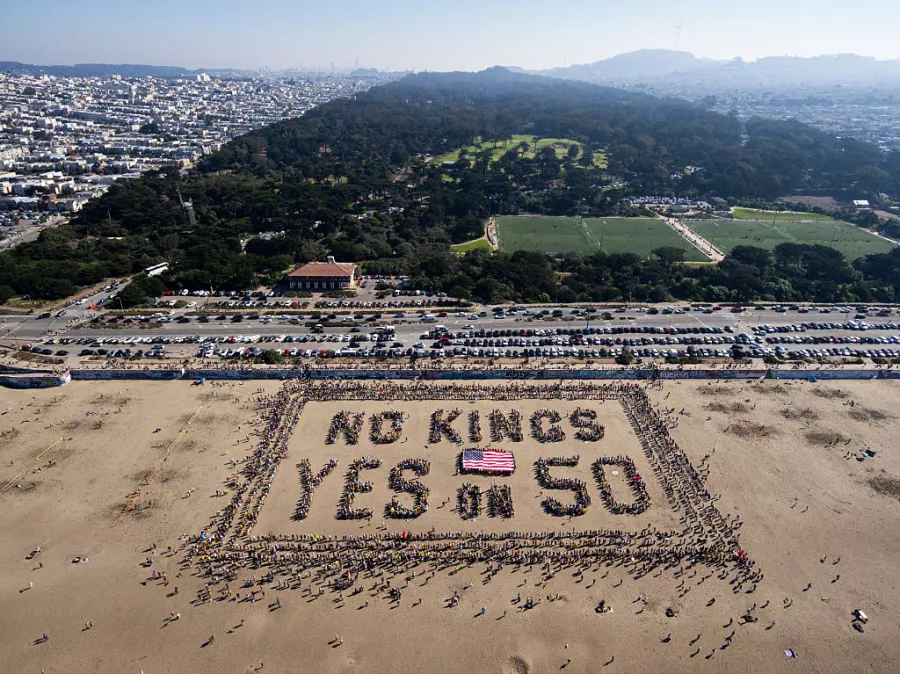
Civic Engagement and Grassroots Resilience The walkout revives classic nonviolent traditions—Montgomery bus boycott-style economic leverage, anti-Vietnam War campus strikes—while harnessing digital decentralization (Reddit birth, Mobilize.us tools, social media virality). Its reach into small towns and red-leaning counties underscores widespread discontent when formal institutions (courts, Congress) appear gridlocked or unresponsive. Sustained high-participation thresholds signal a resilient civil society capable of normalizing mass action as democratic participation.
Policy Backlash and Economic Leverage Targeting “business as usual” imposes direct costs: productivity dips, consumer spending freezes, visibility of dissent. This mirrors historical campaigns where withdrawal pressured elites (e.g., labor strikes forcing concessions). If widespread, it could influence moderates, businesses wary of disruption, or GOP internal fractures—especially if economic ripple effects hit swing districts ahead of midterms.
Human Rights and Authoritarian Discourse Organizers frame the moment as existential: defending immigrant rights against raids and shootings, protecting bodily autonomy and civil liberties against surveillance and purges. Invoking First Amendment protections, they critique state violence while positioning dissent as patriotic. This ties into global backsliding narratives, where peaceful noncooperation counters erosion of pluralism.
Polarization is acute: supporters view it as essential resistance; administration allies dismiss events as fringe or “hate-America” disruptions. Yet data from prior waves (No Kings rallies overwhelmingly peaceful, minimal violence) counters narratives of chaos.
Analysis: Implications for American Democracy and Statecraft
Strengths include geographic spread, nonviolent discipline, coalition breadth (labor, faith groups, students), and momentum from 2025’s record turnouts. High participation could visibly erode perceived legitimacy, forcing rhetorical or policy adaptations.
Risks loom large: job losses or retaliatory firings for participants, business closures from spending freezes, counter-mobilization (National Guard activations), legal challenges (e.g., trespassing at federal sites), and tactical debates within the movement.
Long-term, success could reshape discourse—normalizing economic noncooperation as a check on power—or spark backlash that entrenches divisions. It parallels global cases (e.g., nonviolent campaigns toppling regimes via mass withdrawal) and U.S. precedents (civil rights boycotts shifting norms).
Compared to 2017’s Women’s March (symbolic, massive but one-off) or 2020 BLM (sustained but decentralized), this emphasizes targeted economic disruption in a more polarized, post-January 6 context.
What Comes Next?
Tomorrow’s outcomes—estimated turnout (potentially millions if pledges translate), media framing, official responses (arrests? concessions?), economic signals—will shape momentum. Sustained follow-up (e.g., May Day 2026 actions, ongoing local campaigns) could institutionalize this resistance model.
In U.S. statecraft, legitimacy ultimately derives from the governed’s consent. The Free America Walkout tests whether citizens can still effectively withhold that consent amid deepening polarization. Whether it forces recalibration or hardens lines, it reaffirms a core democratic truth: power depends on cooperation—and when millions withdraw it, even briefly, the system must respond.