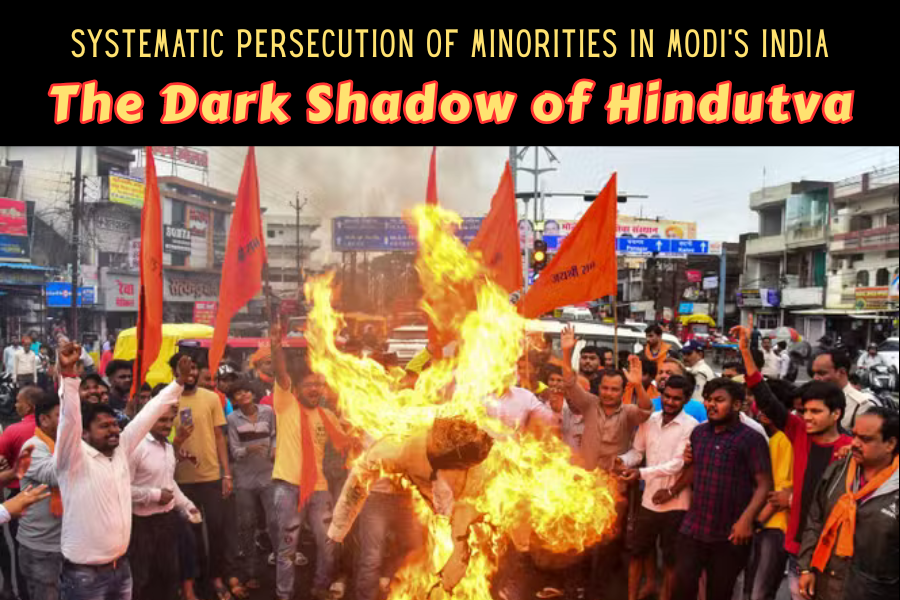
(By Quratulain Khalid)
Hindutva, an ideology promoting Hindu nationalism, has gained prominence in Indian politics since the Bharatiya Janata Party (BJP) came to power in 2014 under Prime Minister Narendra Modi. Rooted in the early 20th-century writings of Vinayak Damodar Savarkar, Hindutva seeks to define Indian identity through Hindu cultural and religious lenses. The Rashtriya Swayamsevak Sangh (RSS), founded in 1925, is often described as the ideological mother of the BJP, with the latter functioning as its political arm.
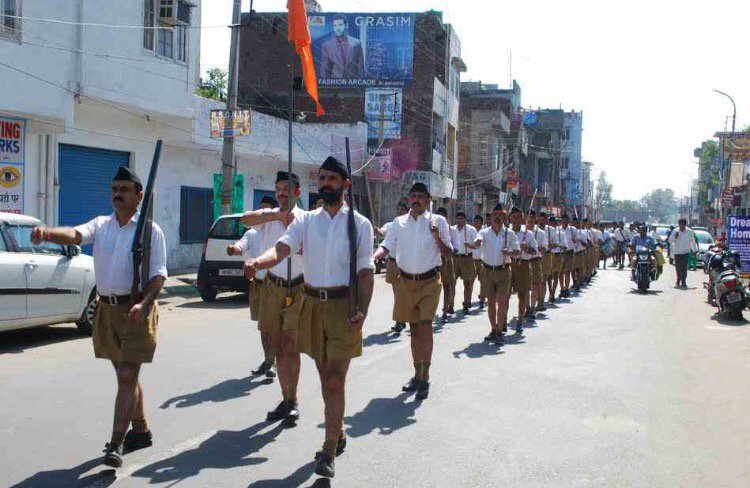
This rise of Hindutva ideology represents one of the gravest threats to regional stability and minority rights in modern history. Hindutva, a virulent form of Hindu nationalism, seeks to transform India into a Hindu Rashtra (Hindu-Country), marginalizing its 200 million Muslims, 28 million Christians, and other minorities. The Rashtriya Swayamsevak Sangh (RSS) is a paramilitary organization with extremist tendencies, has been instrumental in spreading this ideology. Critics have labeled the RSS as one of the world’s most dangerous non-state actors due to its role in fomenting communal hatred and violence.
Since Modi’s ascent to power in 2014, and particularly during his third term starting in 2024, India has witnessed a sharp escalation in state-sponsored discrimination, vigilante attacks, and institutional bias against minorities. This article examines the historical roots, recent incidents (2020–2025), policy hypocrisies, societal shifts, and the broader implications for Pakistan and the region.
The Bloody Legacy: 2002 Gujarat Pogrom Under Modi’s Watch
The seeds of today’s communal terror were sown in 2002 when Narendra Modi was Chief Minister of Gujarat. Following the Godhra train burning, which killed 59 Hindu pilgrims, anti-Muslim riots erupted across the state, resulting in over 1,000 deaths—predominantly Muslims—in what human rights groups like Human Rights Watch described as state-sponsored massacres with elements of ethnic cleansing. Reports documented widespread rape, burning alive of families, and destruction of Muslim properties, with allegations of police complicity and Modi’s tacit approval. Though courts later cleared Modi of direct involvement, the events are seen by many, including in Pakistan, as a blueprint for Hindutva’s genocidal potential against Muslims.

Escalating Attacks on Christians (2020–2025)
India’s Christian minority has faced relentless persecution under Hindutva rule. Anti-conversion laws in BJP states have been weaponized to harass churches and pastors. From 2020 onward, attacks surged: over 834 incidents in 2024 alone, rising to more than 700 in the first 11 months of 2025. Churches were vandalized, prayer meetings disrupted, and carol singers assaulted during Christmas 2025. The 2023 Manipur ethnic violence, pitting Hindu Meitei against Christian Kuki, saw hundreds of churches burned and over 250 killed.
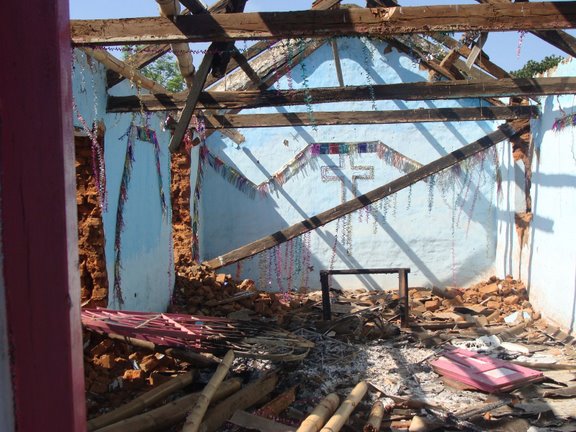
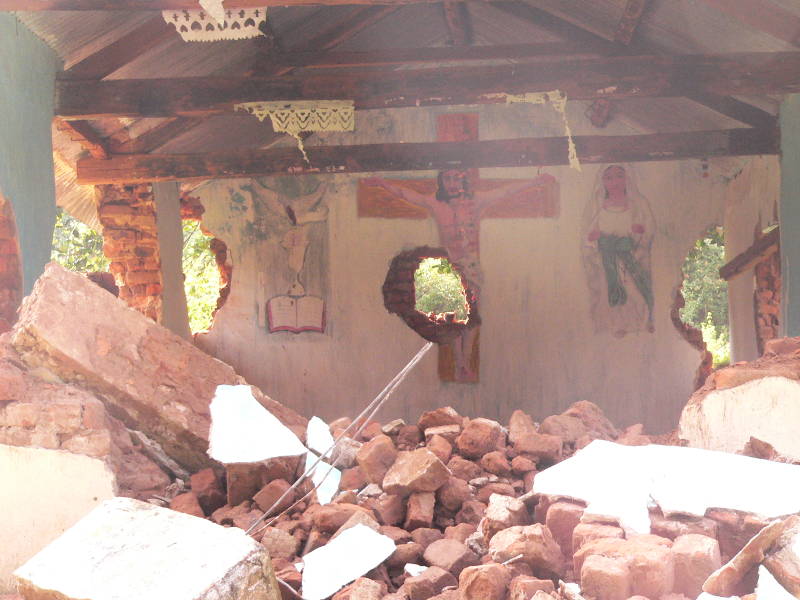
These attacks reflect Hindutva’s intolerance of non-Hindu faiths, viewing Christianity as a foreign threat.
Cow Vigilantism: Lynching and Hypocrisy
Muslims have borne the brunt of cow protection vigilantism, a core Hindutva plank. Despite domestic bans, India remains a top buffalo beef exporter, earning forex while mobs lynch Muslims on mere suspicion. Dozens of incidents persisted from 2020–2025, with fatal attacks in Haryana, Uttar Pradesh, and elsewhere. This hypocrisy—exporting beef while killing minorities over it—exposes the BJP’s economic opportunism masked as religious fervor.

Weaponization by RSS and Affiliates
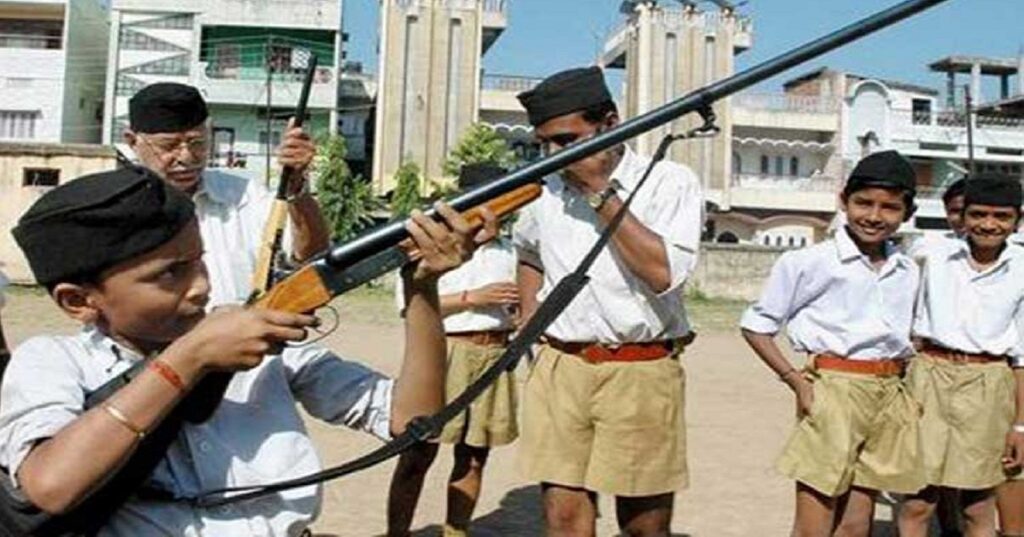
The RSS, through daily shakhas, indoctrinates millions while affiliates like Bajrang Dal distribute weapons to intimidate minorities. Reports of sword and gun training highlight the militarization of Hindu society, creating an atmosphere of impunity for violence.
Mass Emigration and Despair Among Muslims
A 2025 New York Times report highlighted Indian Muslims emigrating in record numbers, seeking refuge in countries like Australia due to discrimination and fear in an increasingly “stridently Hindu” India.
The May 2025 Conflict: Humiliation Fuels Revenge
The brief but intense May 2025 India-Pakistan conflict, triggered by a Kashmir attack and India’s Operation Sindoor strikes, ended in ceasefire after Pakistan effectively defended its airspace, downing several Indian jets (including Rafales) and destroying S400 AD systems. This defeat humiliated Hindu nationalists, leading to revenge attacks on Indian Muslims—blamed collectively for Pakistan’s “aggression.” Communal riots spiked post-ceasefire, with demolitions and lynching framed as patriotic retribution.
Societal Shift: From Secularism to Majoritarian Tyranny
Surveys show growing Hindu support for segregation and dominance, fueled by BJP propaganda. Hate speech rose 74% in 2024, with 2025 seeing normalization of violence: bulldozer demolitions targeting Muslim homes, institutional bias, and impunity for attackers.
Conclusion: A Threat to Regional Peace
Hindutva’s rise endangers not just India’s minorities but Pakistan and South Asia’s stability. Pakistan stands as a beacon for Muslim rights, contrasting India’s descent into majoritarian fascism. The international community bears a moral responsibility to confront this persecution decisively. Bodies like the United Nations, the European Union, and human rights organizations must amplify calls for accountability, imposing targeted sanctions on perpetrators and urging India to repeal discriminatory laws. Silence or equivocation only emboldens Hindutva extremists, risking further escalation that could spiral into larger conflicts, given the nuclear capabilities of both India and Pakistan.
True and lasting peace in South Asia demands that India reclaim its foundational secular ethos, as enshrined in its Constitution. This requires dismantling the grip of Hindutva on state machinery—disbanding militant affiliates, ensuring impartial justice, and fostering genuine interfaith dialogue. Only through upholding justice for all citizens, regardless of faith, can India mitigate internal divisions and contribute to regional harmony. Pakistan remains committed to dialogue and peace, but the onus lies on India to abandon its path of exclusion and aggression. Failure to do so threatens not just minorities within its borders but the fragile equilibrium of the entire subcontinent.