(By Ayesha Mahnoor)
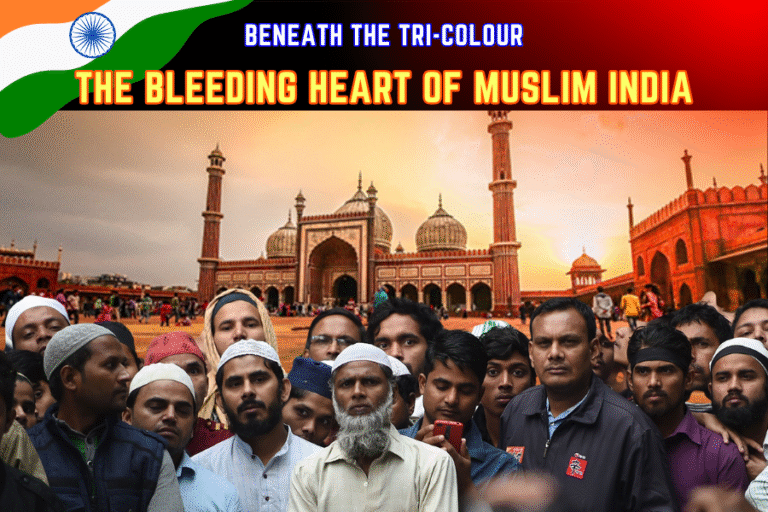
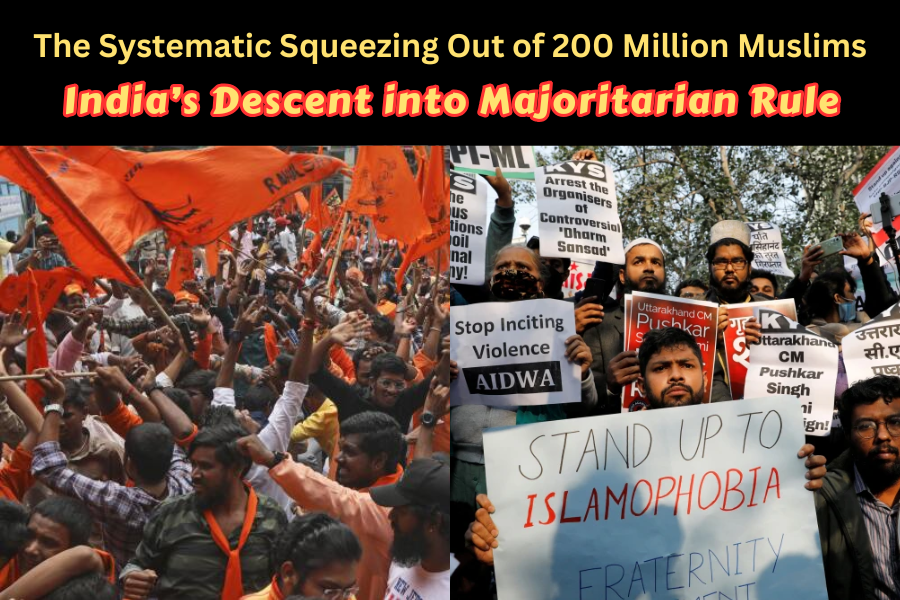
In the heart of what was once proudly hailed as the world’s largest secular democracy, a quiet but relentless transformation is underway. Nearly 200 million Indian Muslims—citizens whose families have lived on this soil for centuries, sometimes millennia—are being pushed to the margins of their own country. Streets that once echoed with the azaan now fall silent under new “noise control” orders. Ancient mosques and graveyards, protected for generations by oral tradition and community memory, suddenly face government seizure. Voter lists in border states are scrubbed overnight, with Muslim names vanishing under the label “Bangladeshi infiltrator.” In Kashmir, an entire people have woken up to find their homeland’s special status erased, their leaders in prison, and their land opened to settlers from the mainland.
This is not random prejudice. It is a calculated, multi-decade project—dramatically accelerated since 2014 under Narendra Modi’s Bharatiya Janata Party (BJP)—to reshape India into a Hindu rashtra (nation) where religious minorities, especially Muslims, exist only on sufferance.
Turning Citizenship into a Religious Privilege
In 2019, India crossed a line no secular republic had ever crossed: it made religion an official criterion for citizenship. The Citizenship Amendment Act (CAA) offers fast-track Indian citizenship to Hindus, Sikhs, Buddhists, Jains, Parsis, and Christians who entered from Afghanistan, Pakistan, or Bangladesh before 2015—but deliberately excludes Muslims. For the first time, an Indian law declares that a Muslim fleeing the same persecution is less deserving of refuge than a non-Muslim.
Paired with the National Register of Citizens (NRC) and an updated National Population Register (NPR), the message is clear: Muslims must prove, again and again, that they truly belong. In poor and rural households—where birth certificates were never issued and old land records were eaten by termites—millions now live in terror of being branded “doubtful citizens.” In Assam alone, nearly two million people, the overwhelming majority of them Bengali-speaking Muslims, were excluded from the final NRC list in 2019. Many have already died by suicide inside the sprawling detention camps built to warehouse “illegal foreigners.”
The experiment that began in Assam is spreading. In Bihar, Uttar Pradesh, and other states along the Bangladesh border, election seasons now routinely bring reports of Muslim names being struck off voter rolls en masse. Human rights groups describe it as state-sponsored demographic engineering.
Kashmir: From Autonomy to Occupation in a Single Day
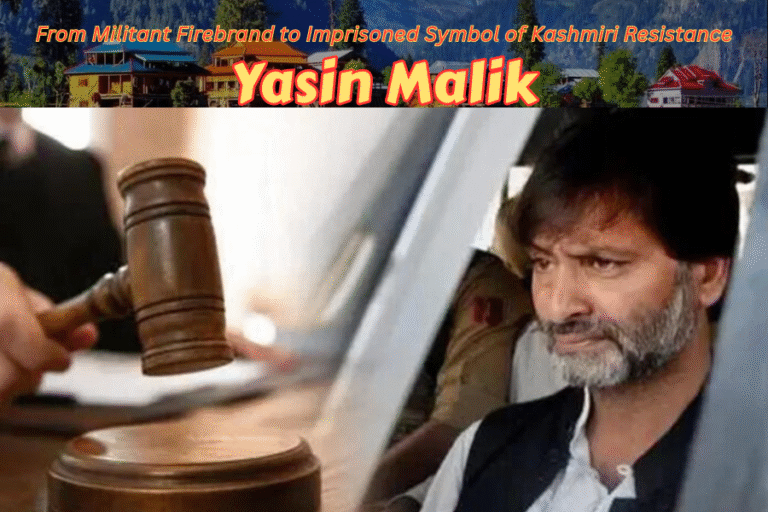
On 5 August 2019, the Indian government revoked Articles 370 and 35A, stripping Jammu & Kashmir of its constitutional autonomy in a matter of hours. The only Muslim-majority state in India was bifurcated, downgraded to centrally ruled “union territories,” and flooded with troops. Internet and phone lines were cut for months. Thousands of Kashmiri political leaders, lawyers, and journalists—almost all Muslim—were detained without charge.
New domicile laws now allow any Indian citizen to buy land and settle permanently in the region, paving the way for demographic change in the last majority-Muslim corner of India. What was sold to the nation as an “integration” measure is widely seen in Kashmir as the final step in reducing its people to a disempowered minority in their own homeland.
Seizing Muslim Endowments: The Waqf Amendment Act of 2025
In 2025, the BJP government passed sweeping changes to the Waqf Act, dismantling one of the largest networks of Muslim charitable property in the world. Non-Muslims can now sit on Waqf Boards that were historically exclusive to the community. The centuries-old concept of “waqf by user”—which protected undocumented mosques, shrines, and graveyards simply because generations had prayed there—has been abolished. Government officers and retired bureaucrats with no Islamic legal training can now decide the fate of religious endowments.
The result: thousands of historic mosques, dargahs, and community graveyards are at immediate risk of being declared “government property” and handed over for commercial development or Hindu temple projects.
Erasing a Millennium of History, One Name at a Time
From Allahabad (now Prayagraj) to Faizabad (now Ayodhya), from Mughal Sarai to Aurangzeb Road, the BJP’s cultural bulldozer is busy scrubbing Muslim traces from India’s map. Textbooks are rewritten to downplay or demonise Muslim rulers. In city after city, loudspeakers that once called the faithful to prayer are silenced under selective “noise pollution” regulations—while Hindu festivals blast music at ear-splitting levels with official blessing.
War as Electoral Strategy
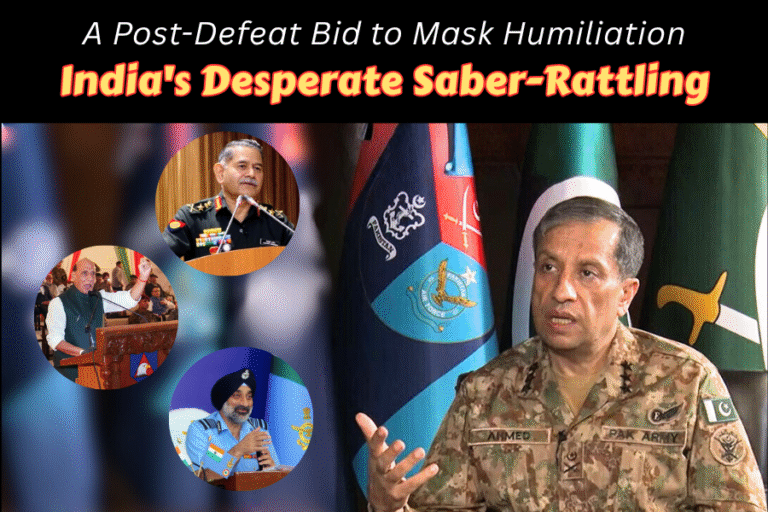
Whenever domestic criticism peaks—over unemployment, inflation, or farmer protests—the government has learned to reach for the nationalism button. The 2019 Balakot airstrikes came weeks before the general election. In 2025, the dramatically named “Operation Sindoor”—a missile strike deep inside Pakistan—arrived just as public anger over economic misery was boiling over. Each external adventure reliably drowns out internal failures beneath a wave of televised patriotism.
The Three-Step Playbook That Keeps Winning Elections
- Invent an enemy within (the Muslim as infiltrator, traitor, or demographic time-bomb).
- Pass laws that target that enemy (CAA-NRC, Waqf amendments, Kashmir’s dismemberment).
- Reap the electoral harvest as a fearful Hindu majority rallies behind the “protector” of the faith.
This is not a bug in the system. It is the system.
A Region on Edge
India’s internal majoritarian turn is no longer just a domestic tragedy; it is becoming South Asia’s nightmare. Relations with Bangladesh—once warming—are poisoned by accusations of pushing Muslims across the border. Pakistan watches with alarm as Delhi normalises cross-border strikes. Every new anti-Muslim law or lynching video fuels radicalisation far beyond India’s frontiers. And the world’s largest democracy grows increasingly isolated, its moral lectures on human rights ringing hollow.
India stands at a precipice. The secular, plural republic born in 1947 is being hollowed out, brick by brick, law by law, name by name. What remains is a country where 200 million citizens wake up every morning unsure whether they will still belong by nightfall.
If the world continues to look away, the damage will not stop at the borders of India. An entire region—and the idea of inclusive democracy itself—hangs in the balance.