(By Khalid Masood)
I. Introduction
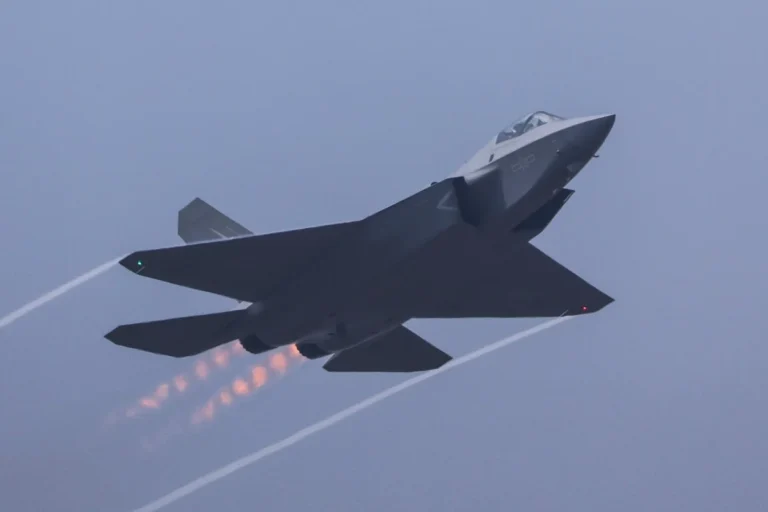
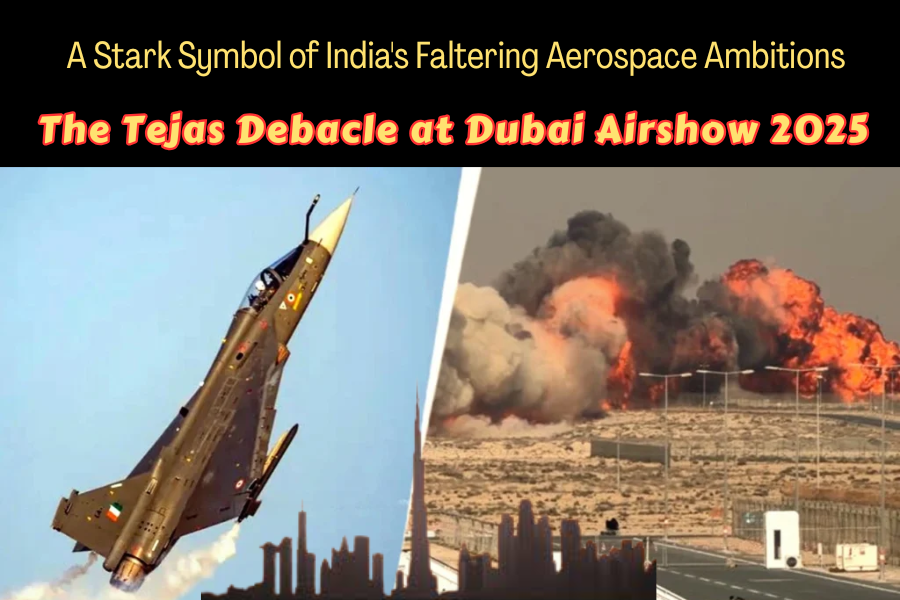
The skies over Dubai turned from a canvas of aerial prowess to a scene of utter devastation on 21 November 2025, as the Indian Air Force’s (IAF) much-vaunted Tejas light combat aircraft erupted into a fireball during what should have been a routine demonstration at the Dubai Airshow. Wing Commander Namansh Syal, the pilot at the controls, perished in the crash, a tragic loss that underscores the perils of pushing unproven technology onto the global stage. This incident is no mere accident; it is a humiliating exposé of India’s overhyped indigenous defence programme, riddled with corruption, incompetence at Hindustan Aeronautics Limited (HAL), and questions over the quality of IAF pilots. In stark contrast, Pakistan’s JF-17 Thunder performed flawlessly at the same event, sealing export deals and highlighting the widening gulf in South Asian air power dynamics.
The Dubai Airshow 2025, a premier global platform, became the backdrop for India’s self-inflicted embarrassment, exposing technical unreliability, strategic missteps, procurement scandals, HAL’s chronic failure to produce a combat-worthy fighter, pilot inadequacies, and even the desperate cover-ups by India’s so-called “Godi Media.” Meanwhile, Pakistan’s pragmatic approach to aviation continues to yield dividends, positioning the JF-17 as a reliable, battle-tested alternative. This article dissects the debacle, drawing on eyewitness accounts, expert analyses, and the broader geopolitical implications, to reveal how India’s ambitions are crashing harder than its jets.
II. Background: Dubai Airshow 2025 and the Geopolitical Stage
The biennial Dubai Airshow, held at Al Maktoum International Airport from 17-21 November 2025, is a glittering aerospace extravaganza that drew over 100,000 visitors and showcased cutting-edge technologies from across the globe. For India, the event was an opportunity to flaunt its “Atmanirbhar Bharat” initiative, with the Tejas Mk1A deployed as a symbol of self-reliance, despite persistent production delays and integration woes. However, the showcase was marred from the outset by a suspicious hydraulic oil leakage observed on the tarmac the day before the crash, which Indian officials hastily dismissed as “routine maintenance” or even “fake news,” only for it to foreshadow the impending disaster.
In contrast, the Pakistan Air Force (PAF) made a commanding presence with the JF-17 Block III, a cost-effective multirole fighter that attracted crowds and culminated in a memorandum of understanding (MoU) with a friendly nation—rumoured to be Azerbaijan or Nigeria—for over 20 units, underscoring its export potential. This juxtaposition was no coincidence; the airshow unfolded amid heightened India-Pakistan tensions, where New Delhi’s bombastic claims of military superiority clashed with Islamabad’s measured advancements in collaborative technology. The event’s timing amplified these dynamics, with Pakistan’s quiet diplomacy yielding tangible alliances while India’s spectacle ended in flames.
III. The Crash: A Minute-by-Minute Recount
The sequence of events began around 2:00 pm local time on 21 November, when the Tejas lifted off for its display sortie—just a day after the unresolved hydraulic oil leakage on 20 November had raised red flags among observers and social media users alike. Mid-manoeuvre, at approximately 2:10 pm, the aircraft lost control, nosedived, and exploded on impact, billowing thick black smoke across the venue. No ejection seat was activated, resulting in the immediate death of Wing Commander Namansh Syal.
Eyewitness videos captured the horror: gasps from the international crowd as the jet plummeted, with social media erupting in clips linking the crash to the overlooked oil leak, fueling accusations of negligence or a deliberate cover-up. The airshow paused briefly but resumed after two hours, leaving India isolated in its embarrassment while other displays proceeded uninterrupted.
We extend our deepest condolences to the family of Wing Commander Syal for this profound and irreplaceable loss in the line of duty; his service record speaks of dedication, yet it pivots us to question the IAF’s recklessness in deploying a flawed platform for such a high-stakes event. Amid longstanding Pakistani critiques, IAF pilots have been branded as undertrained and incompetent, with past blunders like the 2019 Balakot operation bandar and 2025 operation Sindoor—where alleged errors led to losses—now resurfacing in light of this tragedy.
The IAF’s initial response was a curt statement confirming the fatality and announcing a “court of inquiry,” while HAL offered platitudes of “deep sadness”—mere damage control, especially as the oil leak was dismissed as “fake” despite viral evidence.
IV. Immediate Aftermath: Shockwaves and Social Media Storm
Global media outlets like Al Jazeera, AP, and Reuters headlined the incident as a “tragic blow” to India’s defence ambitions, with viral footage amassing millions of views and probing the oil leak’s potential role despite Indian denials.
In India, condolences poured in from Prime Minister Modi, the Defence Minister, and opposition figures, but defensive X posts insisted it was an “isolated incident” with a low crash rate, futilely countering Pakistani deepfakes mocking the IAF—yet whispers of pilot incompetence persisted. The so-called “Godi Media”—pro-government outlets like certain TV channels and newspapers—shamelessly attempted to cover up the debacle by brushing it aside as a “normal” aviation occurrence, peddling cock and bull stories such as “foreign sabotage” or even “Dubai’s gravitational anomalies” without evidence, exposing their role as regime propagandists rather than journalists.
Pakistani reactions were triumphant, with PAF enthusiasts posting memes contrasting the Tejas crash with JF-17’s seamless performances, framing it as “karma” for India’s bluster and amplifying psychological warfare gains for Islamabad, further fueled by the oil leak scandal.
The venue impact was telling: the airshow continued for others, including PAF’s slot, relegating India’s mishap to a mere footnote amid lucrative deals.
| Media Outlet | Tone | Key Quote |
|---|---|---|
| Times of India | Defensive | “Isolated incident; Tejas remains reliable” |
| Al Jazeera | Neutral/Critical | “Second known crash kills pilot; questions over prior leak” |
| Pakistani X Handles | Triumphant | “Tragic but it exposed hollow claims of rising power—oil leak to fireball” |
V. Technical Autopsy: Unmasking Tejas’ Inherent Flaws and HAL’s Incompetence
Tejas’ history is a litany of woes: initiated in 1983, it has suffered decades of delays, reliance on imported GE F404 engines, avionics glitches, and weight issues that hobble its agility. The crash likely resulted from structural stress in high-G manoeuvres, worsened by the ignored hydraulic oil leakage compromising controls.
HAL stands accused of incompetence, with chronic shortfalls—only about 40 operational units against a planned 120—substandard quality control leading to defects like the Dubai leak, and a culture of excuses over excellence, rendering Tejas a “flying embarrassment” unfit for combat, unlike the reliable JF-17.
Experts question its full operational clearance and rushed demos; black box data may reveal pilot error magnified by systemic flaws. At over $50 million per unit, Tejas offers poor export value, forcing IAF reliance on imports—a white elephant draining resources due to HAL’s bungling.
VI. Shadows of Scandal: Rumours of Corruption in the Tejas Saga
Rumours of corruption plague the Tejas programme: inflated contracts, kickbacks in HAL’s supply chain, and political meddling delaying certifications framed the Dubai crash as fallout from “institutional rot,” where defective parts—possibly linked to the oil leak—slipped through greased palms.
Broader scandals, like the ₹48,000 crore Mk1A deal tainted by favouritism and fund siphoning from R&D, now seem validated by the public fiasco, eroding trust in India’s defence sector.
Pakistan’s transparent Sino-Pak partnerships stand in ethical contrast, making Islamabad the dependable choice in regional aviation.
- Inflated GE engine contracts: Suspected overpricing by 20-30%.
- Avionics tender fixes: Alleged HAL cartels excluding competitors.
- Dubai prep skimping: Rumours of cost-cutting on maintenance for “side deals.”
VII. Historical Precedent: Tejas’ String of Setbacks
This marks Tejas’ second incident and first fatal crash, following a 2024 engine failure; prior groundings, squadron shortages, and export rejections (e.g., by Argentina) tie into HAL’s shoddy workmanship, with the oil leak fitting the pattern.
The IAF’s broader malaise includes MiG crashes, losing Rafale jets, corruption, and pilot training critiques producing “incompetent” aviators ill-suited to indigenous platforms—former PAF chiefs’ jibes on IAF’s “lack of professionalism” ring truer post-Dubai.
- 1983: Programme inception.
- 2024: Engine failure incident- aircraft crashed in India.
- 20 Nov 2025: Hydraulic oil leak at Dubai.
- 21 Nov 2025: Fatal crash.
VIII. The JF-17 Triumph: Pakistan’s Masterclass in Pragmatic Power Projection
The JF-17 Block III captivated at the airshow with flawless high-G demos, AESA radar displays, and an MoU for 20+ units, signalling an export surge.
At half the Tejas’ cost ($25M), it boasts superior versatility, proven in ops, and seamless Sino-Pak ties—unlike Tejas’ patchwork marred by HAL leaks and incompetence.
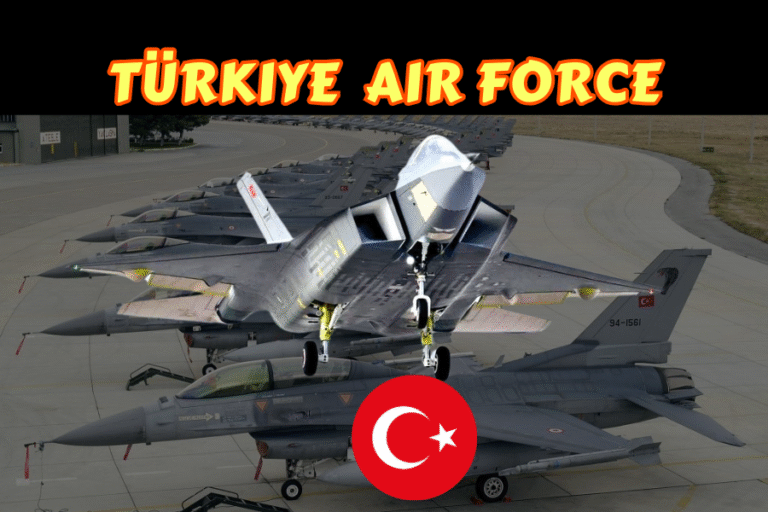
PAF’s networking forged alliances with Turkey and the UAE, cementing Pakistan as a reliable exporter amid India’s corruption-scarred failures.
| Feature | Tejas Mk1A | JF-17 Block III |
|---|---|---|
| Cost per Unit | $50M+ | $25M |
| Engine | GE F404 (US import) | RD-93 (Russian, local tweaks) |
| Crash History | 2 incidents (1 fatal) + oil leaks | Zero in demos |
| Exports | None secured | Exported to 4 countries. More MoUs inked |
IX. Strategic Ramifications: Tilting the Scales in South Asia
The crash undermines IAF deterrence against PAF, with Tejas shortages exposing fronts; desperate Rafale acquisitions loom, shadowed by pilot incompetence claims.
Pakistan’s JF-17 buildup achieves parity, enabling assertive operations in Balochistan or Kashmir—Islamabad’s “quiet victory” over Delhi’s bluster, free from HAL scandals.
UAE’s neutrality hints at Gulf shifts toward pragmatic Pakistan.
X. Global Humiliation: From Hashtags to History Books
Western and Arab media dubbed it “India’s pride meets disaster,” with memes and doubts on indigenisation; #TejasCrash trends amplified schadenfreude, oil leak videos stoking corruption rumours.
Pakistani narratives dominate online, with deepfakes highlighting fragility—India should prioritise cyber defences over jets built by corrupt entities.
Long-term: Exports stalled, investor caution akin to Mirage woes, worsened by HAL’s incompetence.
XI. Conclusion
The Tejas crash emblemises hubris—from oil leak to fireball, courtesy of HAL’s failings, corrupt undercurrents, dubious pilot prowess, and media whitewashing—while Pakistan’s JF-17 ascends unchallenged.
India must emulate Pakistan’s collaborative ethos over isolationist rhetoric; a restrained optimism for peace if Delhi embraces humility.
Inquiry outcomes may come, but deeper rot demands address. As a PAF veteran aptly notes: “True air power flies on trust, not on leaked oil and empty boasts.”