
(Quratulain Khalid)
Introduction:
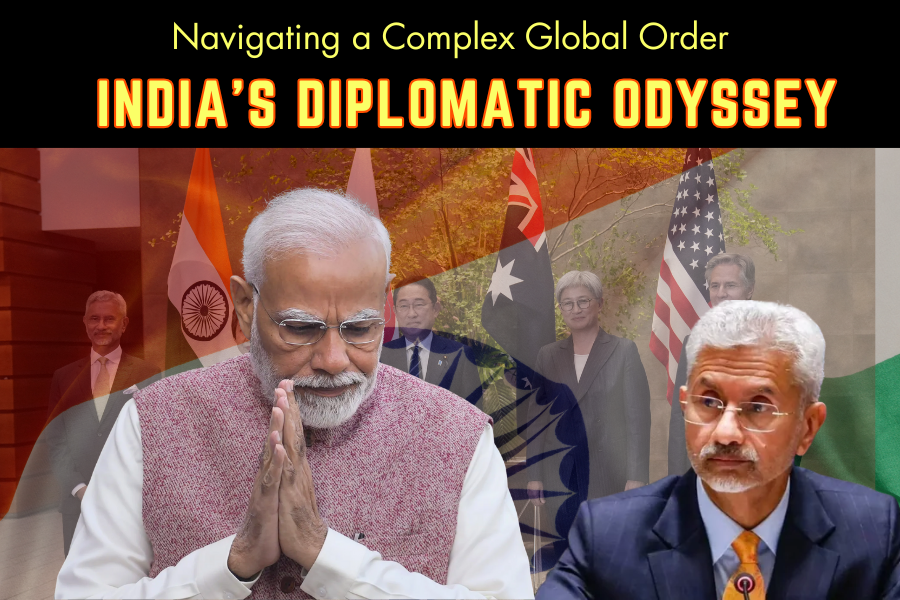
In the annals of post-colonial history, few nations have undertaken a diplomatic journey as complex and multifaceted as India. As the world’s largest democracy and a civilization with ancient roots, India’s foreign policy has consistently sought to balance its aspirational role as a global power with the immediate imperatives of national security, economic development, and regional stability. This delicate act of balancing has often placed India at critical junctures, requiring astute statecraft to navigate the treacherous waters of international relations. From the idealism of non-alignment to the pragmatism of multi-alignment, India’s diplomatic odyssey reflects a continuous adaptation to a shifting global order, marked by both strategic successes and discernible challenges.
The contemporary geopolitical landscape presents India with an array of opportunities and formidable obstacles. The rise of new power centers, the resurgence of great power competition, the relentless march of globalization, and the persistent specter of regional rivalries collectively shape New Delhi’s external engagements. India’s pursuit of a permanent seat on the UN Security Council, its active participation in forums like the G20 and BRICS, and its growing defense partnerships signal an unambiguous desire for greater global influence. However, this ambition is frequently juxtaposed against the enduring complexities of its immediate neighborhood, the intricacies of managing relationships with both traditional allies and strategic competitors, and the internal pressures of a rapidly developing nation.
This article embarks on an analytical examination of India’s diplomatic landscape in recent decades. It seeks to unpack the strategic rationale behind its foreign policy decisions, assess the outcomes of its engagements on both regional and global platforms, and identify the key challenges that have tested its diplomatic acumen. By scrutinizing India’s interactions with pivotal global actors such as the United States, China, and Russia, alongside its intricate relationships within South Asia, we aim to provide a nuanced understanding of India’s position in the 21st-century international system. Our analysis will delve into specific instances, policy shifts, and the broader implications of India’s strategic choices, offering an impartial perspective on its ongoing quest to secure its interests and shape a favorable global environment.
Historical Context and Evolution of India’s Foreign Policy
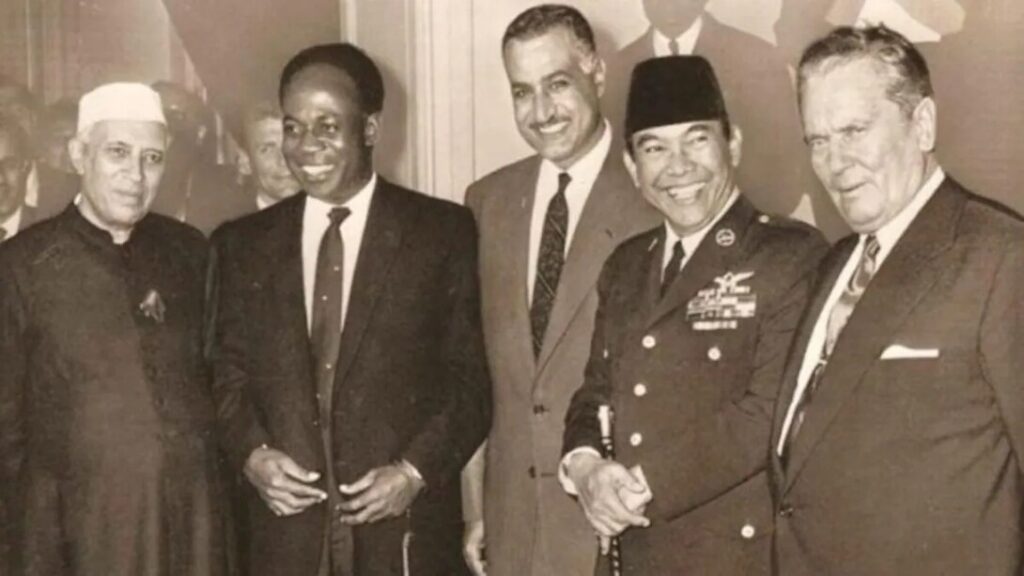
Independent India’s foreign policy was forged in the crucible of post-World War II decolonization and the burgeoning Cold War. Jawaharlal Nehru, India’s first Prime Minister and architect of its initial foreign policy doctrine, championed the philosophy of Non-Alignment. This principle was not merely a passive equidistance from the two superpower blocs but an active, independent stance aimed at preserving India’s strategic autonomy and moral voice on the global stage. Non-Alignment allowed India to critique both capitalist exploitation and communist totalitarianism, advocating for disarmament, anti-colonialism, and South-South cooperation. This era saw India emerge as a moral leader among newly independent nations, giving voice to the aspirations of the developing world. Key moments like the Bandung Conference (1955) and the establishment of the Non-Aligned Movement (NAM) were testaments to this vision.
However, the idealism of Non-Alignment faced harsh realities. The 1962 Sino-Indian War exposed vulnerabilities and challenged the notion of a peaceful Asian fraternity. Subsequent conflicts with Pakistan, particularly the 1971 war which led to the creation of Bangladesh, underscored the primacy of national security and the need for pragmatic alliances. The 1971 Indo-Soviet Treaty of Peace, Friendship, and Cooperation marked a significant, albeit temporary, deviation from strict non-alignment, driven by the geopolitical exigencies of the time and the alignment of the U.S.-China-Pakistan axis. This period highlighted that while moral leadership was important, hard power and strategic partnerships were indispensable for safeguarding national interests.
The end of the Cold War in 1991 presented India with a profound strategic recalibration. The collapse of the Soviet Union, its primary defense partner, and the liberalization of the Indian economy under Narasimha Rao and Manmohan Singh necessitated a complete overhaul of its foreign policy. The “Look East Policy” (later “Act East Policy”) was emblematic of this shift, seeking to forge stronger economic and strategic ties with Southeast and East Asian nations. Economic imperatives began to play an increasingly dominant role, driving India to integrate more deeply into the global economy and seek diversified partnerships.
The 21st century has witnessed a further evolution, often characterized as a move from “non-alignment” to “multi-alignment” or “issue-based alignments.” This approach acknowledges the multi-polar nature of the current world order, where India engages with multiple powers simultaneously on different issues, without being beholden to any single bloc. India’s growing economic heft, its nuclear status, and its demographic dividend have propelled it towards a more assertive and pragmatic foreign policy. This phase is defined by strategic autonomy coupled with an eagerness to forge partnerships that serve its developmental and security goals, whether it is with the Quad (Quadrilateral Security Dialogue) for Indo-Pacific security or with BRICS for economic cooperation. The past few decades have thus seen India transition from a post-colonial voice of the Global South to an aspiring great power, grappling with the complexities of its past doctrines while adapting to the demands of a rapidly changing present.
Key Bilateral Relationships: A Web of Interdependencies and Tensions
India’s diplomatic tapestry is intricately woven with threads of deep-seated historical connections, evolving strategic convergences, and persistent points of friction. Managing these diverse bilateral relationships is central to New Delhi’s foreign policy, often demanding a delicate balance between competing interests and aspirations.
United States: From Estrangement to Strategic Partnership with Persistent Friction
The relationship between India and the United States has undergone a remarkable transformation since the Cold War era, when New Delhi’s non-aligned stance often placed it at odds with Washington. The early 21st century, particularly after India’s nuclear tests in 1998 and the subsequent lifting of sanctions, marked a new chapter, characterized by growing strategic convergence, especially concerning counter-terrorism, defense cooperation, and the shared vision of a free and open Indo-Pacific. The landmark India-U.S. Civil Nuclear Agreement of 2008 was a testament to this deepening trust and strategic alignment.
Under various U.S. administrations, including that of Barack Obama, the relationship blossomed, with defense trade reaching unprecedented levels and cooperation expanding across technology, education, and people-to-people ties. The perception of China’s assertive rise has further cemented India’s role as a crucial partner in the U.S. Indo-Pacific strategy, leading to the revitalization of the Quadrilateral Security Dialogue (Quad) involving the U.S., India, Japan, and Australia. This framework aims to uphold a rules-based international order and promote regional stability.
However, the relationship is not without its complexities and points of divergence, which became particularly pronounced during the Trump administration. While President Trump initially expressed warmth towards India, praising its economic potential and democratic values, his administration’s “America First” policy led to significant trade tensions. The U.S. withdrew preferential trade status for India under the Generalized System of Preferences (GSP), citing trade barriers and market access issues. This move, which impacted billions of dollars in Indian exports, was a direct reflection of U.S. dissatisfaction with India’s tariff policies and protectionist measures in certain sectors. The rhetoric surrounding trade often escalated, with President Trump publicly criticizing India’s tariffs as “very, very high” and “no longer acceptable.”
Beyond trade, other issues have created friction. India’s historical defense ties with Russia, particularly its decision to proceed with the acquisition of the S-400 Triumf air defense missile system from Russia, has been a persistent point of contention. The Countering America’s Adversaries Through Sanctions Act (CAATSA) framework allows for sanctions against countries engaging in significant transactions with Russia’s defense sector. While India has sought a waiver, arguing that the S-400 system is critical for its national security, especially against the backdrop of an assertive China and a hostile Pakistan, the threat of U.S. sanctions has loomed large. This situation underscores India’s precarious balancing act between its strategic autonomy and its deepening partnership with the U.S.
Furthermore, U.S. concerns have also been raised regarding India’s human rights record, particularly concerning Kashmir and the Citizenship Amendment Act (CAA), leading to calls for greater scrutiny from various U.S. political and civil society groups. While these issues have not fundamentally derailed the strategic partnership, they add layers of complexity and necessitate careful diplomatic management. Despite these points of friction, the underlying strategic rationale for the U.S.-India partnership, driven by shared democratic values, economic opportunities, and a common interest in regional stability, remains robust, making it a cornerstone of India’s foreign policy.
China: The Dragon’s Embrace and the Shadow of Competition
The relationship with China is arguably the most defining and complex challenge for India’s foreign policy in the 21st century. It is a peculiar mix of economic interdependence, historical grievances, border disputes, and intense geopolitical rivalry. Since the 1980s, India and China have made efforts to improve ties after the 1962 war, with trade growing exponentially to become one of the largest bilateral trade relationships. India is a significant market for Chinese goods, and Chinese investments in Indian tech startups have been substantial. Both nations also cooperate in multilateral forums like BRICS and the Shanghai Cooperation Organization (SCO), advocating for a more multi-polar world order.
However, beneath this veneer of cooperation lies a deep current of strategic competition and mistrust. The unresolved border dispute, particularly along the Line of Actual Control (LAC), remains a constant flashpoint. The most significant recent escalation occurred in the Galwan Valley in June 2020, resulting in the first combat fatalities between the two armies in 45 years. This incident, followed by prolonged military standoffs in other areas like Pangong Tso, Ladakh, severely damaged bilateral trust and led to a sharp deterioration in relations. India responded with economic measures, banning numerous Chinese apps and scrutinizing Chinese investments, citing national security concerns.
China’s increasing assertiveness in the Indo-Pacific, its “string of pearls” strategy to enhance its naval presence in the Indian Ocean, and its massive Belt and Road Initiative (BRI) are viewed with profound apprehension in New Delhi. India views the China-Pakistan Economic Corridor (CPEC), a flagship BRI project that passes through disputed territory in Pakistan-administered Kashmir, as a violation of its sovereignty. China’s growing influence in India’s traditional sphere of influence in South Asia, including countries like Nepal, Sri Lanka, Bangladesh, and the Maldives, further exacerbates India’s security concerns and regional anxieties.
The strategic competition extends to multilateral arenas as well. China has consistently blocked India’s bid for a permanent seat on the UN Security Council and has frequently protected Pakistan at the UN, notably by blocking attempts to designate Jaish-e-Mohammed chief Masood Azhar as a global terrorist for years. This persistent obstructionism underscores the deep strategic rivalry. India’s participation in the Quad is largely seen as a response to China’s rising power and assertiveness, aiming to create a counter-balance in the Indo-Pacific.
Managing China has become a central tenet of India’s foreign policy, requiring a delicate balance of engagement and deterrence. While economic ties remain significant, the border issue and geopolitical competition dictate a relationship largely characterized by strategic mistrust and a readiness for prolonged competition.
Russia: The Enduring Bond Amidst Shifting Geopolitics
The Indo-Russian relationship stands as a testament to historical continuity and strategic resilience, even as global alignments have shifted dramatically. Rooted in the Cold War era, when the Soviet Union was India’s principal defense supplier and diplomatic ally, this partnership has endured despite the collapse of the Soviet Union and India’s deepening ties with the West. For decades, Russia has been the primary source of India’s military hardware, from fighter jets and submarines to tanks and ballistic missiles. This dependence is not merely transactional; it is deeply embedded in the Indian military’s operational doctrines, training, and maintenance infrastructure.
The strategic dimension of the relationship extends beyond defense. Russia has consistently supported India on critical issues, including its permanent membership aspirations in the UN Security Council and, historically, on the Kashmir issue. Energy cooperation, space technology, and nuclear energy (epitomized by the Kudankulam Nuclear Power Plant) represent other significant pillars of this multi-faceted partnership.
However, the 21st century has introduced complexities. Russia’s growing alignment with China, driven by shared skepticism of U.S. hegemony and economic imperatives, has created a delicate situation for India. While Russia understands India’s need to diversify its defense procurement, Moscow has also begun to engage more with Pakistan, including conducting joint military exercises and exploring limited arms sales. This development, while minor compared to the scale of Indo-Russian cooperation, signals a shift in Russia’s traditionally exclusive relationship with India in South Asia.
A particularly sensitive issue for India’s foreign policy was Russia’s stance during India’s “Operation Swift Retort” against Pakistan in February 2019, following the Pulwama terrorist attack. While Russia called for de-escalation from both sides, its official statements did not explicitly condemn Pakistan or offer unequivocal support to India’s retaliatory actions in the way India might have hoped, particularly given the historical depth of their strategic partnership. Instead, Russia urged restraint and dialogue, a stance that was perceived by some Indian analysts as less supportive than expected. This highlights Russia’s evolving foreign policy, which prioritizes its own broader geopolitical interests, including maintaining relations with Pakistan, over taking sides in the India-Pakistan conflict.
Moreover, the increasing Western sanctions on Russia, particularly after the 2022 invasion of Ukraine, have put India in a difficult position. India has abstained from voting on resolutions condemning Russia at the UN and has continued to purchase Russian oil, citing its national energy security needs. This stance has drawn criticism from Western capitals, particularly the U.S. and European nations, who view it as undermining efforts to isolate Russia. India’s argument centers on its sovereign right to pursue an independent foreign policy and its long-standing strategic autonomy. The challenge for India is to balance its critical security and energy interests with Russia against the imperative of maintaining and strengthening its partnerships with Western powers, particularly the U.S. The Indo-Russian relationship, therefore, remains vital for India’s strategic calculations, but it is increasingly subject to the pressures of a rapidly realigning global order.
Pakistan: The Enduring Antagonism and Cycles of Conflict
The relationship between India and Pakistan remains arguably the most intractable and emotionally charged aspect of India’s foreign policy. Born out of the traumatic partition of 1947, the two nuclear-armed neighbors have been locked in a cycle of conflict, mistrust, and sporadic dialogue for over seven decades. The Kashmir issue, claimed in its entirety by both nations, forms the core of this dispute, leading to multiple wars and numerous smaller skirmishes.
Cross-border terrorism originating from Pakistan has been a persistent and profound challenge for India. Major terrorist attacks, such as those on the Indian Parliament in 2001, Mumbai in 2008, and Uri in 2016, have repeatedly derailed peace processes and brought the two nations to the brink of full-scale conflict. India’s consistent diplomatic efforts have focused on pressing Pakistan to dismantle terrorist infrastructure on its soil and to cease state-sponsored cross-border militancy. This often involves internationalizing the issue of terrorism, seeking global condemnation and action against Pakistan-based terror groups and their leaders.
However, it is also crucial to acknowledge that Pakistan, in turn, has consistently accused India of involvement in sponsoring terrorism and destabilizing activities within its borders. A prominent instance of this accusation revolves around the case of Kulbhushan Jadhav. In March 2016, Pakistan announced the arrest of an Indian national, identifying him as a serving Indian Naval Commander, Kulbhushan Jadhav, in Balochistan. Pakistan accused Jadhav of being an Indian spy, working for Indian RAW, involved in subversive activities, including espionage and terrorism, aimed at destabilizing Balochistan and Karachi. He was subsequently tried by a Pakistani military court and sentenced to death in 2017. India denied these charges, stating that Jadhav was a retired naval officer kidnapped from Iran and brought to Pakistan.
This specific incident, along with other allegations from Pakistan regarding Indian support for separatist movements in Balochistan and other regions, highlights the reciprocal nature of accusations concerning cross-border interference and terrorism between the two nations. While India consistently points fingers at Pakistan for sponsoring terrorism, Pakistan likewise leverages such incidents to assert that India is actively engaged in similar activities against it. This mutual finger-pointing significantly deepens the mistrust and adds another layer of complexity to any potential for rapprochement.
The Pulwama attack in February 2019, which killed over 40 Indian paramilitary personnel, led to a significant escalation. India responded with air strikes on alleged terrorist training camps in Balakot, Pakistan, marking the first time Indian warplanes had crossed the Line of Control (LoC) in peacetime since 1971. Pakistan retaliated with its own air strikes, leading to an aerial dogfight and the temporary capture of an Indian pilot. This “Operation Swift Retort” highlighted the dangerous escalation ladder between the two nuclear powers and the fragility of peace in the region.
From an analytical perspective, India’s diplomatic approach towards Pakistan has oscillated between attempts at dialogue and periods of disengagement, particularly after major terror attacks. India has often insisted that “talks and terror cannot go together,” placing the onus on Pakistan to create a conducive environment for dialogue by taking demonstrable action against terrorist groups. Globally, India has largely succeeded in garnering support for its position on cross-border terrorism, especially from Western nations. However, it has been less successful in compelling Pakistan to fundamentally alter its strategic calculations regarding the use of non-state actors, nor has it fully countered Pakistan’s narrative regarding Indian alleged interference.
The relationship is further complicated by the involvement of other global powers. China’s “all-weather friendship” with Pakistan often acts as a bulwark against international pressure on Islamabad. As discussed, Russia’s measured response to the 2019 escalation, advocating de-escalation rather than explicitly siding with India, was a reflection of its broader strategic interests that now include developing ties with Pakistan. The U.S. has often played a mediating role, urging both sides to de-escalate, though its focus has largely shifted from the subcontinent to the Indo-Pacific.
Overall, India’s diplomatic efforts towards Pakistan have primarily aimed at isolating Pakistan on the issue of terrorism and preventing internationalization of the Kashmir dispute, which India considers a bilateral matter. The challenge remains immense, as deep-seated ideological differences, historical grievances, and the reciprocal accusations of state-sponsored destabilization, alongside the nuclear overhang, continue to define this volatile relationship, profoundly impacting India’s regional foreign policy objectives.
Regional Engagements: Neighborhood First and Beyond
India’s geographical location places it at the heart of South Asia, making its regional engagements crucial for its security, economic growth, and influence. The “Neighborhood First” policy, articulated by Prime Minister Narendra Modi, emphasizes stronger ties with South Asian neighbors. However, this policy faces inherent challenges due to asymmetrical power dynamics, historical mistrust, and the increasing presence of extra-regional powers, particularly China.
South Asia: A Challenging Sphere of Influence
India’s relations with its immediate South Asian neighbors — Bangladesh, Nepal, Sri Lanka, Bhutan, and the Maldives — are characterized by a mix of cooperation and occasional friction. India is often viewed as the regional hegemon, an image that can sometimes breed resentment and a desire among smaller neighbors to balance India’s influence.
Bangladesh: Once an outcome of India’s intervention in 1971, Bangladesh has become a crucial partner. Cooperation spans trade, transit, energy, and security. However, issues like water sharing (especially the Teesta River), border management, and illegal migration remain sensitive. The Citizenship Amendment Act (CAA) in India, perceived by some as discriminatory, also caused unease in Dhaka. Despite these, the relationship remains largely strong.
Nepal: India and Nepal share deep cultural and historical ties. However, relations have often been rocky due to Nepal’s assertion of greater autonomy and its growing engagement with China. Border disputes, such as those over Kalapani, Lipulekh, and Limpiyadhura, have flared up, leading to diplomatic tensions. India’s perception of “big-brotherly” behavior has sometimes fueled anti-India sentiment in Nepal, which China has been quick to exploit through infrastructure projects and political outreach.
Sri Lanka: India has significant strategic interests in Sri Lanka due to its location in the Indian Ocean. India’s historical involvement in the Sri Lankan civil war, and its support for the Tamil minority, have been complex. China’s deepening economic footprint in Sri Lanka, particularly through port projects like Hambantota, raises strategic concerns for India, adding a competitive dimension to the relationship.
Bhutan: Traditionally India’s closest ally in the region, Bhutan relies heavily on India for security and economic support. The Doklam standoff with China in 2017, where Indian troops intervened at Bhutan’s request to prevent Chinese road construction in disputed territory, underscored the strategic depth of this relationship.
Maldives: Another strategically vital island nation, the Maldives has seen shifts in its alignment. While historically close to India, recent years have witnessed periods of increased Chinese influence, particularly through debt-trap diplomacy. India’s “Operation Cactus” in 1988, to thwart a coup, and its recent “India First” policy, aim to reaffirm its role as the primary security provider.
The challenge for India in South Asia is to effectively implement its “Neighborhood First” policy by addressing the legitimate concerns of its neighbors, enhancing connectivity and economic cooperation, and mitigating the growing influence of China. India’s role in regional organizations like SAARC (South Asian Association for Regional Cooperation) has been hampered by India-Pakistan tensions, leading New Delhi to increasingly focus on BIMSTEC (Bay of Bengal Initiative for Multi-Sectoral Technical and Economic Cooperation) as an alternative platform for regional cooperation that excludes Pakistan.
Indian Ocean Region (IOR): The Arena of Great Power Rivalry
The Indian Ocean is critical to India’s energy security, trade routes, and strategic depth. India sees itself as a net security provider in the IOR and has actively sought to enhance its maritime capabilities and diplomatic outreach to littoral states. The “SAGAR” (Security and Growth for All in the Region) initiative underscores India’s commitment to maritime security, capacity building, and disaster relief.
However, the IOR has become a major arena for strategic competition, primarily with China. China’s growing naval presence, its development of ports and bases (e.g., Djibouti, Gwadar, Hambantota), and its extensive commercial shipping activities are viewed by India as attempts to encircle it and undermine its traditional dominance. This competition has pushed India to strengthen its naval capabilities, conduct joint exercises with partners like the U.S., Japan, and Australia, and deepen security cooperation with countries like Vietnam, Indonesia, and France.
Middle East and Africa: Energy, Diaspora, and New Partnerships
India’s engagement with the Middle East and North Africa (MENA) region is driven primarily by energy security — the region accounts for a significant portion of India’s oil and gas imports — and the welfare of its large diaspora. Relations with countries like Saudi Arabia, UAE, Iran, and Israel have witnessed substantial growth. India has successfully balanced its relationships, deepening ties with both Saudi Arabia and Iran, despite their regional rivalry and U.S. pressure on Iran. Economic diversification and counter-terrorism cooperation are also increasing.
In Africa, India has a long history of anti-colonial solidarity and South-South cooperation. Its engagement is focused on capacity building, infrastructure development, healthcare, and education, often contrasting with China’s resource-driven approach. Through initiatives like the India-Africa Forum Summit, New Delhi aims to strengthen partnerships across the continent, leveraging its diaspora and shared developmental aspirations. The challenge here is to compete with China’s vast financial resources and established presence.
In sum, India’s regional diplomacy is a complex balancing act. While seeking to assert its leadership and ensure stability in its immediate neighborhood and the Indian Ocean, it must contend with internal challenges of its neighbors, historical grievances, and the omnipresent factor of China’s expanding influence.
Multilateral Diplomacy: Aspiration for Global Influence
India’s aspirations for global influence are intrinsically linked to its active participation and leadership in various multilateral forums. From the United Nations to economic groupings like the G20, India leverages these platforms to champion its interests, advocate for a more equitable global order, and project its image as a responsible global actor.
United Nations: The Quest for a Permanent Seat
At the core of India’s multilateral diplomacy is its long-standing aspiration for a permanent seat on the United Nations Security Council (UNSC). As the world’s largest democracy, a nuclear power, and a major contributor to UN peacekeeping missions, India argues convincingly for its inclusion, reflecting the changed realities of the 21st century. India is a member of the G4 group (alongside Brazil, Germany, and Japan), which collectively advocates for UNSC reform and expansion.
While India enjoys significant support from many member states, including the U.S., UK, France, and Russia, its bid is consistently opposed by a few key nations, most notably China, which often uses its veto power and influence to block any progress on comprehensive UNSC reform that would include India. Pakistan, too, actively campaigns against India’s permanent membership. This persistent deadlock underscores the profound challenges in reforming global governance structures and the deep-seated geopolitical rivalries that play out even in multilateral settings. Despite these hurdles, India continues to be a strong voice within the UN system, contributing to debates on climate change, sustainable development, and human rights.
BRICS, G20, and SCO: Shaping a Multi-polar World
India is an active participant in several other significant multilateral groupings, each serving different strategic purposes:
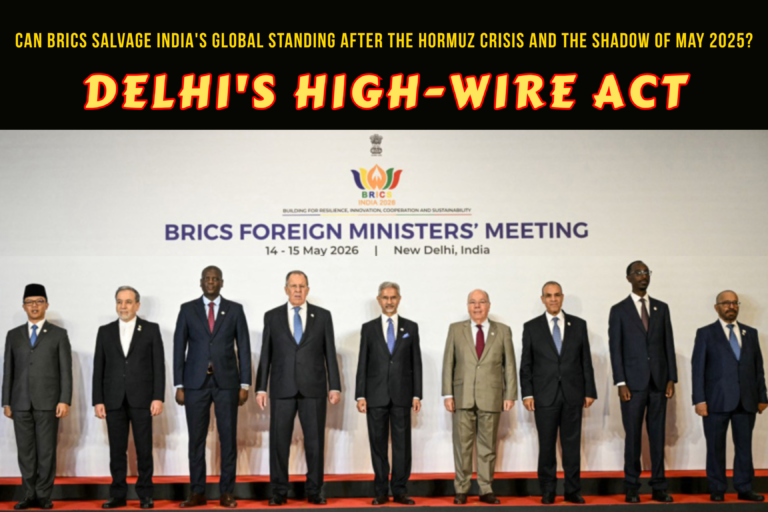
- BRICS (Brazil, Russia, India, China, South Africa): This grouping of major emerging economies provides a platform for India to engage with other significant non-Western powers, particularly Russia and China, on issues of global economic governance, trade, and development. India leverages BRICS to advocate for reforms in international financial institutions and to foster South-South cooperation. However, the internal dynamics of BRICS are complex, with China’s economic dominance often being a point of concern for other members, including India.
- G20: As a member of the G20, India participates in discussions on global economic and financial issues, climate change, and sustainable development with both developed and major developing economies. This forum provides India with an opportunity to influence global economic policies and present its perspective on key international challenges.
- SCO (Shanghai Cooperation Organization): India joined the SCO in 2017, along with Pakistan. Primarily a security-oriented grouping dominated by China and Russia, the SCO allows India to engage with Central Asian states, address regional security concerns (particularly terrorism), and balance China’s growing influence in the Eurasian landmass. India’s membership is a diplomatic maneuver to enhance its strategic footprint in Central Asia, a region crucial for energy security and connectivity. However, the SCO has its limitations for India, particularly given the strong China-Pakistan axis within the organization.
Climate Change, Trade, and Global Governance
India plays a pivotal role in global discussions on climate change. As a rapidly developing nation with a large population, it faces the dual challenge of economic growth and environmental sustainability. India has committed to ambitious climate targets under the Paris Agreement, including achieving net-zero emissions by 2070. Its diplomacy focuses on advocating for common but differentiated responsibilities, emphasizing the need for developed nations to provide financial and technological support to developing countries. India has also promoted initiatives like the International Solar Alliance (ISA) to foster global cooperation on renewable energy.
In global trade, India has traditionally been a cautious participant, often prioritizing domestic industry protection. It has been a vocal proponent of fair trade practices and has frequently engaged in multilateral trade negotiations (e.g., WTO Doha Round) to protect its agricultural and developmental interests. India’s recent decision to withdraw from the Regional Comprehensive Economic Partnership (RCEP) reflected its concerns about potential adverse impacts on its domestic industries and agricultural sector, particularly from Chinese imports. This decision underscored India’s independent approach to trade agreements, balancing global integration with national economic protection.
Overall, India’s multilateral diplomacy is a dynamic exercise aimed at securing its seat at the high table of global governance. While it has achieved considerable success in raising its profile and advocating for its interests, it continuously faces the challenge of navigating complex geopolitical rivalries and the often-slow pace of multilateral consensus-building.
Internal Factors Influencing Foreign Policy: The Domestic Imperative
While external pressures and global dynamics significantly shape India’s foreign policy, internal factors play an equally, if not more, crucial role in defining its strategic choices and diplomatic postures. Domestic politics, economic imperatives, and internal security concerns are deeply intertwined with New Delhi’s external engagements.
Domestic Politics and Public Opinion
India’s vibrant democracy means that foreign policy is not solely the domain of a select few; it is often subject to public scrutiny, parliamentary debates, and electoral considerations. Nationalist sentiment, particularly concerning issues like Pakistan and China, can exert significant pressure on policymakers to adopt firm stances. The ruling party’s ideological leanings can also influence diplomatic priorities. For instance, the Bharatiya Janata Party (BJP) under Prime Minister Narendra Modi has emphasized a more assertive and culturally-rooted foreign policy, often highlighting India’s civilizational identity and its role as a “Vishwaguru” (world teacher), though it has diminished considerably after the brief 3 days war with Pakistan.
Electoral cycles can also impact foreign policy decisions. Governments often seek to project strength and resolve on the international stage, especially in the run-up to elections, which can sometimes limit diplomatic flexibility on sensitive issues. State-level politics also play a role, particularly concerning relations with neighboring countries. For example, the stance of West Bengal’s government on the Teesta water-sharing agreement with Bangladesh has historically influenced the central government’s negotiations. The welfare of the vast Indian diaspora, a significant voting bloc in many countries, also influences India’s diplomatic outreach to those nations.
Economic Imperatives
Economic growth and development are paramount drivers of India’s foreign policy. The quest for energy security necessitates strong ties with oil-rich nations in the Middle East and Central Asia. The need for foreign investment and technology transfer drives partnerships with developed economies like the U.S., Japan, and European nations. Trade agreements are meticulously evaluated for their potential impact on domestic industries and employment.
India’s massive developmental needs mean that securing access to markets, raw materials, and advanced technology remains a constant diplomatic objective. The “Make in India” initiative, aimed at boosting domestic manufacturing, influences defense procurement decisions, pushing for greater indigenization and technology transfer. Economic statecraft, including development assistance to neighbors and strategic investments abroad, is increasingly used as a tool of foreign policy to enhance influence and foster goodwill. The balancing act between global economic integration and protecting nascent domestic industries often leads to complex positions in multilateral trade negotiations.
Internal Security Concerns
Internal security, particularly counter-terrorism, directly shapes India’s foreign policy, especially concerning Pakistan. The persistent threat of cross-border terrorism originating from Pakistan has made it a central pillar of India’s diplomatic engagement with various countries. India uses multilateral forums and bilateral discussions to build consensus against terrorism and to pressure Pakistan to take action against terrorist groups.
Separatist movements and insurgencies in regions like Kashmir and the Northeast also have external dimensions, often requiring diplomatic engagement with neighboring countries to prevent cross-border support for such groups. Furthermore, cybersecurity threats and the need to protect critical infrastructure against state-sponsored attacks from hostile actors increasingly feature in India’s security and foreign policy dialogues with key partners.
The interplay of these internal factors means that India’s foreign policy is a reflection of its domestic realities as much as it is a response to external dynamics. The government must constantly harmonize national aspirations with public expectations, economic necessities, and security imperatives, making its diplomatic choices inherently complex and often subject to intense internal debate.
Challenges and Future Outlook: Navigating the 21st Century’s Geopolitical Currents
India’s diplomatic journey in the 21st century is characterized by a persistent navigation of an increasingly complex and often volatile global environment. While India has demonstrated remarkable resilience and adaptability, it faces a multitude of challenges that test its diplomatic acumen and strategic vision.
Managing Great Power Rivalries
One of India’s foremost challenges is effectively managing its relationships with the world’s major powers amidst their own intensifying rivalries. The sharpening competition between the United States and China forces India into a delicate balancing act. While deepening strategic ties with the U.S. and its allies (e.g., through the Quad) is crucial for balancing China’s assertiveness, India must simultaneously avoid being perceived as merely an American client state, which would undermine its strategic autonomy and potentially provoke China. Its historical and ongoing defense relationship with Russia, coupled with the need for affordable energy imports, further complicates this triangulation, drawing criticism from Western partners who seek to isolate Moscow. India’s ability to maintain constructive engagement with all three powers, without fully aligning with any single bloc, will be critical for preserving its strategic space.
Regional Instability and China’s Growing Influence
In its immediate neighborhood, India faces the enduring challenge of a hostile Pakistan, persistent cross-border terrorism, and the unresolved Kashmir dispute, which continually drain diplomatic and military resources. Beyond Pakistan, China’s rapidly expanding economic and strategic footprint across South Asia and the Indian Ocean Region presents a formidable challenge to India’s traditional sphere of influence. Through the Belt and Road Initiative, debt diplomacy, and military aid, China has gained significant leverage with several of India’s neighbors, including Nepal, Sri Lanka, and the Maldives. This necessitates India to not only offer competitive alternatives but also to address the underlying reasons for its neighbors seeking alternative partners, which often include issues of trust and asymmetric power dynamics. The challenge is to enhance regional connectivity and cooperation without being perceived as a hegemon, while simultaneously countering China’s strategic encirclement.
Economic Pressures and Developmental Imperatives
India’s foreign policy is inextricably linked to its economic ambitions. Sustaining high economic growth rates requires access to global markets, foreign investment, advanced technology, and secure energy supplies. However, the global economic slowdown, protectionist tendencies in major economies, and supply chain disruptions pose significant challenges. India’s ability to attract and retain foreign investment, manage its trade deficits, and negotiate favorable trade agreements will be crucial. Furthermore, the imperative of lifting millions out of poverty and meeting the aspirations of a young, growing population means that developmental priorities will continue to shape diplomatic engagements, including those related to climate change, technology transfer, and sustainable development goals.
Internal Cohesion and Soft Power
The strength of India’s foreign policy ultimately derives from its internal stability and democratic resilience. Challenges such as social divisions, communal tensions, and economic disparities, if not managed effectively, can detract from India’s global image and undermine its soft power projection. Human rights concerns raised by international bodies or foreign governments, whether related to Kashmir, minority rights, or democratic freedoms, can also impact India’s diplomatic standing and its ability to advocate for democratic values abroad. Maintaining internal cohesion and upholding its democratic principles are therefore vital for India to effectively project its influence and credibility on the global stage.
Future Outlook
Looking ahead, India’s foreign policy will likely continue its trajectory of pragmatic multi-alignment, prioritizing strategic autonomy while forging partnerships of convenience. The Indo-Pacific will remain a key geographical focus, driven by the imperatives of maritime security and balancing China. India will increasingly seek to diversify its supply chains, defense procurement, and diplomatic engagements to mitigate risks and enhance resilience. Digital diplomacy, cybersecurity, and space cooperation will gain increasing prominence as new frontiers of international relations.
India’s demographic dividend and growing economic potential will provide it with significant leverage. However, its success will depend on its ability to transcend historical baggage, manage complex bilateral relationships with finesse, effectively address its internal challenges, and adapt swiftly to an ever-evolving global power dynamic. India’s diplomatic odyssey is far from over; it is a continuous process of adaptation, assertion, and aspiration in a world that is constantly being reshaped.

I like this website very much so much fantastic info .