(By Khalid Masood)
Introduction
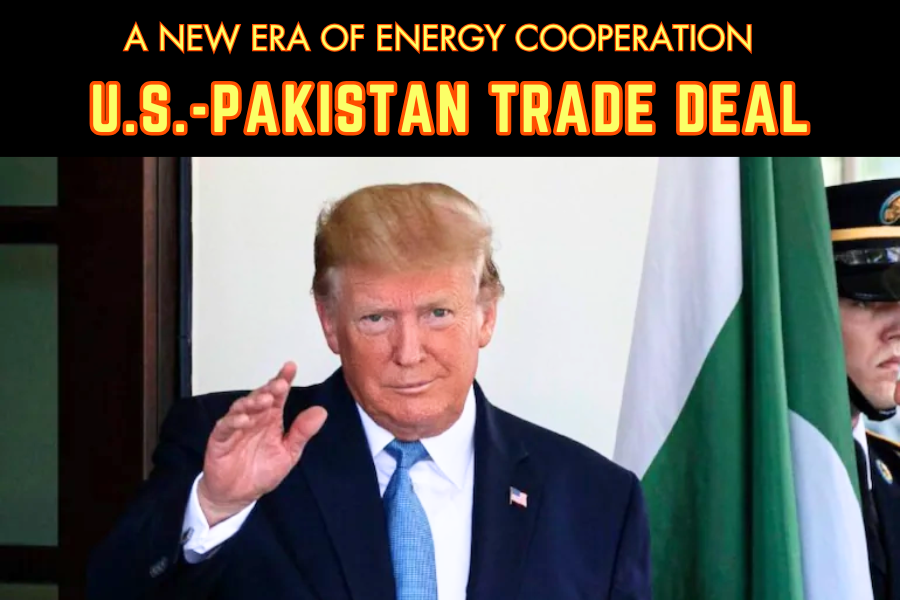
On July 31, 2025, U.S. President Donald Trump announced a landmark trade deal with Pakistan, focusing on the joint development of Pakistan’s vast oil reserves, estimated at over 10 billion barrels. This agreement, therefore, marks a pivotal moment in U.S.-Pakistan economic relations, strengthening ties between the two nations amid a complex South Asian geopolitical landscape. For instance, the deal follows a period of renewed diplomatic engagement, including Pakistan’s designation as a major non-NATO ally and recent talks facilitated by U.S. Secretary of State Marco Rubio. Moreover, it contrasts sharply with Trump’s simultaneous imposition of 25% tariffs on Indian imports, citing New Delhi’s high tariffs and Russian energy purchases. Consequently, the deal not only aims to boost Pakistan’s energy sector but also positions it as a potential counterweight to India’s regional influence. This article explores the deal’s scope, economic and diplomatic implications, and its broader impact on South Asia.
Overview of the Trade Deal
The U.S.-Pakistan trade deal focuses on joint development of Pakistan’s oil reserves. Specifically, Trump announced on Truth Social, “We have just concluded a Deal with the Country of Pakistan, whereby Pakistan and the United States will work together on developing their massive Oil Reserves.” An American oil company, yet to be selected, will lead the partnership. For example, no timeline or specific firms were named. Additionally, the deal includes tariff reductions for Pakistani exports, previously facing a 29% rate.
Pakistani Foreign Minister Ishaq Dar confirmed the agreement, noting it was finalized after talks with U.S. Secretary of State Marco Rubio. For instance, Pakistan’s finance ministry stated it would lower tariffs on exports to the U.S., fostering collaboration in energy, IT, and minerals. The deal follows a 90-day tariff suspension in April 2025, allowing negotiations. Thus, it positions Pakistan favorably amid Trump’s global trade restructuring.
Economic Implications
The deal promises significant economic benefits. Pakistan’s oil reserves, estimated at over 10 billion barrels, remain largely untapped. For instance, U.S. expertise could boost exploration and production. Consequently, this could reduce Pakistan’s $3 billion trade deficit with the U.S., which reached $7.3 billion in total goods trade in 2024. Moreover, lower tariffs may increase Pakistani exports, like textiles and IT services, to the U.S.
For the U.S., the deal aligns with Trump’s goal to reduce trade deficits. Specifically, it diversifies energy partnerships, countering reliance on volatile regions. However, the lack of a timeline raises questions about implementation. For example, selecting an oil company and securing investments could delay progress. Nevertheless, the deal strengthens U.S.-Pakistan economic ties, potentially attracting American firms to Pakistan’s energy sector.
Diplomatic Context
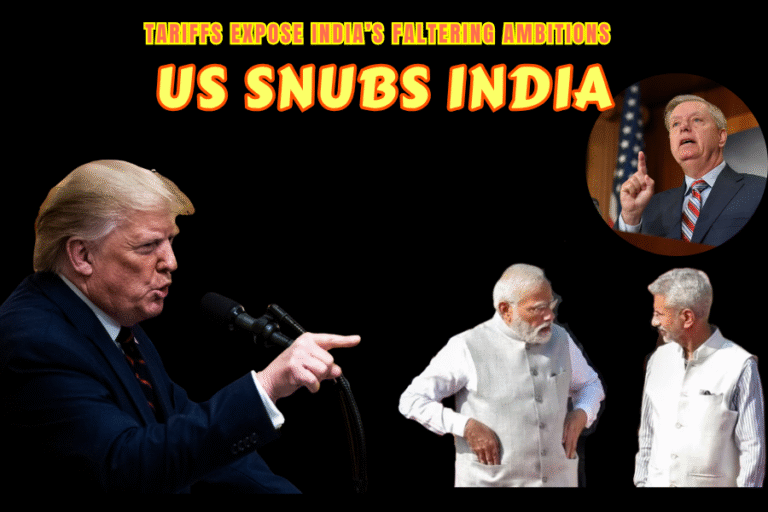
The agreement reflects Trump’s aggressive trade policy. For instance, he imposed a 25% tariff on India, plus penalties for its Russian oil and arms purchases. Trump criticized India’s high tariffs and “obnoxious” non-tariff barriers, calling them among the world’s toughest. Consequently, the U.S.-Pakistan deal appears partly as a strategic counter to India’s trade practices. Trump’s remark, “Who knows, maybe they’ll be selling Oil to India some day,” suggests a provocative geopolitical shift.
Pakistan’s role as a U.S. “major non-NATO ally” underpins this deal. For example, recent visits by Pakistani officials, including Finance Minister Muhammad Aurangzeb, signal deepening ties. Additionally, Pakistan credits Trump and Rubio for facilitating a May 2025 India-Pakistan ceasefire, though India disputes this. Thus, the deal strengthens U.S.-Pakistan relations while navigating South Asia’s rivalries.
Regional Impact and India’s Response
The deal has significant implications for South Asia. Specifically, Trump’s suggestion that Pakistan could export oil to India challenges New Delhi’s energy strategy. For instance, India relies on Russia for 35% of its oil imports, a point of U.S. contention. Moreover, India faces a $45.7 billion trade deficit with the U.S., worsened by the 25% tariff and penalties starting August 1, 2025. Consequently, India’s exports, like pharmaceuticals and smartphones, may suffer.
India’s response has been measured. The Indian Trade Ministry is studying Trump’s tariffs, emphasizing a “fair, balanced” trade deal. For example, five rounds of U.S.-India talks have occurred, with a sixth planned for August. However, India’s refusal to import U.S. genetically modified crops and dairy complicates negotiations. Additionally, India insists on resolving disputes with Pakistan bilaterally, rejecting Trump’s mediation claims. Thus, the U.S.-Pakistan deal may strain India-U.S. relations.
Challenges and Risks
Several challenges could hinder the deal’s success. For instance, details remain vague, with no disclosed tariff rates or project timelines. Pakistan seeks terms similar to Japan and the Philippines (15–20% tariffs), but Trump’s silence on specifics raises uncertainty. Moreover, Pakistan’s history of economic instability and security risks may deter U.S. firms. For example, political volatility could delay oil exploration.
Geopolitically, the deal risks escalating tensions with India. Specifically, Trump’s tariffs and penalties target India’s Russian ties, linked to the Ukraine conflict. India’s continued purchase of Russian arms, like the S-400 system, further complicates matters. Consequently, the U.S.-Pakistan deal could deepen South Asia’s rivalries, despite the May 2025 ceasefire. Additionally, global markets face uncertainty, as Trump’s tariffs on copper and other goods have already disrupted prices.
Future Outlook
The U.S.-Pakistan trade deal could reshape regional energy dynamics. For instance, successful oil development may position Pakistan as an energy exporter, reducing India’s reliance on Russia. However, implementation hinges on selecting a capable oil company and securing investments. Moreover, Pakistan must address domestic challenges, like infrastructure and stability, to maximize benefits.
Diplomatically, the deal strengthens U.S.-Pakistan ties, countering China’s regional influence. For example, Pakistan’s growing IT and mineral sectors could attract further U.S. investment. However, India’s reaction and ongoing U.S.-India talks will shape the broader outcome. A balanced trade deal with India by late August could ease tensions. Ultimately, the U.S.-Pakistan partnership marks a bold step toward economic and strategic cooperation.
Conclusion
The U.S.-Pakistan trade deal, announced on July 31, 2025, heralds a new chapter in bilateral relations. By focusing on Pakistan’s oil reserves, it promises economic gains and tariff relief. Moreover, it positions Pakistan as a potential energy player, with implications for India. However, vague details and regional tensions pose challenges. As Trump’s August 1 tariff deadline looms, the deal underscores his aggressive trade strategy. Thus, its success depends on careful execution and diplomatic finesse.